
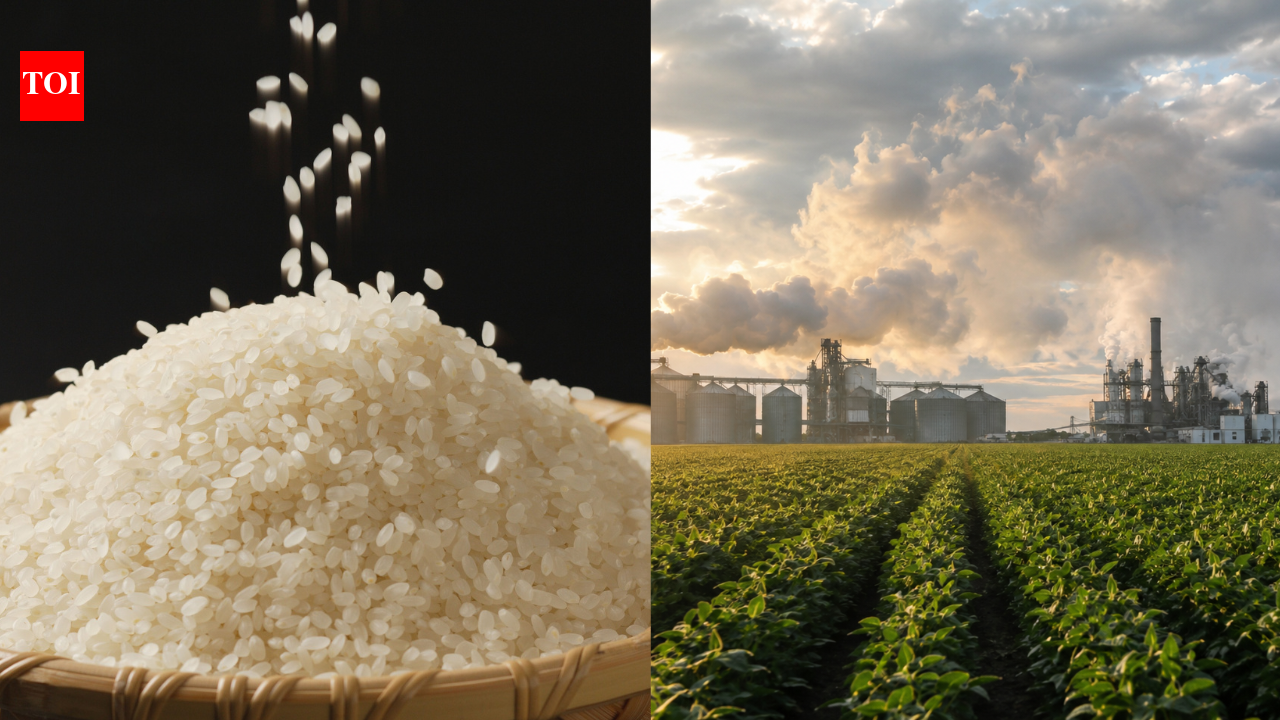
For billions of people, rice is more than just three meals a day; it is the foundation of food security, culture and livelihoods. Every grain harvested represents centuries of agricultural knowledge, feeding communities in Asia, Africa and beyond. However, crops that sustain more than half of humanity are now the focus of growing environmental problems. Modern rice production puts increasing pressure on the Earth’s climate, freshwater resources and nutrient cycles, raising questions about whether today’s agricultural practices can continue without destabilizing the natural systems on which they depend, a new international study finds. Scientists believe the findings underscore the urgent need to rethink how to grow this essential crop for a rapidly growing world, rather than questioning rice itself.
Why rice cultivation Becoming a major challenge for climate, water and food security
Rice holds a unique place in global agriculture. It provides about one-fifth of the world’s calorie consumption and remains a major staple food for billions of people. Meeting this huge demand will require large-scale agriculture, but researchers now warn that the environmental costs of maintaining current production methods are becoming increasingly difficult to ignore.A new paper is titled “Can we produce rice without harming the planet?” identified environmental thresholds at which humans can safely operate. Their analysis found that rice production exerts disproportionate pressure on several of these boundaries, particularly those related to greenhouse gas emissions, freshwater use, and nutrient pollution.Flooding of rice fields is the main reason for this challenge. Standing water creates oxygen-depleted conditions that allow naturally occurring microorganisms to produce methane, one of the most potent greenhouse gases. At the same time, large amounts of irrigation water and intensive fertilizer use put additional pressure on rivers, groundwater reserves, and surrounding ecosystems.Rice production has become “a major contributor to methane emissions, freshwater use, and nutrient pollution,” the researchers wrote, underscoring the need for agricultural systems that can continue to feed the world’s population without exceeding the planet’s environmental limits.
What new planetary boundaries study reveals about global rice production
Rather than focusing on a single environmental issue, the study looked at rice farming through a broader global lens. Planetary Boundaries Framework, developed by scientists led by Stockholm Resilience Centerconsider whether human activity remains within the ecological conditions that have allowed civilization to flourish for thousands of years.The findings indicate that rice cultivation affects multiple interconnected earth systems simultaneously. Methane released from flooded farmland contributes to global warming, while heavy irrigation adds to pressure on already stressed freshwater resources in many agricultural regions. Fertilizers containing nitrogen and phosphorus, while essential for crop growth, can escape into rivers and lakes, damaging aquatic ecosystems and reducing water quality.Importantly, the researchers do not believe that rice itself is unsustainable or that yields should decline. Instead, they emphasize that the methods used to grow crops are not evolving fast enough to adapt to today’s environmental realities. As climate change intensifies droughts, floods and unpredictable weather, agriculture will increasingly rely on practices that protect the natural resources on which it depends.Professor John Rockstrom, who helped develop the planetary boundaries framework, describes these boundaries as defining “humanity’s safe operating space”. The study argues that staying within this space is crucial if future generations are to continue producing enough food while maintaining a stable climate and healthy ecosystems.
How smart rice cultivation protects people and the planet
While the findings highlight significant environmental pressures, the researchers see them as an opportunity rather than a warning of inevitable decline. They believe rice farming has found practical solutions that reduce its environmental footprint without compromising yields.One of the most promising methods is to regularly drain rice fields, rather than continuously flooding them. This technique, known as alternating wetting and drying, interrupts methane-producing conditions while also reducing water consumption. More targeted fertilization can further reduce nutrient losses to surrounding waterways, thereby improving environmental performance and farm efficiency.The study also points to advances in crop breeding, irrigation technology and precision agriculture as important tools for the future. Together, these innovations could help farmers produce more rice using fewer natural resources while making agriculture more resilient to climate change.The researchers concluded that the future of rice production will not depend on expanding farmland or increasing chemical inputs, but on changing the way the crop is grown. To achieve environmental sustainability while maintaining global food security, changes in rice production are needed.For crops that nourish billions of people every day, this shift could become one of the defining challenges of twenty-first-century agriculture.