
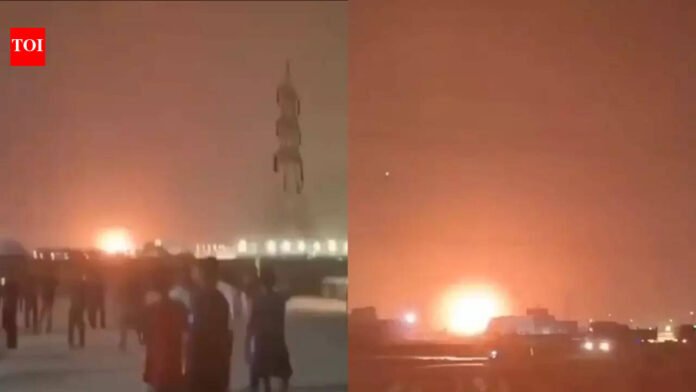
A missile attack on Ras Laffan complex, one of Qatar’s most important gas facilities, shocked the entire Qatar middle East and global energy markets, marking a dangerous escalation in the ongoing war between Iran and the United States and Israel. The incident came after an Israeli attack on Iran’s Pars gas field, followed by Tehran warning Saudi Arabia, the United Arab Emirates and Qatar that their oil and gas facilities would be targeted in the coming hours.An Iranian attack reportedly triggered a fire and structural damage to a major gas facility in Qatar, fueling fears that a war is no longer limited to military targets but directly threatens the world’s most important energy infrastructure. The development comes at a time when the region is already on edge, with repeated alerts, interceptions and retaliatory attacks an almost daily reality.
What happened to the Ras Laffan complex in Qatar during the Iran-US-Israel war?
Qatar confirmed that an Iranian missile struck the key gas facility, causing a fire and causing some damage. While emergency systems prevented a catastrophic explosion at the Ras Laffan complex, the incident highlighted how close the region came to a full-scale energy crisis.Qatar Energy confirmed on Wednesday that the missile strike caused “extensive damage” to Ras Laffan Industrial City, one of the world’s most important liquefied natural gas hubs. The company added that while emergency teams acted quickly to control the situation, all personnel were accounted for and no casualties were reported. The attack came just hours after Iran issued a sweeping warning that it could target oil and gas facilities in the Gulf, naming key sites in Qatar, Saudi Arabia and the United Arab Emirates as potential targets, including the Mesaeed petrochemical complex, Ras Laffan refinery, Jubail petrochemical complex and the Hussen gas field, amid rising tensions following the Israeli attack on Iran’s South Pars gas field. Qatar’s foreign ministry strongly condemned the attack, calling it a “cruel” act and a “blatant violation” of the country’s sovereignty and national security, while warning that such an escalation threatened broader regional stability and international peace. The ministry stressed that Qatar has consistently called for restraint and protection of civilian and energy infrastructure, but accused Iran of irresponsible practices that have plunged the region into crisis. Meanwhile, civil defense teams have confirmed that the fire in Ras Laffan has been initially brought under control, averting potentially catastrophic consequences for a facility critical to global energy supplies.The targeted facilities are part of Qatar’s vast gas network, which is connected to the North Fields, the world’s largest natural gas reserves shared with Iran (known there as South Pars). This alone makes this attack particularly egregious because it targets a common global energy lifeline, potentially disrupting supplies on multiple continents and raising the risk of retaliation across the Gulf. Officials confirmed that defense systems intercepted some of the attacks, but not before damage was done, leading to apparent fires and operational disruptions.
Why this attack on Qatar’s Ras Laffan complex is a big deal in the Iran-U.S.-Israel war
This was not just another missile strike, it marked a strategic shift in the conflict. Until recently, much of the fighting was focused on military installations, command centers and political targets. Now, the focus appears to be turning to economic warfare, with energy infrastructure emerging as a primary target. Reports indicate that Iran has warned that it may target oil and gas facilities in the Gulf in retaliation for earlier attacks on its infrastructure. This threat has now become a reality.
Timetable for the escalation of the war between Iran and the United States and Israel
To understand the significance of this attack, it’s important to understand the rapid escalation in recent weeks –
- Late February 2026: US, Israel launch attacks on Iranian military and energy-related sites
- Early March: Iran responded
drone and missile strikes across the Gulf. - March 2: Qatar halts LNG production as previous strikes hit facilities
- Mid-March: Israel attacks South Pars gas field shared by Iran and Qatar
- Now: Iran retaliates with missile attack on Qatar gas infrastructure
Each step raised the stakes and magnified the impact of the war. The UAE Foreign Ministry strongly condemned Israel’s attack on Iran’s South Pars gas field, calling it a “dangerous escalation” of the current conflict. Since the outbreak of the US-Israeli war against Iran, the UAE has issued a rare warning, warning that energy infrastructure poses a direct threat to global energy security and regional stability, urging all parties to exercise restraint. The ministry stressed that under no circumstances should important facilities be targeted, stressing the importance of complying with international law to prevent further escalation of the situation.
Global energy markets jitters over Iran, U.S.-Israel war
The attack has repercussions far beyond Qatar. Qatar is one of the world’s largest exporters of liquefied natural gas (LNG), supplying energy to Europe, Asia, India, Japan and South Korea. Even minor disruptions can have significant ripple effects. Earlier attacks and shutdowns have led to sharp increases in natural gas prices, increased oil market volatility and concerns about long-term supply shortages. Analysts have warned that continued attacks on energy infrastructure could destabilize global energy supply chains, especially if key routes such as the Strait of Hormuz are further disrupted. While recent attacks have sparked fires, the outcome could have been worse. Experts point out that natural gas facilities are highly sensitive environments where even small disturbances can trigger massive explosions, long-term shutdowns and environmental disasters.In this case, emergency systems contained the fire and avoided catastrophic damage, but the potential for operational disruption remained. Still, the message is clear that the region is on the verge of danger.
A new phase in the Iran-U.S.-Israel war: Targeting infrastructure
The strike signals that the conflict is entering a new, more dangerous phase. Energy infrastructure is more difficult to completely defend, is vital to the economy, and is globally interconnected. This makes it an attractive but risky target. Reports show that Ras Laffan, home to the world’s largest liquefied natural gas facility, has been damaged in recent attacks, underscoring the vulnerabilities of even the most advanced systems.The incident has made headlines around the world, and for good reason. Energy outages in Qatar are not just local, but will impact global fuel prices and the economy. The shift from military to economic objectives was a major turning point. From emergency sirens to apparent fires, this crisis is no longer an abstraction, it’s raising fears about what happens next. If natural gas facilities are vulnerable, what happens next? Oil terminal? Transport route? The entire energy corridor? The Gulf region is currently facing multi-layered crises such as military escalation, civilian safety issues, economic instability and energy insecurity. Countries in the region have issued emergency alerts, stepped up air defense preparations and tightened security around infrastructure, but attacks have continued.At its core, this event was more than just a strike. It reflects a broader reality that Iran’s war with the United States and Israel is no longer contained, the economic system is now squarely in focus, and the global consequences are no longer hypothetical; they are unfolding. The world is watching closely as oil prices rise and natural gas supplies are threatened.The missile attack on Qatar’s gas facilities marked a key escalation point in Iran’s war with the United States and Israel. Fires are being started, infrastructure is being damaged, and global markets are reacting, but perhaps most importantly, the war has reached a stage where energy itself has become the battlefield.