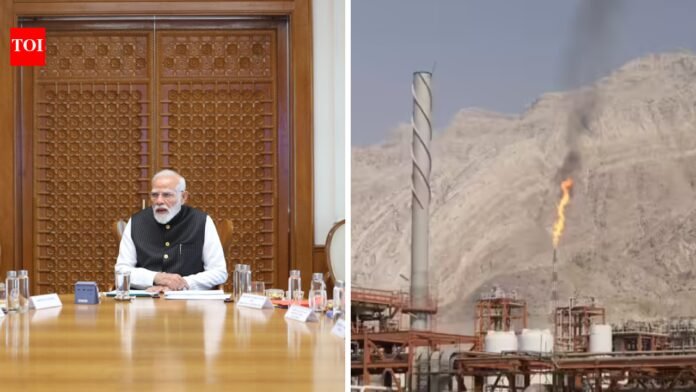
- Prime Minister Modi chairs a high-level meeting of oil, crude oil, natural gas, power and fertilizer industries to review energy preparedness
tensions in the middle east . - The Israeli military later flagged European capitals as being within range of Iranian missiles after Iran fired long-range ballistic missiles at the southern Israeli city and the US-UK base Diego Garcia, while the UK said there was no evidence Iran was targeting Europe.
- Iranian parliament speaker Mohammad Bagher Ghalibaf warned that if the United States or Israel attacked Iran, critical infrastructure and oil facilities in the region would be destroyed “in an irreversible manner.”
- Sharjeel Imam, who was accused in the 2020 Delhi riot conspiracy case, returned to his ancestral village to attend the wedding of his younger brother Muzzamamil Imam, six years after being granted 10-day interim bail.
- Rupee depreciates as global tensions rise,
high oil prices leadforeign portfolio investor Rs 88,180 crore was withdrawn from Indian stock markets in March.
Here are the top 5 stories of the day:
PM Modi chairs high-level review meeting on fuel, power amid tensions in Middle East
Prime Minister Narendra Modi on Sunday chaired a high-level meeting to review the situation related to the oil, crude oil, natural gas, power and fertilizer sectors amid the evolving situation in the Middle East. The meeting focused on ensuring uninterrupted supply of important resources, maintaining stable logistics, and simplifying nationwide distribution. Officials briefed the Prime Minister on preparedness measures to deal with any potential disruptions that could arise from geopolitical developments in the region. Read more
‘Europe is within range of Iranian missiles’: IDF warns after Diego Garcia attack
Iran launched long-range ballistic missiles on Saturday, attacking a southern Israeli city near its nuclear facilities and targeting a U.S. and British military base on the island of Diego Garcia, signaling the expansion of the conflict beyond the Middle East. Israeli military chief Eyal Zamir said the missiles could reach European capitals, while British Housing Secretary Steve Reid told the BBC there was no evidence Iran was targeting Europe, adding, “I am not aware of any assessment at all that they are even trying to target Europe, let alone that they could do it if they tried.”” Read more
‘Oil facilities will be destroyed in an irreversible way’: Iran warns after Trump energy infrastructure threats
Iranian Parliament Speaker Mohammad Bagher Ghalibaf warned that if the United States or Israel attacked Iran, critical infrastructure, including energy and oil facilities in the region, would be considered legitimate targets and destroyed in an “irreversible manner,” which could keep oil prices high for an extended period. He also said, “Throw away what is in your right hand; it will swallow up what they have made.“ Follow real-time updates
2020 Delhi riot case accused Sharjeel Imam returns home after 6 years on interim bail for brother’s wedding
Sharjeel Imam, an accused in the “larger conspiracy” case related to the 2020 Delhi riots, returned to his hometown of Kako after six years to attend the March 25 wedding of his brother Muzamil Imam and visit his ailing mother. A Delhi court granted him 10-day interim bail and parole from March 20 to 30 as per the standard limits for under-trial prisoners. Muzamil expressed happiness at the reunion and thanked the court for allowing Sharjeel to spend time with his family. Read more
FPI outflows in March: Foreign investors withdraw Rs 88,180 cr on Middle East tensions; over Rs 1 lakh withdrawn till 2026
Foreign investors have withdrawn 881.8 billion rupees from Indian equities so far in March, citing rising global tensions, rupee depreciation and high oil prices, pushing total FPI outflows to over 1 billion rupees in 2026. The sell-off follows strong inflows of Rs 22,615 crore in February. Analysts said concerns about conflict in West Asia, crude oil prices above $100 a barrel, the rupee approaching 92 against the dollar, rising U.S. bond yields and potential pressure on corporate profits were driving risk-off strategies. Read more