
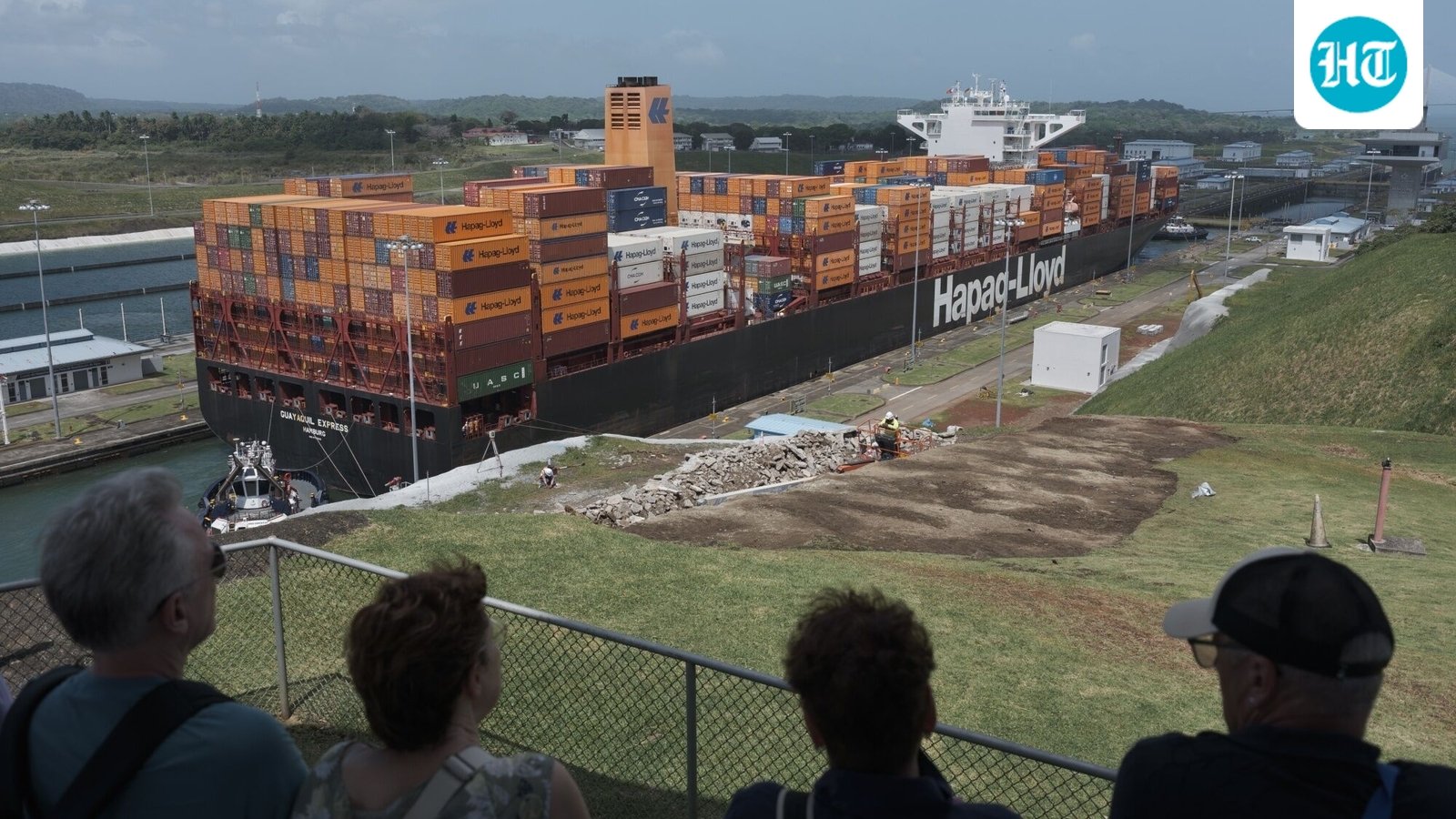
The auction bid to skip the queue at the Panama Canal last week was $4.6 million. It was paid by an empty liquefied petroleum gas supertanker, the G. Arete, and it was the highest fee the waterway has ever charged for a slot, Bloomberg reported. Days earlier, a container ship had paid $4 million for the same privilege.
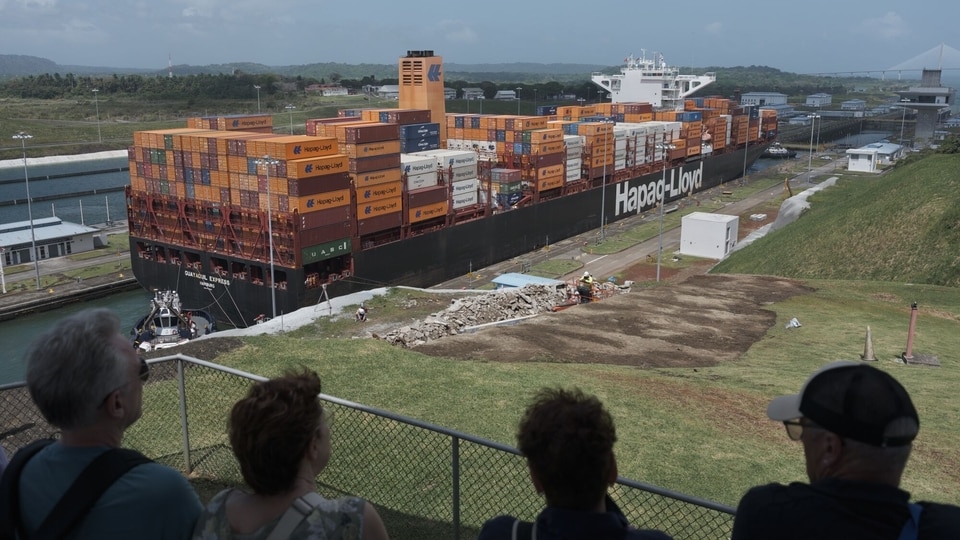
This reflection of a squeeze at the artificial waterway was formally acknowledged by the Panama Canal Authority, which admitted on Thursday that it was running short of water and would need to cut daily transits to cope up.
From September 4, the canal will cap daily transits at 34 vessels, down from an average of 35 through June and a design capacity of about 40, the authority said in an advisory.
From September 15, the cap drops to 32. The larger Neopanamax locks — the wider, third set of locks that were built to accommodate bigger container ships and gas carriers — will be limited to nine slots a day. The older Panamax locks will be restricted to 25 transits a day, and then 23.
The authority is also delaying two draft-limit cuts it had already scheduled rather than easing them. A draft limit is the depth at which a ship sits in the water; a lower draft limit forces vessels to carry less cargo per trip. A planned reduction to a Neopanamax maximum of 14.63 metres, originally due earlier, has been pushed to September 2, and a further cut to 14.48 metres has been pushed to October 1.
Rainfall in the canal’s watershed from May through August has run 34% below the historical average, and inflows to the artificial lakes that feed the locks — Gatun and Alajuela — are 44% below normal, the authority said.
Panama is among the wettest countries in the world, which is why the shortfall matters as a regional signal as well as a local one. A strengthening El Niño, the Pacific warming pattern that reshapes global rainfall, is believed to be the reason for this lack of rainfall.
The canal authority has not ruled out further restrictions if the rains do not come.
Also read: Iran wants to charge for Hormuz, Houthis for the Red Sea: How straits around the world are governed
Why a canal runs out of water
The Panama Canal is a lock canal. Unlike the Suez, which is a sea-level cut, it lifts and lowers ships between the Atlantic and Pacific through a stepped system fed entirely by fresh water from Gatun and Alajuela.
Every transit by a vessel spills water out to sea, and the lakes have to be topped up by rain. When rainfall falls short, the operator has two levers to pull — the number of ships it lets through, and the depth to which each ship can be loaded.
It is now pulling both.
Water is a sensitive subject in Panama for reasons that have nothing to do with shipping. The lakes that feed the canal also supply drinking water for about half of the country’s 4.2 million people, AFP noted. Every litre spent floating a container ship to the Pacific is a litre not available to a household in Panama City. The authority is, in effect, rationing between the two demands.
The canal is key to shipping
The waterway handles about 5% of global maritime trade and roughly 40% of US container traffic. Its principal users are the US, China, Japan, Chile and South Korea.
For those countries, and for the exporters that ship through them, Panama is the shortest route between the American east coast, the Gulf of Mexico and Asia.
The alternatives — around Cape Horn or through the Suez — add weeks and cost. And the Suez route is not the reliable fallback it was. Since the West Asia war widened in July, Iran-aligned Houthis in Yemen have renewed attacks on shipping in the Red Sea and Bab el-Mandab Strait — the approach route to Suez from the south.
Some carriers that had resumed Suez transits this year have begun diverting back around Africa’s Cape of Good Hope. A drone strike on a floating gas terminal at Egypt’s Damietta port in late July also raised fears that the canal itself could be drawn into the conflict.
Between a Panama that is contracting and a Suez corridor under renewed threat, shippers have markedly fewer safe options than they did until at least last year.
Also read: When two wars meet at lake: Ukraine’s strike in Caspian Sea and the Iran-Russia angle
Why 2026 is not 2023
The canal has been at this spot before. During the El Niño-driven drought of 2023 and 2024, the authority cut daily transits from 38 to 22, well below the levels being introduced this September. But what’s different this time is the rest of the shipping system.
The Strait of Hormuz has been disrupted for more than five months due to the US-Israel war against Iran, closing the most efficient corridor between the Persian Gulf and Asia for tankers carrying crude, LPG and refined products. Traffic that would have flowed east through Hormuz is being redirected through Panama at the same moment that traffic on the canal is contracting.
The pressure is evident in the LPG trade. About 60% of US LPG exports have gone to Asia so far in 2026, up from 55% for all of 2025, according to Kpler data cited by Bloomberg. That extra volume is being pushed through a canal whose Neopanamax locks — the size class most LPG supertankers need — are now the bottleneck.
The market response has been to improvise. Chevron has chartered two Neopanamax tankers, the Fritzi N and the Pacific Yantai, to receive cargo through ship-to-ship transfers off the Pacific port of Balboa, expected to draw on smaller Panamax vessels that have already cleared the locks, Bloomberg reported. The Neopanamax ships then head across the Pacific without ever passing through the canal themselves.
Container shipping is also feeling the same squeeze from a different angle. Freight costs are being lifted by the Iran war and by growing congestion at Panama, where wait times for unbooked crossings have stretched from a couple of days to as long as three weeks.
India is not among the canal’s top five users. Its direct exposure to Panama transit fees is small, but its indirect exposure is not.
India is among the world’s largest importers of LPG, and its dependence on US supply has climbed since the Hormuz disruption began. Petroleum and natural gas minister Hardeep Singh Puri said on August 7 that the US now accounts for “something like” 67% of India’s LPG imports, up from an initial plan to source about 10% of national requirement from the country. Nearly 90% of India’s LPG imports were sourced from West Asia before the region plunged into a war.
The US Gulf-to-Asia LPG lane, which runs through Panama, sets the benchmark against which landed prices across the region are struck. When the auction cost of a Neopanamax slot spikes to $4 million or more, part of that cost may eventually show up in the price at which Indian marketers can procure spot cargoes.
The trade cascade goes beyond LPG. Trans-Pacific container rates, which Indian exporters to the Americas pay and which Indian importers of US pharmaceuticals, industrial equipment and agricultural produce pay, are set in the same freight market that is now being tightened by Panama congestion and Hormuz disruption together.
In effect, three key waterways – Hormuz, Panama, and Suez Canal – are facing pressures simultaneously.
Also read: From focus on his ‘greatness’ to deal with Iran: Trump may escape the consequences of his mess
What comes next
The canal authority has said the 2026-27 El Niño could last longer than usual, and its administrator, Ricaurte Vasquez, told a business event on Wednesday that the operator was preparing accordingly.
“The experience of 2023 and 2024 has prepared us well for what we know and has given us the discipline to deal with what we do not know. The canal does not improvise,” Vasquez said. A new reservoir has been planned to soften the demand pressure, but construction is only scheduled to begin next year. It’s likely to be completed by 2032.
For now, the near-term signals to watch are the September auction fees, the pace of any further draft reductions, and whether the authority moves the daily cap below 32.
For commercial shipping, the more consequential question is whether Hormuz begins to open before Panama tightens further. If it does not, the record auction bids of the last week may prove to be early prints of a new normal.