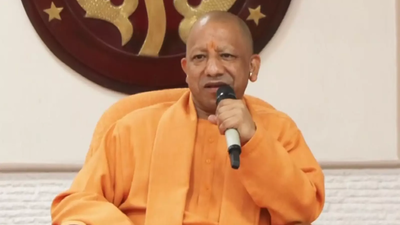
Lucknow: Chief Minister of Uttar Pradesh Yogi Adityanath India on Saturday praised the interim framework of the US-India trade agreement and said it has given a decisive boost to India’s development Made in India. Yogi Adityanath termed the announcement of the framework as a “landmark step”, stressing that it will expand global market access for Indian products.He thanked Prime Minister Narendra Modi, praising his “decisive and dynamic leadership” in ensuring an “India first” deal. Yogi Adityanath said in an article published on the “We are grateful to the Honorable Prime Minister Narendra Modi for his decisive and dynamic leadership in ensuring a balanced, reciprocal and India-first agreement that aims to empower MSMEs, stimulate exports, strengthen supply chains and create new opportunities for youth,” he added. India and the United States have announced a framework for an interim agreement on mutually beneficial trade. The framework reaffirms the two countries’ commitment to the broader Bilateral Trade Agreement (BTA) negotiations launched by President Donald Trump and Prime Minister Narendra Modi on February 13, 2025, which will include additional market access commitments and support for more resilient supply chains, the joint statement said.According to the joint statement, the United States will impose an 18% reciprocal tariff on goods originating in India, including textiles and clothing, leather and footwear, plastics and rubber, organic chemicals, home furnishings, handmade products and certain machinery.The United States will also lift tariffs on certain Indian aircraft and aircraft parts that were imposed in response to national security threats, the joint statement said.The statement said India would eliminate or reduce tariffs on all U.S. industrial products and a variety of food and agricultural products, including distillers dried grains (DDG), red sorghum for animal feed, tree nuts, fresh and processed fruits, soybean oil, wine and spirits, and other products.India also intends to purchase US$500 billion worth of US energy products, aircraft and aircraft parts, precious metals, technology products and coking coal over the next five years.
Saudi Arabia cracks down: More than 20,000 arrested for violating residency, labor and border laws | World News
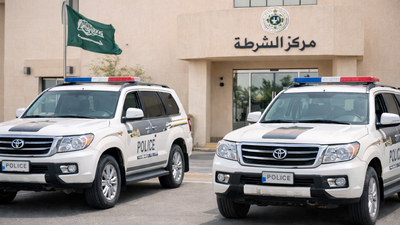
Saudi security agencies stepped up enforcement operations across the country last week, arresting more than 20,000 people for violating residency, labor and border laws, according to figures released by the Interior Ministry on Saturday. The Ministry of Interior said in a statement that a total of 20,237 illegal residents were arrested during joint inspection operations carried out between January 29 and February 4. The operations were coordinated by security forces and relevant government agencies across the country. Of those detained, 12,687 were found to have breached the Residence Act, 4,318 to have breached the Border Security Act and 3,232 to have been charged under the Labor Act. During the same period, 11,656 illegal residents were deported. The authorities also referred 16,805 violators to their respective diplomatic missions to obtain travel documents, while 2,437 individuals were directed to complete the travel booking process. The ministry reported that 1,555 people were arrested while trying to enter the kingdom illegally. Among them, 40% are Yemeni nationals, 57% are Ethiopian nationals, and 3% are other nationalities. In addition, 61 people were arrested while trying to leave the kingdom through illegal means. Enforcement efforts also target those who assist offenders. Authorities arrested 32 people accused of providing transportation, housing or employment to illegal residents. Currently, 23,807 foreign nationals, including 21,926 men and 1,881 women, are undergoing legal proceedings as part of measures to enforce existing regulations. The Home Office reiterated its warning that anyone entering the country illegally, transporting offenders, offering asylum or providing any form of assistance will face severe penalties. These include imprisonment of up to 15 years, fines of up to 1 million riyals, and confiscation of vehicles or property used for such activities. The public is urged to report violations by dialing 911 in Mecca, Riyadh and the Eastern Governorate region and 999 or 996 in all other regions of the Kingdom
When three words can shatter a life: How triple talaq robs women of their ‘haq’ | India News
Instant triple talaq is not some abstract religious practice – it is a brutal power play that can destroy lives in seconds. With just one word from her husband, a woman loses her home, her income, and her future. “Some marriages lasted six months, but some also lasted 10 years. It all ended in a flash,” said Nazreen Ansari, national president of the Muslim Mahira Foundation. “In one case, a husband living in Saudi Arabia divorced his wife via email. The woman was uneducated and helpless – she had no way to seek justice.”When a marriage ends impulsively, women suffer the hardest. Joint accounts were frozen, bills piled up, and “adjustment” became synonymous with enduring in silence to avoid scandal. Even from adult children or parents, support often disappears. Priyanka SharmaCounselor Shanti Sahyog shares, “Who bears the brunt of impulsive behavior? Women bear it. A man can break away, but her family may reject her remarriage.”The real question is not “What does the law say?” but “Where will she go?” and “Who will pay?” This is not courtroom theater; This is a disaster on the doorstep. Imagine ration lists being slashed, landlords demanding rent, school fees piling up unpaid, phone calls filled with sympathy and judgment. At the heart of this mess is a simple idea, but India remains emotionally unsophisticated: Maintenance is not charity. The law recognizes that unpaid labor, joint family and dependent life do not disappear the moment the husband announces the end of the marriage.Yet time and time again, women’s demands for survival—for food, rent, medicine, child expenses—are recast as political disputes over identity, community autonomy, and state limits.This topic has always attracted public attention, but with the release of the movie “Huck”, this topic has once again entered people’s view.
An economy on your doorstep, not a courtroom debate
In separation and divorce, the losses are immediate and significant.Women caught up in such disputes often describe a sudden stop in cash flow. Joint accounts become unusable, monthly payouts stubbornly remain monthly, and social pressure to “adjust” as lawsuits are viewed as public scandals.Even when adult children exist, they are not always financially stable; even when parents exist, they are not always willing or able to take back their daughters.“I remember a case where a woman was hit with triple talaq in a fit of anger. Her husband spoke out impulsively, and later her parents insisted on her reconciliation, but she suffered a lot. In such cases, women suffer the most, as they are pressured by society and family.” Priyanka recalled.For many, the matrimonial home is not just a place but the only affordable roof over their head.“Who bears the brunt of impulsive behavior? Women, of course. A man in a relationship can leave the marriage, but in many cases, the girl’s family doesn’t even want her to marry someone else,” explains Priyanka Sharma, advisor and community mobilizer at Shanti Sahyog.While some families insist on reconciling their daughters, in other cases the husbands themselves change their minds. Ansari shared the situation of women who had to remarry their husbands.“If he later regrets and wants to come back, Halala’s approach becomes another form of exploitation of women,” Nazrin said.She further elaborated on the other side of the case.“Even if the marriage ends completely, how long can a woman maintain herself? Or, how long can her parents take care of her and their children?” Nazrin questioned the fate of women, whose future is full of uncertainty.This is why maintenance is important. For women who have no income or too little to restart their lives overnight, making ends meet is something between dignity and poverty.Politics begins when this basic safety net is not the welfare-like protection of a modern republic, but an infringement of personal law.
conflict
Nazreen Ansari and Priyanka Sharma have both come across cases of women who had to undergo triple talaq. Many cases are filed after divorce; however, many are also filed before divorce.“We first ask the woman what she wants – whether she wants to continue living with the family. We then call both parties for counseling. Many families reconcile and continue to live together after counseling,” Sharma said. “If reconciliation fails, the case is referred to the CAW team or legal agency for divorce proceedings.”Nazreen shared two cases she has seen. “In the first case, a woman I knew was pregnant with her first child and her husband stopped talking to her. His family pressured him to divorce her,” she said.“We stepped in and guided her to file a case in the family court. Over time, the couple reconciled and are now living happily with their two children – a son and a daughter,” Ansari shared the story of the settlement.“In the second case,” she added, “the woman abandoned by her husband has no means of supporting herself or her children.”In these cases, Ansari’s NGO helps women counsel and guide them to get back on their feet.“Initially, she was dependent on her parents, but this was unsustainable. We provided her with counseling and helped her open a small shop. Today, she is financially independent and raising her children on her own.”
Why Article 125 is a hot topic
In the Indian legal system, Section 144 of the Bharatiya Nagarik Suraksha Sanhita (BNSS) (formerly Section 125 of the Criminal Procedure Code) is often described simply as an anti-poverty measure. The purpose is to prevent dependents (wife, children, parents) from losing support.Its logic is secular: the state steps in so that private abandonment does not turn into public poverty.But when women from religious minorities invoke a provision that appears to be “unifying” in application, the debate quickly leaves the home and enters the arena of identity. Critics see this as the state imposing one-size-fits-all morality; supporters say the state is finally doing what it is supposed to do – protect vulnerable citizens, regardless of faith.Women, meanwhile, often ask for something less philosophical. She asked for a sum of money that would sustain her family.
Sabano : One woman, many worries
The Shah Bano case became a national turning point because it put these issues under the harshest scrutiny.Shah Bano Begum, a divorced elderly Muslim woman, sought maintenance under Section 125 of the CrPC. The dispute made its way through the courts to the Supreme Court, which ruled in her favor—in effect confirming that religiously neutral alimony provisions could apply and that preventing poverty was a constitutional and civic concern.A judgment does more than just resolve a case. It marked the entry of the language of equality and welfare into the realm of religious personal law.To many women’s rights advocates, this seems like long-overdue justice. For many in the community, this feels like a wake-up call: If the state can do this in terms of maintenance, what happens next?Those “what’s next” anxieties—never purely legal, always political—help turn support disputes into referendums on minority identity and state power.
How politics dilutes judgment
The backlash against Shah Bano was swift and violent.Protests, public mobilization and political messaging made the case a pressure test for the government of the day: either support the court’s broad interpretation of women’s protections or quell community anger by narrowing the impact of the ruling.Parliament’s response – the Muslim Women (Protection of Rights on Divorce) Bill 1986 – was widely seen by critics as a step backwards, undercutting the Supreme Court’s reasoning. Supporters argue that this is necessary to respect Muslim personal laws.Over time, courts have attempted to interpret the law in ways that do not abandon the goal of preventing poverty.But the damage to the larger idea has been done. It taught the nation that even a Supreme Court moment of gender justice can be politically “managed” into something smaller.
Triple talaq: When a word becomes a weapon
Shah Bano Decades later, the conversation comes back through another door: instant triple talaq—pronounced three times at a time, viewed by some as the immediate end of a marriage. For women, the complaints were not about abstract theology; This is what life hurts.Marriages can end suddenly, often without due process, without meaningful negotiation, and women are suddenly thrust into economic and social freefall.Moral and political arguments are predictably divergent. Reformers called it arbitrary and cruel. Defenders warn against state intervention and majoritarian impulses. But equally, practical issues are pressing: in many cases, the immediacy of divorce exacerbates vulnerability—especially where women have limited incomes, limited family support, and limited access to legal help.
What changed and when
The legal change occurred in two steps.First, in 2017, the Supreme Court struck down instant triple talaq, holding that it could not withstand constitutional scrutiny in the form in which it was defended. Simply put, this approach is ineffective: a declaration by itself does not immediately terminate a marriage, leaving women without protection.Secondly, in 2019, Parliament enacted a law declaring instant triple talaq invalid and illegal and increasing criminal penalties.This is where a new, politically charged issue arises.Should civil vulnerability be addressed through criminal law?Supporters argue that strong deterrence is necessary because women have been ignored for too long. Critics argue that criminalization could create new risks. It can exacerbate family conflict, can be abused, and can push husbands into the criminal justice system, thus complicating the maintenance and support women need.
Unresolved “What now?”
Laws on paper are just the beginning. Real life depends on access: whether a woman can find a lawyer, whether she can afford repeated court appearances, whether the police station feels protective or intimidating, whether family pressure forces her to reach an out-of-court settlement that leaves her losing money, and whether the maintenance order is actually enforced.From a political perspective, personal law reform remains highly stressful.Every intervention is explained through a partisan lens. Every verdict is packaged as a slogan. Every woman who enters the system is quietly asked to shoulder the weight of a national debate she did not start.
Back at the door
The country’s big debates – personal law, religious law, minority rights – often arrive at women’s homes in small but pointed ways: whispers from neighbors, ultimatums from relatives, deadlines from landlords.The question before her is not whether India will one day have a unified family law. The questions are whether her children can go to school, whether she can afford medical bills, and whether she will have a bed to sleep in next month.In India’s personal law battle, the loudest slogans are rarely those for women’s access to housing.

PM Modi holds talks with Malaysian PM Anwar Ibrahim on hot topics including defence, economy and ASEAN India News
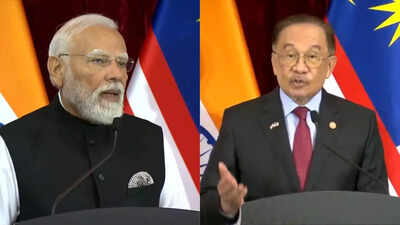
New Delhi: Prime Minister Narendra Modi was given a ceremonial welcome and guard of honor at the Perdana Putra Complex in Putrajaya on Sunday, a key moment of his two-day official visit to Malaysia. The reception came after he arrived in Kuala Lumpur a day earlier, when Malaysian Prime Minister Anwar Ibrahim personally greeted him at the airport.The visit comes months after India and Malaysia upgraded their relations to a comprehensive strategic partnership in August 2024. Against the backdrop of the changing global and regional security landscape, the bilateral talks between the two leaders are expected to focus on defense and security, economic cooperation, innovation, clean energy, semiconductors and people-to-people relations.
Perdana Putra holds welcome ceremony
Prime Minister Modi was welcomed with a red carpet of honor by a guard of honor at the Malaysian Prime Minister’s Office, Perdana Putra. The ceremony featured traditional music and dance performances that reflected the two countries’ shared cultural heritage.Malaysian Human Resources Minister Ramanan and Deputy Foreign Minister Luca Nisman attended the reception.Prime Minister Modi reflected on the welcome on
Jointly promote the Indian community
After the arrival ceremony, Prime Minister Modi and Prime Minister Anwar Ibrahim traveled together in the same vehicle to Kuala Lumpur to attend an Indian community event. The Prime Minister of Malaysia also participated in the program.Sharing the latest news about X, PM Modi wrote: “Celebrating the bond between the people of India and Malaysia! Prime Minister Anwar Ibrahim and I will be traveling to Kuala Lumpur for community programmes.”
Bilateral talks cover a broad agenda
The two leaders are scheduled to hold delegation-level talks on Sunday, with discussions expected to result in a number of agreements aimed at expanding cross-departmental cooperation.In his outgoing statement ahead of his visit, Prime Minister Modi said: “The historic relationship between India and Malaysia has grown steadily in recent years. I look forward to discussions with Prime Minister Anwar Ibrahim to further strengthen our comprehensive strategic partnership.”“We aim to deepen our defense and security ties, strengthen our economic and innovation partnerships, and expand our cooperation into new areas.”Ministry of External Affairs spokesperson Randhir Jaiswal said the visit had a “rich agenda and will be a major boost to the special partnership between India and Malaysia”.“This visit is expected to inject significant impetus into our close and multifaceted partnership,” he added.
Delegation-level talks between Modi and Anwar
During the delegation-level talks, Prime Minister Modi highlighted the growing bilateral ties, saying: “I have fully experienced the height and depth of this friendship and for that, I am deeply grateful. As Prime Minister, I am honored to have the opportunity to visit Malaysia for the third time. Our friendship is so deep and this is the fourth time I have the opportunity to meet you during your term. This in itself reflects our drive and energy. The progress and depth of our bilateral relationship in recent years is truly encouraging. I sincerely thank you for your valuable contribution in this regard…”
Cooperation in key areas continues to expand
Highlighting sectoral cooperation, Prime Minister Modi said: “Today, our cooperation is deepening in every sector, from agriculture and manufacturing to clean energy and semiconductors. We are also important partners in skills development and capacity building. Our defense and security cooperation is also growing.”He also congratulated Malaysia on its role in ASEAN, adding: “I congratulate you once again on your successful assumption of the ASEAN Chair. We believe that with Malaysia’s cooperation, our relationship with ASEAN will be further deepened and expanded. “
The diaspora is a living bridge
Emphasizing on people-to-people ties, Prime Minister Modi said: “The real strength of our relationship lies in our people-to-people ties. The nearly 3 million Malaysian citizens of Indian origin are a living bridge between our two countries…”Talking about his interaction with the Indian diaspora, he added: “Yesterday, I also had the opportunity to meet the Indian diaspora with you. It was a very special experience and I saw the personal respect and affection the diaspora have for you, which was evident yesterday. I feel a sense of pride. “
Terrorism, global instability and shared prosperity
Prime Minister Modi said that in the current global environment, cooperation between friendly countries is crucial. “Support from friendly countries is critical in our fight against terrorism. We firmly believe that the prosperity of India and Malaysia is closely linked. In an environment of global instability, India and Malaysia, our two maritime neighbors, must harness the full potential of our relationship.”He added: “The core message of my visit today is very clear: India wants to work with Malaysia to take our relationship to the next level and expand cooperation in every possible field…”
What Prime Minister Modi said in a joint press statement
During a joint press interaction, Prime Minister Modi described the India-Malaysia relationship as unique and deep-rooted.“India and Malaysia have a very special relationship. We are maritime neighbors. There has been a deep bond between our two peoples for centuries. Today, Malaysia is the second-largest country in the world with a population of Indian origin. Our civilization is bound up with a common cultural heritage and democratic values. “He said that bilateral relations have shown new momentum in recent years and praised Malaysian Prime Minister Anwar Ibrahim for his role in strengthening relations.“Over the past few years, our relations have taken new steps. My friend Prime Minister Anwar Ibrahim has made a special contribution to this. Cooperation between the two sides has been continuously strengthened in the fields of energy, infrastructure, manufacturing and other fields. Mutual investment in digital economy, biotechnology, information technology and other fields has increased. Tourism and people-to-people ties are also deepening. Drawing inspiration from these achievements, we have decided to advance our partnership with unprecedented speed and depth.“Prime Minister Modi said that Malaysia is his priority destination and this will be his first overseas trip in 2026.“…I was not able to come to Malaysia to attend the ASEAN Summit last year, but I promised my dear friends that I would visit Malaysia as soon as possible. I will come to Malaysia for my first overseas trip in 2026.”Outlining future areas of cooperation, Prime Minister Modi said security and emerging technologies will be key pillars.“In the security field, we will strengthen cooperation in areas such as counter-terrorism, intelligence sharing, and maritime security. We will also promote more comprehensive defense cooperation. In addition to artificial intelligence and digital technologies, we will further advance our partnerships in semiconductors, health and food safety. Today’s CEO Forum brings new opportunities for trade and investment. We will create a path to economic transformation through strategic trust.“
Remarks by Malaysian Prime Minister Anwar Ibrahim in a joint press statement
Prime Minister Anwar Ibrahim praised India’s economic rise and said Malaysia would benefit from expanded cooperation with New Delhi, especially within the Asean framework.“India is growing by leaps and bounds, which is an amazing rise in the international economic and trade arena, so if we can get more ways and opportunities to cooperate with India, beyond the US$18.59 billion we achieve by 2025, Malaysia will definitely benefit a lot in the context of ASEAN. A remarkable feat is the decision to use local currency wherever possible…”He emphasized the importance of education and academic exchanges and pointed out India’s growing global standing in the field of higher education.“Education remains vital. Many Malaysians are educated in India and there are increasing numbers of Indian students in Malaysia, but since the last decade or so, under the leadership of my good friend Prime Minister Modi, you have seen an amazing level of recognition for India’s centers of excellence in education. Not only is it comparable, but many of these centers have received outstanding recognition beyond well-known institutions in the West. So we will definitely explore this to increase the number of students studying subjects and fields in India…”Anwar Ibrahim also identified tourism and connectivity as priority areas, linking them to visa liberalization and increased air links.“…tourism and connectivity are areas we must focus more on. We have seen this incredible growth over the past year and we hope to benefit from the true Asia of Malaysia and the incredible India through visa liberalization and increased air connectivity. I’ve been to India several times and visited hundreds of places, but I still don’t think I’ve traveled all over India. Prime Minister, this country is so big, it is an amazing country, worth visiting, learning about history, culture, art, in addition to new advancements in technology...”On regional and global issues, he said the discussions with Prime Minister Modi were a reflection of trust and candor.“On regional and international issues, I must express appreciation because in my discussions with Prime Minister Modi, it was not just the normal biased platitudes and diplomatic exchanges. This is an exchange between true friends, full of trust and understanding…”The Malaysian prime minister also praised Prime Minister Narendra Modi for his role in global peace efforts and announced his support for opening a new Indian consulate.“I must also take this opportunity to express my greetings and gratitude to Prime Minister Narendra Modi for his strong commitment to support all peace efforts around the world, whether in Ukraine, Russia or in the Middle East, especially in Gaza. His commitment to supporting the peace process is clear, so of course I must express my appreciation. As a sign of our excellent relations, I immediately agreed to support the Indian government’s decision to open an Indian Consulate in Kota Kinabalu, Sabah...”
Otni Butman: South Africa’s best death bowler, watch T20 World Cup at home | Cricket News
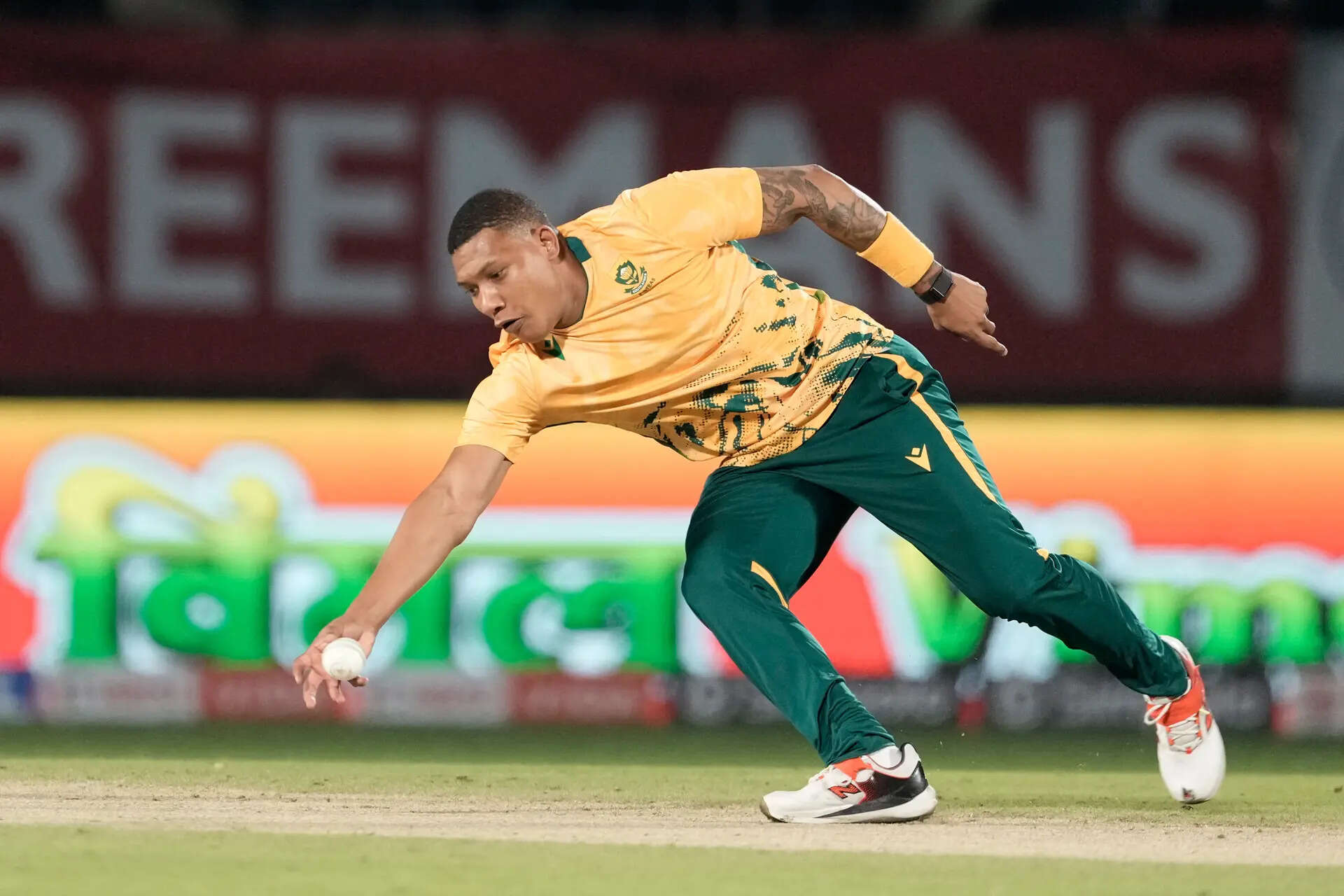
New Delhi: South Africa’s T20 World Cup preparations have been marred by injury problems. Ryan Rickton Tristan Stubbs was substituted Tony DeZorzi and Donovan Ferreira. David Miller missed the series against West Indies but is considered available for the 20-team tournament co-hosted by India and Sri Lanka.But there was considerable confusion in the bowling department. Ottneil Baartman was left out of the squad despite taking five wickets, including four wickets, in three matches against India in December.
The decision to exclude Bartman became even more controversial when he claimed he was unaware of the decision. This is in stark contrast to Luan Dele Pretorius, who despite not being in the squad, received a call from selectors.Push boundaries with our YouTube channel. Subscribe now!The conflict escalated further when selectors convener Patrick Moroney said he had called Bartman after he was left out of the squad. At the same time, he did reveal the decision to exclude Bartman.
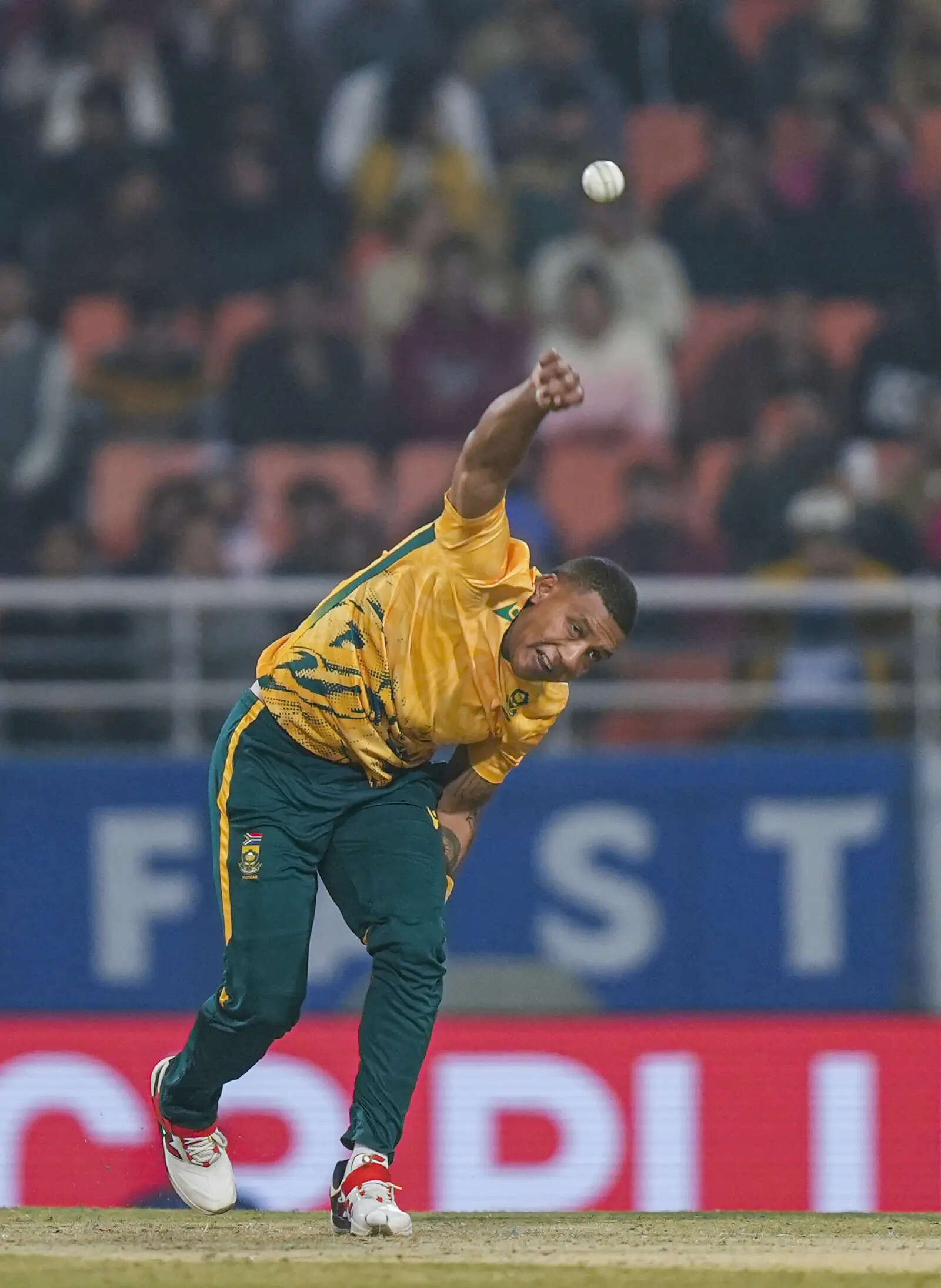
South Africa’s Ottneil Baartman bowls during the third T20 cricket match between India and South Africa in Dharamshala, India, Sunday, December 14, 2025. (AP Photo/Ashwini Bhatia)
“Unfortunately, in the makeup of the team, there’s no room for (Longi) Ngidi and Bartman. They bowl at more or less the same pace and have the same change,” Morrone told SportsBoom.“So, you have to select a player and O’Tneil was very clear in our conversation on January 1 that he is part of the substitute list and he will be monitored. If the need arises then we will push his button if the need arises.”Even though his legs were tied very tight later in SA20, Good luck Already done. The same goes for 19-year-old Kwena Maphaka, although he took just 4 wickets in 8 games in the recently concluded SA20 campaign.Bartman, on the other hand, emerged as the leading wicket-taker in the SA20 competition. The 32-year-old took 20 wickets in 9 games at an average of 13.55 and an economy rate of 9.13. He scored a hat-trick in five attempts against Pretoria Capitals, his only strike of the season. Ngidi, by the way, is another player to score a hat-trick this season.A string of wickets in the fourth edition made him the highest wicket-taker in SA20 history with 61 wickets – just one ahead of Marco Jansen – at an average of 15.15 and an economy of 8.32.Voices questioning Bartman’s exclusion from the T20 World Cup squad have found a familiar tone in former South Africa seamer Dale Steyn.The Proteas legend, who worked with Bartman for three seasons as bowling coach at Eastern Cape Sunrisers, wrote on social media: “He is the highest wicket-taker in SA20, won the league twice and reached the final, and let me remind you, this is a comparison [competition] There are 4 international players (usually batsmen) and all PROTEAS! He’s number one,” Steyn wrote on Twitter. “That’s top quality but he will be sitting at home this 2020/20 season.“
A late bird from the ostrich capital of the world
In a country where cricket is a rich man’s game and players are drafted from elite private schools and academies, Bartman, 32, is an outsider. He was born in the small town of Oudtshoorn in the Klein Karoo region, nicknamed the “ostrich capital of the world”.One of two children raised by a single mother, Bartman grew up without a father figure. His mother, Maria, was the breadwinner and ensured that neither child went to bed with an empty stomach.
New Chandigarh: South Africa’s Ottneil Baartman bowls during the second T20 international cricket series between India and South Africa at Maharaja Yadavindra Singh International Cricket Stadium, New Chandigarh. (PTI Photo/Shiva Sharma) (PTI12_11_2025_000514A)
“My mother was both a mother and a father. I never had a father figure. I met my father, but he was never around for me,” Bartman has previously said.“Raising me with nothing and having me here means the world to me. Without her, I wouldn’t be here.“It means a lot to me. Even though she had nothing, she made it all work. I can’t help but get emotional, but it’s awesome to be able to raise two kids the way she did. The most important thing to me right now is that I know I’m playing for my family.”His first introduction to cricket was at the local Bridgeton Sports Ground, where his cousin Douglas played for the United Stars Cricket Club. Television didn’t exist until Bartman was a teenager, and it was Bartman’s only tryst with the sport. Everything he learned off the field was replicated back home, on the streets, with his friends.The dream of playing for the Proteas meant he needed to leave Oudtshoorn, where top-flight domestic cricket remains absent. After playing provincially for the South West and Northern Cape, he moved to the Free State before joining the more favored Dolphins in KwaZulu-Natal.
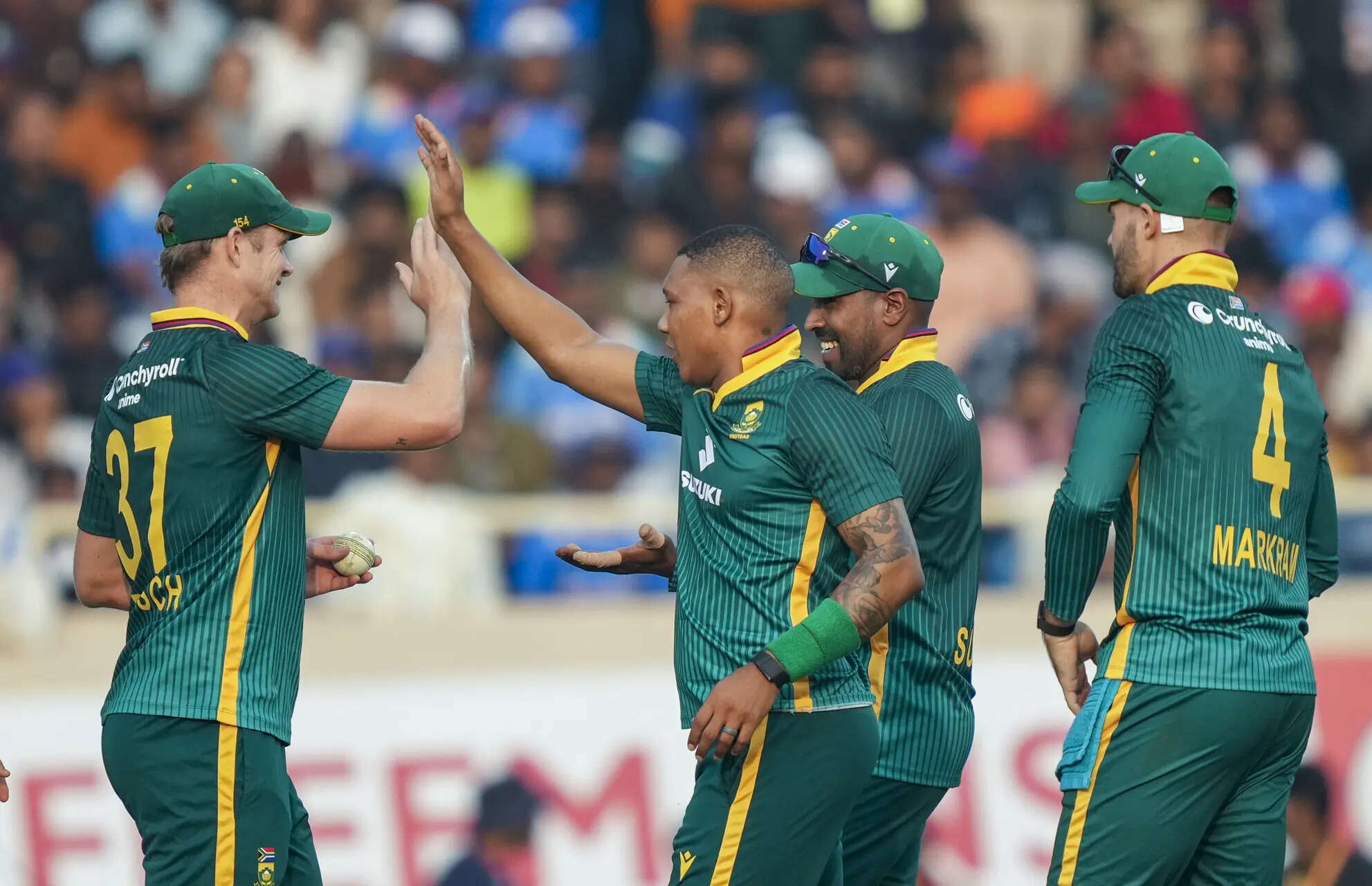
South Africa’s former center fielder Ottneil Baartman celebrates with his teammates after taking the wicket of India’s Washington Sundar during the first ODI cricket match between India and South Africa at the JSCA International Stadium Complex in Ranchi, Jharkhand. (PTI Photo/Kamal Kishore)(PTI11_30_2025_000306B)
It took ten years of hard work in domestic cricket to gain recognition and be selected for the national team. In 2021, he was called up to the South Africa Test team, but did not make the match squad. In the same year, he became the inaugural recipient of the Makhaya Ntini Cricket Power Award.The right-arm seamer will finally get his due in May 2024 against the West Indies. Soon after, he made his ODI debut against Ireland in October. Despite participating in the 2024 T20 World Cup, Bartman has played only 23 international matches, taking 30 wickets at an average of 23.2.Although he has spent most of his time on the sidelines for the Proteas, the 32-year-old has excelled in SA20 and T20 franchise cricket. Paarl Royals paid R5.1 million (Rs. 5.1 million) for him in the 2025 SA20 auction. Elsewhere, he has featured in the IPL with Delhi Capitals, the England T20 Blast with Hampshire and as an injury replacement for Texas Super Kings in Major League Cricket (MLC).Now that he is a father, his goal is the same as his mother’s – to put family first.
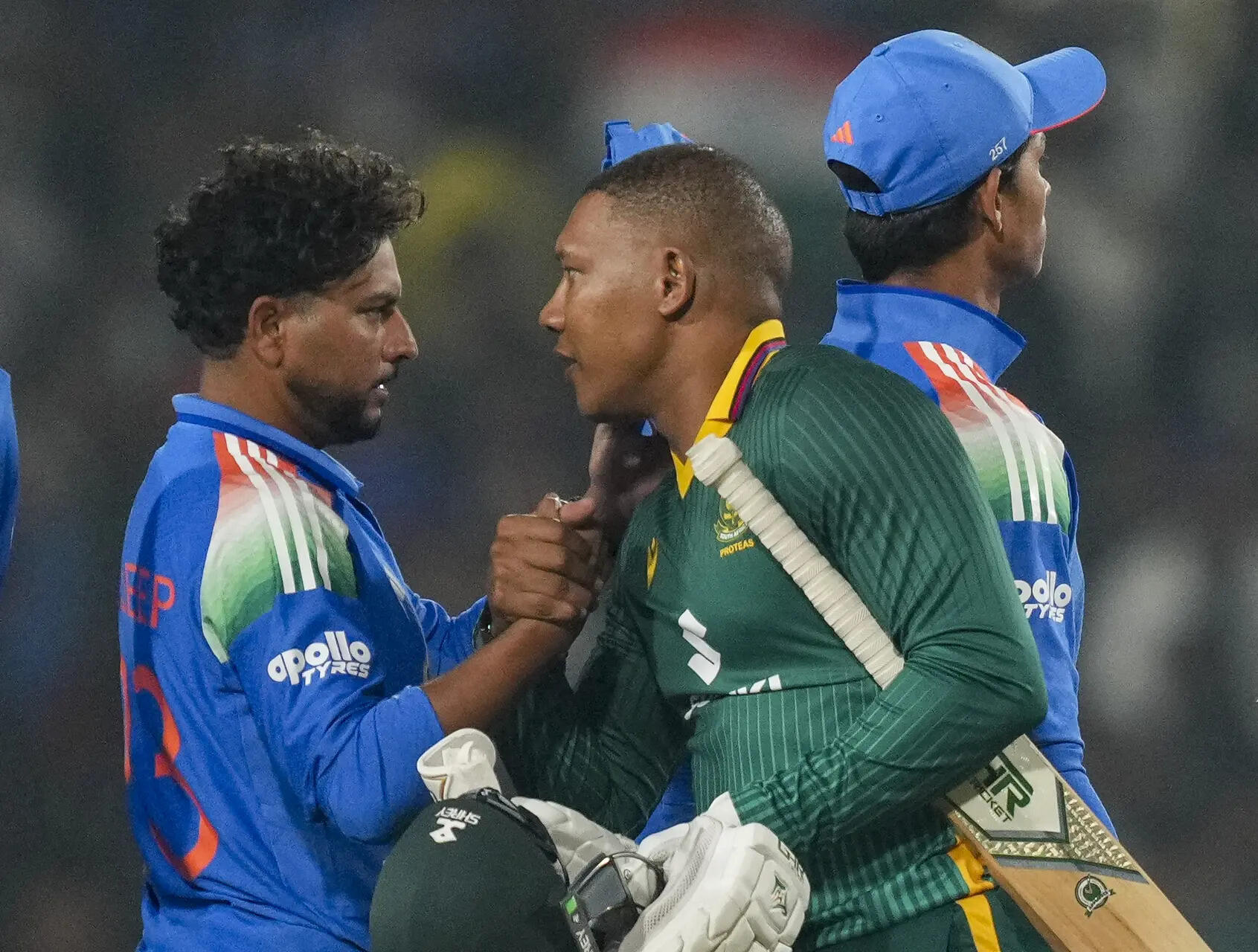
India’s Kuldeep Yadav (left) is congratulated by South Africa’s Ottneil Bartman after winning the first ODI cricket match of the series between India and South Africa at the JSCA International Stadium Complex in Ranchi, Jharkhand. (PTI Photo/Kamal Kishore) (PTI11_30_2025_000571B)
“My daughter, my son, my wife are all home now. I guess they’re screaming when they come home now, but yeah, it means a lot to my family,” he said after scoring a hat trick and a whistle this season.“I’ve barely seen them in the last four months. Obviously, I was in Pakistan and then I went to India from there and then straight from there, it was the SA20.“Then, probably from here, I go back to the domestic team. So, probably it’s them (his family) because they sacrifice a lot. I don’t see them that often, but, yes, they support me off the pitch.”
Huzhuman likes Mohammad Shami
Ironically, Bartman, who is part of South Africa’s 2024 T20 World Cup squad, was rewarded for his 18-wicket haul in the second season of SA20. Bartman had yet to feature for his country when the squad was announced, but he took five wickets in the match, including four against the Netherlands. His shining moment came against Nepal, where he successfully defended his title by seven points in the final round.Since then, he has played just 11 matches in the South 32 T20Is, taking 13 wickets in the process. Unlike Ngidi and his colleagues. Bartman prides himself on being slower and having a diverse arsenal, but Bartman relies on his ability to let the ball slide through him.In the Indians’ case, it would have been a different story if the ball had come faster, stayed low, and gone under the batsman’s swing arc.
polling
Do you think Otni Buteman deserves a place in South Africa’s T20 World Cup squad?
Steyn early on likened Bartman to an Indian seamer who, despite doing his job effectively in domestic cricket, also fails to get his dues.“He reminds me of Mohammad Shami, his seams are down, his wrists are good, his lines are very straight, so he rarely bowls a short wide cut, or a ball that falls down the leg. Similar to Anrish Nortje, his lines are barrel straight, his seams are very good. There are few issues with him, he is easy to coach, he is very easy to zone in a particular area, which is important when you are playing at the highest level,” said the legendary bowler.Unfortunately, all this means nothing as South Africa sit at home with their best white-ball bowlers heading into the T20 World Cup.
‘Abhi still has a long way to go’: Vaibhav Sooryavanshi humbly says after conquering the world. cricket news
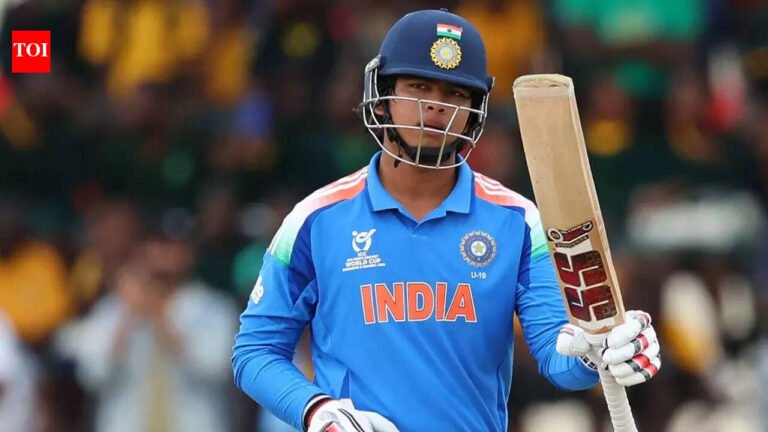
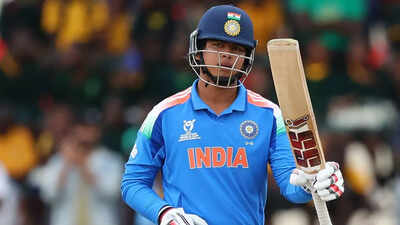
New Delhi: Fourteen-year-old Vaibhav Sooryavanshi summed up this historic night in simple and heartfelt words – be grateful for the moment, be proud of your contribution and stay awake for the journey ahead. “Abhi bohot dur tak hai jaana,” the teenage star wrote after scripting one of the most extraordinary performances in Under-19 World Cup history.Sooryavanshi scored a brilliant 175 off just 80 balls to help India beat England by 100 runs in the final in Harare on Friday to win the ICC Under-19 World Cup for the sixth time. His batting was a stunning blend of fearless batting and maturity beyond his years – completely eclipsing England’s Caleb Falconer’s heroic century.
After India opted to bat, Suryavansh produced a record-breaking masterclass, hitting 15 fours and 15 sixes to propel his team to a daunting 411/9. Skipper Ayush Mhatre scored a composed 53 while Abhigyan Kundu’s brisk 40 ensured that India never lost momentum. England struggled after a promising start, slipping from 142/2 to 177/7. Falconer had a lonely battle with 115 off 67 balls, but that target proved too far off as England’s wait for a second U-19 title stretched into 1998.Later, the young batting prodigy from Samastipur in Bihar posted a picture with the trophy on Instagram and recalled the moment. “I really enjoyed being there and glad I could contribute to this win, which will always hold a special place in my heart,” he wrote, expressing his gratitude for the overwhelming support. The Indian team dominated the match and earned critical acclaim from the cricketing fraternity. Virat KohliHe, who captained India to the U-19 Championship in 2008, praised the team’s continued excellence at the age-group level while head coach Gautam Gambhir Claim: “The bright future is here.”For Sooryavanshi, though, the message is clear – this is just the beginning.
China conducts secret nuclear test days after Galwan clash in June 2020: US | India News
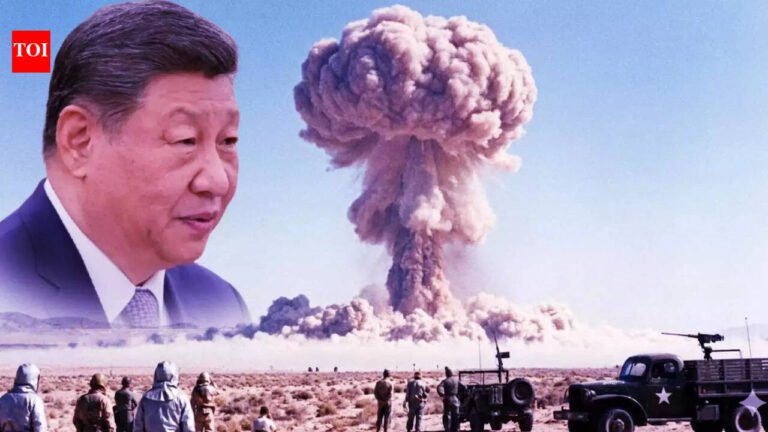
New Delhi: The United States has accused China of carrying out a secret nuclear explosion test on June 22, 2020, just days after a clash in the Galwan Valley that killed 20 Indian soldiers, an allegation it said underscores the need for a new global arms control framework after the expiry of New START.On June 15, 2020, a week before the alleged nuclear test, Indian and Chinese troops clashed in Ladakh. Twenty Indian soldiers were killed, while reports at the time estimated Chinese casualties at more than 35.U.S. Deputy Secretary of State Thomas G DiNanno said China used technology designed to evade international monitoring systems when conducting nuclear tests. “China has conducted nuclear explosion tests, including preparations for tests with a specified yield of hundreds of kilotons…China has used decoupling – a method that reduces the effectiveness of seismic monitoring – to hide its activities from the world. China conducted one such nuclear test on June 22, 2020,” DiNanno said in X.The date cited by US officials comes a week after the June 15, 2020, standoff between Indian and Chinese troops in the Galwan Valley in eastern Ladakh. Twenty Indian soldiers were killed in the clashes, while intelligence reports at the time estimated Chinese casualties at more than 30.
Allegations surface after New START expires
DiNanno’s comments came as New START, the last nuclear arms control agreement between the United States and Russia, officially expired this week, leaving the strategic arsenals of the world’s two largest nuclear powers unfettered for the first time in more than five decades.Di Nanno said: “The restrictions on warheads and launchers in the New START Treaty, signed in 2010, will no longer apply by 2026. By then, one nuclear state is expanding its nuclear arsenal at a scale and speed not seen in more than half a century, while the other nuclear state will continue to maintain and develop a large number of nuclear systems without being restricted by the terms of the New START Treaty.”He said the treaty imposed uneven restrictions on nuclear powers.“…Almost all U.S. deployed nuclear forces are subject to New START, while only a small portion of Russia’s much larger stockpile…China has exactly zero nuclear weapons,” he said.
US urges new nuclear architecture
Di Nanno said China’s so-called secret tests, Russia’s violations and the growth of global nuclear stockpiles made it necessary to seek a new arms control framework suitable for today’s threats.“The combination of Russia’s series of violations, the build-up of global stockpiles, and flaws in the design and implementation of New START has created an urgent need for the United States to call for a new architecture to deal with the threats of today, not those of bygone eras,” he said.He added that Washington was now able to strengthen deterrence while remaining open to meaningful negotiations.“The United States is no longer constrained by the political and military environment of 2010 and the treaties they entered into, and in response to the destabilizing behavior of these other countries, the United States can now finally take steps… to strengthen deterrence on behalf of the American people and our allies,” DiNanno said.
Promote trilateral talks with China
After the expiration of the New Strategic Arms Reduction Treaty, the United States once again called on China and Russia to conduct trilateral nuclear arms control negotiations. Washington has said any future deal must include Beijing, but China has firmly rejected the demand.China has denied U.S. accusations of secret nuclear tests and said it will not participate in disarmament talks at this stage, saying its nuclear arsenal is still far smaller than that of the United States and Russia.
Trump had earlier hinted at testing
U.S. President Donald Trump has previously hinted at similar accusations but gave no details. On October 31 last year, Trump said Washington would begin nuclear tests “on an equal basis” with Moscow and Beijing, but did not elaborate on the nature of such tests.Analysts warn that the end of New START marks a turning point for global nuclear stability, with the lack of formal restrictions raising the risk of a new arms race amid rising geopolitical tensions and mistrust.