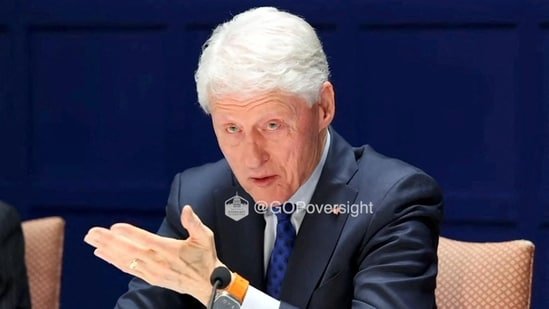

It was a turn of history that few expected. A Cardiff-born Jewish billionaire whose parents fled Nazi Germany now says he is seeking German citizenship because he feels uneasy about life in the UK. Sir Michael Moritz, one of the UK’s richest businessmen and a veteran Silicon Valley investor, described the UK as “an uncomfortable place for Jews today”, arguing that anti-Semitism feels more visible and more socially tolerated than many would like to admit.Moritz, whose grandparents were murdered in the Holocaust, said his decision to apply for a German passport was less about relocation and more about peace of mind. He believes that Germany has made Holocaust commemoration the core of its citizenship. The symbolism is amazing. In his view, the country that once deported his family is now undergoing a deeper institutional reckoning with anti-Semitism than he sees in modern Britain.
Billionaires Influenced by Jewish History
Born in Cardiff in 1954, Moritz rose to prominence at Sequoia Capital, backing early investments in Google and Yahoo during the dot-com boom. His financial success made him the richest Welshman in history, but his memoirs, The Australian, reveal a man with a deep sense of identity and exile.His grandparents, Max and Minnie Moritz, were killed in the Holocaust. Through archival research, he discovered that relatives were photographed by the Gestapo during their deportations. His parents fled to England and rebuilt their lives in Wales. Even in Cardiff, however, he recalls a distinctly different feeling, describing how his surname appeared alone in the phone book, a silent reminder of his specialness.
Britain’s anti-Semitism debate
Moritz’s comments come as anti-Semitism is hotly debated in the UK. Reports of anti-Semitic abuse, vandalism and threats have reached record levels in recent years, particularly during conflicts in the Middle East, according to the Community Safety Trust, which monitors anti-Semitic incidents.The 2025 attack on a synagogue in Manchester’s Heaton Park area marked a particularly shocking moment, prompting police to step up security at Jewish schools and places of worship. Jewish community leaders warn that some families feel heightened anxiety about visible expressions of identity, such as wearing religious symbols associated with Jewish institutions or school uniforms.Moritz believes that more than the statistics, it’s the atmosphere that unnerves him. In his view, casual remarks, hostility on social media and the notion that anti-Semitism can be minimized or redefined in political debates all contribute to a sense of unease.
Immigration, ideology and political fault lines
His comments were also intertwined with the fierce political debate unfolding in Britain. Opposition figures accuse the current Labor government of allowing Britain to be too lax on immigrants and not tough enough on extremist networks. A record number of small boats crossing the English Channel has fueled the debate, with critics arguing border enforcement has failed to stop irregular arrivals.Many of those arriving by small boats come from crises in Muslim-majority countries such as Afghanistan, Iran, Iraq and Syria. This fuels claims by some politicians that the government is too cautious in addressing Islamic radicalization and too hesitant to directly confront ideological extremism. Security services continue to warn that Islamic extremism remains a major national security concern, along with far-right extremism.Opposition MPs accused the government of allowing the UK to become a “safe haven” for extremists, although they pointed to counter-terrorism legislation, deportations and intelligence operations. Yet the battle for perception continues, and immigration has become one of the country’s most politically volatile issues.In an already combustible environment, Moritz’s comments about feeling uneasy about being a Jew in Britain were interpreted by some as part of wider anxieties about social cohesion, border controls and the direction of the country.
Why Germany now?
Germany, by contrast, has integrated Holocaust commemoration into its legal and educational framework. Denying the Holocaust is a criminal offense and school curricula explicitly confront Nazi-era crimes. Since 2021, the citizenship law has been expanded, allowing more descendants of those persecuted between 1933 and 1945 to regain German citizenship.For Moritz, institutional recognition provides what he calls a form of insurance. He doesn’t think Germany is free of anti-Semitism, but he thinks Germany’s modern national identity is rooted in confronting that history, rather than avoiding it.
ironic and disturbing symbolism
The irony at the heart of the story explains its resonance. A Jewish descendant of a Holocaust victim seeks German citizenship because he feels uneasy in Britain, forcing him to make jarring comparisons between the past and the present.Whether one agrees with Moritz’s assessment or thinks it is overblown, his decision highlights a deeper unease that exists among parts of Britain’s Jewish community. It also reveals how debates over immigration, ideology and minority protection are increasingly intertwined with questions of belonging.History doesn’t repeat itself, but in Moritz’s case, it seems to have come full circle in a way that few imagined.