Home Blog Page 330

NASA prepares for launch of Artemis 2 lunar mission: Countdown to April 1 launch begins, including mission details, full schedule, livestream and more |

0

NASA prepares for launch of Artemis 2 lunar mission: Countdown to launch begins on April 1, including mission details, full schedule, livestream and more

NASAThe upcoming Artemis 2 mission is the next crewed mission in the agency’s plan to explore deep space. This mission is the next step after the unmanned Artemis 1 mission. The mission will carry people and launch from the Kennedy Space Center in Florida using a Space Launch System rocket and an Orion spacecraft.The mission will take astronauts deep into the moon and back to Earth. The mission uses the Space Launch System rocket and the Orion spacecraft to test systems such as the spacecraft’s navigation, life support, propulsion and communications systems while a crew is aboard.

NASA Artemis II manned test flight and mission goals

Artemis 2 was a manned test flight. It will launch astronauts beyond low Earth orbit for the first time in the Artemis program. The mission is focused on system validation rather than exploration of the lunar surface.The spacecraft will follow a free return trajectory around the moon. This path allows Orion to fly around the far side of the moon and back without the need for major propulsion maneuvers. This is a planned route to support mission safety during early deep space flights.

Artemis II mission details: launch date, time and duration

Launch is expected no earlier than April 1, 2026the takeoff target is 6:24 PM (ET). Mission duration is estimated to be Lasts 10 days According to NASA. After launch, the rocket will put Orion into Earth orbit. The upper stage will then perform a translunar injection and send the spacecraft to the moon.After flying past the moon, Orion will begin its return journey and re-enter the Earth’s atmosphere. The mission will end with a splashdown in the Pacific Ocean, followed by recovery operations.

who is Artemis 2 crew and their roles

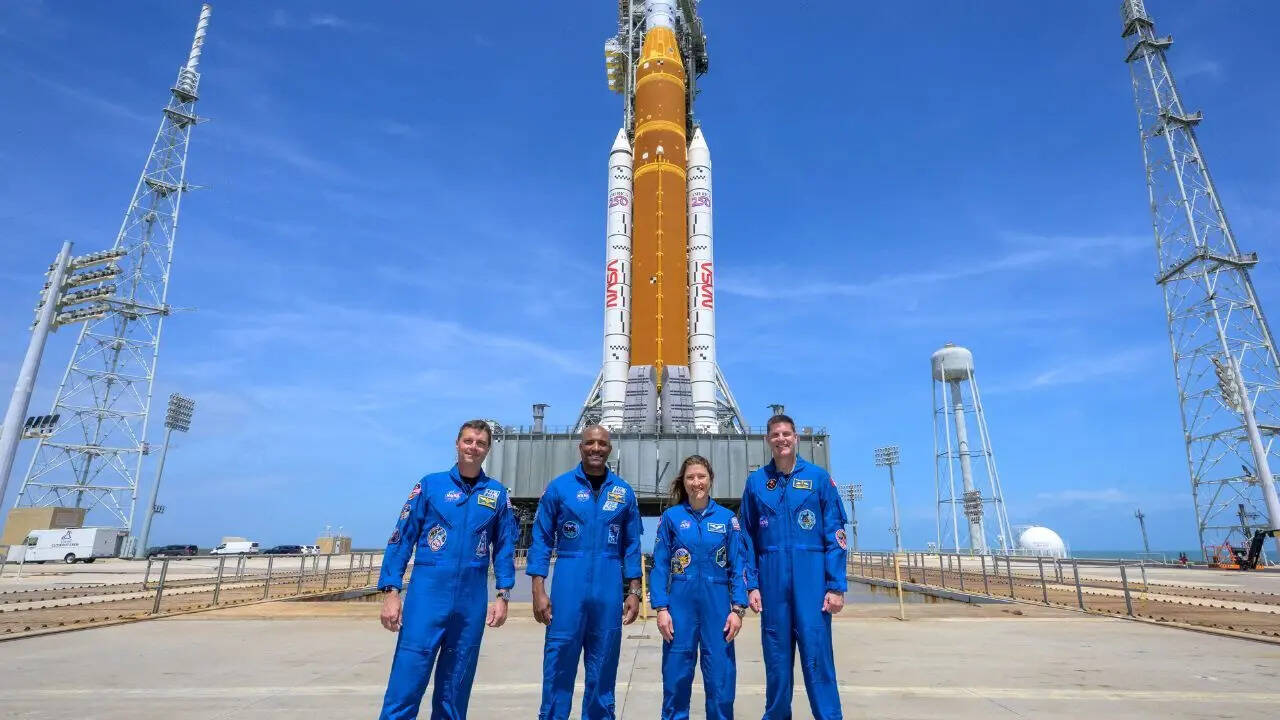
Artemis 2 crew

Computer: NASA

The Artemis 2 crew includes four astronauts:

  • Reed Wiseman, Commander
  • Victor Glover, pilot
  • Christina Koch, Missions Specialist
  • Jeremy Hansen, Mission Specialist (CSA)

Each crew member has a clear operational role. The commander leads mission execution. Pilots assist with spacecraft systems and navigation. Mission specialists support system monitoring, communications and onboard procedures. Crew training includes simulations, emergency procedures and spacecraft system operations. Their responsibilities span the launch, transportation and re-entry phases of the mission.

Artemis II launches today: How to watch live

Viewers can follow NASA’s official broadcast on YouTube and NASA+, the agency’s free streaming platform. The YouTube livestream will begin at 7:45 a.m. ET on Wednesday and will cover tank operations and continue throughout the 10-day mission. The NASA+ broadcast offers shorter selections starting at 12:50 pm ET, focusing on key moments such as crew attire, and concluding with the deployment of solar panels following Orion’s launch.watch here:

watch

NASA’s Artemis 2 crew launches to moon (official broadcast)

NASA’s Artemis II complete 10-day schedule

date
Time (Eastern Daylight Time)
Event details
Wednesday, April 1 7:45 am Coverage of tank operations begins with live broadcasts and commentary
12:50 noon NASA+ launch coverage begins; YouTube continues after solar array deployment

About 2.5 hours after launch
Press conference after the press conference
(Time depends on departure)
Thursday, April 2 8:30 pm Mission briefing after menstrual injection burns
10:24 pm Live streaming down events
Friday, April 3 3:30 pm mission status briefing
8:44 pm Live streaming down events
Saturday, April 4 12:59 noon Live CSA downlink events
4:34 pm Live streaming down events
5:15 pm mission status briefing
Sunday, April 5 12:14 noon Live CSA downlink events
3:30 pm mission status briefing
Monday, April 6 12:45 noon NASA+ Moon flyby coverage begins
1:45pm Astronauts on track to break Apollo 13 distance record
10:39 pm Live streaming down events
Tuesday, April 7 2:29 pm Crew communication with International Space Station astronauts (audio only)
4:00 pm mission status briefing
Wednesday, April 8 3:30 pm mission status briefing
7:09 pm Live CSA downlink events
Thursday, April 9 3:30 pm mission status briefing
5:59 pm Crew press conference
7:54 pm Live streaming down events
Friday, April 10 6:30 pm NASA+ coverage of the return begins
8:06 pm Pacific Ocean Splash
10:35pm Post-splash press conference

Source: NASA

Artemis 2: Design details of the Space Launch System rocket and Orion spacecraft

According to NASA’s report, the launch vehicle will be the Space Launch System, which consists of four RS-25 engines in the rocket’s core stage and two solid rocket boosters. The Orion spacecraft is designed to carry astronauts to the moon, meaning it will go beyond Earth’s orbit. The Orion spacecraft has a crew module, a service module and a launch abort system.The launch abort system is designed to ensure separation of the crew module in the event of an emergency during launch.

Artemis 2 launch countdown and procedures

Prelaunch operations begin days before liftoff. Engineers perform systematic inspections of various components of rockets and spacecraft. These inspections involve diagnostics of engines, avionics, batteries and communications systems.The Orion spacecraft’s flight batteries are fully charged. Batteries are required during launch and early flight. The core level battery is also charged. Batteries are required during launch. Engineers perform pressure checks on the astronaut suits aboard the Orion spacecraft to ensure they are functioning properly. As the countdown process nears its final stages, non-essential personnel leave the launch pad area. The ground launch sequencer begins operation. The ground launch sequencer is an automated system that performs the final countdown sequence. The system issues commands during the countdown, including engine ignition, valve operation, and system transitions.

Weather conditions for launch and their significance

Weather plays a key role in launch preparations. Forecasts for the launch window indicate overall favorable conditions. Monitoring includes cloud cover, wind speed, precipitation and possible electrical activity. NASA is also working with the U.S. Space Force, particularly its space launch Delta 45, to continually assess conditions. Weather restrictions include wind, cloud and lightning conditions. Surface and aloft winds are also monitored to ensure vehicle stability. Additionally, space weather was assessed, including solar flares and charged particle activity that could interfere with communications and navigation systems. As of NASA’s latest blog update on March 30, the weather forecast shows an 80% chance of favorable weather conditions, with cloud cover and possible strong winds on the ground being the main weather issues.Real-time monitoring continues until liftoff, and any violation of weather standards will cause delays in protecting the crew and mission hardware.

Uttar Pradesh CM Yogi announces launch of 250 electric, CNG vehicles; strengthens Lucknow’s “clean, smart, green” vision

0

In a post on

Lucknow: Chief Minister of Uttar Pradesh Yogi Adityanath The Lucknow Municipal Corporation will take delivery of 250 electric and CNG vehicles on Wednesday as part of the state government’s efforts to make the city cleaner and more sustainable.In a post on

watch

Global war sparks panic, rumors spread, UP CM Yogi Adityanath warns against hoarding of LPG

“Under the successful guidance of Prime Minister Hon’ble @narendramodi ji, the new Uttar Pradesh is transforming itself into a smart world-class urban hub and achieving the goal of ‘zero waste to zero carbon emissions’. In this sequence, to ensure ‘easy life’ for the residents of Lucknow, I will be involved in the rollout plan of 250 electric and CNG vehicles of the Lucknow Municipal Corporation in the near future,” the CM wrote.Describing these vehicles as a twin-engine symbol of the government’s commitment, CM Yogi emphasized their role in strengthening waste management infrastructure in Lucknow.“These vehicles are a symbol of the twin-engine government’s commitment to cleanliness, sustainability and environmental protection. Through them, Lucknow’s efforts to be clean, smart and green will gain greater momentum,” he said. Meanwhile, the Chief Minister on Monday conducted a routine ‘Janata Darshan’ at the Chief Minister’s residence in Lucknow to interact with citizens, listen to their grievances and interact with them as part of his routine outreach programme.During Janta Darshan, officials received instructions from the chief minister to address issues highlighted by the public. The program is part of CM Yogi’s ongoing outreach to maintain direct contact with residents.Highlighting Uttar Pradesh’s record in government employment, the chief minister on Sunday said the state had provided nine lakh government jobs in the last nine years and emphasized transparency in the recruitment process. “Uttar Pradesh is the most populous state in the country. The state has a population of 250 million and in the last nine years, we have provided government jobs to 9 lakh youth. No one, not even the opposition, can question the transparency of a single job or the selection process,” CM Yogi said at the appointment letter distribution ceremony for 665 paramedics in Lucknow.

Fiscal Year 2027 H-1B Cap Selection: USCIS Completes Process and Issues Statement

0

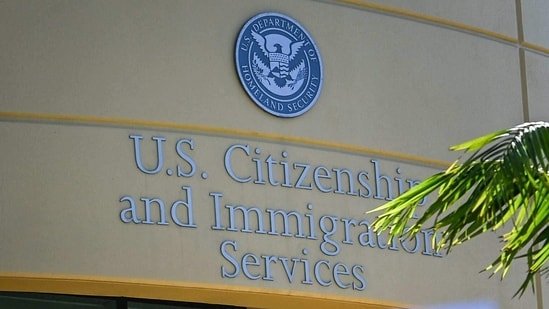
U.S. Citizenship and Immigration Services says annual quota of 85,000 has been reached H-1B FY 2027 beneficiary caps. It also completes regular and advanced degree selection draws.

FY 2027 H-1B cap selection: USCIS completes process and releases statement (AFP)

The agency also said it has notified all potential applicants for selected beneficiaries that they can submit H-1B cap petitions for those beneficiaries.

“FY 2027 H-1B cap petitions, including those eligible for the advanced degree exemption, may be submitted to immigration office Beginning April 1, 2026, if an application is submitted for a selected beneficiary and based on valid registration,” a statement from USCIS on Tuesday, March 31 said.

Learn more | Did Trump effectively end the H1B visa program?

USCIS states that the time limit for filing H-1B cap petitions is at least 90 days. It also lets applicants know that they must include a copy of the applicable selection notice with their FY 2027 H-1B cap application.

The USCIS also stated that it will accept the new version of Form I-129 released on February 27, 2026.

Changes to the H-1B Selection Process

The H-1B screening process has now been changed to a salary-based model. As part of this model, priority will be given to applicants with higher salaries and skills. The change is intended to align visa allocations with labor market needs and reduce abuse of the system.

Learn more | Why does the United States increase visa processing fees? Check out the new rates for H-1B, F-1, and O-1 petitions

One of the changes is the previously introduced significant fee component of a $100,000 fee that will be charged in limited circumstances when an employer sponsors a worker outside the United States. The measure is aimed at encouraging domestic hiring rather than reducing reliance on overseas hiring.

Currently, Congress has set the regular annual cap for the H-1B category at 65,000. An additional 20,000 petitions were filed on behalf of beneficiaries who have earned a master’s degree or higher USA Higher education institutions are exempt from the cap.

According to USCIS regulations, H-1B cap petitions filed on behalf of the beneficiary must contain and be supported by the same identity and position information as the selected registration. USCIS also said applicants must submit evidence of a valid passport or travel document used by the beneficiary at the time of enrollment.

Iran’s Supreme Leader Pezeshkian and Araghchi “smiled, socialized, and took selfies” World News

0

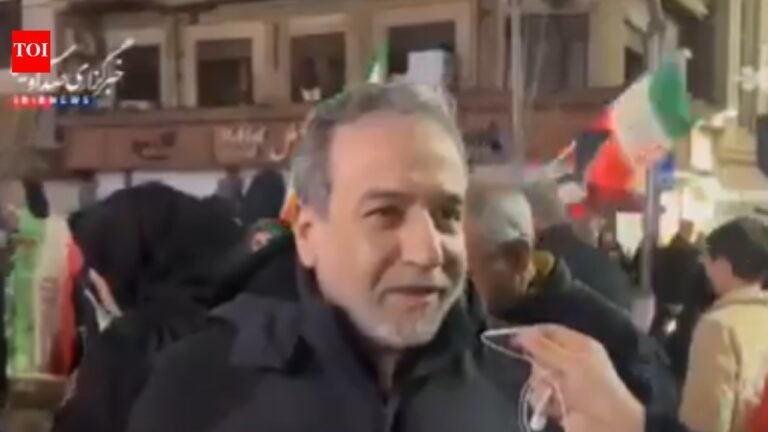
Screenshot source: X/@ActualidadRT

Iranian President Masoud Pezeshkian and Foreign Minister Abbas Araghchi, along with senior officials in the capital Tehran, made a rare public appearance on Tuesday to attend a pro-regime rally in the city to mark Islamic Republic Day.The officials were seen casually mingling with attendees, taking selfies and walking through crowds without apparent security amid rising tensions in the Middle East and ongoing threats against Iran’s senior leaders.

watch

Houthi armed forces attack southern Israel; alarm sounds in strategic Beersheba; Red Sea flashpoint returns

“I came among them to draw energy from the local movement and enjoy this unity and the cohesion of the people,” Araghchi told reporters. Videos of their participation quickly circulated on social media, according to Ynet News. Pezeshkian and Araghchi were last seen in public on Iran’s Quds Day, along with former security chief Ali Larijani, who was killed in a U.S.-Israeli attack days later.Their emergence comes after Israeli Prime Minister Benjamin Netanyahu publicly listed the “top ten plagues” against Iran, including attacks on the country’s senior leadership, and claimed Israel was “systematically suppressing the terror regime.”In his speech to the European Council, Pezeshkian reiterated Iran’s willingness to end the ongoing conflict as long as “basic conditions are met, especially the guarantees needed to prevent the recurrence of aggression.” The statements reflect Tehran’s counter-proposal to the US’s 15-point plan, calling for the establishment of mechanisms to prevent a resumption of hostilities between Israel and the United States.Araghchi confirmed ongoing communications with US Middle East envoy Steve Witkoff but denied they were in talks. “What is happening now is not a negotiation but an exchange of information, either directly or through our friends in the region,” he told Al Jazeera. “We have not yet made any response to the 15-point proposal of the United States. Our conditions for ending the war are clear. We will not accept a ceasefire.”Reports indicate that Araghchi and Knesset Speaker Mohammad Bagher Ghalibaf were temporarily removed from U.S. and Israeli hit lists about a week ago to allow for potential talks, but they have not yet taken place. Iranian leaders stressed that they are ready to defend the country under any circumstances.

Electricity Amendment Bill 2025: Why farmers, workers and states are resisting

0

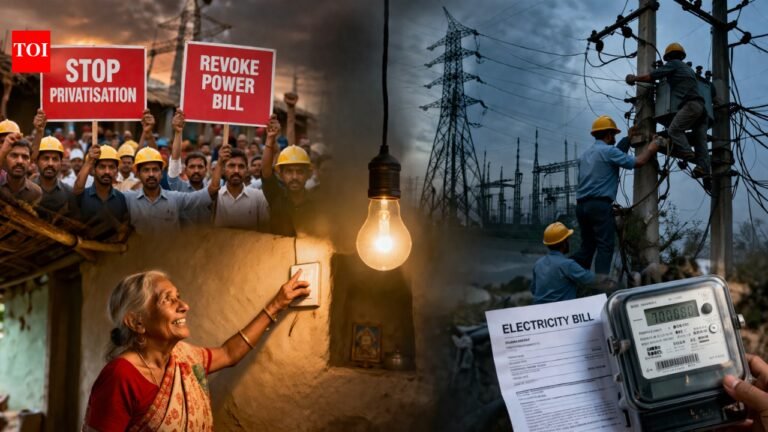
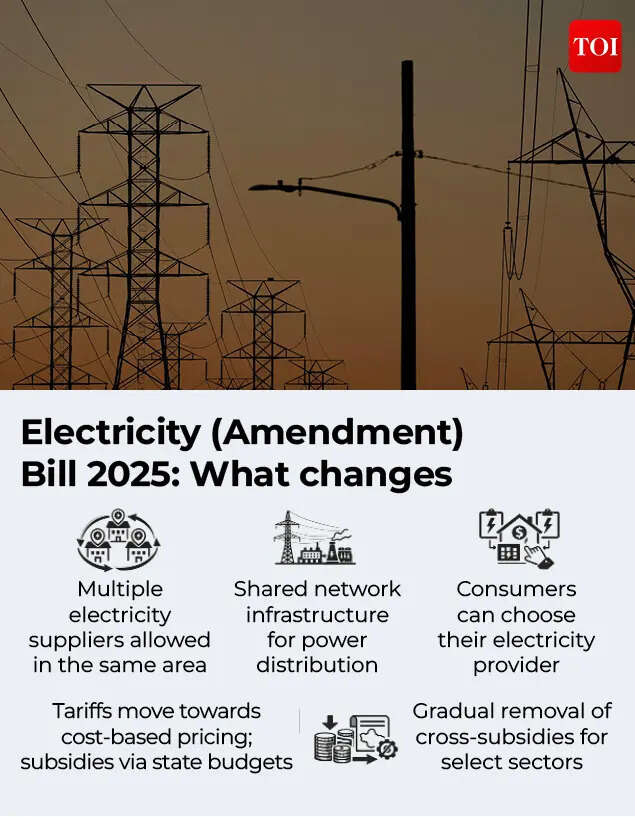
Nearly 2.7 million workers are preparing for nationwide strike— Triggered by one move: the introduction of the Electricity (Amendment) Bill, 2025 in Parliament. These are not just ordinary workers, but the people who keep the nation’s electricity running – engineers, linemen and workers throughout the electrical system. The Center is yet to table the bill in Parliament.The unrest was already visible earlier this month when workers at several state power boards went on strike in protest.Opposition is not limited to labor. Farmer unions have also raised concerns, indicating that resistance to the bill spans across sectors. However, the government sees the draft Electricity (Amendment) Bill, 2025, as a long overdue reform aimed at making the power sector more competitive, efficient and better able to meet future needs. At its core is a key shift: allowing multiple distribution companies to operate in the same area, using shared infrastructure while maintaining the obligation to deliver electricity to all consumers.But it’s not as simple as a switch, a lightbulb and a wave of happiness. For Kaveri Amma, the arrival of electricity was like a silent miracle—simple, shared, and powered by a single supplier, lighting up the entire village.But if Kaveri Amma were alive today, this simplicity would no longer hold true. Power will still come at the flip of a switch—but there won’t be just one Shah Rukh Khan-like figure pulling the strings. It could be that multiple companies share the same wires, competing to provide power to the same home.This shift is at the heart of the Electricity (Amendment) Bill, 2025. “Privatize!”– Power workers, farmers and unions have been pushing back against the term. The Center has been trying to amend the electricity law for more than a decade, but every attempt has been met with resistance.The opposition is not only targeting the bill, but also the way it is drafted. A working group set up by the power ministry in January 2026 finalized the bill but faced criticism from the power sector all india federation of electrical power engineersthe group flagged the All India Telecommunications Association’s inclusion, saying it showed a leaning toward privatization and sidestepped workers’ concerns.

-

But privatization is not the only concern. The bill could change something more immediate — who delivers power to consumers and how much they end up paying.Here’s the thing, the Indian power industry is at an interesting crossroads. Electricity usage is climbing steadily—more appliances, more electric vehicles, more data centers quietly running in the background. Currently, the system is catching up. In 2025, the country will reach a record peak demand of more than 240 GW and total installed capacity will exceed 500,000 MW. Even more striking is the shift in the energy mix—more than half of production capacity now comes from non-fossil energy sources. On the surface, it looks like an industry that is expanding, modernizing, and even getting cleaner.But behind this growth story lies a more complex reality. Providing electricity to your home still depends on a vast and expensive network – generation, transmission and ultimately distribution. And this last stop is still under the greatest pressure. State-run distribution companies (discoms) have historically struggled with mounting losses. In fact, it was only recently, after years of deficits, that they collectively issued a modest profit It will be approximately Rs 2,700 crore in 2024-25. To put things in perspective, the industry’s losses were over Rs 25,000 crore a year ago and nearly Rs 68,000 crore a decade ago. It’s a shift, but a fragile one, still based on low tariffs, delayed subsidies and persistent inefficiencies.This gap between the fast-growing power system and financially strapped distributors is what the government is trying to address through the Electricity (Amendment) Bill, 2025. Versions of it have appeared several times over the past few years. But the theme remains the same: introduce competition, allow multiple companies to supply power in the same area, and give consumers more choice while pushing the system to become more efficient, at least in theory.

Why are farmers opposed?

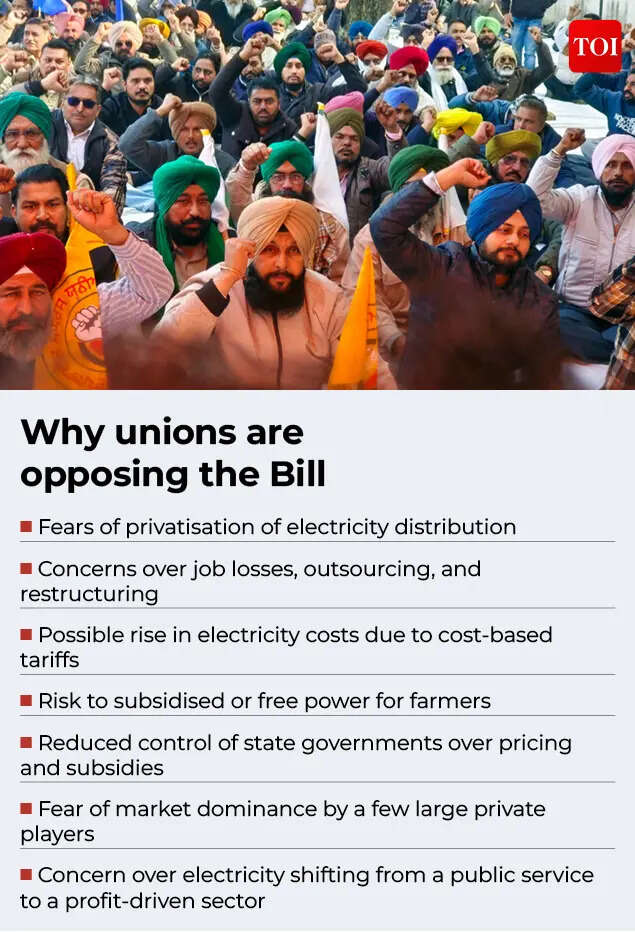
A focus of the proposed reforms is tariff reform and efficiency. The government said the bill would move to cost-reflective tariffs while continuing to provide targeted subsidies through the state budget for vulnerable groups such as farmers and low-income households. But the farmers’ unions don’t buy it. In India, some states provide free or subsidized electricity to farmers. The entry of private players will eventually make state-run distributors inefficient, forcing farmers to pay to choose private suppliers.

-

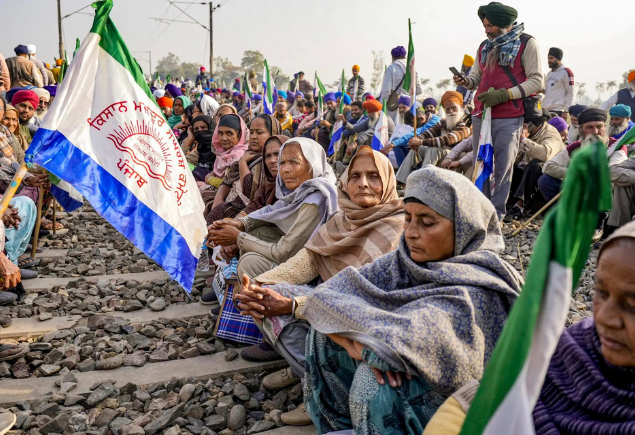
Railway roko protest by Kisan Mazdoor Morcha

Center and state issues

Another deeper question is who calls the shots. Currently, electricity distribution is primarily the responsibility of the states. Each has its own utility, as well as a degree of control over tariffs and subsidies – often used as policy levers and sometimes as political commitments.The concern is that this balance may shift. If a central regulator or new private players enter the system and gain greater control, states may find themselves with less say in how electricity is priced and who receives electricity subsidies. For many, it’s not just a management adjustment, but the loss of a critical tool they’ve relied on for a long time.These concerns are not limited to policy. They also extend into the world of work. With more private involvement, there are concerns about outsourcing, the restructuring of state-owned utilities and the potential for job losses across the industry – especially for the workforce now leading the protests.Center of Indian Trade Unions (CITU) vice-president Tapan Sen said: “Privatization and open access will lead to mass unemployment, contractualization and outsourcing. By allowing private license holders to enter the defense zone, the bill also jeopardizes national security in the name of ‘ease of doing business’.”

What about consumers?

In India, electricity is a politically sensitive topic. Elections in India are won on promises of free or subsidized electricity. The commodification of this subject thus fuels debates about the welfare state.“The bill is part of a wider neoliberal strategy to hand over the entire electricity supply chain – from generation to distribution – to private monopolies,” CITU said. “By promoting speculative electricity markets, this bill transforms electricity – a basic human necessity – into a tradable commodity. Such deregulation will lead to price volatility, supply unreliability and the erosion of public control over energy security,” Sen said.The bill aims to improve the competitiveness of the electricity industry. Competition provides consumers with choices, lowers prices and provides them with the best service. It clearly states that “lack of competition When it comes to electricity supply, consumers are tied to a single distribution system, limiting service quality and innovation. “On paper at least, the promise is simple: More competition means more selection, better service and lower prices. This is the logic driving this bill. If multiple companies can provide electricity in the same area, they will compete to keep consumers happy.But things don’t always go smoothly. In some industries, competition initially played a role, such as telecommunications. More players join, prices drop, and service improves. But over time, competition for the same diminished. What was initially a crowded market eventually narrowed down to a handful of dominant players. Similarly, efforts to privatize Air India were initially welcomed, but the recent IndiGo crisis exposed the dangers of duopoly in the system.This possibility exists here as well. Even if several power distributors enter the same area, the market may not remain crowded forever. It can be solved around a few large companies. When that happens, competition may still drive better service, but it won’t necessarily guarantee cheaper electricity.

-

How successful have the privatization initiatives been?

If the idea is to bring in private players to solve the distribution problem, India has already tried it, just not on a large scale. Distribution companies are at the end of the power chain and are responsible for delivering electricity to homes and charging them for it. In fact, they are monopoly retailers in their respective fields. Yet despite their central role, most state-owned telecoms companies have struggled for years with losses, inefficiencies and mounting debt. Privatization is often considered a way out of this cycle.In fact, only a handful of states have gone down this path. Odisha was one of the first regions to try it in the late 1990s, but the initial attempts were unsuccessful and had to be cancelled. The 2002 Delhi experience is often considered a benchmark. After breaking up the electricity board and bringing in private operators, the practical effects were clear – system losses dropped dramatically. Over time, total technology and commercial (AT&C) losses, once as high as 45-60%, fell below 6.5%. That’s a significant improvement, especially when the national average still hovers around 15%.But that’s only part of the story. As a research analysis by the Center for Social and Economic Progress points out, although efficiency has improved and supply has become more reliable, the financial situation remains complex. Tariffs continue to be heavily regulated and disagreements between regulators and distributors over cost approvals have become the norm. Much of the costs claimed by telcos are not always recoverable through tariffs, leading to the accumulation of “regulatory assets” – essentially costs deferred to the future. In the Delhi case, such losses have run into tens of thousands of rupees and disputes between tribunals and courts have been going on for years.This is where the limitations of privatization begin to show. Bringing in private operators may solve operational problems, such as reducing theft or improving billing, but it does not automatically solve deeper structural problems. Issues surrounding tariff setting, cost recovery and regulatory oversight have not gone away. In fact, if anything, they have become more controversial. The result is a system where increased efficiency coexists with financial uncertainty, with costs that may still have to be borne by the end consumer.This is perhaps why most states are not rushing to follow Delhi’s path. Government-run distribution companies still dominate and private participation remains limited. The broader lesson of the past two decades is quite clear – privatization can improve the way electricity is delivered, but it does not by itself guarantee the stability of the financial system. This again depends on how the industry is regulated and how those rules are enforced.


Johnny Somali case: US anchor’s mother asks judge for leniency ahead of sentencing in South Korea

0

The mother of American live broadcaster Johnny Somali, whose real name is Ramsey Khalid Ismael, appeals South Korea The court asked for a lighter punishment for the son. Sentencing is scheduled for April 15, 2026.

Anchor Johnny Somali is under investigation in South Korea on new sex crime charges and could face 31 years in prison. (@johnnysomalia/instagram)

Somalia is facing multiple charges in the country after he live-streamed himself disturbing the peace. Dexerto reports that according to lawyers and YouTuber Legal Mind, Somalia’s mother filed a clemency petition on behalf of her son.

Charges against Johnny Somali

Somali faces four charges of interfering with business, two charges of breaching the Minor Offenses Act and two charges of sexual violence offences.

Learn more | Did Hassan Pike say he had “no patriotism” for America in his heart? Streamers respond after backlash

Somalia has been accused of playing offensive noise on a subway, including a speech by North Korean leader Kim Jong Un. He also allegedly performed a lap dance at a memorial to Korean World War II sex slaves. He was banned from YouTube due to the live broadcast.

Prosecutors in the case are seeking three years in prison, a fine of about 150,000 won (about $100) and registration as a sex offender, according to Complex.

Somalia spoke publicly about the case when he appeared in court last month. He argued with the judge that what he was doing would not get him into legal trouble in the United States.

Learn more | Emiru-Mizkif feud explained: Twitch streamer accuses ex-BF of assault, abuse, stalking; here’s his response

“I did some stupid things while under the influence of alcohol and I realized the consequences,” he said. “I sincerely apologize for this. I am USAI didn’t realize how serious consequences these actions that are not illegal in the United States might have in South Korea. “

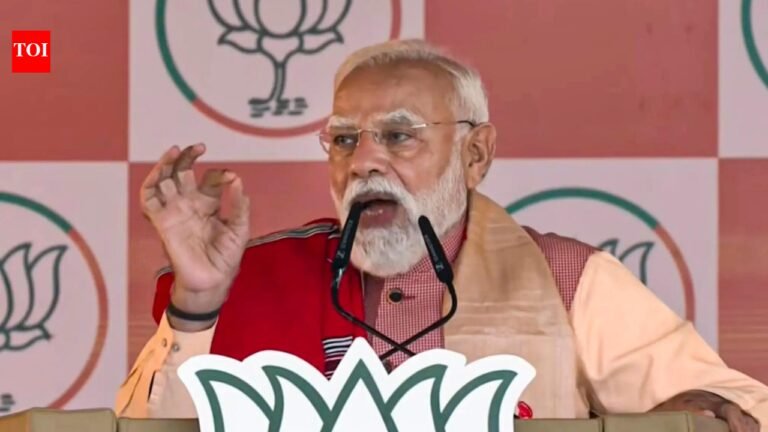
‘Congress will surely score hat-trick’: PM Modi takes dig at Rahul Gandhi in Assam

0

New Delhi: Prime Minister Narendra Modi Launching a blistering attack on Assam Congress party on Wednesday, lashing out at Opposition Lok Sabha leader Rahul Gandhi Calling him “Rajkumar”, he predicted a series of defeats for the old and great party, even as he expressed confidence that the BJP-led National Development Alliance would achieve a “hat-trick” in the state, citing the strong state leadership under Sarbanand Sonowal and now Himanta Biswa Sarma.Addressing a public rally in Gogamukh, the Prime Minister struck an aggressive tone and indirectly mocked former Congress president Rahul Gandhi, calling him a “self-proclaimed prince”.Prime Minister Modi said, “This is my first public rally after the Assam elections were announced. The sea of ​​people in front of me, the enthusiasm of the youth, the blessings of my sisters and daughters, this love is a public declaration, and I will definitely achieve a hat-trick this time.”The Prime Minister reiterated his confidence and highlighted his own electoral record and the party’s performance in the state.Prime Minister Modi said: “With the blessings of all of you, I get the opportunity to perform a hat-trick as the Prime Minister. With your blessings, I also get the opportunity to perform a hat-trick in this land. I am here for the third time. With your blessings, the Assam government will also achieve a hat-trick.”He attributes the governance of the state in the past decade to the former chief minister Sarbananda Sonowal Current Prime Minister Himanta Biswa Sarma said Assam has entered a new phase of development and stability.Prime Minister Narendra Modi said: “In the past decade, first under the leadership of Sarbananda Sonowal and then under Himanta Biswa Sarma, Assam has witnessed a new era of service and good governance. These Assam elections are elections to build a developed Assam for a developed India.” This time, the BJP-NDA government will complete a hat-trick. Congress will also face a hat-trick of defeats.… The self-proclaimed Prince of Congress was doomed to a century of defeat. “The Prime Minister also referred to the recent manifesto released by the BJP, describing it as the blueprint for the future of the state.Prime Minister Narendra Modi said: “…the Assam Bharatiya Janata Party released a brilliant manifesto yesterday. Yesterday was Tuesday and this manifesto released on Tuesday will bring more ‘Mangal’ (auspiciousness) to Assam…this is the ‘Mangal Patra’ that arrived on Tuesday. “Prime Minister Modi highlighted key commitments and spoke about governance reforms and social initiatives, including the proposed Uniform Civil Code in the state.Prime Minister Modi said: “To ensure that our daughters are not deceived, we have also made many major announcements to ensure dignity, respect and safety in the lives of our daughters. Implementation of the Uniform Civil Code in Assam, protecting the traditions of our tribal society, Sixth Schedule areas, or saving the identity of Assam are very significant announcements. The BJP walks the talk. “In stark contrast to past governments, the Prime Minister blamed Congress for presiding over a period of instability and violence, while praising the National Development Agenda for bringing peace and development.Prime Minister Modi said: “Assam has gone through a long journey of development in the past ten years. These young people of 20-25 years have only witnessed the good governance of the BJP-NDA. They have not seen the dark days of Congress rule, when the only news coming out of Assam was bombs, guns, riots and curfews. The twin-engine government has shown a new path towards lasting peace for Assam. Over the past decade, thousands of Assam’s sons and daughters have put down their guns and moved towards a new future.He also outlined plans to position Assam as a modern technology hub, including semiconductor manufacturing.“Once upon a time, Assam was famous for its tea. Now, Assam is not only famous for tea but also for chips. The day is not far when semiconductor factories in Assam will start producing chips. This will make Assam a major hub of modern technology. In the future, whether it is mobile phones, cars, TVs or refrigerators, all these products will use Assam chips. This is our roadmap for development,” said Prime Minister Modi.On the infrastructure front, Prime Minister Modi accused the previous Congress government of neglect, especially in building connectivity on the Brahmaputra river.Prime Minister Modi said, “Assam is uniquely endowed with resources and has never lacked resources. But for the sake of power, the Congress Party divided Assam society and never allowed the two sides of the Brahmaputra River to be connected. In 1960-65, the Congress Party only built three bridges on the Brahmaputra River.” We lost a lot of people because of the lack of bridges. The dual-engine government understood the problem and completed 5 major bridges on the Brahmaputra in just 10-11 years.The Prime Minister also pointed the finger at the Congress over the issue of illegal infiltration, insisting that the NDA government would continue to take strict action.Prime Minister Narendra Modi said, “Congress wants to settle foreigners in Assam and make the indigenous sons and daughters of this land a minority…The BJP-NDA government will not allow the lands of our farmers, tribals and forests to be occupied by infiltrators. The BJP-NDA government will continue to take action against illegal occupation. The pride and identity of Assam will continue to exist. This is Modi’s assurance.”The rally marked a high-voltage campaign in Assam, which is scheduled to go to single-phase polls on April 9, with results due on May 4.

10,000 terrorists attacked, 40 senior officials killed in 40 seconds: Israel outlines the scale of Iran’s offensive

0

10,000 terrorists attacked, 40 senior officials killed in 40 seconds: Israel outlines the scale of Iran’s offensive

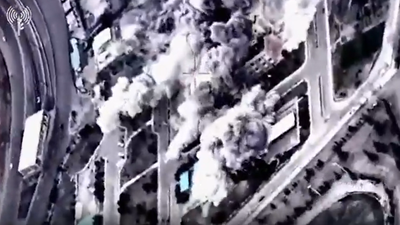
The Israeli military released the latest details of its ongoing “Operation Lion’s Roar” against Iran, saying it had conducted hundreds of sorties and thousands of attacks on Iranian-related targets. It claimed to have eliminated 40 senior Iranian officials in “just 40 seconds.”According to the military, more than 800 attack sorties have been carried out so far, and nearly 10,000 air strikes have hit nearly 4,000 targets. Approximately 16,000 rounds of ammunition were also used in the operation.The military claimed that more than 2,000 soldiers and commanders linked to Iran were killed in the operation. In addition to launching attacks on Iran, the report added, the military was also involved in a wider multi-front conflict, with nearly 7,000 targets attacked in different theaters.IDF spokesman Avichay Adraee said in a post for Arab media on

  • Conducted more than 800 attack sorties
  • Launched nearly 10,000 air strikes against nearly 4,000 terrorist targets
  • Nearly 16,000 rounds of ammunition used
  • Eliminated more than 2,000 soldiers and commanders of the Iranian terrorist regime
  • While Iran was under attack, the IDF was engaged in multiple battles and struck nearly 7,000 targets on various battlefields.

In a video message shared on The spokesman said: “In less than 24 hours, the air force flew to the center of Tehran. In just 40 seconds, it eliminated about 40 senior officials of the Iranian terrorist regime.”Meanwhile, as part of the 88th phase of Operation True Commitment 4, naval forces of Iran’s Islamic Revolutionary Guard Corps (IRGC) conducted four operations against U.S. and Israeli assets in the early hours of the morning, Press TV reported.Iran said its naval forces launched a “violent” attack on enemy positions. An Israeli container ship, the Express Halfong, was reportedly attacked by a ballistic missile in the middle of the Persian Gulf.In another coordinated strike, a U.S. Marines hideout off the coast of the United Arab Emirates was struck by an explosive drone. News TV also reported that Iran destroyed a U.S. Fifth Fleet counter-drone system deployed near a base near Manama Airport in Bahrain.

FIFA World Cup 2026: All 48 teams confirmed, full group rosters revealed

0

FIFA World Cup 2026: All 48 teams confirmed, full group rosters revealed

The roster for the 2026 FIFA World Cup is now complete, with all 48 teams confirmed after the final round of continental qualifying and playoffs.The final six spots were sealed in March, with Sweden, Türkiye, Bosnia and Herzegovina and the Czech Republic advancing to the UEFA play-offs. Iraq and the Democratic Republic of Congo grabbed the last two spots through the intercontinental play-offs. Iraq defeated Bolivia 2-1 to lock the last spot.Co-hosts the United States, Mexico and Canada will host the expansion tournament from June 11 to July 19, which will be the first time that 48 teams and 12 groups will participate.

Full list of eligible teams FIFA world cup

  • Co-sponsored by: Canada, Mexico, United States
  • AFC: Australia, Islamic Republic of Iran, Japan, Jordan, Republic of Korea, Qatar, Saudi Arabia, Uzbekistan, Iraq
  • African Football Confederation: Algeria, Cape Verde, Democratic Republic of Congo, Côte d’Ivoire, Egypt, Ghana, Morocco, Senegal, South Africa, Tunisia
  • North and Central America and the Caribbean: Curacao, Haiti, Panama
  • CONMEBOL: Argentina, Brazil, Colombia, Ecuador, Paraguay, Uruguay
  • Oxygen-free copper: New Zealand
  • UEFA: Austria, Belgium, Bosnia and Herzegovina, Croatia, Czech Republic, England, France, Germany, Netherlands, Norway, Portugal, Scotland, Spain, Sweden, Switzerland, Turkey

Note: Curaçao is the smallest country to participate in the World Cup, highlighting the inclusivity of the expanded format.

2026 FIFA World Cup Group Status

The competition will be divided into 12 groups of 4 teams each:

Group A Mexico, Czech Republic, South Africa, South Korea
Group B Canada, Bosnia and Herzegovina, Qatar, Switzerland
Group C Brazil, Haiti, Morocco, Scotland
Group D United States, Australia, Paraguay, Türkiye
Group E Curacao, Ecuador, Germany, Cote d’Ivoire
Group F Netherlands, Japan, Sweden, Tunisia
Group G Belgium, Egypt, Iran, New Zealand
Group H Cape Verde, Saudi Arabia, Spain, Uruguay
first group France, Norway, Senegal, Iraq
Group J Algeria, Argentina, Austria, Jordan
Group K Colombia, Jamaica, Portugal, Uzbekistan
Group L Croatia, England, Ghana, Panama

The qualifying journey begins in 2023 and ends with dramatic play-offs that include Bosnia’s upset victory over Italy and the Democratic Republic of Congo’s narrow victory over Jamaica.With all the teams locked in, anticipation is building for what will be the biggest and most diverse World Cup in history.

Top-rated TVs in 2026: What you should actually look at before buying

0

The moment you switch on a new TV, you expect it to just work – clear picture, smooth streaming, and sound that fills the room. But with so many options in 2026, picking the right one is not that simple. Screen types have changed, software platforms differ, and even budget TVs now promise features that were once limited to premium models.

Buying a TV in 2026 feels confusing, here are top rated options that make your choice easier. (Pixabay)

MD Ijaj Khan

Ijaj Khan is a tech journalist and Senior Content Producer at HT Tech, where he translates the fast-paced world of consumer tech, gaming, and AI into stories that spark curiosity and connection. Always on the lookout for the next big trend, he believes technology should be as relatable as your everyday conversations. When he’s not decoding gadgets and innovations, you’ll likely find him hopping across cities, chasing new adventures, and sampling cuisines that tell their own stories.

Read moreRead less

That’s where most buyers get stuck, not because there are too few options, but because there are too many that look similar on paper.

In this guide to the Top Rated TVs in 2026, we focus on what actually matters in daily use. From picture performance and sound output to smart features and connectivity, these TVs have been selected based on how they perform in real homes. Whether you want a large screen for your living room or a compact TV for a secondary setup, this list helps you narrow down your choice without overthinking the specs.

The Vu Vibe Series 55-inch TV comes with a 4K QLED panel offering a resolution of 3840×2160. It supports Dolby Vision, HDR10, and HLG, allowing better handling of HDR content across streaming platforms. The TV runs on Google TV with 2GB RAM and 16GB storage. It includes HDMI 2.1 ports and dual-band Wi-Fi, making it suitable for streaming and console gaming. A key highlight is the 88W built-in soundbar with Dolby Atmos support, which reduces the need for external speakers.

With MEMC support and a 60Hz refresh rate, motion handling remains steady for sports and action content. This model works well for users planning to upgrade to a larger screen with integrated audio.

Specifications

Resolution

3840×2160 (4K)

Refresh rate

60 Hz with MEMC

HDR

Dolby Vision, HDR10, HLG

Audio

88 W soundbar, Dolby Atmos‑ready

OS

Google TV, 2 GB RAM, 16 GB storage

Ports

HDMI 2.1, USB, Wi‑Fi, Bluetooth

Reasons to buy

...

Large 55‑inch

...

Bright QLED

...

Strong built‑in sound

Reason to avoid

...

Basic blacks

...

Limited brand support

What are buyers saying on Amazon?

Owners praise the big, colourful picture and powerful built‑in soundbar, calling it a clear upgrade for living‑room movies and sports; a few mention occasional lag in menus.

Why choose this product?

If you want a big‑screen 55‑inch 4K QLED TV with Google TV and theatre‑like sound in one box, this Vu model is easy to justify under Rs. 30k.

This 43-inch TV from Samsung uses a Crystal 4K panel with a resolution of 3840×2160. It supports HDR10, HDR10+, and HLG, backed by the Crystal Processor 4K for image processing. The TV runs on Tizen OS and includes apps such as Netflix, Prime Video, YouTube, and Disney+ Hotstar. It offers three HDMI ports and dual-band Wi-Fi for connectivity.

Voice assistants like Bixby, Alexa, and Google Assistant are supported. Filmmaker Mode is also included for content playback in its intended format. The 20W Dolby Digital Plus audio system handles everyday viewing needs. This TV is suited for users looking for a compact 4K option with a stable interface.

Specifications

Resolution

3840×2160 (4K)

Audio

~20 W speakers, Dolby Digital Plus

Ports

3 HDMI, USB, Wi‑Fi, Bluetooth

Reasons to buy

...

Sharp 4K picture

...

Reliable Tizen OS

...

Thin, modern design

Reason to avoid

...

Average sound

...

Basic HDR only

What are buyers saying on Amazon?

Users like the clear 4K image and simple setup, plus a clean, space‑saver look for smaller rooms; a few mention sound is fine but not loud enough for big rooms alone.

Why choose this product?

Pick this if you want a compact 43‑inch 4K TV from a trusted brand that “just works” for OTT and daily viewing without fuss.

The VW Pro Series 55-inch TV features a 4K QLED panel with HDR10 and HDR10+ support. It operates at a 60Hz refresh rate and runs on Google TV. The hardware includes 2GB RAM, 16GB storage, and a quad-core processor. Connectivity options include three HDMI ports with eARC support, Bluetooth 5.1, and dual-band Wi-Fi.

The TV also includes a 30W speaker system with Dolby Atmos support. It is positioned for buyers who want a large screen experience with standard smart features at a lower price point.

Specifications

Resolution

3840×2160 (4K)

Brightness

~300–400 nits

Audio

30 W 2.1‑ch, Dolby Atmos‑ready

OS

Google TV, 2 GB RAM, 16 GB storage

Ports

3 HDMI, 2 USB, Wi‑Fi, Bluetooth 5.1

Reasons to buy

...

Colourful 55-inch QLED

...

Google TV

...

Decent surround‑style sound

Reason to avoid

...

Mid‑range blacks

...

Less brand reach

What are buyers saying on Amazon?

Buyers highlight the vibrant 4K image and good‑sounding speakers at the price, plus smooth navigation; a few feel the UI could be a bit more polished than big brands.

Why choose this product?

Go for this if you want a 55‑inch 4K QLED with Google TV and built‑in audio that feels more premium than a budget LED TV.

Sony’s BRAVIA 3 Series 55-inch TV uses a 4K panel powered by the 4K HDR Processor X1. It also includes TRILUMINOS PRO and 4K X-Reality PRO for improved content upscaling. The TV supports Dolby Vision, HDR10, and HLG. Motionflow XR 100 helps in handling fast-moving scenes. It runs on Google TV with built-in Chromecast and access to major streaming apps.

Connectivity includes HDMI 2.1 ports, Wi-Fi 6, and Bluetooth 5.3. The 20W speaker system supports Dolby Atmos. This model is suitable for users who prioritise picture processing and long-term reliability.

Specifications

Resolution

3840×2160 (4K)

Refresh rate

60 Hz with Motionflow XR

HDR

HDR10, HLG, Dolby Vision

Audio

~20 W 2‑ch, Dolby Atmos

OS

Google TV, 2 GB RAM, 16 GB storage

Ports

4 HDMI 2.1, 2 USB, Wi‑Fi, Bluetooth 5.3

Reasons to buy

...

Great 4K processing

...

Google TV

...

Smooth motion

Reason to avoid

...

No QLED

...

Average speakers

What are buyers saying on Amazon?

Users like the cinematic HDR picture and clean Google TV layout, plus smooth motion for sports; many say it feels “better than its price” for Sony.

Why choose this product?

Choose this if you want a Sony‑branded 55‑inch 4K TV with refined image processing and Google TV, ideal for movies and OTT over hardcore gaming.

The Hisense 50-inch TV features a 4K QLED panel with Direct-LED backlighting and a 60Hz refresh rate. It delivers consistent output for streaming and TV content. It runs on VIDAA OS and includes Wi-Fi, Bluetooth 5.2, and Ethernet support. The TV offers three HDMI ports and two USB ports for additional devices.

A key feature is the 48W quad-speaker setup with Dolby Atmos support, which offers stronger audio output compared to many TVs in this range. AirPlay and screen mirroring are also supported. This TV works well for users who want better sound output without investing in extra speakers.

Specifications

Resolution

3840×2160 (4K)

Audio

48 W quad speakers, Dolby Atmos‑ready

Ports

3 HDMI, 2 USB, Wi‑Fi, Bluetooth 5.2

Reasons to buy

...

Big 50-inch QLED

...

Loud 48 W audio

...

Great value

Reason to avoid

...

Basic OS

...

Mediocre blacks

What are buyers saying on Amazon?

Owners praise the bright QLED picture and loud quad‑speaker sound, noting it feels like a big upgrade; a few say the OS lags unless paired with a Fire TV stick.

Why choose this product?

Pick this if you want a 50‑inch 4K QLED with strong built‑in speakers and a low price for movie‑centric small-to-mid-sized rooms.

The Toshiba M450RP 43-inch TV comes with a 4K QLED panel and supports Dolby Vision, HDR10+, and HLG. It also includes AI-based upscaling for lower-resolution content. The TV runs on VIDAA OS and supports voice control. It includes dual-band Wi-Fi, Bluetooth 5.0, and multiple HDMI and USB ports.

The 24W speaker system supports Dolby Atmos and Dolby Digital. Built-in apps cover most streaming needs. This TV is suitable for smaller spaces where a 43-inch screen size is preferred with standard smart features.

Specifications

Resolution

3840×2160 (4K)

HDR

HDR10+, Dolby Vision, HLG

Audio

24 W 2‑ch, Dolby Atmos, Dolby Digital

Ports

3 HDMI (one eARC), 2 USB, Wi‑Fi, Bluetooth 5.0

Reasons to buy

...

Vibrant colours

...

Louder 24 W sound

...

Feature‑rich inputs

Reason to avoid

...

VIDAA OS

...

Mid‑tier blacks

What are buyers saying on Amazon?

Owners like the vivid 4K picture and stronger‑than‑average sound, plus HDMI 2.1 eARC and wide app support; a few say the interface feels slower until paired with a stick.

Why choose this product?

Choose this if you want a compact 43‑inch 4K QLED with good audio and connectivity, ideal for small halls and apartments on a mid‑range budget.

Panasonic’s 43-inch model features a 4K LED panel with HDR10+ and Dolby Vision support. It uses a 4K Colour Engine for image processing. The TV runs on Google TV and supports apps such as Netflix, Prime Video, YouTube, and Zee5. Voice control via Google Assistant is also included.

It comes with three HDMI 2.1 ports, Bluetooth 5.0, and dual-band Wi-Fi. The 20W speaker system is tuned for room-level audio output. This model is designed for users who want a straightforward smart TV experience in a compact form factor.

Specifications

Resolution

3840×2160 (4K)

HDR

HDR10+, Dolby Vision, HLG

Audio

20 W 2‑ch, Dolby Digital

Ports

3 HDMI 2.1, 2 USB, Wi‑Fi, Bluetooth 5.0

Reasons to buy

...

Clean 4K HDR

...

Google TV

...

Room‑filling sound

Reason to avoid

...

Average contrast

...

Interface lags

What are buyers saying on Amazon?

Users praise the bright 4K picture and stronger‑than‑typical built‑in audio, plus a simple Google TV interface; a few note occasional lag during heavy multitasking.

Why choose this product?

Pick this if you want a 43‑inch 4K Google TV with solid HDR and sound, suitable for a compact living room or bedroom without overspending.

Factors to Consider Before Buying a TV for the Home

Screen Size and Viewing Distance

Pick a size that matches your room: 43-inch for small halls/bedrooms, 50–55-inch for larger living rooms, and keep at least about 1.5–2.5× the diagonal distance from the couch.

Display Type and HDR Support

Choose QLED for brighter colours and better HDR, standard LED if you want value; ensure HDR10, HLG or Dolby Vision support for better movies and OTT.

Resolution and Upscaling

Prefer 4K (3840×2160); check if the TV has upscaling so HD/1080p content still looks sharp on the 4K panel.

Smart OS and App Ecosystem

Pick Google TV, Tizen or a well‑known OS if you want a smooth interface and quick access to Netflix, Prime Video, Disney+ Hotstar, YouTube and gaming apps.

Audio Quality and Built‑in Sound

Look for higher wattage (20 W or more) and Dolby Atmos or Dolby Digital support if you don’t want a separate soundbar yet.

Connectivity

Prefer at least 3 HDMI ports (ideally one eARC), 2 USB ports, Wi‑Fi and Bluetooth for streaming sticks, consoles and sound systems.

Brand, Service and Warranty

Consider after‑sales support, service‑centre reach and warranty length in your city to keep the TV trouble‑free for years.

TV Model (4K TV) Size (Inches) Panel & HDR Feature Smart OS Audio & Sound Feature Gaming & Input Ports
Vu 55VIBE‑DV 55-inch 4K QLED, Dolby Vision, HDR10, HLG Google TV 88 W integrated soundbar, Dolby Atmos‑ready HDMI 2.1, Wi‑Fi, Bluetooth
Samsung UA43UE81AFULXL 43-inch 4K Crystal LED, HDR10, HDR10+, HLG Tizen OS 20 W speakers, Dolby Digital Plus 3 HDMI (incl. HDMI 2.1), Wi‑Fi
VW VW55GQ2 55-inch 4K QLED, HDR10 Google TV 30 W 2.1‑ch speakers, Dolby Atmos‑ready 3 HDMI, Wi‑Fi, Bluetooth 5.1
Sony K‑55S30B 55-inch 4K LED, Dolby Vision, HDR10, HLG Google TV 20 W 2‑ch speakers, Dolby Atmos 4 HDMI 2.1, Wi‑Fi 6, Bluetooth 5.3
Hisense 50E75Q 50-inch 4K QLED, HDR10, HLG VIDAA OS 48 W quad speakers, Dolby Atmos‑ready 3 HDMI, Wi‑Fi, Bluetooth 5.2
Toshiba 43M450RP 43-inch 4K QLED, Dolby Vision, HDR10+, HLG VIDAA OS 24 W 2‑ch, Dolby Atmos, Dolby Digital 3 HDMI (incl. eARC), Wi‑Fi, Bluetooth 5.0
Panasonic TH‑43PX665DX 43-inch 4K LED, Dolby Vision, HDR10+, HLG Google TV 20 W 2‑ch, Dolby Digital home‑theatre‑style 3 HDMI 2.1, Wi‑Fi, Bluetooth 5.0

Disclaimer: At Hindustan Times, we help you stay up-to-date with the latest trends and products. Hindustan Times has an affiliate partnership, so we may get a part of the revenue when you make a purchase. We shall not be liable for any claim under applicable laws, including but not limited to the Consumer Protection Act, 2019, with respect to the products. The products listed in this article are in no particular order of priority.