Home Blog Page 329

Music by Tesseract: Sounds of Truth

0

There’s a moment near the end of Stanley Kubrick’s Eyes Wide Shut when a waltz plays out over a scene of unsettling beauty. The piece, Shostakovich’s Waltz No. 2, was composed for a Soviet film in the mid-1950s, was completely mistakenly attributed to another suite, and is now one of the most recognized orchestral works in the world precisely because of its impact on a room. It’s not comforting. It’s unsettling and elegant. It was the first piece of music the audience heard as they walked into Tesseract: The Geometry of Truth, a choice that spoke volumes about the evening’s purpose.The musical direction of Tesseract was no accident. Michael composed eleven works covering Soviet orchestral music jacksonBilly Joel , Queen and three of them Hans ZimmerIn the most famous film scores, a coherent argument is made. This is amplified by the choreography and staging. Music worked. Taken together, these songs form their own geometry: approaching the same central questions from different angles: what is truth, who holds it, who denies it, and what it costs to honestly seek it.Waltz No. 2 – Dmitri Shostakovich

watch

Dmitri Shostakovich – Second Waltz

Shostakovich composed this waltz for a Soviet film in the mid-1950s, and it circulated for decades under an incorrect title—a piece of music whose identity has been recorded. Its fame soared when Kubrick used it in Eyes Wide Shut, emphasizing a world where beautiful surfaces conceal dark truths lurking beneath. As a prelude to a show about perception and reality, this is entirely true.Michael Jackson appears three times on the Tesseract soundtrack, and this progression is no accident.Man in the Mirror – Michael Jackson

watch

Michael Jackson – Man in the Mirror (Official Video)

It’s the most inward-looking piece from Jackson’s 1988 album Bad, a gospel-flavored self-examination song that Jackson performed at that year’s Grammy Awards, with a choir behind it. Unusually, the music video contains almost no Jackson himself. Instead, it runs through a montage of pain, protest, and injustice, as if to say: This is what you’re avoiding.They don’t care about us – Michael Jackson

watch

Michael Jackson – They don’t care about us

Released eight years later and more confrontational, this shifted the focus outward. This is a song about the people history has left unmentioned, the voices conveniently ignored by systems of power. The anger in it is concrete and deserved. Where “Man in the Mirror” asked individuals to look inward, this film asks the world to take responsibility.Earth Song – Michael Jackson

watch

Michael Jackson – Earth Song (Official Video)

Released in 1995, it is a gospel lament for the natural world that asks what humankind’s collective ambitions – including ambitions to discover, build and develop – cost the planet to make all this possible. The pursuit of progress, even the pursuit of truth, is not free. Of Jackson’s three essays, this one has the broadest moral weight and the most thorny issue.Billy Joel offers two distinct registers.She’ll always be a woman – Billy Joel

watch

Billy Joel – She’ll Always Be a Woman (Official Audio)

Written in 1977, the book is a portrait of a man who refused to be reduced to a simple narrative – a study of the gap between who a person really is and who others insist on seeing. Joel wrote this book in part out of frustration with critics who misread the people he loved, but it’s something much bigger: a quiet argument against the laziness of accepted opinion. In a show about the geometry of truth, it’s worth noting that truth about people is almost always more complex than the shapes we assign.We didn’t set the fire – Billy Joel

watch

Billy Joel – We Didn’t Start the Fire (Official HD Video)

The book was written after a conversation with a young man who believed that the 1950s were calm, the opposite of calm – 119 historical references compressed into less than 5 minutes, presenting a series of events without hierarchy or conclusion. Joel said he never meant to apologize for his generation, nor was the accusation directed at anyone else. He believes that the world has always been a mess. The fire was burning long before we arrived.We are the champions – the queen

watch

Queen – We Are the Champions (Official Video)

When Freddie Mercury wrote these words in 1977, he was speaking directly to his audience—not as a boast of victory, but as an acknowledgment of a shared journey of failure, persistence, and, ultimately, something that might resemble victory. Among us we are truly open. It belongs to anyone who is entitled to it. A paean to collective resilience, it carries the emotional heart of the evening and needs no explanation.Hans Zimmer exhibited three works spanning the decade of his most famous work.Time – Hans Zimmer (“Inception”, 2010)

watch

Hans Zimmer – Time (Inception)

The piece builds from a fragile subject into something vast and unresolved; it accompanies the final moments of Christopher Nolan’s Inception, where the lines between dreaming and waking are deliberately left open and the music refuses to close either. For a show built around perception and truth, few musical productions do more with less.The Dark Knight Theme — Hans Zimmer & James Newton Howard (2008)

watch

The Dark Knight Theme – Hans Zimmer

Almost out of nothing – Zimmer ties this two-note theme to a character defined by his desire to expose the fragility of everything people think will keep them safe. In Nolan’s interpretation, the Joker doesn’t want power or money; He wanted to show that the systems people trust are more fragile than they appear. In other words, it’s a subject about what happens when the comfort of fiction collapses.Interstellar Theme — Hans Zimmer (2014)

watch

Interstellar Theme – Extra Extended – Music by Hans Zimmer

Recorded almost entirely with a pipe organ – an unusual choice for a science fiction film, and a very well thought out one. The organ carries centuries of associations: sacred, vast, unknowable. It has a unique place in the Tesseract soundtrack. It doesn’t argue. It doesn’t accuse. It bears witness.Knight of Cups — Hans Zimmer (The Da Vinci Code, 2006)

watch

Chevaliers De Sangreal (from The Da Vinci Code soundtrack)

The climactic theme of Ron Howard’s adaptation of Dan Brown’s novel revolves entirely around the proposition that the truths most protected are the ones that institutions have the most to lose by revealing them. Zimmer’s score for the apocalyptic moment is less triumphant than solemn: the choir rises slowly, as if truth itself is walking into the light. This is the final piece of the Tesseract soundtrack. It felt good to end the night.

S size. song title Artist/Composer Source/Annotation
1 Waltz No. 2 Dmitri Shostakovich Russian National Symphony Orchestra/performed by Dmitry Yablonsky
2 man in mirror michael jackson
3 they don’t care about us michael jackson
4 she will always be a woman billy joel
5 we didn’t set fire billy joel
6 we are champions Queen
7 time Hans Zimmer from Inception
8 dark knight theme Hans Zimmer and James Newton Howard from dark knight
9 song of the earth michael jackson
10 interstellar theme song Hans Zimmer from Interstellar
11 Knights of the Holy Grail Hans Zimmer from The Da Vinci Code

Tesseract is a work about perception, geometry, and the many shapes truth can take depending on where you are. Its music was chosen with the same seriousness. From a Soviet waltz that has been misnamed for decades to a choir that moves towards revelation in its final moments, these songs retain their truth for a brief moment in human memory.


Can life survive on Mars? Scientists use water bears to test the habitability of the Red Planet

0

Can life survive on Mars? Scientists use water bears to test the habitability of the Red Planet

Penn State researchers are building on the unique resilience of tardigrades, or “water bears,” to assess how the organisms would respond to and protect Martian resources. These tiny extremophiles are famous for their ability to survive in the vacuum of space. However, this study focused primarily on their molecular responses to Mars-like conditions, and the specific types of proteins that tardigrades use to protect their DNA and cellular structures. By studying the proteins produced by tardigrades, researchers have gained important information about biotechnological applications that could be used in future space expeditions. This information will not only help determine conditions for possible habitation on other planets, but also provide models for developing resilient, biomimetic materials that could be used to protect critical infrastructure and biological assets on the Martian surface.

Habitability cracked: How tardigrades survived the pressure of Mars

Tardigrades are best known for their ability to enter a dormant state called cryptobiosis, but Penn State researchers are studying the very specific molecular mechanisms that allow them to do this. Researchers have discovered a new class of “disordered proteins” with no clear three-dimensional structure that appear to form biological glass around the tardigrade’s DNA and other key cellular components when the tardigrades experience extreme stress, such as extreme radiation or low humidity from a Martian-like environment. The glass cover would likely prevent cells from shattering or being permanently damaged in a harsh environment like Mars.

Water bears are turning protein into protection

The results of this study suggest that the tardigrade’s survival strategy can be exploited to create a protective coating for valuable resources on Mars. By studying how these microorganisms stabilize their biomaterials, researchers hope to create biomimetic coatings that could protect sensitive technologies such as electronics and pharmaceuticals from degradation caused by cosmic radiation and extreme temperatures—effectively moving from passive observation of biological systems to designing “active protection systems” that would mark a major shift in how we think about sustaining human life on Mars in the long term.Understanding how tardigrades adapt can serve as an experimental framework when developing resilient infrastructure for Mars. The Penn State research team points out that biosynthetic analogues of ruptured proteins could potentially be synthesized to create self-healing or ultra-durable materials for building habitats. By designing similar organizational systems and methods that replicate these types of natural protection systems, future missions will eliminate the need for extensive heavy-duty shielding on spacecraft and be able to utilize lightweight, biocompatible polymeric materials that respond to the environment similar to how tardigrades respond when transitioning into their “tun” state, allowing for longer-lasting and more successful construction solutions.

Mars’ biological blueprint

By demonstrating that organisms on Earth can exploit specific molecular pathways in order to survive in an environment similar to Mars, this research is expanding the definition of a habitable environment; it also creates a reference point against which the likelihood of other alien bodies being considered habitable can be measured. Essentially, if we can adapt these biological models, the means to survive on Mars could be considered biologically engineerable, rather than just surviving through mechanical endurance. For NASA, this biological framework is critical to advancing its long-term plans to establish a sustained human presence on the moon and eventually Mars.

LSG vs DC, IPL 2026: 5 players to watch out for in today’s match

0

LSG vs DC, IPL 2026: 5 players to watch out for in today’s match
File photo: Rishabh Pant and KL Rahul (Image credit: IPL)

Lucknow super giants captain Ritha Pant There is little room for error as his side take on Delhi Capitals at home on Wednesday, heading into the crucial IPL season. After a disappointing first year as captain – with poor leadership and batting ability, coupled with injuries to key pacers, Pant now has a stronger, fully healthy squad at his disposal.Bowling team strengthened with arrival Mohammad Shami and Anrich Nortje, while the returns of Mayank Yadav and Mohsin Khan add depth. Young prospects like Prince Yadav and spinner Digwish Singh Rati have further strengthened the attack.The batting looks more consistent, with Mitchell Marsh and Aiden Markram forming a formidable opening combination. Pant is expected to move up the order, with Nicholas Pooran likely to start at No. 4.Delhi Capitals, meanwhile, will be looking to build on last season’s promising but inconsistent foundation. Kuala Lumpur Rahul It is about to open, but his partners Prithvi Shaw, Abhishek Porel and Pathum Nissanka are yet to decide. The addition of David Miller strengthens the middle order, which includes Tristan Stubbs.Despite the absence of Mitchell Starc in the opener, Delhi boast a strong bowling attack led by Axar Patel and Kuldeep Yadav, with Lungi Ngidi and T Natarajan adding variety. Five players to watch today:Raisa pants (LSG)After eight seasons with DC, Rishabh Pant joined LSG as captain last year but had a mixed season. He scored 269 runs in 13 innings, including a century, but at a strike rate of 133.16. Pant is aiming to make this a breakthrough season, both as LSG’s leader and as a frontline batsman. Overall, he scored 3,553 runs in 125 games, including 200s and 19 fifties, at a strike rate of 147.61.Mohammad Shami(LSG)Veteran Indian pacer Mohammad Shami will don the LSG jersey against DC, representing his sixth IPL team. Shami has been away from the national team for more than a year and despite strong domestic performances proving his fitness, he has been repeatedly overlooked. He will be eager to bounce back with his new team and strengthen LSG’s offense after a disappointing last season. A seasoned player, he took 133 wickets in 119 IPL games.Kuala Lumpur Rahul(DC)DC opener KL Rahul will be looking to build on his stellar performance last season. After moving to DC from LSG in 2025, Rahul scored 539 runs in 13 innings at an average of 53.90 and a strike rate of 149.72, including a century and three fifties. He’s aiming for another 500-point season, which would be his third straight season, having also scored 520 points in 2024. One of the most prolific batsmen in the league, Rahul amassed 5,222 runs in 145 games at an average of over 46 and a strike rate of 136.02, including 5 centuries and 40 fifties.Mayank Yadav(LSG)Young pace star Meyank Yadav is once again out injured and will be eager to play a full season for LSG, who have shown great faith in him. He has played just six games in two seasons since his IPL debut in 2024, but his ability to consistently hit speeds in excess of 150 km/h is impressive. Health remains his biggest challenge, but if he stays healthy, he could be a major threat to opposing hitters.Tristan Stubbs (DC)Promising batsman Tristan Stubbs has impressed for DC in IPL 2024, scoring 378 runs in 13 innings at a strike rate of 190.90. Last year, he had a decent 300-game season with a strike rate of 150.75, albeit with a slightly less impact. Stubbs is now aiming to contribute even more, with the goal of turning his consistent 300-game streak into a 500-plus game season.

Puducherry assembly election SWOT analysis: NDA vs Congress-DMK in direct clash amid TVK buzz

0

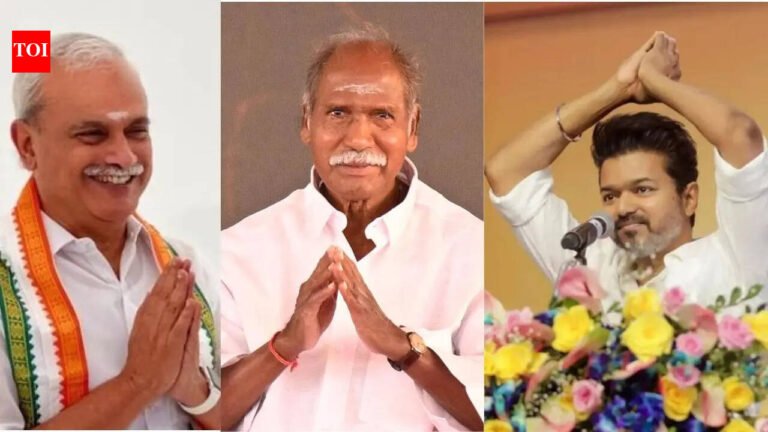
Congress’ V Vaithilingam; CM N Rangasamy; TVK chief Vijay

NEW DELHI: The upcoming Puducherry assembly elections have set the stage for a direct contest between the ruling National Democratic Alliance (NDA) of All India NR Congress (AINRC)–BJP and the Congress–DMK’s Secular Progressive Alliance (SPA).The NDA, led by chief minister and AINRC founder-president N Rangasamy, is aiming for a second consecutive term. Meanwhile, the Congress and DMK finalised their seat-sharing at the last moment, and will fight to reclaim power in the Union territory.

Puducherry assembly polls 2026

Puducherry assembly polls 2026

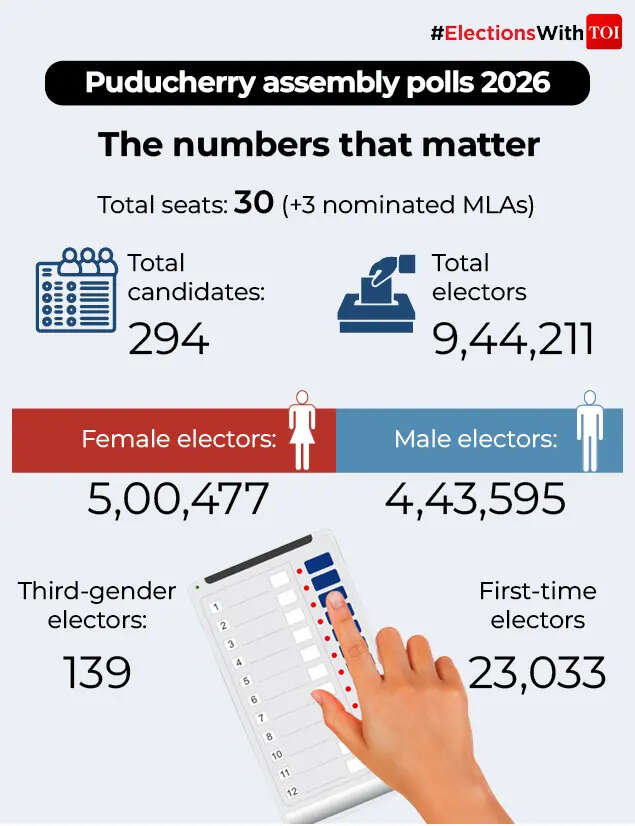
Puducherry’s 33-member legislative assembly includes 30 elected seats, while three members are nominated by the Centre. Voting will be held on April 9, followed by counting on May 4, alongside counting in Assam, Kerala, Tamil Nadu and West Bengal, all of which will also vote this month.

A snapshot of past elections

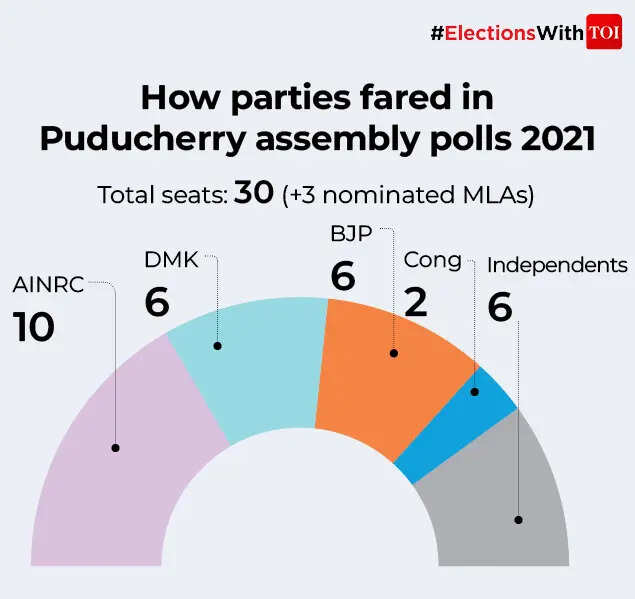
Puducherry has not re-elected a government since the Congress in 2006. In February 2011, Rangasamy, a former Congress member, launched the AINRC, which came to power a few months later. The grand old party reclaimed power in 2016, before the AINRC–BJP combine won the assembly elections in 2021.In the previous polls, the AINRC and BJP—contesting together for only the second time and their first assembly election as allies—ousted the Congress. The alliance won 16 seats, exactly the majority needed to form the government.

How parties fared in Puducherry assembly polls 2021

How parties fared in Puducherry assembly polls 2021

Five years before that, the Congress had emerged victorious with 15 seats, while the DMK added two more to their joint tally. The AINRC, which had experienced rapid success soon after its formation, was voted out, securing just eight seats.Can AINRC reverse the trend?

High-stake contest

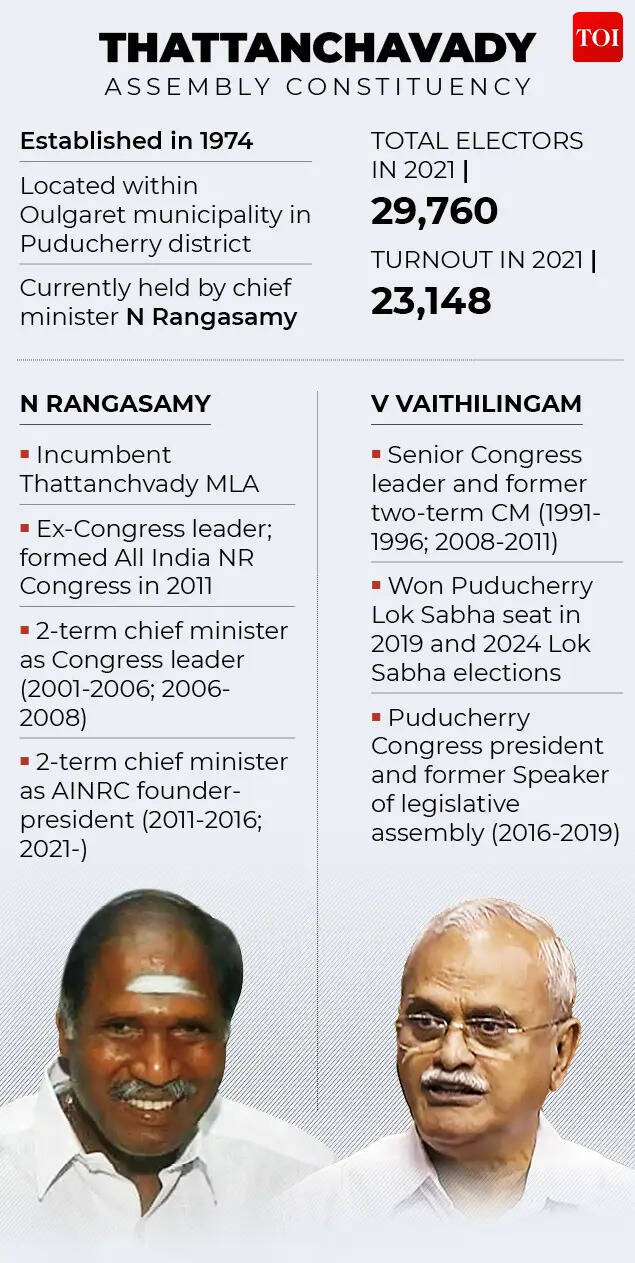
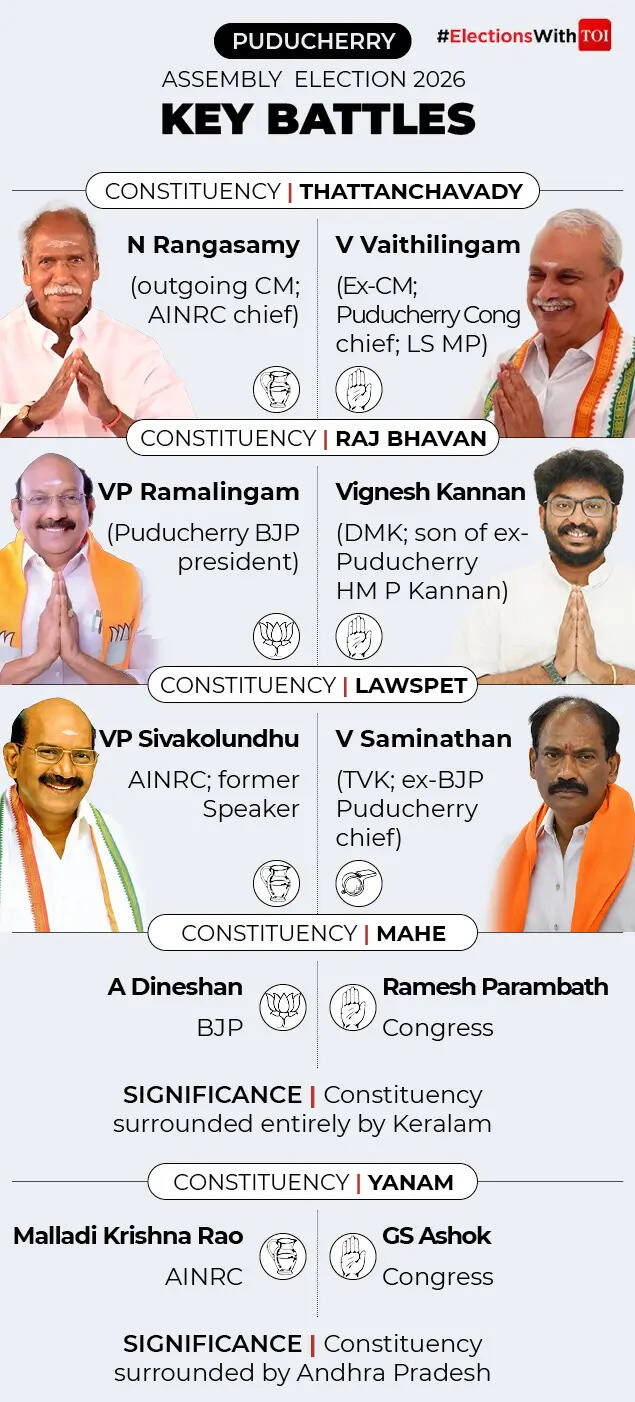
The most high-profile contest of the election is set to unfold in Thattanchavady, featuring two candidates who were once in the same party and have both held the UT’s top executive post. On the final day of nominations, with the Congress and DMK yet to finalise a seat-sharing agreement, V Vaithilingam, Puducherry Congress president and former chief minister, filed his nomination from Thattanchavady, setting up a direct clash against Rangasamy, the outgoing CM.

Thattanchavady constituency

Thattanchavady constituency

Since his second term as chief minister ended in 2011, Vaithilingam has represented the UT’s only Lok Sabha seat—also called Puducherry—which he won in both the 2019 and 2024 general elections. Meanwhile, Rangasamy has held the chief ministerial post four times, twice each with the Congress and later with the AINRC.Thattanchavady could, therefore, once again decide Puducherry’s next chief minister.

Major poll battles

While the Rangasamy–Vaithilingam contest will be the most high-profile battle, several other constituencies are also set to witness intense fights. For the Raj Bhavan segment, the NDA has nominated VP Ramalingam, the Puducherry BJP chief. The SPA nominee is Vignesh Kannan, who recently joined the DMK and is the son of the late P Kannan, an ex-Puducherry minister and a former parliamentarian.

Key battles

Key battles

In Lawspet, AINRC’s VP Sivakolundhu, who served as assembly speaker while in the Congress, faces a strong challenge from V Saminathan of actor-politician Vijay’s two-year-old Tamilaga Vettri Kazhagam (TVK). Saminathan, a former Puducherry BJP president, holds the distinction of being the longest-serving leader in that position, making this race a high-stakes contest.In Mahe and Yanam, which fall in Kerala and Andhra Pradesh respectively, the NDA candidates are A Dineshan (BJP) and Malladi Krishna Rao (AINRC). The SPA candidates are Ramesh Parambath (Congress) and GS Ashok (Congress).

Puducherry dynasty candidates

Puducherry dynasty candidates

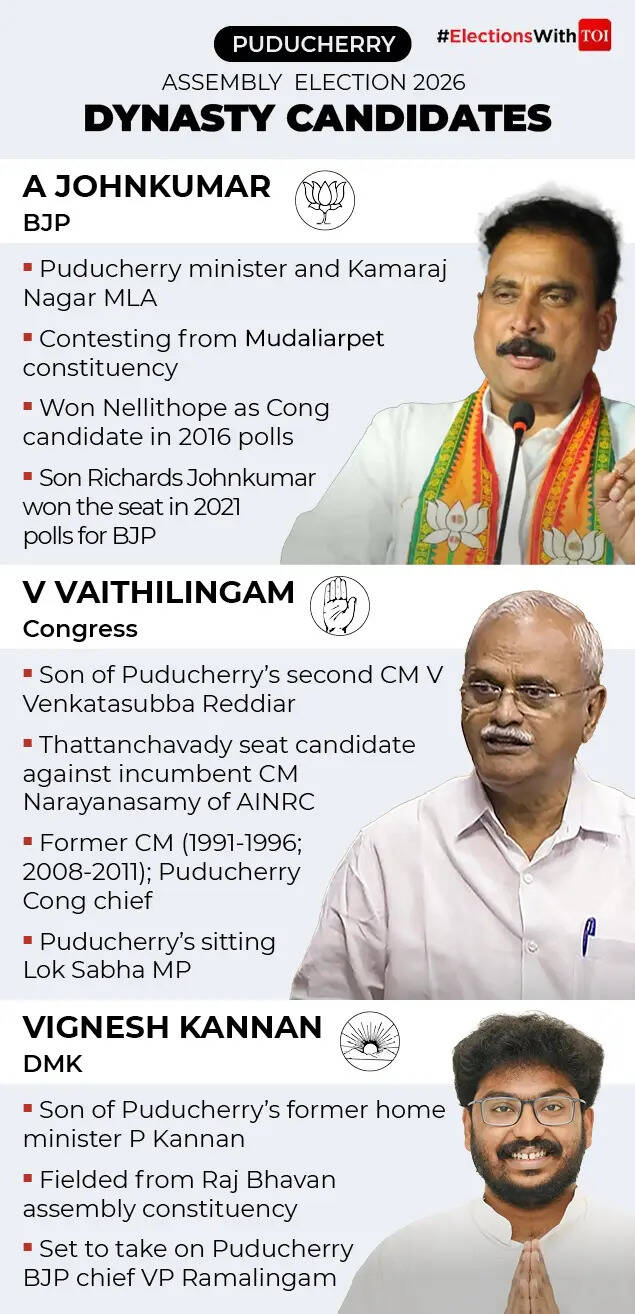
Other major candidates include home minister and BJP leader A Namassivayam (Mannadipet), minority affairs minister and BJP leader A Johnkumar (Mudaliarpet), and AINRC’s Nedungadu nominee Chandira Priyanga, a former minister who resigned in October 2023 as the lone woman in the cabinet.From the Congress-DMK alliance, DMK’s R Siva, leader of the opposition in the outgoing assembly, will contest from Villianur. DMK leader and ex-minister AMH Nazeem will contest the Karaikal South seat.

Key issues dominating the election campaign

Statehood: Ahead of the electoral battle, the long-pending demand for statehood for Puducherry has emerged as the biggest issue and could play a decisive role in the outcome. As the ruling party and an ally of the BJP, which leads the Union government, the AINRC stands to lose the most if the opposition is able to bring this issue to the forefront effectively.Puducherry’s Union territory status means that most administrative matters are decided by the lieutenant governor—the UT’s constitutional head appointed by the President on the Centre’s recommendation—rather than the chief minister. For instance, the police department reports to the Union home ministry, unlike in a full-fledged state, where it functions under the elected political administration. Successive governments in the UT have cited this lack of full-fledged powers as a hindrance to effective governance.‘Excessive’ focus on Puducherry district: The district, which shares its name with the Union territory and is home to its capital city of the same name, also accounts for a lion’s share of the assembly seats. Out of the 30 assembly constituencies, 23 are located here, giving it an overwhelming influence in determining the outcome of the elections. This concentration of seats means that political campaigns, party strategies, and voter attention are heavily focused on the Puducherry district, often overshadowing Karaikal, Mahe, and Yanam. Additionally, Mahe and Yanam are surrounded by two different states (Kerala and Andhra Pradesh, respectively), which shape their political and administrative dynamics differently.

Candidates with criminal cases

Candidates with criminal cases

Water contamination: In September 2025, the Puducherry city faced a public health concern due to contaminated drinking water in some areas, with many residents reportedly falling ill with symptoms like diarrhoea and vomiting after consuming unsafe water. The contamination was believed to be caused by poor sanitation and possible mixing of sewage with the water supply. The incident led to protests and raised concerns about the need for better water quality management and improved public health measures.Unemployment: Despite its small size and relatively low population, the UT has recorded a high unemployment rate. In June 2021, just a month into the AINRC–BJP government’s first term, the unemployment rate stood at a national high of 47.1%, according to a Centre for Monitoring Indian Economy (CMIE) study, compared to a national average of 9.2%.This was significantly lower than the figures recorded in April 2020, when the unemployment rate had peaked at 75.8% against a national average of 23.5%, largely due to the lockdown imposed to curb the spread of Covid-19.

SWOT analysis

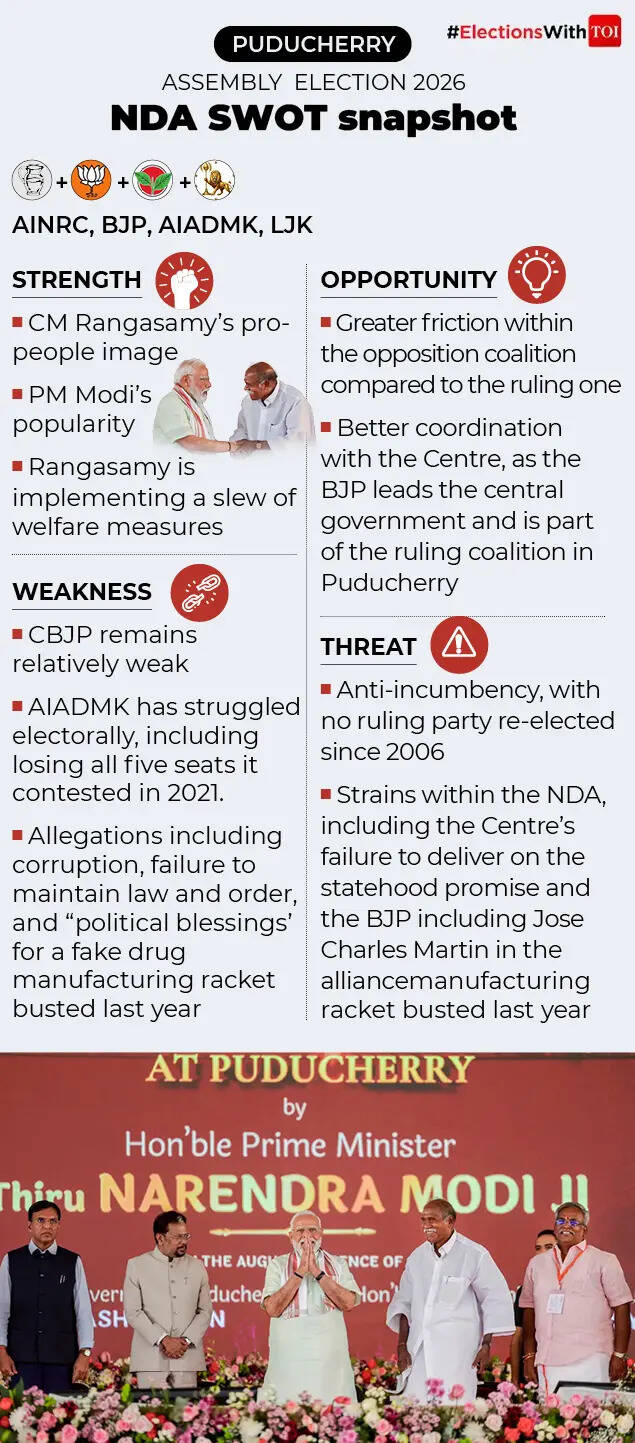
NDA: The alliance has retained its previous formula, under which AINRC will contest 16 seats and BJP 14. From its quota, the BJP has allocated two seats each to allies like the AIADMK and the newly formed Latchiya Jananayaga Katchi (LJK), led by businessman Jose Charles Martin, son of “lottery king” Santiago Martin.Strength

  • CM Rangasamy’s pro-people image
  • The UT government’s popularity
  • Rangasamy is implementing a slew of welfare measures

Weakness

  • BJP remains relatively weak in Puducherry
  • AIADMK has struggled electorally, including losing all five seats it contested in 2021.
  • Allegations including corruption, failure to maintain law and order, and “political blessings’ for a fake drug manufacturing racket busted last year

Opportunity

  • Greater friction within the opposition coalition compared to the ruling one
  • Better coordination with the Centre, as the BJP leads the central government and is part of the ruling coalition in Puducherry

Threat

  • Anti-incumbency, with no ruling party re-elected since 2006
  • Strains within the NDA, including the Centre’s failure to deliver on the statehood promise and the BJP, including Jose Charles Martin in the alliance

NDA SWOT

NDA SWOT

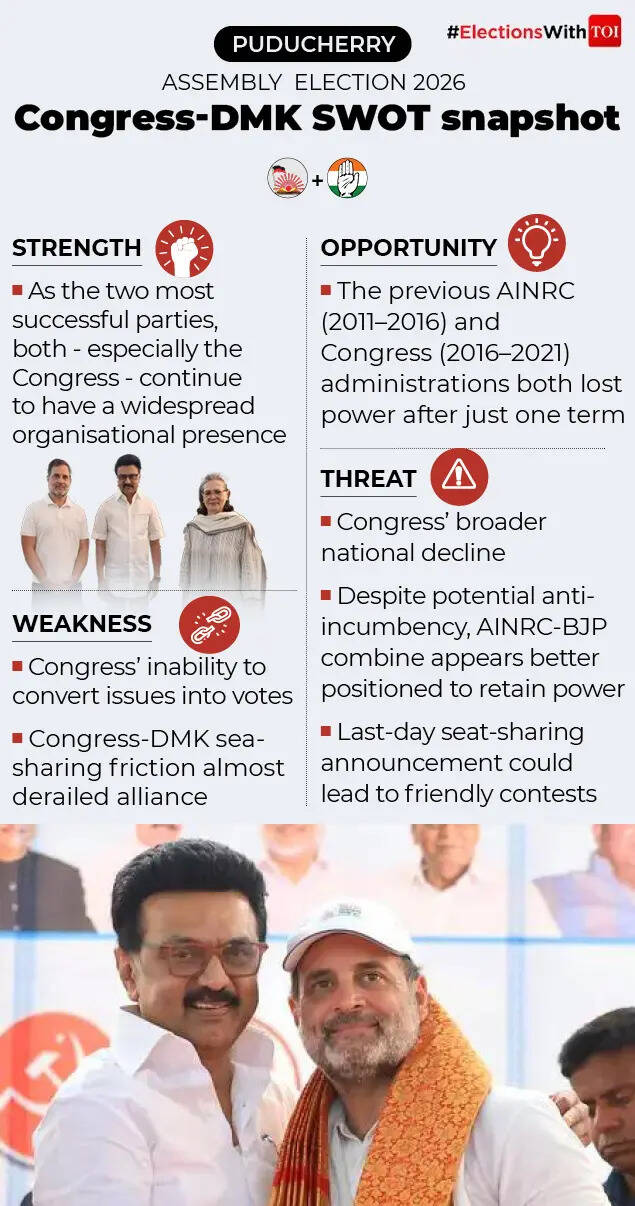
Congress-DMK: The Congress–DMK alliance is the more traditional of the two major coalitions, having contested assembly elections here since 2006.Last time, the DMK won six constituencies compared to the Congress’ two, emerging as the second-largest party and holding the leader of the opposition post.The Congress will field 16 candidates, with the remaining seats allotted to the DMK. The MK Stalin-led party had initially announced one seat from its quota for the Viduthalai Chiruthaigal Katchi (VCK). However, the VCK chose to contest independently and field its own candidates in three constituencies.Strength

  • As the two most successful parties, both – especially the Congress – continue to have a widespread organisational presence

Weakness

  • Congress’ inability to convert issues into votes
  • Congress-DMK sea-sharing friction almost derailed the alliance

Opportunity

  • The previous AINRC (2011–2016) and Congress (2016–2021) administrations both lost power after just one term

Threat

  • Congress’ broader national decline
  • Despite potential anti-incumbency, AINRC-BJP combine appears better positioned to retain power
  • The last-day seat-sharing announcement could lead to friendly contests
Congress-DMK SWOT

Congress-DMK SWOT

Wildcard factor

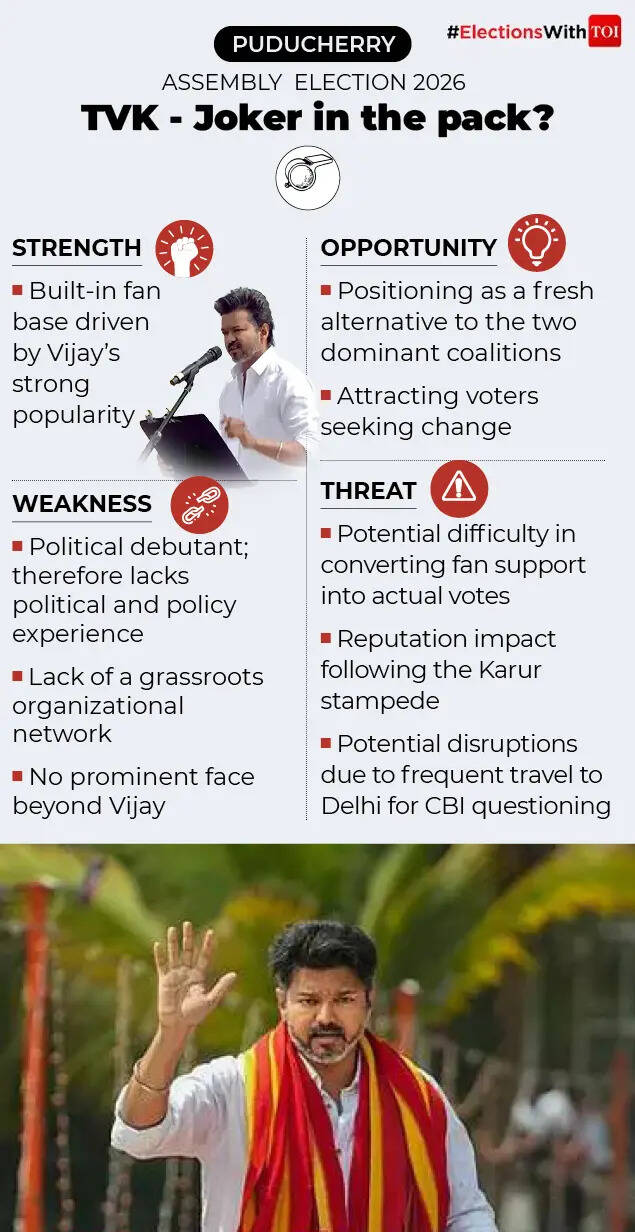
As in neighbouring Tamil Nadu, the biggest wildcard factor in Puducherry is “Thalapathy” Vijay. His TVK initially announced candidates for all 30 constituencies before joining hands with independent legislator G Nehru’s newly formed Neyam Makkal Kazhagam (NMK).Under this arrangement, the TVK withdrew its nominees from the Orleanpet and Thattanchavady seats for the NMK. Nehru himself will contest from Orleanpet, while NMK general secretary E Vinayagam will stand from Thattanchavady.Like in Tamil Nadu, the TVK’s biggest strength is Vijay’s massive popularity; his Puducherry rally in December last year drew thousands. Yet, converting his fan base into votes will be the party’s biggest challenge. Additionally, as a newly formed party—it was launched in February 2024—the TVK lacks both a strong grassroots organisation and governance experience compared to more established parties.Yet, TVK could attract voters seeking alternatives beyond the two major alliances. This could end up benefiting one of the two while hurting the other, and at the same time help establish TVK as a rising political force.Unsurprisingly, Vijay was reportedly courted by the AIADMK, BJP, and Congress in Tamil Nadu, but he declined overtures from all three.Strength

  • Built-in fan base driven by Vijay’s strong popularity

Weakness

  • Political debutant; therefore lacks political and policy experience
  • Lack of a grassroots organisational network
  • No prominent face beyond Vijay

Opportunity

  • Positioning as a fresh alternative to the dominant coalitions
  • Attracting voters seeking change

Threat

  • Potential difficulty in converting fan support into actual votes
  • Reputation impact following the Karur stampede
  • Potential disruptions due to frequent travel to Delhi for CBI questioning

TVK SWOT

TVK SWOT

Stage set for poll battle

As the elections approach, several political heavyweights—including Prime Minister Narendra Modi, Union home minister Amit Shah, and Congress MP and Lok Sabha leader of opposition Rahul Gandhi—are expected to visit Puducherry regularly to campaign for their respective parties..Still, attention is not on Puducherry as it is a Union territory and small in size. However, it has its own politics and stands out for its French colonial past and the fact that its four districts are spread across three different states, with two of the states—Tamil Nadu and Kerala —voting in the current round, giving the UT a unique political significance.With the key players and alliances in place, the stage is now set for a potentially close poll battle.

Shirley Kitson kidnapping: Last post before US journalist kidnapping case comes to light

0

American journalist Shirley Kittelson was reportedly kidnapped in the Iraqi capital by the Iran-backed armed group Kataeb Hezbollah Baghdadshared her last Instagram post on March 21. The 49-year-old was abducted on Tuesday, March 31, an incident confirmed by Al-Monitor, an independent media outlet for which she writes. Kitson is from Monticello, Wisconsin.

American journalist Shirley Kittelson poses for a photo in Baghdad on March 31, 2026. The United States said that as the regional security situation deteriorated after the United States and Israel attacked Iran, Kittelson was kidnapped by suspected Iranian-backed Iraqi armed groups in Baghdad on March 31 (AFP photo) (AFP)

We are deeply shocked to learn that Al-Monitor writer Shelly Kitson was kidnapped in Iraq on Tuesday, according to the New York Post. We call for her immediate and safe release. “The New York Post reported, and Al-Monitor said in a statement.

Learn more | American journalist Shirley Kittelson kidnapped in broad daylight in Iraq; video of kidnapping surface

“We support her important reporting in the region and call on her to return quickly to continue her important work,” the statement concluded.

Shirley Kitson’s last post

In one of his last Instagram posts, written more than a week before his abduction, Kittelson shared a photo of an empty desert with dark clouds in the sky. “Syrian desert. March 2026,” she wrote in the post.

Meanwhile, Middle East Uncovered shared Kittleson’s report on Instagram five days ago. The media wrote in the reporter’s label, “Sherkitsen reported from the field in Syria that a faint sense of calm reigned in Damascus as authorities tried to reassure foreign powers and avoid being drawn into the conflict. Some families said they were bringing relatives back home from other countries in the region to ensure their safety as they hoped to overcome all odds and avoid an escalation of the conflict.”

The title of the article is “Can Syria maintain stability amid regional escalation?”

Many well-wishers commented under the “Middle East Revealed” post, praying for Kitson’s safe return.

“I hope you get home safe. I’m praying for you and my heart is with you,” one user wrote. Another said, “I wish America would send Delta Force to take you home.”

Learn more | Who is Shirley Kitson? 5 things to know about the American journalist kidnapped in Iraq

“I hope Shirley you come home safe! Praying for you,” one user said, while another commented, “Oh dear friend I hope you are safe…and back to us soon…”

Shirley Kitson kidnapping

Kitson’s abduction was caught on camera, and video shared by local media on X reportedly showed armed men stopping her at a busy intersection in Baghdad and strapping her into the back seat of a car. Kitson has written extensively for BBC World, Politico and Foreign Policy.

Kitson was reportedly ambushed near a Baghdad hotel near the heavily fortified Green Zone. Two vehicles were reportedly involved in her abduction.

No one has claimed responsibility for Kitson’s kidnapping. However, a former Pentagon official believes the journalist may have been held hostage by an Iraqi Shia paramilitary group.

“I can confirm that my friend Shelly Kittleson was kidnapped and possibly held hostage by Khatib Hezbollah in Baghdad. Her whereabouts and condition are unknown. I am her designated U.S. contact. If you have information, please provide it to law enforcement and send me a private message,” Alex Plitsas write on X.

Kitson reportedly spent years reporting from war zones Afghanistan, Iraqand Syria.

NASA prepares for launch of Artemis 2 lunar mission: Countdown to April 1 launch begins, including mission details, full schedule, livestream and more |

0

NASA prepares for launch of Artemis 2 lunar mission: Countdown to launch begins on April 1, including mission details, full schedule, livestream and more

NASAThe upcoming Artemis 2 mission is the next crewed mission in the agency’s plan to explore deep space. This mission is the next step after the unmanned Artemis 1 mission. The mission will carry people and launch from the Kennedy Space Center in Florida using a Space Launch System rocket and an Orion spacecraft.The mission will take astronauts deep into the moon and back to Earth. The mission uses the Space Launch System rocket and the Orion spacecraft to test systems such as the spacecraft’s navigation, life support, propulsion and communications systems while a crew is aboard.

NASA Artemis II manned test flight and mission goals

Artemis 2 was a manned test flight. It will launch astronauts beyond low Earth orbit for the first time in the Artemis program. The mission is focused on system validation rather than exploration of the lunar surface.The spacecraft will follow a free return trajectory around the moon. This path allows Orion to fly around the far side of the moon and back without the need for major propulsion maneuvers. This is a planned route to support mission safety during early deep space flights.

Artemis II mission details: launch date, time and duration

Launch is expected no earlier than April 1, 2026the takeoff target is 6:24 PM (ET). Mission duration is estimated to be Lasts 10 days According to NASA. After launch, the rocket will put Orion into Earth orbit. The upper stage will then perform a translunar injection and send the spacecraft to the moon.After flying past the moon, Orion will begin its return journey and re-enter the Earth’s atmosphere. The mission will end with a splashdown in the Pacific Ocean, followed by recovery operations.

who is Artemis 2 crew and their roles

Artemis 2 crew

Computer: NASA

The Artemis 2 crew includes four astronauts:

  • Reed Wiseman, Commander
  • Victor Glover, pilot
  • Christina Koch, Missions Specialist
  • Jeremy Hansen, Mission Specialist (CSA)

Each crew member has a clear operational role. The commander leads mission execution. Pilots assist with spacecraft systems and navigation. Mission specialists support system monitoring, communications and onboard procedures. Crew training includes simulations, emergency procedures and spacecraft system operations. Their responsibilities span the launch, transportation and re-entry phases of the mission.

Artemis II launches today: How to watch live

Viewers can follow NASA’s official broadcast on YouTube and NASA+, the agency’s free streaming platform. The YouTube livestream will begin at 7:45 a.m. ET on Wednesday and will cover tank operations and continue throughout the 10-day mission. The NASA+ broadcast offers shorter selections starting at 12:50 pm ET, focusing on key moments such as crew attire, and concluding with the deployment of solar panels following Orion’s launch.watch here:

watch

NASA’s Artemis 2 crew launches to moon (official broadcast)

NASA’s Artemis II complete 10-day schedule

date
Time (Eastern Daylight Time)
Event details
Wednesday, April 1 7:45 am Coverage of tank operations begins with live broadcasts and commentary
12:50 noon NASA+ launch coverage begins; YouTube continues after solar array deployment

About 2.5 hours after launch
Press conference after the press conference
(Time depends on departure)
Thursday, April 2 8:30 pm Mission briefing after menstrual injection burns
10:24 pm Live streaming down events
Friday, April 3 3:30 pm mission status briefing
8:44 pm Live streaming down events
Saturday, April 4 12:59 noon Live CSA downlink events
4:34 pm Live streaming down events
5:15 pm mission status briefing
Sunday, April 5 12:14 noon Live CSA downlink events
3:30 pm mission status briefing
Monday, April 6 12:45 noon NASA+ Moon flyby coverage begins
1:45pm Astronauts on track to break Apollo 13 distance record
10:39 pm Live streaming down events
Tuesday, April 7 2:29 pm Crew communication with International Space Station astronauts (audio only)
4:00 pm mission status briefing
Wednesday, April 8 3:30 pm mission status briefing
7:09 pm Live CSA downlink events
Thursday, April 9 3:30 pm mission status briefing
5:59 pm Crew press conference
7:54 pm Live streaming down events
Friday, April 10 6:30 pm NASA+ coverage of the return begins
8:06 pm Pacific Ocean Splash
10:35pm Post-splash press conference

Source: NASA

Artemis 2: Design details of the Space Launch System rocket and Orion spacecraft

According to NASA’s report, the launch vehicle will be the Space Launch System, which consists of four RS-25 engines in the rocket’s core stage and two solid rocket boosters. The Orion spacecraft is designed to carry astronauts to the moon, meaning it will go beyond Earth’s orbit. The Orion spacecraft has a crew module, a service module and a launch abort system.The launch abort system is designed to ensure separation of the crew module in the event of an emergency during launch.

Artemis 2 launch countdown and procedures

Prelaunch operations begin days before liftoff. Engineers perform systematic inspections of various components of rockets and spacecraft. These inspections involve diagnostics of engines, avionics, batteries and communications systems.The Orion spacecraft’s flight batteries are fully charged. Batteries are required during launch and early flight. The core level battery is also charged. Batteries are required during launch. Engineers perform pressure checks on the astronaut suits aboard the Orion spacecraft to ensure they are functioning properly. As the countdown process nears its final stages, non-essential personnel leave the launch pad area. The ground launch sequencer begins operation. The ground launch sequencer is an automated system that performs the final countdown sequence. The system issues commands during the countdown, including engine ignition, valve operation, and system transitions.

Weather conditions for launch and their significance

Weather plays a key role in launch preparations. Forecasts for the launch window indicate overall favorable conditions. Monitoring includes cloud cover, wind speed, precipitation and possible electrical activity. NASA is also working with the U.S. Space Force, particularly its space launch Delta 45, to continually assess conditions. Weather restrictions include wind, cloud and lightning conditions. Surface and aloft winds are also monitored to ensure vehicle stability. Additionally, space weather was assessed, including solar flares and charged particle activity that could interfere with communications and navigation systems. As of NASA’s latest blog update on March 30, the weather forecast shows an 80% chance of favorable weather conditions, with cloud cover and possible strong winds on the ground being the main weather issues.Real-time monitoring continues until liftoff, and any violation of weather standards will cause delays in protecting the crew and mission hardware.

Uttar Pradesh CM Yogi announces launch of 250 electric, CNG vehicles; strengthens Lucknow’s “clean, smart, green” vision

0

In a post on

Lucknow: Chief Minister of Uttar Pradesh Yogi Adityanath The Lucknow Municipal Corporation will take delivery of 250 electric and CNG vehicles on Wednesday as part of the state government’s efforts to make the city cleaner and more sustainable.In a post on

watch

Global war sparks panic, rumors spread, UP CM Yogi Adityanath warns against hoarding of LPG

“Under the successful guidance of Prime Minister Hon’ble @narendramodi ji, the new Uttar Pradesh is transforming itself into a smart world-class urban hub and achieving the goal of ‘zero waste to zero carbon emissions’. In this sequence, to ensure ‘easy life’ for the residents of Lucknow, I will be involved in the rollout plan of 250 electric and CNG vehicles of the Lucknow Municipal Corporation in the near future,” the CM wrote.Describing these vehicles as a twin-engine symbol of the government’s commitment, CM Yogi emphasized their role in strengthening waste management infrastructure in Lucknow.“These vehicles are a symbol of the twin-engine government’s commitment to cleanliness, sustainability and environmental protection. Through them, Lucknow’s efforts to be clean, smart and green will gain greater momentum,” he said. Meanwhile, the Chief Minister on Monday conducted a routine ‘Janata Darshan’ at the Chief Minister’s residence in Lucknow to interact with citizens, listen to their grievances and interact with them as part of his routine outreach programme.During Janta Darshan, officials received instructions from the chief minister to address issues highlighted by the public. The program is part of CM Yogi’s ongoing outreach to maintain direct contact with residents.Highlighting Uttar Pradesh’s record in government employment, the chief minister on Sunday said the state had provided nine lakh government jobs in the last nine years and emphasized transparency in the recruitment process. “Uttar Pradesh is the most populous state in the country. The state has a population of 250 million and in the last nine years, we have provided government jobs to 9 lakh youth. No one, not even the opposition, can question the transparency of a single job or the selection process,” CM Yogi said at the appointment letter distribution ceremony for 665 paramedics in Lucknow.

Fiscal Year 2027 H-1B Cap Selection: USCIS Completes Process and Issues Statement

0

U.S. Citizenship and Immigration Services says annual quota of 85,000 has been reached H-1B FY 2027 beneficiary caps. It also completes regular and advanced degree selection draws.

FY 2027 H-1B cap selection: USCIS completes process and releases statement (AFP)

The agency also said it has notified all potential applicants for selected beneficiaries that they can submit H-1B cap petitions for those beneficiaries.

“FY 2027 H-1B cap petitions, including those eligible for the advanced degree exemption, may be submitted to immigration office Beginning April 1, 2026, if an application is submitted for a selected beneficiary and based on valid registration,” a statement from USCIS on Tuesday, March 31 said.

Learn more | Did Trump effectively end the H1B visa program?

USCIS states that the time limit for filing H-1B cap petitions is at least 90 days. It also lets applicants know that they must include a copy of the applicable selection notice with their FY 2027 H-1B cap application.

The USCIS also stated that it will accept the new version of Form I-129 released on February 27, 2026.

Changes to the H-1B Selection Process

The H-1B screening process has now been changed to a salary-based model. As part of this model, priority will be given to applicants with higher salaries and skills. The change is intended to align visa allocations with labor market needs and reduce abuse of the system.

Learn more | Why does the United States increase visa processing fees? Check out the new rates for H-1B, F-1, and O-1 petitions

One of the changes is the previously introduced significant fee component of a $100,000 fee that will be charged in limited circumstances when an employer sponsors a worker outside the United States. The measure is aimed at encouraging domestic hiring rather than reducing reliance on overseas hiring.

Currently, Congress has set the regular annual cap for the H-1B category at 65,000. An additional 20,000 petitions were filed on behalf of beneficiaries who have earned a master’s degree or higher USA Higher education institutions are exempt from the cap.

According to USCIS regulations, H-1B cap petitions filed on behalf of the beneficiary must contain and be supported by the same identity and position information as the selected registration. USCIS also said applicants must submit evidence of a valid passport or travel document used by the beneficiary at the time of enrollment.

Iran’s Supreme Leader Pezeshkian and Araghchi “smiled, socialized, and took selfies” World News

0

Screenshot source: X/@ActualidadRT

Iranian President Masoud Pezeshkian and Foreign Minister Abbas Araghchi, along with senior officials in the capital Tehran, made a rare public appearance on Tuesday to attend a pro-regime rally in the city to mark Islamic Republic Day.The officials were seen casually mingling with attendees, taking selfies and walking through crowds without apparent security amid rising tensions in the Middle East and ongoing threats against Iran’s senior leaders.

watch

Houthi armed forces attack southern Israel; alarm sounds in strategic Beersheba; Red Sea flashpoint returns

“I came among them to draw energy from the local movement and enjoy this unity and the cohesion of the people,” Araghchi told reporters. Videos of their participation quickly circulated on social media, according to Ynet News. Pezeshkian and Araghchi were last seen in public on Iran’s Quds Day, along with former security chief Ali Larijani, who was killed in a U.S.-Israeli attack days later.Their emergence comes after Israeli Prime Minister Benjamin Netanyahu publicly listed the “top ten plagues” against Iran, including attacks on the country’s senior leadership, and claimed Israel was “systematically suppressing the terror regime.”In his speech to the European Council, Pezeshkian reiterated Iran’s willingness to end the ongoing conflict as long as “basic conditions are met, especially the guarantees needed to prevent the recurrence of aggression.” The statements reflect Tehran’s counter-proposal to the US’s 15-point plan, calling for the establishment of mechanisms to prevent a resumption of hostilities between Israel and the United States.Araghchi confirmed ongoing communications with US Middle East envoy Steve Witkoff but denied they were in talks. “What is happening now is not a negotiation but an exchange of information, either directly or through our friends in the region,” he told Al Jazeera. “We have not yet made any response to the 15-point proposal of the United States. Our conditions for ending the war are clear. We will not accept a ceasefire.”Reports indicate that Araghchi and Knesset Speaker Mohammad Bagher Ghalibaf were temporarily removed from U.S. and Israeli hit lists about a week ago to allow for potential talks, but they have not yet taken place. Iranian leaders stressed that they are ready to defend the country under any circumstances.

Electricity Amendment Bill 2025: Why farmers, workers and states are resisting

0

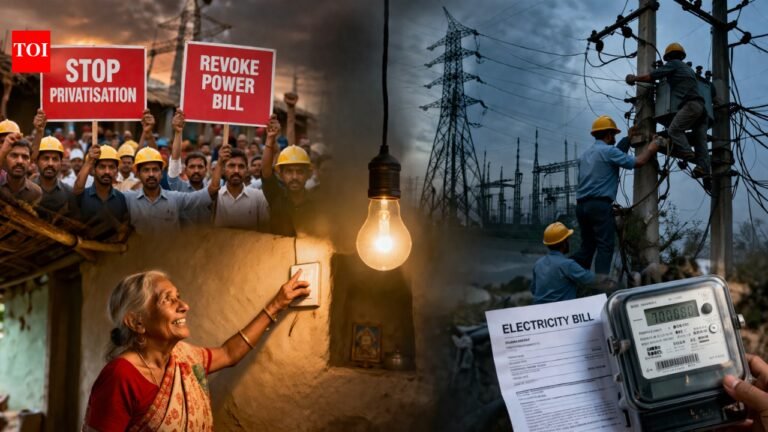
Nearly 2.7 million workers are preparing for nationwide strike— Triggered by one move: the introduction of the Electricity (Amendment) Bill, 2025 in Parliament. These are not just ordinary workers, but the people who keep the nation’s electricity running – engineers, linemen and workers throughout the electrical system. The Center is yet to table the bill in Parliament.The unrest was already visible earlier this month when workers at several state power boards went on strike in protest.Opposition is not limited to labor. Farmer unions have also raised concerns, indicating that resistance to the bill spans across sectors. However, the government sees the draft Electricity (Amendment) Bill, 2025, as a long overdue reform aimed at making the power sector more competitive, efficient and better able to meet future needs. At its core is a key shift: allowing multiple distribution companies to operate in the same area, using shared infrastructure while maintaining the obligation to deliver electricity to all consumers.But it’s not as simple as a switch, a lightbulb and a wave of happiness. For Kaveri Amma, the arrival of electricity was like a silent miracle—simple, shared, and powered by a single supplier, lighting up the entire village.But if Kaveri Amma were alive today, this simplicity would no longer hold true. Power will still come at the flip of a switch—but there won’t be just one Shah Rukh Khan-like figure pulling the strings. It could be that multiple companies share the same wires, competing to provide power to the same home.This shift is at the heart of the Electricity (Amendment) Bill, 2025. “Privatize!”– Power workers, farmers and unions have been pushing back against the term. The Center has been trying to amend the electricity law for more than a decade, but every attempt has been met with resistance.The opposition is not only targeting the bill, but also the way it is drafted. A working group set up by the power ministry in January 2026 finalized the bill but faced criticism from the power sector all india federation of electrical power engineersthe group flagged the All India Telecommunications Association’s inclusion, saying it showed a leaning toward privatization and sidestepped workers’ concerns.

-

But privatization is not the only concern. The bill could change something more immediate — who delivers power to consumers and how much they end up paying.Here’s the thing, the Indian power industry is at an interesting crossroads. Electricity usage is climbing steadily—more appliances, more electric vehicles, more data centers quietly running in the background. Currently, the system is catching up. In 2025, the country will reach a record peak demand of more than 240 GW and total installed capacity will exceed 500,000 MW. Even more striking is the shift in the energy mix—more than half of production capacity now comes from non-fossil energy sources. On the surface, it looks like an industry that is expanding, modernizing, and even getting cleaner.But behind this growth story lies a more complex reality. Providing electricity to your home still depends on a vast and expensive network – generation, transmission and ultimately distribution. And this last stop is still under the greatest pressure. State-run distribution companies (discoms) have historically struggled with mounting losses. In fact, it was only recently, after years of deficits, that they collectively issued a modest profit It will be approximately Rs 2,700 crore in 2024-25. To put things in perspective, the industry’s losses were over Rs 25,000 crore a year ago and nearly Rs 68,000 crore a decade ago. It’s a shift, but a fragile one, still based on low tariffs, delayed subsidies and persistent inefficiencies.This gap between the fast-growing power system and financially strapped distributors is what the government is trying to address through the Electricity (Amendment) Bill, 2025. Versions of it have appeared several times over the past few years. But the theme remains the same: introduce competition, allow multiple companies to supply power in the same area, and give consumers more choice while pushing the system to become more efficient, at least in theory.

Why are farmers opposed?

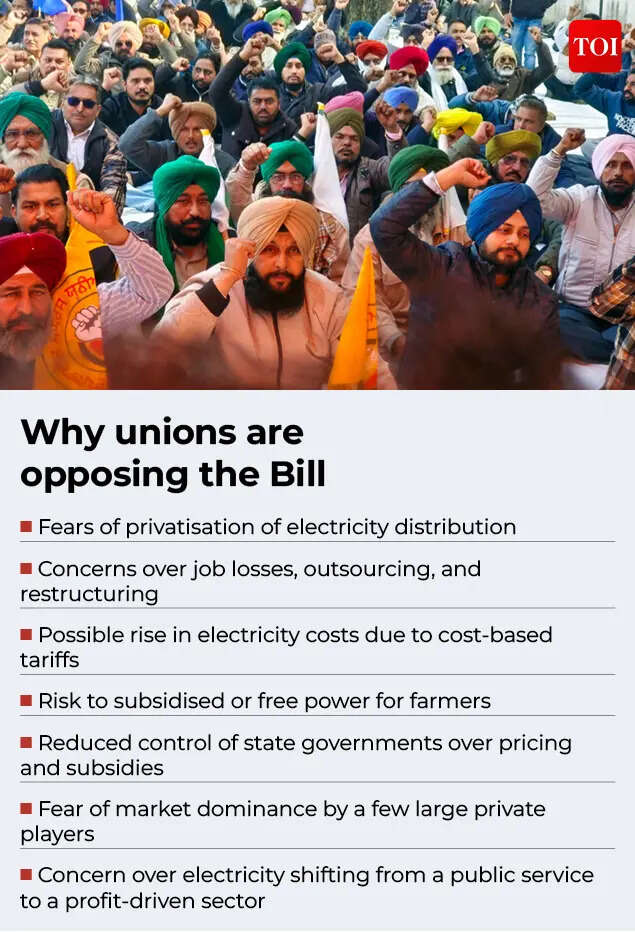
A focus of the proposed reforms is tariff reform and efficiency. The government said the bill would move to cost-reflective tariffs while continuing to provide targeted subsidies through the state budget for vulnerable groups such as farmers and low-income households. But the farmers’ unions don’t buy it. In India, some states provide free or subsidized electricity to farmers. The entry of private players will eventually make state-run distributors inefficient, forcing farmers to pay to choose private suppliers.

-

Railway roko protest by Kisan Mazdoor Morcha

Center and state issues

Another deeper question is who calls the shots. Currently, electricity distribution is primarily the responsibility of the states. Each has its own utility, as well as a degree of control over tariffs and subsidies – often used as policy levers and sometimes as political commitments.The concern is that this balance may shift. If a central regulator or new private players enter the system and gain greater control, states may find themselves with less say in how electricity is priced and who receives electricity subsidies. For many, it’s not just a management adjustment, but the loss of a critical tool they’ve relied on for a long time.These concerns are not limited to policy. They also extend into the world of work. With more private involvement, there are concerns about outsourcing, the restructuring of state-owned utilities and the potential for job losses across the industry – especially for the workforce now leading the protests.Center of Indian Trade Unions (CITU) vice-president Tapan Sen said: “Privatization and open access will lead to mass unemployment, contractualization and outsourcing. By allowing private license holders to enter the defense zone, the bill also jeopardizes national security in the name of ‘ease of doing business’.”

What about consumers?

In India, electricity is a politically sensitive topic. Elections in India are won on promises of free or subsidized electricity. The commodification of this subject thus fuels debates about the welfare state.“The bill is part of a wider neoliberal strategy to hand over the entire electricity supply chain – from generation to distribution – to private monopolies,” CITU said. “By promoting speculative electricity markets, this bill transforms electricity – a basic human necessity – into a tradable commodity. Such deregulation will lead to price volatility, supply unreliability and the erosion of public control over energy security,” Sen said.The bill aims to improve the competitiveness of the electricity industry. Competition provides consumers with choices, lowers prices and provides them with the best service. It clearly states that “lack of competition When it comes to electricity supply, consumers are tied to a single distribution system, limiting service quality and innovation. “On paper at least, the promise is simple: More competition means more selection, better service and lower prices. This is the logic driving this bill. If multiple companies can provide electricity in the same area, they will compete to keep consumers happy.But things don’t always go smoothly. In some industries, competition initially played a role, such as telecommunications. More players join, prices drop, and service improves. But over time, competition for the same diminished. What was initially a crowded market eventually narrowed down to a handful of dominant players. Similarly, efforts to privatize Air India were initially welcomed, but the recent IndiGo crisis exposed the dangers of duopoly in the system.This possibility exists here as well. Even if several power distributors enter the same area, the market may not remain crowded forever. It can be solved around a few large companies. When that happens, competition may still drive better service, but it won’t necessarily guarantee cheaper electricity.

-

How successful have the privatization initiatives been?

If the idea is to bring in private players to solve the distribution problem, India has already tried it, just not on a large scale. Distribution companies are at the end of the power chain and are responsible for delivering electricity to homes and charging them for it. In fact, they are monopoly retailers in their respective fields. Yet despite their central role, most state-owned telecoms companies have struggled for years with losses, inefficiencies and mounting debt. Privatization is often considered a way out of this cycle.In fact, only a handful of states have gone down this path. Odisha was one of the first regions to try it in the late 1990s, but the initial attempts were unsuccessful and had to be cancelled. The 2002 Delhi experience is often considered a benchmark. After breaking up the electricity board and bringing in private operators, the practical effects were clear – system losses dropped dramatically. Over time, total technology and commercial (AT&C) losses, once as high as 45-60%, fell below 6.5%. That’s a significant improvement, especially when the national average still hovers around 15%.But that’s only part of the story. As a research analysis by the Center for Social and Economic Progress points out, although efficiency has improved and supply has become more reliable, the financial situation remains complex. Tariffs continue to be heavily regulated and disagreements between regulators and distributors over cost approvals have become the norm. Much of the costs claimed by telcos are not always recoverable through tariffs, leading to the accumulation of “regulatory assets” – essentially costs deferred to the future. In the Delhi case, such losses have run into tens of thousands of rupees and disputes between tribunals and courts have been going on for years.This is where the limitations of privatization begin to show. Bringing in private operators may solve operational problems, such as reducing theft or improving billing, but it does not automatically solve deeper structural problems. Issues surrounding tariff setting, cost recovery and regulatory oversight have not gone away. In fact, if anything, they have become more controversial. The result is a system where increased efficiency coexists with financial uncertainty, with costs that may still have to be borne by the end consumer.This is perhaps why most states are not rushing to follow Delhi’s path. Government-run distribution companies still dominate and private participation remains limited. The broader lesson of the past two decades is quite clear – privatization can improve the way electricity is delivered, but it does not by itself guarantee the stability of the financial system. This again depends on how the industry is regulated and how those rules are enforced.