
Home Blog Page 312

Beyond Silicon Valley: India and UAE are building new human-centric AI models

0

Beyond Silicon Valley: India and UAE are building new human-centric AI models
India-UAE Artificial Intelligence Partnership: Human-Centered Artificial Intelligence Collaboration for Social Welfare and Growth

By 2026, Asia’s two fastest growing digital economies, India and the United Arab Emirates (UAE), will deepen cooperation in artificial intelligence (AI), moving beyond commercial interests towards a shared vision of human-centered AI that emphasizes social welfare, responsible governance, equitable growth and ethical use of emerging technologies. India and the UAE already have strong diplomatic and economic ties rooted in long-standing people-to-people ties and expanding trade ties.However, their collaboration in the field of artificial intelligence marks a strategic upgrade of this partnership, basing technology cooperation on shared values ​​of inclusivity, social impact and ethical stewardship. During President Sheikh Mohamed bin Zayed Al Nahyan’s official visit to New Delhi in January 2026, the two countries doubled down on cooperation in advanced technologies, with a special focus on AI infrastructure, research, workforce skills and ethical frameworks, reflecting a shared desire to leverage AI not only to improve efficiency but also to benefit humanity.The related memorandum of understanding (MoU) also paves the way for joint AI data center and supercomputing projects in India, including supercomputing clusters and plans to expand computing capabilities, which will accelerate research, model training and commercial applications across industries. The India AI Impact Summit 2026, scheduled to be held in New Delhi from February 16 to 20, will be a landmark gathering that brings together governments, technology innovators, industry leaders, researchers and civil society to develop a collective roadmap for responsible, inclusive and human-centric AI.

Why human-centered artificial intelligence matters

Human-centered AI is an emerging global standard that balances innovation with ethical considerations, including fairness, transparency, accountability and public value. This approach has attracted attention not only in India and the UAE but also internationally:

  • Digital Inclusion Summit 2026Ahead of major AI policy-making events in New Delhi and Dubai, the conference focused on human-centered AI in education, putting teachers and students at the center of the agenda.
  • Globally, from the EU AI Bill to multilateral forums, debates on AI governance increasingly focus on the reconciliation of AI with human rights and social values.

For India, human-centered AI aligns with national goals such as “AI for All,” a strategy that aims to use AI to improve health care outcomes, extend digital public services to underserved populations, and promote inclusive economic growth. In the UAE, human-centricity of AI is reflected in initiatives such as promoting responsible technology, protecting privacy and ensuring transparent AI deployment in public services, as part of a broader national AI strategy that is rapidly expanding the use of intelligent systems by government and industry.

Three pillars of India-UAE cooperation in artificial intelligence

  1. Infrastructure and innovation ecosystem: The two countries are exploring joint investments in data centers and supercomputing capabilities, which will not only accelerate artificial intelligence research but also strengthen data sovereignty and computing resources in India’s booming tech ecosystem. This type of collaboration can help free up high-performance computing workloads, which are critical for training large artificial intelligence models, improving research results, and supporting complex applications in fields ranging from agriculture to healthcare. It also fits with a global trend in which investment in computing increasingly determines leadership in artificial intelligence.
  2. Workforce development and skills exchange: The collaboration focuses on developing human capital in the field of artificial intelligence. India’s emphasis on AI’s social impact requires a workforce that is not only proficient in algorithms but also in ethical frameworks and public policy design. The UAE places equal emphasis on capacity building and training programs for government officials and private sector professionals to utilize artificial intelligence responsibly. Joint initiatives could include educational programmes, vocational training and exchange mechanisms to equip students and professionals with future-ready skills, a priority highlighted by both countries’ push to integrate AI literacy into broader economic strategies.
  3. Governance, ethics and policy framework: India and the UAE are looking to co-design governance principles to govern how artificial intelligence is deployed, ensuring it upholds human rights, protects privacy and fosters trust. This aligns with global momentum for AI accountability and transparency, including initiatives such as Dubai’s push for the Visible Humanity AI Contribution Icon and the Global Prize for Responsible AI Governance.

By sharing insights into regulatory design, risk assessment and ethical standards, the two countries contribute to a global framework for human-centered AI that other countries can adopt to seek a balance between innovation and social impact.

Regional and global footprint in India and UAE

India-UAE AI partnership reflects broader regional dynamics:

  • bay Countries, including the UAE, are accelerating the adoption of artificial intelligence to enhance economic diversification, public services and innovation ecosystems.
  • With a vast digital ecosystem and a large IT workforce, India has positioned itself as a global AI powerhouse, contributing not only talent but also policy leadership in the field of human-centered AI.

Such cooperation would also have ripple effects across South Asia middle East and Africa, promoting deeper cross-border investments in responsible AI, joint research centers and regional governance frameworks.

Challenges and opportunities for India and the UAE

Despite this promise, human-centered AI collaboration faces real challenges—

  • Moral Diversity: Coordinating AI governance across different legal and cultural contexts requires sensitive negotiations and mutual respect for local norms.
  • Talent gaps: Both countries must invest in AI education and lifelong learning to ensure a ready workforce that can sustain innovation while managing ethical risks.
  • Data governance: Harmonizing data protection standards and cross-border flows without compromising privacy or security remains a complex task that requires ongoing policy dialogue.

However, these challenges are also opportunities, as India has a large pool of developers and data scientists, and the UAE’s strategic investments in AI centers can create complementary advantages that benefit both countries and the global AI community. As countries race to leverage artificial intelligence to boost economic growth and social well-being, the India-UAE partnership offers a model of cooperation based on people-centric values. By combining innovation with ethics, infrastructure with skills, and governance with accountability, this bilateral agenda is likely to influence regional AI norms, talent ecosystems, and policy frameworks long into the future.Ultimately, this collaboration underscores a shared understanding that AI should serve humanity, not just the market. This principle resonates in New Delhi, Abu Dhabi and beyond. The human-centered AI agenda between India and the UAE represents a new frontier for digital cooperation, blending technological ambition with ethical commitment. By investing in infrastructure, talent, and governance, both countries are positioning themselves not just as adopters of AI, but as leaders in shaping the future of technology that equitably enhances communities, economies, and societies.
‘India stands with Canada’: PM Modi expresses condolences over BC school shooting that leaves 10 dead India News

0

Canada attacks: B.C. school shooting leaves dozens dead; PM Carney calls for unity

Prime Minister Narendra Modi (PTI Photo)

New Delhi: Canadian Prime Minister Narendra Modi on Wednesday expressed shock over the Canadian school shooting that left 10 people dead and expressed condolences to the families of the victims.Prime Minister Modi wrote in a post on

Canada attacks: B.C. school shooting leaves dozens dead; PM Carney calls for unity

The shooting occurred at Tabler Ridge Secondary School in British Columbia. Eight people died in and around the school, including a woman believed to be the shooter who appeared to have died of a self-inflicted wound, according to the Royal Canadian Mounted Police (RCMP). According to the Associated Press, two more people were found dead in a nearby home, bringing the death toll to 10 people believed to be related to the attack. More than 25 people were injured in the incident. Authorities said police arrived at the school within minutes of reports of the shooting.The suspect has been identified as a female, but her name has not been released. Investigators are still trying to determine the motive behind the attack and the connection between the victim and the shooter. Police say the early stages of such an incident are often chaotic, with multiple reports needing to be verified.An emergency alert was issued shortly after 2 p.m., asking residents to shelter in place and avoid the area while police secured the scene. Tumbler Ridge Health Center declared a code orange, indicating a mass casualty emergency, and restricted access while medical teams responded.Tumbler Ridge is a small community of approximately 2,700 people in the Canadian Rockies, more than 1,000 kilometers north of Vancouver. The middle school has approximately 175 students in grades 7-12. Community leaders called the tragedy devastating and said many residents knew the victims.Canadian Prime Minister Mark Carney said he was “shocked” by the shooting and expressed his condolences to the families affected. He also announced the suspension of planned travel in light of the tragedy. British Columbia Premier David Iby called the incident an “unimaginable tragedy” and urged people across the province to support grieving communities.School shootings are rare in Canada. The attack has been described as the country’s worst mass shooting since 2020, when a gunman killed 22 people in Nova Scotia.

Carlos Palazuelos Family: Man jailed in Nancy Guthrie case released, mother-in-law exclaims: ‘My daughter and him…’

0

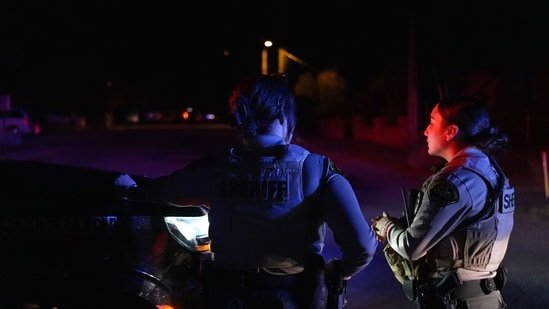
Carlos Palazzolosthe man was detained for interrogation in connection with the matter Nancy Guthrie CNN reported on Wednesday that the investigation was now public, citing its affiliate KNXV.

Carlos Palazuelos, who was detained in the Nancy Guthrie case, has been released without charge, KNXV reports. (AP Photo/Ty O'Neill) (AP)
Carlos Palazuelos, who was detained in the Nancy Guthrie case, has been released without charge, KNXV reports. (AP Photo/Ty O’Neill) (AP)

Law enforcement arrested Palazulos for questioning at a traffic stop in Rio Rico on Tuesday. Rio de Janeiro is located an hour south of Tucson, close to the United States –Mexico boundary.

The detention was based on investigative leads. However, that person was not charged, according to law enforcement officials who spoke to CNN at the time.

this pima county Investigators have concluded a search of a property in Rio de Janeiro, the Sheriff’s Department announced Wednesday.

Also read: Is Dominic Evans the masked man in Nancy Guthrie’s suspected video? Fact-checking viral claims linking Tommaso Cioni

Carlos Palazulos’ mother-in-law speaks out after his arrest

Palazzolos’ mother-in-law insists he is innocent. A woman who calls herself “Josefina” told NewsNation’s senior national correspondent Brian Entin that her son-in-law showed up at her home in Rio de Janeiro. Arizonaduring Guthrie’s disappearance.

The person detained during the traffic stop has not yet been labeled a suspect.

She revealed that Carlos and her daughter are now living in her house after being evicted from their previous home and are currently waiting for a tax refund to secure enough funds to relocate.

“My daughter and him and the kids, my grandkids, they were doing DoorDash when they got pulled over here,” Josefina told the outlet.

“They’ve asked us a lot of questions about him. Like I said, I have nothing to hide. You can come into my house. You can search anything you want. There’s nothing to hide. I don’t know this lady, I don’t know this lady. I saw on Facebook that she (is missing),” she added.

Also read: Annie Guthrie and Tommaso Cioni’s Marriage and Children: Inside Their Relationship Amid ‘Prime Suspect’ Allegations

Carlos Palazzolos’ mother-in-law calls him ‘a good guy’

Josefina called her son-in-law a “good man” and insisted he had no criminal record or history of violence. When seeing surveillance images captured by the person being monitored Nancy Guthrie’s Ring camera, Josefina said it didn’t look like Carlos.

She further noted that when she “made sure” her son-in-law was home Guthrie Missing. “On the weekends, he stayed at my house. He didn’t go anywhere,” she told NewsNation.

When asked about the possibility of leaving during the night, Josefina responded: “Oh, no, no,” further explaining that his van was currently unavailable.

Has Kerala’s Left taken a Right turn? | India News

0

Has Kerala's Left taken a Right turn?

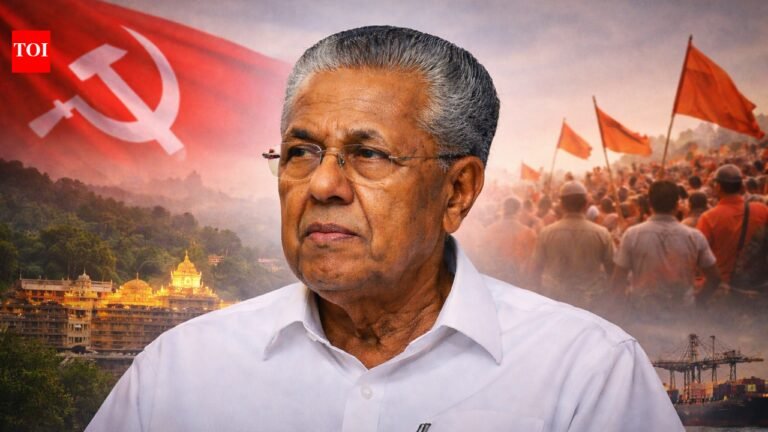
Kerala chief minister Pinarayi Vijayan condemned his Assam counterpart Himanta Biswa Sarma’s “point-blank” video, terming it “communal hate mongering”. However, it was only weeks ago when he himself remained at the center of a controversy for supporting a communal statement in his state.Kerala’s Left has, for decades, projected itself as an ideological outlier in Indian politics — secular, class-driven, and resistant to the communal polarisation that has reshaped much of the country.

PM Modi Signals Political Shift In Kerala, Assures Sabarimala Probe, Attacks LDF-UDF In Big Rally

Alternating in power with the Congress-led UDF, the CPM-led LDF built its dominance on welfare politics, strong grassroots organisation, and a firm rejection of identity-based mobilisation. Yet, as the state heads toward another high-stakes electoral cycle, that self-image appears increasingly strained.Recent years have seen the Left navigating a far more complex political terrain.Anti-incumbency pressures after two consecutive terms, the steady expansion of the BJP’s footprint, and shifting demographic and electoral calculations have forced recalibration. In response, the LDF’s politics has begun to display sharper edges — marked by strategic outreach to majority sentiment, selective engagement with religious institutions and a willingness to deploy rhetoric it once distanced itself from.It is against this backdrop that a spate of communally charged statements and controversies has moved to the centre of Kerala’s political discourse. What was once confined to accusations of covert alliances and backroom deals has now acquired a distinctly communal framing, raising questions about whether the Left is merely reacting to new political threats — or consciously adopting elements of the very playbook it long criticised.

Jamaat and the ‘Marad riots‘ rhetoric

Jamaat-e-Islaami Hind has once again found itself at the centre of a political storm in Kerala — but this time, the sharper focus is on the surge of communal rhetoric that has accompanied the controversy.The socio-Islamic organisation was dragged into a political spat after the CPM and the BJP accused the Congress-led UDF of accepting support from Jamaat. While Jamaat’s political wing, the Welfare Party of India, does not wield significant electoral power, it maintains a presence across social, religious and educational institutions — a footprint that often becomes politically contentious.What has amplified the row, however, is the language used in attacking the alleged association. CPM leader AK Balan made a communally charged statement while criticising the UDF, warning that if the Congress alliance came to power, Jamaat would control the state’s home ministry and that it could lead to a repetition of incidents like the Marad riots of 2002-03. The reference to a past episode of communal violence immediately escalated tensions and sharpened political divides.Kerala chief minister Pinarayi Vijayan did not shy away from voicing his support for Balan’s remarks. But the fallout was swift. The CPM’s top leadership later attempted damage control, describing Balan’s remarks as his “personal view” after the party faced criticism for rhetoric that opponents said it echoed “Sangh Parivar” campaign.The Congress seized on that line of attack. “What the CM has said is a kind of communalism that even Sangh Parivar does not express,” AICC general secretary KC Venugopal said, framing the controversy as a troubling departure from the CPM’s professed secular stance.The CPMpushed back, arguing that the debate was being deliberately mischaracterised. Party leader MV Govindan said BJP and Sangh Parivar organisations were trying to present CPM’s criticism of the RSS as an attack on Hindu believers. “Society should understand that criticism against religious fundamentalists is not against religion,” he said, adding that Mahatma Gandhi was a true believer and Nathuram Godse was a religious fanatic.“How can one argue that criticism against a religious fanatic is criticism against religion? CPM will continue to expose this contradiction and work among people to expose and oppose both minority and majority communal extremists,” Govindan said.Despite defending its ideological position, the CPM eventually distanced itself from Balan’s original statement, reiterating that it reflected his “personal view.”Even as the Left sharpened its outreach to the majority community, it simultaneously moved to reinforce ties with influential Muslim bodies, most notably Samastha, signalling a calibrated dual-track political strategy.The nomination of Samastha Mushawara member Ummer Faizi Mukkam—known both for his proximity to the Left and his vocal criticism of the IUML—to the reconstituted Kerala State Waqf Board underscored this approach.Faizi’s inclusion, despite past controversies and objections from pro-IUML quarters within Samastha, was widely read as an attempt to strengthen engagement with sections of the influential Islamic scholars’ body that are either sympathetic to or seeking distance from the IUML.

Global Ayyappa Sangamam

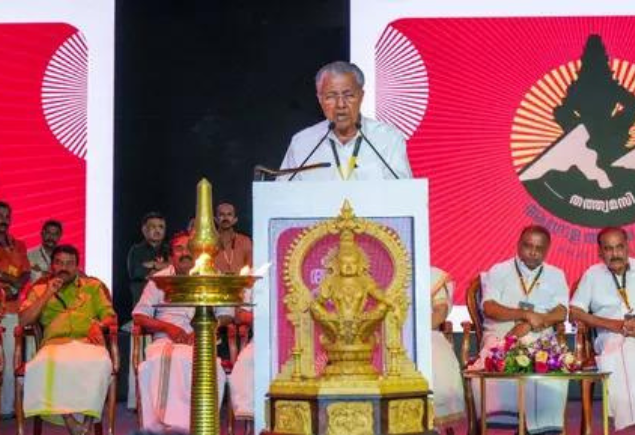
Communist CM Pinarayi Vijayan, far-right UP CM Yogi Adityanath’s message and a Hindu event – Kerala witnessed it all last year.

-

Pinarayi Vijayan speaks at Ayyappa SangamamThe Left government in Kerala organised Global Ayyappa Sangamam. But why did it stand out? As the name suggests, the event is meant for Ayyappa devotees. Sabarimala temple, which remains controversial, earlier for restricted women’s entry, and now for gold theft, is devoted to the Hindu deity Ayyappa. Travancore Devaswom Board (TDB) manages the temple and organises Global Ayyappa Sangamam. However, last year, the CPM government’s move to “assist” TDB in organising the Ayyappa event raised a lot of eyebrows.Why?The Left government was upfront in supporting the SC 2018 verdict allowing the entry of women of all ages in the Sabarimala temple. It even provided police protection to the two women of menstruating age who entered the Ayyappa temple.Protests erupted. Those who opposed the move- Sabarimala Karma Samtihi and BJP among others- took to the streets.BJP even accused the Left government of using the SC verdict to “diminish the prominence of the Sabarimala temple.”BJP and RSS both maintained the stance that while they supported “equal rights for men and women to worship in all temples”, they also affirmed that “unique rituals and beliefs should be protected”.By 2019, the Left government took a U-turn. It felt that aggressively facilitating women’s entry, as the year before, could again trigger unrest and large-scale protests during the pilgrimage season. Moreover, the party leadership concluded that pushing the issue could be politically costly, especially after past backlash and violence.As a result, Left’s move to organise the Ayyappa event is seen as nothing but a “majority appeasement” move, at least by the opposition.In fact, CPM received backing for the Sangamam from influential community organisations, including the Nair Service Society (NSS)—which led the 2018 agitation against the Vijayan government—as well as the SNDP, KPMS and the Malayaraya Mahasabha.The Sabarimala gold theft case is another major corruption charge that the Left has been accused of. The case revolves around the alleged pilferage and misuse of gold from the inner shrine of the Sabarimala Ayyappa Temple. Moreover, the opposition has alleged that investigative lapses have allowed key accused to walk out on bail — an outcome the Congress says marks another low for the Left government in Kerala.

CPM flaunts Vizhinjam port left, right and centre

-

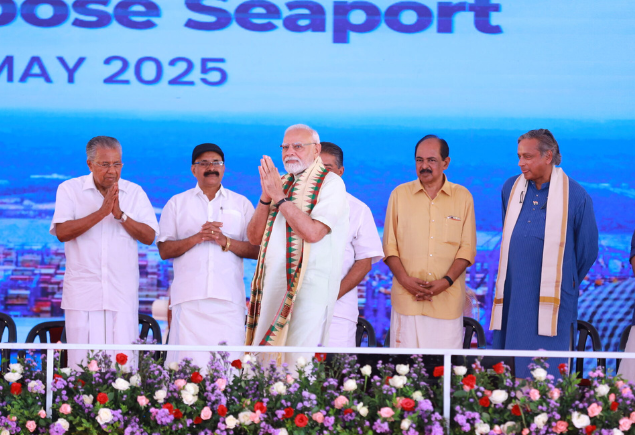
Vizhinjam port inauguration (Credit: vizhinjamport.in)Picture this: Prime Minister Narendra Modi, Kerala CM Pinarayi Vijayan and Thiruvananthapuram MP Shashi Tharoor sharing a stage to mark the largest private investment in a communist state, after a slew of opposition by the locals citing environmental concerns.It was 2015. The UDF government in Kerala laid the foundation stone for the Vizhinjam port. ‘Adani Ports and Special Economic Zone’ (APSEZ) signed the agreement with Kerala to build the port and operate it for 60 years.LDF, which was in opposition then, had rejected what it called a ‘sell-out’ PPP framework that favoured the sole bidder, Adani Ports and SEZ.Cut to 2025. LDF government, led by CM Pinarayi Vijayan shared the stage with Gautam Adani to congratulate for the “excellent execution of this mission”.However, this change in stance wasn’t just theatrics. On the ground, too, the shift was unmistakable.Despite sustained protests by fisherfolk and environmental groups, the LDF government stood firmly behind the project.Legal challenges against the port were contested in court, but construction was allowed to proceed.Prolonged protests, including a 140-day agitation in 2022, were met with police action and criminal cases against protest leaders.Claims of coastal erosion, displacement and loss of livelihood were rejected by the government, which backed the developer’s compliance reports and pushed the project forward, even as local opposition continued.The CPM went beyond backing the project and turned its fire on the protesters themselves. Through its mouthpiece Deshabhimani, the party branded the Vizhinjam agitation as violent, motivated by vested interests, and led by forces seeking to destabilise the region.Protesters were accused of attacking police and the media, vandalising equipment, and defying court orders, even as the government refused to pause construction.The paper insisted that most demands had already been conceded, ruled out any rethink of the project, and portrayed protest leaders as irresponsible actors prolonging unrest despite talks and assurances—effectively shifting blame from the project to those resisting it.And that’s how a communist state got its largest ever private investment.

What explains the Left’s right turn?

Anti-incumbencyAnti-incumbency has historically been a decisive factor in Kerala politics, and the numbers from past assembly elections make clear why the Left Front is apprehensive ahead of 2026.Looking at the electoral record, the LDF has experienced sharp swings after being in power: in 2001, it won only 41 seats compared to the UDF’s 100, but bounced back to 102 in 2006 after a term out of office. Similar patterns recur in 2011, when the LDF’s seat count fell to 70 from 102, illustrating the electorate’s tendency to punish prolonged rule regardless of performance. These cycles show that voter fatigue and anti-incumbency are embedded in Kerala’s political DNA, particularly against fronts seeking consecutive terms. The concern is amplified by the LDF’s recent tenure. Having governed since 2016 and securing 94 seats in 2021, the Left is now eyeing for a third consecutive term, a period historically vulnerable to voter backlash. With past trends showing that even strong governments can be significantly reduced after two terms, anti-incumbency presents a major hurdle for the LDF as it seeks to retain power in 2026.Rise of saffron waveAnother major challenge confronting the Left in Kerala is the steady rise of the saffron wave, reflected clearly in the BJP’s expanding influence in the past two decades.The BJP finally opened its account in Kerala in the 2024 Lok Sabha elections, winning its first-ever parliamentary seat in the state. The CPI(M) too was left with just one seat, secured as part of the INDIA bloc, but the result carried little sense of achievement for the Left. For a party that once commanded double-digit representation from Kerala, repeating a single-seat tally for the second consecutive general election highlighted not stability but a prolonged erosion of influence.Alongside the seat win, the NDA raised its vote share to 19.4 per cent from 15.6 per cent in 2019, signalling that the party’s support base had reached a level where it could no longer be dismissed as electorally marginal.The CPM, which had won 12 Lok Sabha seats in 2004, saw its tally fall to four in 2009 and five in 2014, before being reduced to just one seat in 2019—a position it failed to improve upon in the 2024 elections.The contrasting trajectories underline a shift in Kerala’s national-level political landscape, where the Left’s once-dominant presence has steadily weakened even as the BJP has begun converting vote share into representation. The ‘watershed’ local body pollsLocal body polls painted another scary picture for the Left, reinforcing concerns about the growing saffron wave ahead of the 2026 assembly elections.Seen as a semi-final to the state polls, the results delivered a sharp setback to the governing LDF, cutting through its welfare claims and governance pitch and reducing it to its weakest grassroots performance in years.While the Congress-led UDF mounted a sweeping comeback across all tiers of local self-government, the BJP-led NDA expanded beyond its traditional confines, transforming Kerala’s familiar bipolar contest into an increasingly triangular one.The most dramatic rupture came in Thiruvananthapuram, where the BJP-led NDA ended the CPM’s three-decade grip on the city corporation. Emerging as the single-largest front with 50 of 100 wards—just one short of an absolute majority—the NDA pushed the LDF down to 29 seats, while the UDF nearly doubled its tally from 10 wards in 2020 to 19.The result, hailed by Prime Minister Narendra Modi as a watershed moment in Kerala politics, underscored how the saffron surge has moved from the periphery to the centre of the state’s political contest, posing a direct challenge to the Left’s long-standing dominance.Demographically, Hindus constitute 54.73% of Kerala’s population. Muslims account for 26.56% and Christians 18.38%, both remaining influential but more regionally concentrated.As the Left confronts shrinking margins and the rise of new competitors, especially in Hindu-majority regions, it has increasingly sought to complement its long-standing minority outreach with calibrated appeals to the majority community.

Ghost trees rising from ice: Earthquake 100 years ago creates eerie underwater forest in Kazakhstan | World News

0

Ghost trees rising from the ice: Earthquake 100 years ago created Kazakhstan's eerie underwater forest

The natural story of Lake Kandi hidden in the Tien Shan Mountains of Kazakhstan seems like a dream. The tree trunks poke eerily out of the water, ghostly and silent. Very strange. Almost unreal. However, locals and tourists alike are drawn to it, curious to see the forest frozen in time. More than a century ago, an earthquake transformed the landscape, creating the lake and protecting the trees beneath the cold, clear water. Experts say the water temperature never rises above six degrees, which leaves the spruce trees surprisingly intact. Nature seems to pause, leaving behind something both haunting and beautiful.

How Lake Candy became home to an underwater frozen forest

It is reported IFLS ScienceThe story goes back to 1911, when it was reported that a magnitude 8 earthquake occurred in the Tianshan area. A landslide ensued. Huge rocks blocked the canyon. A natural dam was born. Slowly, the valley filled with rainwater and melting glaciers. Water flooded a forest. The centuries-old spruce trees eventually sank underwater.The lake gradually grew. Trees above the surface have distorted shapes, while below the surface the forest remains mostly intact. Experts say the cold water preserved branches and needles. It seems impossible, but it’s true. The earthquake not only shook the ground, but also created a tiny underwater time capsule.The trunk looks like a skeleton. They rise from the water like fingers reaching for the sky. Some call them “misplaced toothpicks.” There is something surreal about walking around the lake. You expect the trees to fall, but they don’t. They stood, frozen. Tourists reportedly went in to swim, even though the water was freezing cold. How weird. But very beautiful. You can’t help but stare. The green-blue water sparkles. Limestone carried by landslides scatters sunlight, giving the lake a strange glow. It’s almost magical.

Natural landscape preserved in the ice of Lake Condy

Dive or gaze underwater, the forest continues. The trunk stretches downward. The water is crystal clear. Seemingly trapping the forest in time. Small fish swam around unconsciously, but the branches remained stiff and brittle. Visitors are often amazed when they see this place. It’s a bit unreal. A centuries-old forest, untouched in a watery grave. It makes you wonder how fragile and durable nature is.Despite being close to a city with a population of over a million, the lake has an isolated feel. Quiet. Barely moved. Trails meander around the edge. Locals sometimes guide visitors, sharing stories about the 1911 earthquake.

Soham Bhagawati hopes to earn international call-up during Spanish spell, aims to make debut in India Football News

0

Targeting India debut: Young footballer Soham Bhagawati hopes to earn national call-up while playing in Spain

Soham Bhagawati grew up in a sports-loving family and his journey into football began at a very young age. Born in Guwahati and raised in Dubai, he grew up with a sporting influence: his father was a tennis player and his grandfather was a footballer. This unwavering family support helped transform a childhood passion into a serious professional pursuit. The young footballer is now based in Spain and is steadily on the road to making his debut in India.Soham moved to Spain about two and a half years ago to improve his football skills and gain a higher level of exposure. In the meantime, he is continuing his studies and pursuing a degree in sports management, which will help him learn more about the sport on and off the field.

Jay Shah’s India 2036 Olympics blueprint: ‘Eight medals not enough to achieve the goal’

In 2020, Soham was called up for trials with the India Under-19 national team, which was a major milestone in his career. He considers donning the India jersey a major achievement and proud moment, further motivating him to push himself.The 22-year-old currently plays for Terrassa FC, representing the club’s B team in the Catalan second division and the senior team in Spain’s fourth tier.He said Spanish football has helped him grow both technically and mentally, and that the competitive environment has been a valuable learning experience.Soham counts Brazilian star Neymar as an early inspiration. However, as time went on and he learned more about the game, he felt that each player brought something different to the game. Today, instead of idolizing one person, Soham believes everyone has something to learn and focuses on improving by taking lessons from all the players he watches and plays with.Soham from Indian Football calls Sunil Chhetri a ‘king’ and draws inspiration from his achievements and leadership. He loves FC Barcelona and Argentina’s Boca Juniors and he dreams of one day representing a club of similar status through hard work and dedication.

Sohan Bhagawati

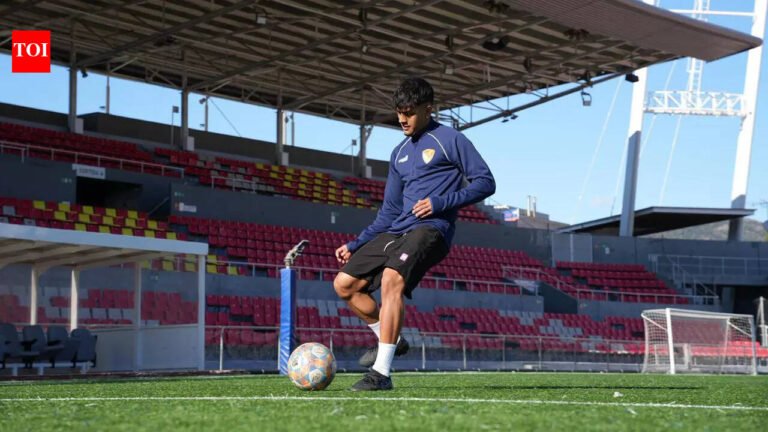
Soham joins his teammates in training at Terrassa Football Club.

He hopes to one day play for his favorite ISL club NorthEast United FC. However, for now his focus is on gaining experience and improving his game.Soham believes the difference between Indian and Spanish players is not talent but exposure, which sets them apart. However, he feels that the standard of India’s young players is steadily improving.“India has talented players and improving facilities, especially with ISL clubs now providing strong infrastructure. However, football does not receive the same level of investment and attention as other sports, which is limiting growth. Exposure to a competitive environment remains the biggest gap,” Soham said in an exclusive interview with TimesofIndia.com.Soham emphasized the importance of the Indian Football League for Indian football. He said this not only provides young players with much-needed exposure and professional experience, but also allows fans to stay connected to the sport.“In recent years, the Indian Football League is the main league that people associate with Indian football. Without it, the sport would have lost its popularity and structure. It is good that players are back on the field despite changes in the format and wages – the game is the most important thing for footballers,” he added.Soham’s short-term goal is to break into the club’s first team, while his long-term goal is to play at a higher professional level in Spain. Representing India at the senior level remains a clear dream – something he believes is achievable through consistent hard work, dedication and belief in his abilities.

Sohan Bhagawati

Soham performed well in the match.

“It is everyone’s dream to represent India at the senior level. For me, if I keep working hard, this dream will come true soon.” Let’s see – it takes work but if it happens it will be a proud moment,” Soham added.Soham is optimistic about the future of Indian football. He believes that with the right focus and commitment, India has the potential to qualify for the World Cup.“We already have top players like Sandesh Jhingan, Lallianzuala Chhangte. If we focus and give our best, I believe we can achieve this in the next few years,” he said.Outside of football, Soham has deep spiritual beliefs and believes his faith keeps him grounded.“I pray and look to God every day for the opportunities He has given us. We are truly blessed with everything we have. There will be hard times, but they will pass. The key is to stay positive, focus on the right things, and always be happy and smile,” he said.

Carlos Palazzolos: Man detained in Nancy Guthrie case breaks silence after release | WATCH

0

Authorities released a man detained for questioning on suspicion of kidnapping Nancy GuthrieKNXV reports. man, identified as Carlos Palazzolos by his family in Rio Rico, about 60 miles south of Tucson. Earlier, authorities searched a vehicle and a home in the city. Guthrie’s location remains unknown, according to officials.

Authorities have released Carlos Palazzolos, who was being questioned in the kidnapping of Nancy Guthrie. He claimed he was innocent and claimed he was simply delivering a package. (AFP Getty Images)

Also read: Is Dominic Evans the masked man in Nancy Guthrie’s suspected video? Fact-checking viral claims linking Tommaso Cioni

Carlos Palazuelos speaks out on his arrest in Nancy Guthrie case

The man told ABC15 reporter Ford Hatchett that his wife was driving when they were pulled over as police chased them.

He expressed his shock after being pulled over and said he had no idea who Guthrie was or why law enforcement believed he might be involved in her kidnapping.

“They told me I was being held for kidnapping. I asked them, ‘Who was kidnapped?'” said the man, whose identity has not been revealed by authorities.

In the exclusive video, which Hatchett shared on X, the man tells him he wants to be identified as Carlos.

“I told them … I might deliver packages to their homes, but I never kidnapped anyone.”

Authorities have not yet verified whether Carlos is a person of interest or if that person has been released.

Also read: Are Annie Guthrie and Tommaso Cioni facing any financial difficulties? Zach Peter claims he may be jealous…

Carlos Palazuos’ mother-in-law claims innocence

Meanwhile, his mother-in-law spoke to NewsNation, asserting his innocence and calling him a “good guy.”

Josefina Maddox told reporters that authorities were investigating property belonging to her.

“(Investigators told me) they had a tip that the woman (Guthrie) was in the house,” Maddox said. “… I don’t know who she is. I know nothing about her,” Maddox said, according to CBS News. “… I told them you can go in and check the house; there’s no one there. I have nothing to hide. … They’re investigating my son-in-law… He has nothing to do with this.”

According to her, Carlos worked as a delivery driver in Maddox, Tucson.

“… They were just invading my property. I told him (an investigator) that they were going to come in and out of my house, take a lot of pictures and everything. I mean, I told him, we’re not hiding anything. I gave him permission. You can go search, there’s nothing in my house. You’re not going to find anything because we have nothing to hide,” she continued.

Maddox said when she returned home, she found her son handcuffed outside the residence.

Maddox further mentioned that the silver vehicle that was stopped by authorities during the detainment belonged to her daughter, CBS News reported.

She said investigators showed her surveillance video from Guthrie’s residence that was released Monday in an attempt to identify the person captured in the video. However, her son-in-law did not own any of the clothing worn by the potential suspect.

‘He is in good spirits’: Government opposes release of Sonam Wangchuck on health grounds | India News

0

'He's in good spirits': Government opposes release of Sonam Wangchuk on health grounds
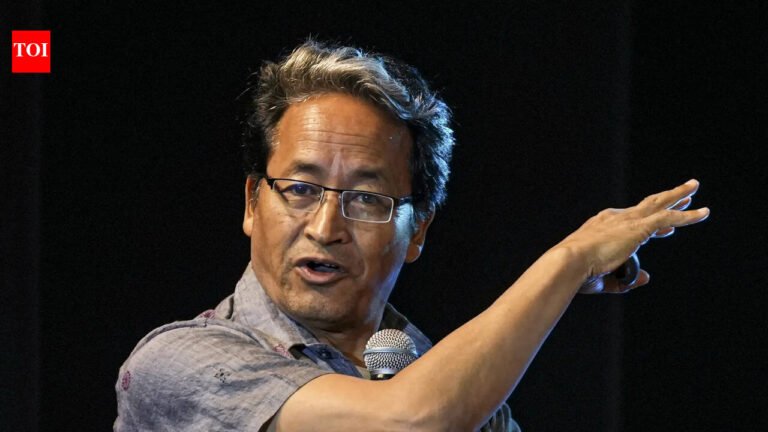
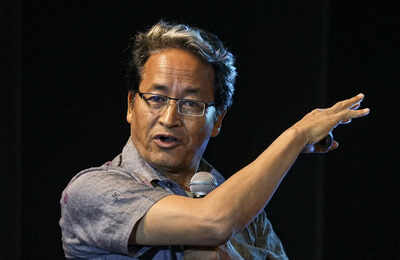
Sona Wat (Photo by Philip Ping)

New Delhi: Central government on Wednesday objected sorryHe was released on medical grounds and said the climate activist was “in good spirits and suffered only a minor infection”.The government said it was inappropriate to review Wangchuck’s detention as recommended by the court. The climate activist from Ladakh was detained by authorities under the National Security Act (NSA) for his role in last year’s violent protests in Leh, which left four people dead and more than 150 injured. Solicitor General Tushar Mehta submitted this submission before Justice Aravind Kumar and Justice PB Varale in response to Supreme CourtThe earlier inquiry asked authorities to consider releasing Wangchuk on medical grounds as his health deteriorated. “As per the jail manual, he has undergone periodic check-ups around 24 times. He is in good health and in good spirits. He has digestive issues and infections. If we start making such exceptions (to release him), it will not bring positive results. The grounds for passing a detention order remain. It is not possible to release him on health grounds. This may also not be advisable. Now that it has fallen from the hands of the Lord, we have given it maximum consideration,” representative Tushar Mehta said. government told the Supreme Court. The Supreme Court last week asked the Center to reconsider/revisit its decision to continue detaining climate activist Sonam Wangchuk in view of his failing health, who has been detained for over four months.The SC had earlier directed the authorities to conduct a medical examination of Wangchuk by professional doctors and submit a report to him. The activist is currently lodged in Jodhpur jail. The medical report was submitted to the Supreme Court during the last hearing.Wangchuck was detained under the National Security Act on September 26 last year after protesting in Leh over Ladakh’s demands for statehood and Sixth Schedule status. The SC is hearing a plea filed by Wangchuck’s wife Gitanjali Angmo against preventive detention.Earlier, the government told the court that the activist was trying to create political and social unrest and unrest in Ladakh and was trying to emulate what happened in Bangladesh, Sri Lanka and Nepal.

Steve Smith is back! Mitchell Marsh misses T20 World Cup opener, Australia calls up veteran Cricket News

0

Steve Smith is back! Mitchell Marsh misses T20 World Cup opener, Australia calls up veteran
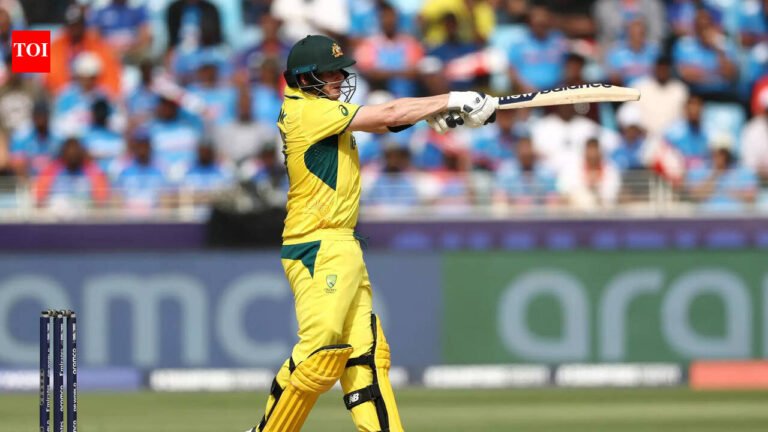
Steve Smith, Australia (Getty Images)

Australia to lose captain Mitchell Marsh He played in the first match of the ICC Men’s T20 World Cup against Ireland after suffering a groin injury during training earlier this week. In the absence of Marsh, Travis Head will lead the team in Colombo. Cricket Australia confirmed Marsh suffered a direct blow to the groin, causing ongoing pain and limited movement. Medical scans revealed bleeding within the testicles and he will now undergo a period of rest and recovery. His ability to return to play will depend on medical guidance and relief of symptoms.

Abhishek Sharma hospitalized – latest updates on his recovery and India Net

As a precautionary measure, veterans Steve SmithHe has not played a T20 international since February last year but is in good form during the tournament and will join the squad in Sri Lanka. In the 2026 BBL, Smith played 6 games and scored 299 points, with an average of 59.8 points, a hit rate of 167.98, and a maximum score of 100 points. Smith will fit in with the team and be ready to step in if needed. The development was a major blow for Australia, with Marsh losing his leadership and all-round ability at the start of the game. Against Ireland, Australia won the toss and elected to bat. team: Ireland (Starting XI): Paul Sterling (centre), Ross Adair, Harry Turcotte, Lorcan Tucker (female), Curtis Campfer, Benjamin Kallitz, George Dockrell, Gareth Delany, Mark Adair, Barry McCarthy, Matthew Humphreys Australia (XI): Travis Head (C), Josh Inglis (F), Cameron Green, Matt Renshaw, Cooper Connolly, Glenn MaxwellMarcus Stonis, Nathan Ellis, Xavier Bartlett, Matthew Kooneman, Adam Zampa

‘More than 50% of polling stations are in centres’: How Bangladesh is preparing for first elections since Hasina’s ouster

0

'More than 50% of polling stations are in centres': How Bangladesh is preparing for first elections since Hasina's ouster
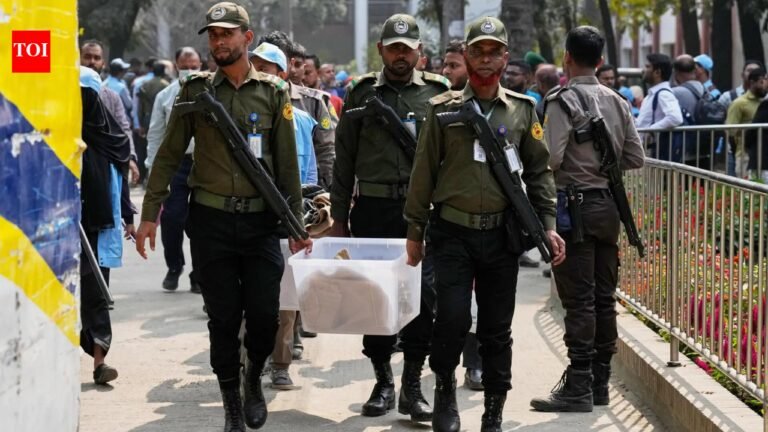
Election officials and security personnel transport ballot boxes and voting materials to polling centers ahead of Thursday’s national parliamentary elections in Dhaka. (AP Photo)

Bangladesh is set to hold parliamentary elections on Thursday, the first nationwide vote since former Prime Minister Sheikh Hasina was ousted amid mass protests in August 2024. Authorities have introduced unprecedented security measures, with more than half of the country’s voting centers deemed “at risk.”Nearly 24,000 polling stations out of about 43,000 across the country are classified as “high” or “medium” risk, according to police assessments. In Dhaka alone, 1,614 out of 2,131 polling centers were flagged as risky. However, the military said it identified only two centers in the capital as “risky”.

‘Don’t get involved in political games’: EU launches Bangladesh 2026 poll mission

The Electoral Commission (EC) said its security deployment strategy is based on local sensitivities and threat assessments.“Security deployments are based on local sensitivity assessments,” Elections Commissioner Abu Fazal Mohammad Sanaullah told a media briefing.

Document security and technical deployment

The upcoming polls will witness the largest deployment of law enforcement personnel in Bangladesh’s electoral history, officials said. Nearly 958,000 security personnel have been deployed across the country.Inspector General of Police Baharul Alam said more than 157,000 police personnel will be directly involved in electoral duties and will be supported by nearly 30,000 police personnel at police stations across the country.For the first time, authorities deployed drones, drones and body cameras to monitor the process.“Additionally, drones and body cameras are being used for the first time in election security,” Sanalla said.Around 25,000 body-worn cameras will be used on the ground, while CCTV cameras have been installed in more than 90 per cent of polling centers to ensure continuous monitoring.

299 seats voted

Polling will be held from 7.30 am to 4.30 pm in 299 wards, with Sherpur-3 polling postponed due to the death of a candidate. A total of 42,659 voting centers have been set up.More than 127.7 million voters are eligible to vote, including about 3.58% of first-time voters. In addition to the parliamentary elections, citizens will hold a referendum on an 84-point reform package.The Election Commission has deployed 2,098 administrative judges and 657 judicial judges to oversee the electoral process.Sanara said the EC was satisfied with the law and order situation and expressed hope that law enforcement agencies would ensure a peaceful environment during and after voting.

political background

The election comes 18 months after Hasina’s Awami League government was ousted in a student-led uprising on August 5, 2024. The interim government, led by chief adviser Muhammad Yunus, subsequently dissolved the Awami League and banned it from contesting elections.The main competition is between the Bangladesh Nationalist Party (BNP) and the Jamaat-e-Islami. Pre-poll surveys showed the BNP as the front-runner, with its chairman Tarique Rahman emerging as the main contender for the top job.With heightened surveillance, massive security deployments and advanced surveillance systems in place, Bangladesh is heading into a closely watched election seen as a key test of its political transition after the Hasina era.