


























Home Blog Page 125

‘Modi ji, ab jhola uthaiye aur chale jaiye’: Sanjay Raut’s inflation advice to PM

0

New Delhi: Shiv Sena (UBT) MP Sanjay Raut India’s rupee depreciation government was criticized on Sunday, questioning the Prime Minister’s ability to lead the country.Addressing a press conference in New Delhi, Rathe recalled Prime Minister Narendra Modi’s remarks when he was chief minister of Gujarat, saying “when the rupee depreciates, the country’s credibility and reputation goes down”. Raut accused the prime minister of focusing on campaigning instead of addressing rising inflation and a weak currency.“There will be a century… Abki baar, 100 ke paar. Where is Modiji? He is in West Bengal, preparing for presidential rule to defeat Mamata Banerjee. Modiji and Shahji are trying to do ‘khela’ in West Bengal and the value of rupee is falling… Modiji said that when the value of rupee falls, the prestige of the country goes down. What is this? Which one is going down now?” Raut said. After the press conference, Rathe denied that ongoing tensions in West Asia were a factor in the rupee’s depreciation and claimed that the rupee has been on a downward trajectory since Prime Minister Narendra Modi took over.“The government has remained silent and will continue to remain silent. When the rupee depreciates, not only does the currency depreciate, but the credibility and prestige of the country also declines…Considering the faltering Indian economy and the rupee plummeting day after day, I feel Narendra Modi is no longer capable of leading the country. Yes, there was a war today, but there was no war yesterday, wasn’t it? The rupee started depreciating and the situation worsened dramatically when PM Modi became Prime Minister. The Prime Minister is still busy campaigning and does not care about the rupee. I have only one thing to tell him: “Modi ji, ab jhola uthao or chale jaiye,” ANI quoted Raut as saying. His comments came after the rupee fell below 93 against the dollar on Friday, signaling continued pressure on the domestic currency.On Saturday, the Leader of the Opposition in the Lok Sabha and the Congress Leader Rahul Gandhi A weak Indian rupee and rising industrial fuel prices have criticized the Center amid escalating conflicts in West Asia.Rahul expressed concern about the economic outlook, warning of possible inflationary pressures and accusing Narendra Modi’s government of relying on “empty rhetoric” rather than laying out a concrete economic strategy.“The rupee weakened against the dollar and approached 100, while industrial fuel prices rose sharply – these are not just numbers; they are clear signals of coming inflation. The Modi government has neither direction nor strategy, just empty talk. The question is not what the government is saying but what are you left with,” Rahul Gandhi posted on X.PTI quoted foreign exchange traders as saying that the Indian rupee is under intense pressure due to surging crude oil prices and growing risk aversion, which has dampened investor sentiment. Rising geopolitical uncertainty is pushing up energy costs, a trend that could widen the trade deficit and further fuel inflationary pressures, they added.

WATCH: Pilots pay tribute to three Ohio guards killed in Iraq refueling plane crash

0

WATCH: Pilots pay tribute to three Ohio guards killed in Iraq refueling plane crash

An aviation enthusiast has paid a touching tribute to three members of the Ohio Air National Guard who were among six service members killed in a tanker accident in western Iraq just days ago.Flight tracking data from Flightradar24 shows that on March 19, a pilot made a symbolic salute in the sky, tracing the outline of a service member along three headstones to honor fallen Ohio Guardsmen.According to U.S. Central Command, Capt. Seth Koval, Capt. Curtis Angost and Master Sgt. Tyler Simmons were participating in the U.S. government’s Operation Epic Fury on March 12 when a KC-135 aircraft crashed around 2 p.m. The military said the plane lost contact while flying over friendly airspace and the cause of the crash was still under investigation.Maj. John Alex Klingner of Auburn, Alabama, was also killed in the incident. Capt. Ariana G. Savino, Covington, Wash.; and Technical Sergeant Ashley B. Pruitt, Bardstown, Ky. The Ohio National Guard and the 121st Air Refueling Wing later paid tribute to Koval, Angst and Simmons, BBC News reported.In just 21 days of conflict, at least 16 military aircraft – 12 drones and four aircraft, including the THAAD radar system, an F-35 stealth fighter and even the USS Gerald R. Ford – were involved, although not all incidents were directly caused by enemy fire.In early March, three F-15 fighter jets were shot down in “an apparent friendly fire incident” over Kuwait, officials said. All six crew members ejected safely. Boeing built the KC-135 Stratotanker for the U.S. military in the 1950s and early 1960s.It has been the backbone of the U.S. military’s aerial refueling fleet, allowing fighter jets to fly longer missions without landing.

Secret Service agent failed to secure Butler Roof suspension again? Why Myosoty ‘Miyo’ Perez is getting attention

0

A female Secret Service agent failed to protect the roof, thomas matthew crooks Used when he fires at him Donald Trump According to Real Clear Politics, the project has been suspended again. Myosoty “Miyo” Perez was one of the many agents who failed to protect the roof of the AGR Building where Crooks shot Trump at a rally in Butler, Pennsylvania, in 2024.

U.S. Secret Service members monitor the scene after a car crashed into a security barricade near the White House in Washington, DC, March 11, 2026. (Photo: Brendan SMIALOWSKI/AFP) (AFP)

Trump was hit in the ear and injured during the attack. firefighter Corey Competore was killed.

Viral video of the incident showed Perez fumbling with her weapon as Trump was led off the stage and into a vehicle. Perez and five other Secret Service agents were subsequently suspended, but Perez later returned to work.

Learn more | Thomas Crooks was on authorities’ radar more than 90 minutes before the shooting, text messages show: “I did see him with…”

Perez was not named in the congressional investigation into the Butler shooting. However, she was reportedly deemed inexperienced to be responsible for security at such a large outdoor event. Trump reportedly banned her from being part of his security detail.

Why is Myosoty ‘Miyo’ Perez banned again?

Perez was reportedly suspended for failing to disclose the status of his marriage to a foreigner. She reportedly secretly married a Brazilian woman in April 2025 but did not notify the agency until January this year.

According to Real Clear Politics, “Former long-time Secret Service agents said the investigation and questions surrounding Perez’s ties to Brazilian foreigners and possible illegal immigrants raise serious questions about the agency’s due diligence on potential insider threats and threats from foreigners, as well as Perez’s judgment to continue serving as an agent.”

Learn more | Trump rally shooting: New records detail Thomas Crooks’ ‘intense preparation’ for attack, ‘He was almost focused on…’

It added, “There are strict rules that require security personnel to proactively self-report foreign contacts and significant life changes, including foreign travel, arrests, financial distress, and changes in marital or cohabitation status, to their respective agency’s facility security personnel. Failure to report these may result in clearance suspension or revocation, a penalty that will prevent Secret Service agents from performing their duties.”

The report also states that in 2024, Perez notified the Secret Service of a foreign contact. However, sources told Real Clear Politics there are now questions over whether she would have followed through when the relationship became more serious, with the woman she and she began living together and later tied the knot.

The situation raised questions about whether Perez was harboring illegal immigrants or “trying to obtain a green card for a friend or romantic partner while covering up that effort, or at least not being candid or transparent about it,” according to the former Secret Service agent.

PM Modi to chair high-level meeting to review energy preparedness amid Middle East tensions

0

New Delhi: Prime Minister Narendra Modi India will host a high-level meeting on Sunday evening to review its energy preparedness in case of escalating tensions in the Middle East, with senior ministers expected to assess the situation in the oil, power and fertilizer sectors, PTI reported citing sources.The meeting focused on ensuring uninterrupted supply, stable logistics and efficient distribution across the country.

watch

PM Modi discusses West Asia crisis and ensures safety of shipping routes with Iranian President

Officials said continued monitoring of global developments remains the top priority to protect consumer and industry interests amid the ongoing crisis.On March 12, Prime Minister Modi stated that the war in West Asia had triggered a global energy crisis, calling it a “severe test of the national character” and that the situation needed to be handled with peace, patience and raising public awareness.The Prime Minister also stressed that the government is working tirelessly to address disruptions to international supply chains. “We are also continually working to determine how to overcome disruptions that occur in the supply chain,” he said.The conflict, which began with U.S. and Israeli attacks on Iran on February 28, has entered its third week and has escalated since then, with Iran retaliating against Israel and several Gulf neighbors.Iran’s control of the Strait of Hormuz severely affects the vital shipping lane for global energy supplies, with limited ships allowed through. The resulting blockade disrupted energy supplies in several countries, including India.Since the conflict began, Prime Minister Narendra Modi has held phone conversations with a number of global leaders, including those of Saudi Arabia, the United Arab Emirates, Qatar, Bahrain, Kuwait, Jordan, France, Malaysia, Israel and Iran.

‘They made a bold decision’: Pathan delivers big verdict against PBKS ahead of IPL 2026

0

'They took a bold decision': Irfan Pathan's big verdict against Kings XI Punjab ahead of IPL 2026
Kings XI Punjab (Getty Images)

former indian allrounder Irrfan Pathan Believe Kings XI Punjab are finally “moving in the right direction” after taking a smart and bold decision at the auction table, raising hopes of ending their long wait for the Indian Premier League (IPL) title.Speaking on IPL Today Live, Pathan highlighted how the team has shown a new clarity in terms of leadership and team-building. Kings XI Punjab finished as runners-up last season but narrowly lost to Royal Challengers Bangalore in the final.

Clear leadership drives transformation in Punjab

“Leadership has played a huge role in Punjab’s turnaround. You win half the IPL at the auction table. Big purses don’t necessarily mean you always get what you want, but they did and they made it to the final,” he said.Smart auctions key to Punjab’s rise Pathan noted that the team has not shied away from accepting tough demands, including releasing underperforming players, e.g. Glenn Maxwellwhile also strengthening their bench. “They made bold but important decisions… now you see all-rounders like Azmatullah Omarzai, Marco Janssen and Marcus Stoinis, along with the young Indian batting core. They also gave it their all Shreyas Iyer After it was decided that he would be captain. The thinking is clear and I feel Punjab has started moving in the right direction,” he said.

Kings XI Punjab in IPL 2025

Kings XI Punjab made a breakthrough in IPL 2025 and became one of the most consistent teams this season. Led by Shreyas Iyer, they climbed to the top of the league and reached the final, their first title bid since 2014. The team showed stunning balance with Iyer leading the way with the bat and finishing with 604 runs while Ardeep Singh Led the bowling attack and finished with 21 wickets. Punjab’s journey includes victory over rivals in Qualifier 2 mumbai indians After losing in RCB Qualifier 1, they failed to reach the finals where they lost to Royal Challengers Bangalore. Despite the loss, the 2025 season marked a significant shift for the team, making them a true contender and establishing a solid foundation for future success.

Banner insert

Oman flash floods: Oman flood disaster 2026: Search continues amid severe storm, death toll rises to 4 World News

0

Oman floods 2026: Death toll rises to 4 as search continues amid storm
Four killed in Oman floods, more than 40 rescued, search for missing persons continues/Photo: File

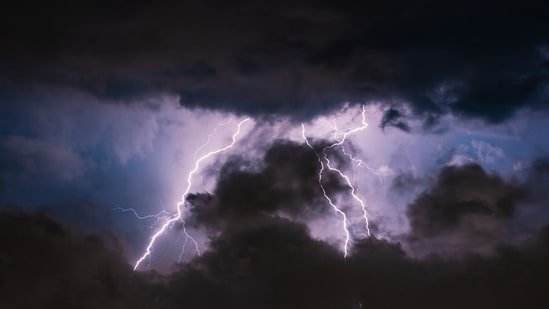
Oman is facing a severe weather emergency as heavy rains trigger flash floods that have left at least four people dead and one missing.The latest deaths were confirmed in Barka province, where two bodies were found, bringing the death toll to four. Earlier, three people were killed when powerful floods swept away their vehicles in Wadi Al Maawil, an area known for sudden surges in water levels during heavy rainfall.Rescue teams have managed to rescue more than 40 people in the affected areas as floods washed out roads and low-lying areas. The situation escalated quickly, with the usually dry river bed turning into a fast-moving torrent within minutes – a dangerous but familiar pattern during Oman’s rare but powerful storms.

Oman Nationwide Emergency Alert

The authorities have launched a large-scale rescue operation and many areas are on high alert.Emergency teams have been working continuously to evacuate trapped residents and respond to distress calls. Roads were blocked in some areas due to flooding, especially in parts of Muscat and South Batinai.The National Emergency Management Committee has activated emergency plans for affected provinces, urging residents to avoid unnecessary activities.Officials have repeatedly warned the public not to attempt to cross flooded river valleys, which could lead to many deaths

What did the authorities say?

As the situation remains unstable, Omani authorities have issued a strong and direct warning.The Civil Aviation Authority (CAA) and emergency officials stressed that the weather system remained active and dangerous. Thunderstorms, strong winds and heavy rainfall may continue to cause flash floods in several areas, authorities warned in an official advisory.Emergency management officials urged residents to strictly follow safety instructions and said entering the flooded valley or trying to drive through the water could be life-threatening.Authorities also confirmed that a search operation for the missing persons was ongoing and rescue teams were deployed to high-risk areas.

Oman weather forecast

Weather conditions are expected to remain unsettled over the coming days, raising concerns about further flooding.Predictions indicate:

  • Continuous thundershowers and scattered heavy rainfall
  • Strong winds and hail may occur in some areas
  • Increased risk of flash flooding, particularly in wadi and low-lying areas

While March in Oman is usually relatively dry with limited rainfall, sudden weather systems can bring intense short-term rainfall that floods drainage systems and terrain.Experts point out that even a few days of heavy rain can cause widespread damage because the country’s geography and soil conditions are unable to absorb water quickly.Authorities advise residents to exercise caution in the coming days as the situation may change rapidly.

Why are floods so deadly?

Flash floods remain one of the most dangerous natural threats in Oman.Because the wadi is dry most of the year, many drivers underestimate the speed and force of incoming water. Within minutes, rainfall in the surrounding mountains can send powerful currents downstream, sweeping away vehicles and people.This recurring pattern has resulted in repeated warnings from authorities, but events still occur during each major rainfall period.

Allies in Delhi, rivals in states: Why Congress should quit INDIA bloc, fight regional parties

0

NEW DELHI: The just-concluded Rajya Sabha election has done more than reshuffle numbers in the Upper House – it has once again exposed the widening divide within the opposition’s INDIA (Indian National Development Inclusive Alliance) bloc. What was stitched together as a united opposition front, led by Congress, against the BJP ahead of the 2024 Lok Sabha polls now appears increasingly frayed, with allies turning their fire inward. And at the heart of this heat is the Congress itself. Consider this: some of the sharpest attacks on the Congress in recent days have come not from its political rivals, but from its own partners. From accusations of “betrayal” by the Samajwadi Party to the CPM dubbing it a “B-team of the Sangh Parivar”, and the CPI(ML) flagging its vulnerability to “horse-trading”, the rhetoric has been unusually blunt.

Kerala CM on Congress

Here are some of the remarks:

  • “The Congress always betrays the Mahagathbandhan at the last moment, causing the alliance to be embarrassed” : Samajwadi Party (SP) spokesperson Ashutosh Verma
  • “The results of Rajya Sabha elections once again confirm the reality that the Congress party functions as the B-team of the Sangh Parivar”: Kerala chief minister Pinarayi Vijayan
  • “In state after state, the Congress has exposed its soft underbelly, its utter vulnerability to horse trading. The Congress should look within to identify and stem the rot that seems to have taken deep roots”: CPI(ML) Liberation MLA Sandeep Saurav

All these remarks are from leaders who are allies of the Congress in the INDIA bloc. The immediate provocation for this no-holds-barred attack was cross-voting by some Congress MLAs in Bihar, Haryana and Odisha in the Rajya Sabha elections. It’s a different matter that it was not just the Congress MLAs who cross-voted but legislators of some other regional parties also broke ranks to help the BJP.The Congress has already initiated action against MLAs who went against the party line and has accused the BJP of indulging in horse-trading to win elections. In fact, in Haryana they have also lodged an official complaint with the state governor. What comes out of this complaint is something that we will have to wait and see.However, the recent episode has laid bare a larger problem that the INDIA bloc coalition is struggling to stay united beyond its anti-BJP agenda. The bloc was formed in the run-up to the 2024 Lok Sabha elections with the primary aim of preventing division of anti-BJP votes to slow down the saffron march. To that extent the alliance did reasonably well – restricting the BJP to 244 and preventing it from another majority victory. The Congress gained the most in the process, nearly doubling its numbers to 99 in the Lower House. But two years after the setup of INDIA bloc, the fact remains that the relationship between the Congress and its regional allies has mostly been tumultuous.After a surprise success of Lok Sabha elections, the compulsions of state politics took centre stage. The fact that most of the regional parties who had joined hands with the Congress in Delhi, were political rivals in their states made the relationship not just complex but also acrimonious.While the Congress wanted to regain its lost base in the states, the regional parties, many of whom had grown at the expense of the Congress, did not want to cede too much ground to the grand-old-party. That perhaps explains why the existence of the INDIA bloc has been questioned every time there have been state elections.

Post-2024 Lok Sabha script

Here’s a look at the INDIA bloc dynamics at state-level: Maharashtra: Internal tussles of MVAThe Maha Vikas Aghadi (MVA, comprising Congress, Shiv Sena (UBT) and NCP (Sharad Pawar), has struggled with coordination after the 2024 Lok Sabha success.In the assembly elections held later in November 2024, the BJP-led Mahayuti alliance secured a landslide victory by winning 235 of 288 seats. The MVA managed to get only 50 seats. Post-results, internal friction peaked with partners blaming each other for poor seat-conversion. Uddhav Thackeray’s Shiv Sena and the Congress have often clashed over who should be the “face” of the alliance in the state moving forward.In the recently held BMC and other civic polls in Maharashtra, Congress had contested on its own while the other two parties fought together for some of the seats.Delhi: AAP vs CongressAfter a tactical seat-sharing deal for the 2024 Lok Sabha polls, which yielded zero seats for the alliance in Delhi, both AAP and Congress reverted to being bitter rivals. In June, 2024, AAP’s Delhi convenor Gopal Rai had announced that the alliance was “only for the General Election.” In 2025 Delhi assembly elections, the alliance completely collapsed as both parties contested independently. The relationship deteriorated further in the election campaign phase where both parties accused each other of being BJP’s proxy.In one of the rallies, Kejriwal had said: “The problem with the Congress is their sense of entitlement. They think they have a divine right to lead the opposition just because of their past, even when they have zero presence on the ground. They are not fighting the BJP; they are fighting the regional parties who actually defeat the BJP. In Delhi, the Congress is nothing but a ‘vote-cutter’ meant to help the BJP.”Rahul Gandhi and Priyanka Gandhi Vadra held rallies across Delhi, terming Kejriwal and other AAP leaders “corrupt” amid liquor policy case. In one such rally, Rahul Gandhi had said: “Kejriwal ji keeps lying. The way PM Modi lies, Kejriwal lies too. There isn’t much difference between them. But I will tell you one thing—Kejriwal is probably more cunning and sophisticated than even the Prime Minister in how he misleads people.” Senior Congress leader Ajay Maken’s sharp critiques of Arvind Kejriwal-led AAP to even suggest that Congress be “expelled” from the national bloc. The two parties eventually reached the point of no return after BJP’s sweep in the state, with both parties blaming each other for the split in votes.While BJP got 48 of 70 seats, AAP lost the power and was reduced to 22 seats while Congress drew a blank for the third straight time. AAP chief Kejriwal and Manish Sisodia (both of whom lost their individual seats) also blamed the Congress for “acting as a spoiler” and cutting into the AAP’s core secular vote bank.By July, AAP officially exited the INDIA bloc. Party MP Sanjay Singh said, “We said that officially, the Aam Aadmi Party is not with the INDIA alliance as of today. Our alliance was for the Lok Sabha elections.”Kejriwal asserted that the Congress’s “entitled leadership” was the primary reason the opposition could not mount a challenge to the BJP.West Bengal: TMC vs Congress vs LeftThis is currently the most volatile relationship in the bloc. While Mamata Banerjee is a founding member of the INDIA bloc, the “on-ground” reality in Bengal remains a three-way battle. Mamata, who has till now managed to successfully keep BJP out of power in Bengal, refused to cede even a percentile of its voter base to Congress, or Left for that matter. Immediately after the 2024 Lok Sabha elections, where the TMC won 29 out of 42 seats, Mamata Banerjee concluded that the Congress was a “liability” in Bengal. In February 2025, Mamata formally told her party legislators that the TMC would contest the 2026 assembly polls alone. Her rationale was blunt: “The Congress has no base in Bengal; we cannot strengthen them at our own cost.”In the upcoming elections, all three parties – TMC, Congress and CPM are going solo while fighting against BJP. Tamil Nadu: Deal or compromise?In Tamil Nadu, the DMK-Congress alliance has held, but only after intense last-minute bargaining exposed underlying tensions. On March 4, 2026, the two parties finalised their pact for the April 23 assembly elections following days of uncertainty.The Congress, which had pushed for 40 seats and a power-sharing formula including cabinet berths, had to settle for a modest expansion — from 25 seats in 2021 to 28 in 2026, along with one Rajya Sabha seat. Meanwhile, MK Stalin remained firm against any power sharing arrangement. For now the two parties have managed to come together for state polls, but it would be interesting to see if it holds for long. Kerala: Congress vs CPMIn the upcoming Kerala assembly elections, the two major INDIA bloc constituents are the primary adversaries in a direct face-off. The United Democratic Front (UDF) is being led by Congress and the Left Democratic Front (LDF) is led by CPM.As the state moves toward the 2026 assembly elections, the rhetoric has turned hostile. Congress (UDF) is campaigning against 10 years of “anti-incumbency” and corruption under the LDF, while the Left has accused Congress of having a “secret understanding” with the BJP to weaken them.The other factor that has contributed to this acrimony is the leadership question – with the prominent regional leaders of the bloc reluctant to accept Congress (read Rahul Gandhi) as their leader. When the bloc was formed, JD(U) chief Nitish Kumar, who was one of the key architects of this experiment against the BJP, had hoped to lead it. But the Congress, which despite its decline, was the largest party in the bloc, had other plans. The Congress took over the leadership of INDIA bloc and party chief Mallikarjun Kharge became the leader of the opposition alliance. In the last two years, there have been several occasions when regional parties have questioned the leadership of the Congress. Some of them have even accused the grand-old-party of using the opposition alliance as per its convenience. Their calls for regular meetings, common agenda, shared manifesto have been ignored by the Congress. Last month, the Congress faced embarrassment when one of its own leaders made a strong case for a change in the INDIA bloc’s leadership and urged Rahul Gandhi to step aside. Mani Shankar Aiyar, who many thought had faded into political oblivion, was back with a bang. Aiyar, who has an uncanny knack of courting controversies, openly asked Rahul Gandhi to step aside and let regional leaders lead the opposition alliance.So, Aiyar first pitched Mamata Banerjee and said “West Bengal chief minister is central to the survival of INDIA bloc”. Then he backed the DMK chief and claimed “MK Stalin is best-suited to be the convenor of INDIA bloc”. The former Union minister also batted for Samajwadi Party chief Akhilesh Yadav and Rashtriya Janata Dal leader Tejashwi Yadav for the leadership role.While leaders of some regional parties welcomed Aiyar’s advice, some rejected the remarks as his “personal opinion” and asserted any decision on leadership will be taken by the members of the alliance.Jammu and Kashmir chief minister Omar Abdullah, whose party National Conference is part of INDIA bloc, dismissed Aiyar’s efforts and asserted any decision on leadership will be taken by the members of the alliance.“To date, there has been no discussion regarding leadership in any meeting of the INDIA bloc. But ultimately, when a decision is made, it will be by the INDIA bloc. Everyone will talk together. No such meeting has taken place so far to discuss the leadership. So, I don’t know where this is being projected,” Abdullah then said when asked about Aiyar’s suggestions.The Congress dismissed Mani Shankar Aiyar as a leader whose time was over. “Mani Shankar Aiyar and others like him are people whose time is over. They have no role in this party. They are not part of this party. His position is that of someone who goes wherever he is hired. Whoever hires him, he goes there. That is nothing to be particularly respected,” Congress leader Ramesh Chennithala said dismissing Aiyar’s remarks.But while the Congress may have dumped Aiyar, his pitch for regional leadership of the INDIA bloc put the grand-old-party in a tight spot once again.

Why Congress should withdraw itself from INDIA bloc

The experience of the past two years suggests that the INDIA bloc’s biggest challenge lies not in confronting the BJP, but in reconciling its internal contradictions. For the Congress, which remains the largest party in the alliance, the dilemma is particularly acute: balancing its national leadership role with the reality of state-level competition from its own partners.Given the acrimony and differences that have characterised the existence of INDIA bloc since its inception, breaking out of this cycle may require a bold call. The Congress should perhaps consider opting out of the opposition alliance for now. A temporary exit from the alliance could allow the Congress to rebuild without constantly negotiating its space with regional players.The grand-old party could forge individual alliances in states with regional parties on its own terms. The next Lok Sabha elections are still three years away which leaves enough time for realignment, but for now, the party’s priority may well be to strengthen itself independently before returning to any grand coalition.

Trump gold coins celebrating 250th anniversary of U.S. independence spark controversy; can a living president legally appear on currency?

0

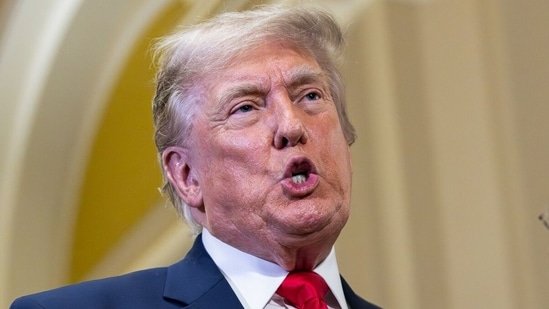
president Donald Trump will be engraved on a gold coin commemorating the 250th anniversary of the founding of the People’s Republic of China. A commemorative gold coin featuring Trump’s face has been approved by the Federal Arts Council.

Trump gold coins celebrating 250th anniversary of US independence spark controversy (Photo by ROBERTO SCHMIDT / GETTY IMAGES NORTH AMERICA / Getty Images via AFP) (Getty Images via AFP)

Although the legality of the move remained in question, the U.S. Council of Fine Arts voted unanimously to approve the design after its presentation at the U.S. Mint. The 24-karat gold coin will commemorate the 250th anniversary of the founding of the United States on July 4 this year. The gold coin depicts Trump pressing his fist on the table.

Learn more | Video of Trump trudging down Air Force One stairs ‘tired, disheveled’ sparks new health concerns

“As we celebrate our 250th birthday, we are pleased to prepare coins that represent the enduring spirit of our country and our democracy, and there is no more symbolic face on the obverse of these coins than the face of our current President, Donald J. Trump,” U.S. Treasury Secretary Brendan Beach said in a statement to Fox Business.

Check out the coin’s design in this X post:

legality debate

This will be the second time a living president appears on a coin. Previously, Calvin Coolidge, the 30th President of the United States, had appeared on the commemorative coin. george washington Minted in 1926 to celebrate the 150th anniversary of American Independence.

Federal law states that living presidents cannot appear on U.S. dollars. However, the coin was issued under the regulations of the Minister of Finance Scott Bessant According to the BBC, the minting and issuance of gold coins proves the power and discretion of the gold coins.

According to Beach, the proposed coins would be separate from the currency in circulation. He noted that the Secretary of the Treasury has full discretion over final design selection and authorized casting.

Learn more | ‘When Trump dies…’: Trump’s comments on Robert Mueller’s death anger voters; Laura Loomer weighs in

Democrats called the proposed gold coins embarrassing and contrary to national values. The Washington Post quoted Democratic Sen. Jeff Merkley of Oregon as saying: “Monarchs and dictators put their faces on coins, not leaders of democracies.”

Bill Maher said, “Good news, you can now get a $1 gold Trump coin. They’re minting a gold coin with Trump’s face on it. Now, federal law strictly prohibits putting a living president on currency. That’s not controversial, but Trump found a legal loophole called ‘Fuck you.'”

The coin is now expected to join a series of special edition currencies and medals issued by the Treasury Department to celebrate the 250th anniversary of the United States’ independence. Bessant is expected to order the coin to be minted once the U.S. Mint releases the final dimensions.

“I move to approve this bill,” said committee vice chairman James McCrery. [coin] As shown, and you are strongly encouraged to make it as large as possible, all the way up to three inches in diameter. “

Alexandria Ocasio-Cortez paid nearly $19,000 in campaign funds for ‘leadership consulting’ related to ketamine treatment expert

0

Alexandria Ocasio-Cortez paid nearly $19,000 in campaign funds for 'leadership consulting' related to ketamine treatment expert

Rep. Alexandria Ocasio-Cortez, D-N.Y., spent nearly $19,000 in campaign funds last year on a psychiatrist who specialized in the controversial ketamine treatment, according to Federal Election Commission records.The lawmaker hired Dr. Brian Boyle of Boston, chief psychiatric officer of the Stella chain of mental health clinics that specializes in “novel” treatments popular in Hollywood and Wall Street. Her campaign paid Boyle $11,550 in March 2025, another $2,800 in May and $4,375 in October, for a total of $18,725, according to records cited by the New York Post.The fees are labeled “Leadership Training and Consulting.”Boyle is a Harvard-educated doctor and self-described “interventional psychiatrist” who specializes in unorthodox methods of treating treatment-resistant depression, post-traumatic stress disorder and anxiety disorders. He is considered an “authority” on ketamine, described as a controversial horse tranquilizer that was used in the month before the tragic death of Friends star Matthew Perry.“I just saw the incredible power these treatments have,” Boyle said during a podcast last year about entering this exciting industry. “It’s so much fun helping patients recover.”Boyle’s clinic also offers other treatments popular with the 1%, including stellate ganglion blocks, an anesthetic injected into the nerve plexus in the neck that calms the body’s fight-or-flight response. Billionaires like Bob Parsons, who has struggled with post-traumatic stress disorder (PTSD) since returning from the Vietnam War, rave about the treatment.“Celebrities tend to be more oriented toward finding highly effective solutions in beauty, health, mental health, nutrition, etc.,” Boyle said of the treatment in an interview last year.Ocasio-Cortez has previously touted the therapeutic benefits of psychedelic drugs. The “Squad” representative who sponsored the repeal of federal marijuana prohibition in 2018 has proposed legislation three times to make it easier to study psychedelic mushrooms and other hallucinogens.As a freshman congresswoman in 2019, she introduced an amendment that would have allowed the federal government to use taxpayer dollars to study the medical potential of psilocybin, MDMA and other drugs to treat mental illness, calling early research “promising.”“It’s long overdue that we shift drug use from a criminal to a medical consideration,” she tweeted at the time.The amendment was overwhelmingly rejected at the time, including by her Democratic colleagues, and failed again on a second try in 2021. The amendment passed on her third try, when she co-sponsored a similar bill that was signed into law in 2023.

Blue Sari Brigade: Women at the heart of India’s water system

0

World Water Day 2026: How India’s Jal Sahelis are leading the way (Image: UNICEF)

On the dry plains of Bundelkhand state, one of India’s most water-stressed regions, a woman wakes up before sunrise. She did not go to the well. She went to a meeting. As a member of “Friends of Water” Jal Saheli, she is part of a network of some 1,530 women in 321 villages who have spent the past decade digging check dams, reviving ancient ponds, repairing hand pumps and convening groundwater councils. Most of them are illiterate. They are completely indispensable.On World Water Day, the United Nations has a clear message: at its core, the global water crisis is a gender crisis, and the solutions must come through women. The theme for the 2026 event is “Water and Gender: Where Water Flows, Equality Grows,” calling for a transformative, rights-based approach that gives women equal voice, leadership and opportunity in water decision-making. Across India, the shift has been taking place quietly and informally.

Jasahli Movement

When the thirteenth rains failed in Bundelkhand, Ms. Shirkunwar Rajput, leader of the Udghuvan (Lalitpur) Paani Panchayat, did not wait for the government to come. She gathered the women of the village and spoke a sentence that was eventually inscribed on the barrage: “In Bundelkhand, fetching water is exclusively the work of women or girls. Therefore, women have priority over water resources,” Mongabay quoted.Jal Saheli Movement was established in 2005 in Madhogarh, Jalaun, uttar pradeshstems from this belief. By 2024, around 1,530 Jal Sahelis were active in 321 villages in Uttar Pradesh and Madhya Pradesh. The women, aged between 18 and 70 and wearing simple blue saris, built more than a hundred check dams, restored traditional ponds, installed new hand pumps and built soak pits to reduce runoff waste.The impact is both agricultural and domestic. Before the intervention of Jal Sahelis, farmers in some of these villages could only grow one season of wheat each year. Since then, guaranteed irrigation has allowed for annual harvests of two to three years. Groundwater recharge from the barrage has restored functioning wells to the community, where children used to share a water pump with 1,200 people.Weltungerhilfe worked with the NGO Parmarth Samaj Sevi Sansthan to train these female volunteers in water resource planning, groundwater level monitoring and conservation techniques before sending them back to their villages as experts. The model has since attracted the attention of government departments in Uttar Pradesh and Madhya Pradesh, with both states expressing interest in expanding it to 5,000 villages.

.

Governing the underground: Atal Bhujal Yojana

India’s aquifers are in crisis. As of 2020, the Central Groundwater Board classified 256 districts as water-scarce, and the country’s per capita water supply is expected to decline significantly by 2050. In this context, the Government of India launched the Atal Bhujal Yojana (Atal Jal) in 2020 – at a cost of Rs. The Rs 6,000-crore (USD 756 million) program, co-financed by the World Bank, targets the production of 8,562 grams of panchayat in seven water-stressed states: Gujarat, HaryanaKarnataka, Madhya Pradesh, Maharashtra, Rajasthan and Uttar Pradesh.Ataljar is unique not only in its budget but also in its politics. The plan stipulates that at least 33% of the members of the Village Water Supply and Sanitation Committee (VWSC) must be women. In fact, representation has gone further: women now hold an average of 44% of seats in the scheme’s gram panchayat. Crucially, 33% of women hold actual decision-making positions in WUAs – chairperson, vice-chairman, secretary and treasurer.According to the program’s own data, the results have been significant: demand-side water conservation activities covered an area of ​​670,802 hectares, saving an estimated 1.716 billion cubic meters of water through micro-irrigation, crop diversification and rainwater harvesting. Through the construction of 77,052 buildings, an additional 642 million cubic meters of groundwater was replenished. About 30 million people benefited at a cost per beneficiary of about Rs. 2,627.In Haryana, the program took on a distinctly feminine look through the figure of Jal Saheli. Jal Saheli are local resource persons, often women from self-help groups, who are trained to conduct water quality tests, communicate groundwater data to communities, and advocate for efficient irrigation practices. In Rajasthan’s Phalodi district, Jal Sahelis, led by UNICEF and the NGO Unnati, restored a centuries-old village pond, raising Rs 1 million. 1.5 million community funding and MGNREGA grant.

Bhubaneswar “Call Club”

India’s water revolution isn’t just happening in farmlands and check dams. In urban slums, this happens via smartphones as well.Between January 2023 and December 2024, the Center for Advocacy and Research (CFAR), with support from the Australian Government’s Women’s Water Fund, conducted a landmark urban WASH program in 215 informal settlements in Bhubaneswar, Odisha. At its core is a “caller’s club”: community members trained to record and report grievances about water, sanitation and hygiene on behalf of residents through the Janhit-Vaani Interactive Voice Response System (IVRS).A total of 18,750 calls were made by community members during the two-year period. Women led the effort, fielding 10,419 calls and providing most of the feedback, with 5,610 calls specifically addressing water-related issues. Of the 8,517 water-related grievances recorded, 4,550 (53.4%) were formally resolved, benefiting 8,696 people. The situation is even better for health complaints: 4,783 of 6,767 reported issues (70.7%) were resolved, resulting in a resolution rate of 98.4% of health-related complaints.The Urban Local Bodies, Department of Public Health Engineering and Watco proactively responded to online complaints, worked with communities to resolve issues and educated residents on infrastructure maintenance. The project also funded climate-resilient infrastructure upgrades in 126 settlements: elevated toilets to protect against monsoon flooding, stormwater drains and solar-powered water filtration plants – all designed with input from the women who use the facilities.Laxmipriya Lenka, president of the Bhubaneswar Slum Development Association, is one of those pushing this feedback loop to work. Her leadership exemplifies what UN Women’s World Water Day 2026 campaign calls for: not just access to water, but agency over water.

Evidence of female leadership

The centrality of women in water governance is not only moral but also experiential. A landmark study on panchayats in India cited by UN Women found that the number of drinking water projects in local council areas led by women was 62% higher than in areas led by men. A study of 44 water projects in Asia and Africa cited by the World Resources Institute found that when women help shape water policies and institutions, communities use water more sustainably and equitably.However, structural barriers remain significant. Less than 50 countries around the world have laws or policies specifically mentioning women’s participation in water resources management. In India, women have been marginalized in the National Water Policies of 1987, 2002 and 2012 – policies largely drafted by men who traditionally did not bring water home. It is only through schemes like the Jal Jeevan Mission and Atal Bhujal Yojana, and grassroots pressure from movements like the Jal Sahelis, that this omission is starting to be corrected.

.

The economic case is equally compelling. In India alone, the productivity loss caused by women being tasked with fetching water is estimated to be equivalent to about 10 lakh rupees. 10 billion—or about $160 billion, or almost 4.7% of GDP. Every tap closer to home, every barrage that stores monsoon water in March, means women can regain their time: go to school, work, rest, lead.Highlighting this shift, Chandrakant Kumbhani, Chief Operating Officer, Community Development, Ambuja Foundation said: “Water resources development is one of the strongest drivers of women’s empowerment in rural India. But real transformation happens when women stop being beneficiaries and become decision-makers – involved in the planning, management and governance of village-level water systems. This engagement builds confidence, visibility and leadership, allowing them to influence not only water-related decisions, but wider community priorities. This role becomes even more important as climate stress intensifies. Women’s participation strengthens the way communities plan and manage water resources, making systems more resilient and sustainable. “

movement of stones

There is an inscription on the barrage of Bundelkhand. In local dialect carved into the concrete they wrote: “Women have first rights over water.” This is not poetry. This declaration suggests that the women who suffer most from scarcity are those who have won the power to govern abundance.Jal Sahelis leader Leela Khatun described the work to revive the village pond. “Ponds are a lifeline for villagers, especially during summer, drought and periods of scant rainfall. We took on the task of cleaning the ponds, using manual labor and excavators,” she proudly told UNICEF. “Some desilting work is being carried out under MGNREGA. We have held discussions with village chiefs and villagers to ensure sustainable water supply.Across India, from the slums of Bhubaneswar to the gram panchayats of Rajasthan, from the overexploited aquifers of Haryana to the arid plateaus of Madhya Pradesh, women like Devati Sharma are engaging in the technical, political and physical labor of water governance. They hold meetings, file grievances, repair infrastructure and teach water knowledge to communities not yet reached by the formal sector.On this World Water Day, the United Nations has proposed a slogan: “Where water flows, equality grows.” In India, women who have worked the land for years already know this to be true. The question now is whether governments, donors and institutions around the world will incorporate it into their policies – as permanently as Jal Saheli etched it in stone.