
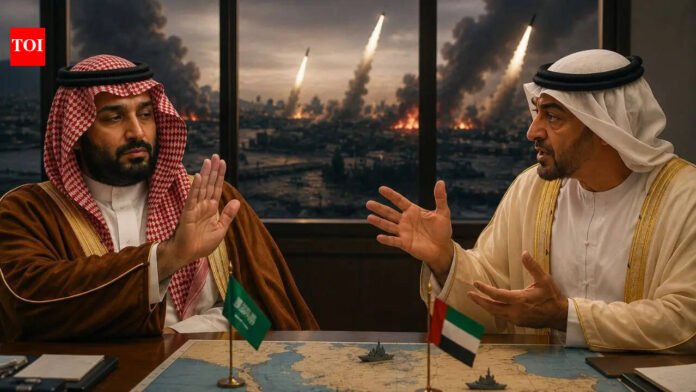
The United Arab Emirates tried unsuccessfully to persuade Gulf states, including Saudi Arabia and Qatar, to join a coordinated military response against Iran after Tehran launched a massive attack on the Gulf states earlier this year, Bloomberg reported, citing people familiar with the matter.Shortly after the United States and Israel began bombing Iran on February 28, UAE President Mohammed bin Zayed Al Nahyan reportedly held a series of calls with regional leaders, including Saudi Crown Prince Mohammed bin Salman.It is known that UAE President MBZ believes that the Gulf countries need collective retaliation to deter Iran after Tehran launched hundreds of drones and missiles against the Gulf countries in response to US and Israeli attacks.The attacks reportedly targeted ports, airports, residential buildings and hotels in the Gulf region. Iran has also all but closed the strategically important Strait of Hormuz, disrupting oil and gas supplies and forcing Gulf states to curb production.However, several Gulf leaders reportedly refused to join a coordinated military operation, telling Emirati leaders “this is not their war,” according to people familiar with Abu Dhabi’s thinking.The disagreement reportedly exacerbated already tense relations between the UAE and Saudi Arabia. When speaking to Gulf leaders, MBZ reportedly reminded them that the GCC was established in 1981 primarily out of security concerns following Iran’s Islamic Revolution.These developments also help explain the UAE’s growing dissatisfaction with other Gulf states, which reportedly culminated in Abu Dhabi’s decision to withdraw from OPEC in late April. The UAE is also said to be reviewing its membership in regional organizations including the Gulf Cooperation Council.In addition to tensions related to the Iran conflict, the UAE and Saudi Arabia have become increasingly economic rivals and are at odds over regional conflicts in Yemen and Sudan.The UAE reportedly normalized diplomatic ties with Israel under the 2020 Abraham Accords before a fragile ceasefire came into effect on April 8, making it the Gulf state most heavily targeted by Iran.Iran reportedly launched nearly 3,000 drones and missiles towards the UAE during the conflict, but most were intercepted by air defense systems. Tehran reportedly targeted the main oil port of Fujairah and fired more projectiles even after the truce.Other Gulf states such as Qatar, Kuwait, Bahrain, Saudi Arabia and Oman have also come under attack, particularly targeting energy infrastructure. An attack on Qatar’s Ras Laffan LNG facility has reportedly caused billions of dollars in damage that could take years to repair.Despite wider regional attacks, UAE leaders reportedly believe no other Gulf state faces an attack on the same scale as Abu Dhabi.The UAE and Israel also reportedly cooperated closely during the conflict on intelligence sharing, interception of Iranian attacks, and coordination of targets within Iran. Earlier this month, MBZ held a rare phone conversation with Israeli Prime Minister Benjamin Netanyahu, according to both governments.U.S. Ambassador to Israel Mike Huckabee said earlier this week that Israel had sent Iron Dome air defense systems and personnel to the UAE during the conflict.Saudi Arabia also reportedly launched an attack on Iran in March before turning its focus to diplomacy. Riyadh later encouraged Pakistan to mediate between the United States and Iran.The UAE is reportedly frustrated that it was not adequately consulted during Pakistan-led diplomatic initiatives. Abu Dhabi then refused to provide Pakistan with a $3 billion loan in early April, after which Saudi Arabia stepped in to aid Islamabad.Qatar is also reportedly considering retaliatory action after Iran attacked Ras Laffan, the world’s largest liquefied natural gas facility, in mid-March. However, Doha ultimately chose to prioritize efforts to de-escalate the situation.Bahrain and Kuwait, along with Saudi Arabia, are reportedly not involved in the conflict, while Oman is considered unlikely to join military action because of its relatively close ties with Iran.The administration of U.S. President Donald Trump is also reportedly aware of UAE-led efforts to establish a coordinated military response in the Gulf and wants Saudi Arabia and Qatar to participate.However, Saudi Arabia, Qatar and the United Arab Emirates initially tried to dissuade Trump from taking military action against Iran, fearing Tehran would retaliate against Gulf states and U.S. military bases in the region.The report added that Gulf states have tried to improve relations with Iran in recent years in the hope of stabilizing the region and promoting investment and economic growth.


