
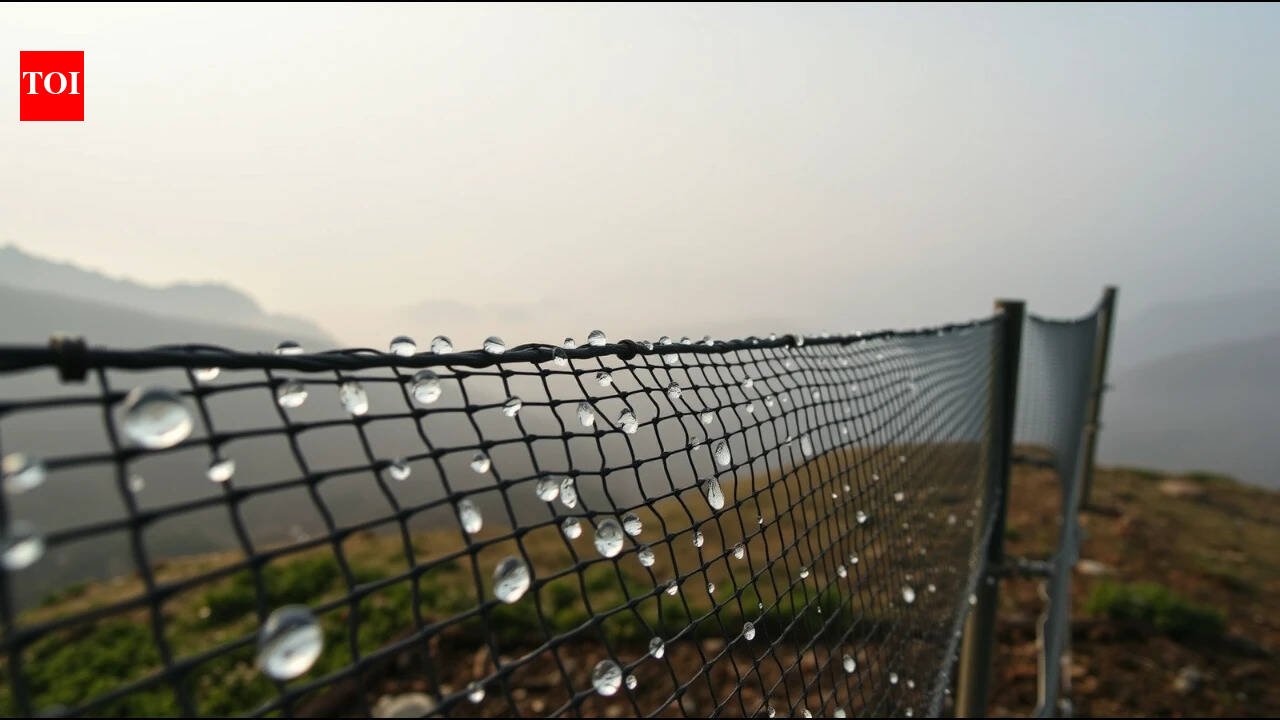
High on Mount Boutmezguida in southwest Morocco, more than 4,000 feet above sea level, rows of black mesh stand directly in the path of Atlantic fog rolling through the Anti-Atlas Mountains. As the fog passes through the mesh, tiny droplets collect on the fibres, run downward and are gathered before being stored and carried through pipes to homes in nearby communities. The project is operated by Dar Si Hmad, a Moroccan nonprofit whose work with fog harvesting began in 2006, initially through a pilot effort to determine whether the region’s persistent coastal fog could provide a dependable source of freshwater. The later system uses CloudFisher technology developed through partnerships involving Dar Si Hmad, FogQuest and technical partners, with about 600 square metres of mesh capable of producing roughly 6,300 litres of water a day. The network now supplies five villages in the Aït Baamrane region, where reliable freshwater has historically been difficult to access. Instead of travelling long distances to wells, some households can now receive water through taps supplied by moisture collected directly from the mountain air.
How CloudFisher nets on Mount Boutmezguida collect water from fog
The technology behind the system is relatively simple in principle. Large sheets of specially engineered mesh are stretched across supporting structures in locations where dense fog regularly moves through the mountains. When moisture-laden air encounters the mesh, droplets accumulate on the fibres until gravity pulls them downward into collection gutters. The water is then channelled into reservoirs before being treated and distributed through the local network. The system at Mount Boutmezguida covers approximately 600 square metres of mesh and can produce around 6,300 litres of water per day under suitable conditions. The technology is known as CloudFisher and was developed to improve the durability and efficiency of conventional fog collectors, which have been used in different parts of the world for decades. Dar Si Hmad worked with FogQuest, a Canadian nonprofit specialising in fog and rainwater collection, as well as technical partners in developing and implementing the system. The idea itself is much older than the modern project: atmospheric moisture has been collected in various forms for centuries, but the Moroccan installation combines engineered mesh with storage, treatment and distribution infrastructure, allowing fog harvesting to function as a genuine community water supply rather than simply an experimental demonstration.
Why getting Moroccan communities to accept fog water was as important as building the nets
The engineering was only one part of making the project work. Residents also had to become comfortable with the idea of drinking water collected directly from fog rather than water drawn from a conventional well or transported from elsewhere. A University of Toronto Reach Alliance case study examining Dar Si Hmad’s work focuses heavily on this social side of the project, including community acceptance, household water management and the changes that followed once water became available closer to home. Some residents initially questioned whether fog water could provide the qualities they associated with conventional sources, while others had concerns connected to cultural and religious practices. Dar Si Hmad therefore treated community involvement as part of the infrastructure itself, working with residents to explain the system, its water treatment process and how households could conserve and maintain their new supply. The organisation also developed what it calls a water school, using the new network as an opportunity to teach communities about water management and, in some cases, literacy and numeracy. The result was that the project was not simply a set of nets installed on a mountain, but a water system that required residents to understand, trust and participate in its operation.
What changed for Moroccan families once water began arriving through household taps
The system’s impact extends beyond the approximately 6,300 litres of water it can collect on a suitable day. Before the network was established, some families in the region depended on distant wells and had to spend significant amounts of time collecting and transporting water, a responsibility that frequently fell on women and girls. Bringing water closer to homes could therefore change how households used their time, particularly for people who had previously spent hours making water-collection trips. Dar Si Hmad’s network initially supplied more than 90 households and has since been described as serving several hundred residents across five villages. The project has also demonstrated why an unconventional water source cannot be separated from the community using it: reliable collection technology matters, but so do maintenance, water education, local acceptance and an infrastructure network capable of getting the water from a mountainside to a household tap. Fog harvesting cannot solve Morocco’s wider water crisis, and its output naturally depends on local fog conditions, but in the Aït Baamrane region it has transformed an atmospheric phenomenon into a practical source of freshwater. What once simply drifted over the mountains is now captured, stored, treated and delivered to people living below them.