
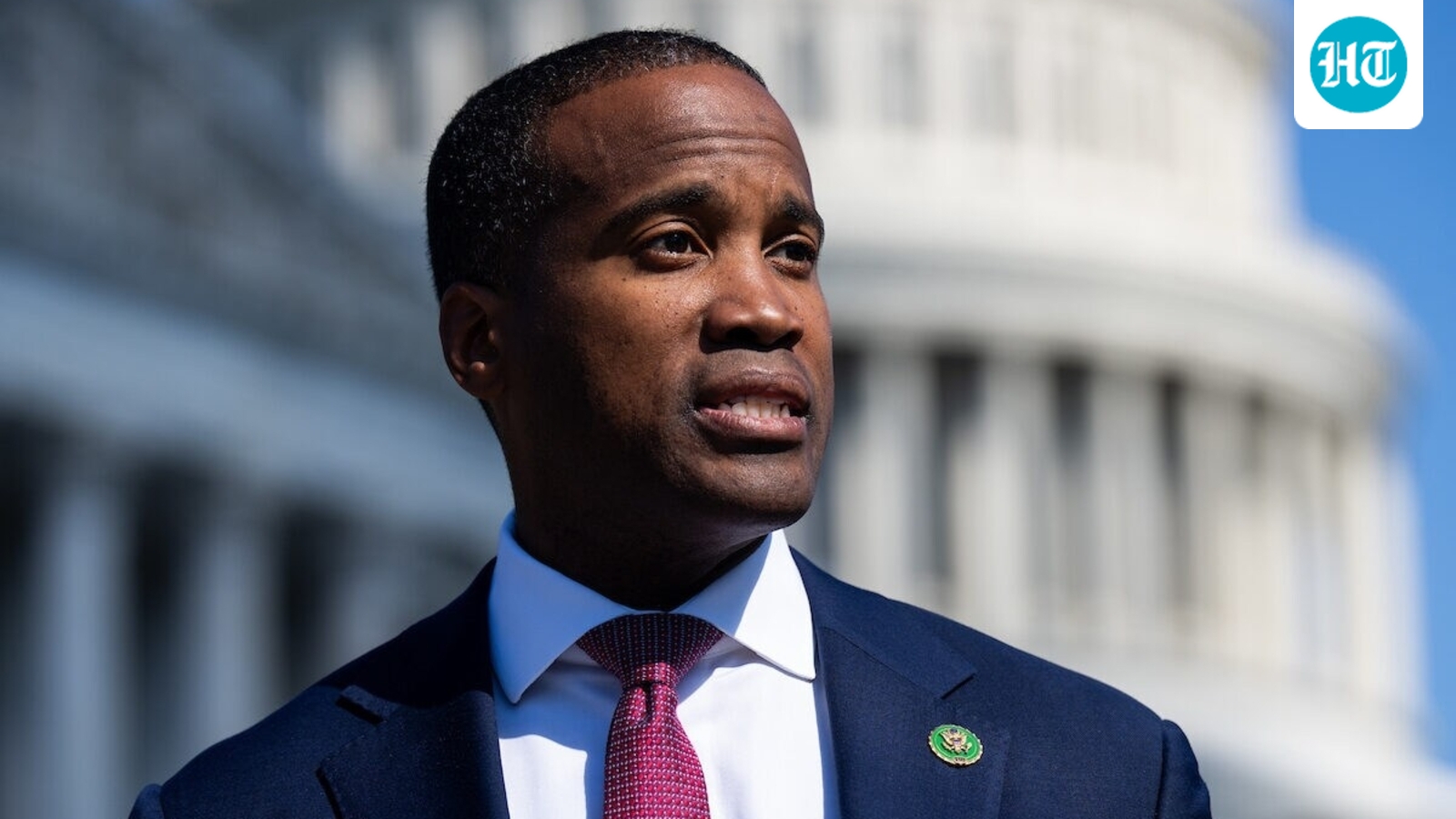
Long before he became a Republican congressman, John James served in the US Army, flying Apache helicopters over Iraq, and ran an automotive logistics company in Michigan. His experience informs his approach to the governor’s office, according to his campaign that someone who has led soldiers and businesses can deliver a more pragmatic, growth-oriented message.

What we know about John James
James, 45, was born and raised in Michigan and graduated from West Point before serving eight years in the US Army. He became a Ranger-qualified aviation officer and led two Apache platoons during Operation Iraqi Freedom. He went on to complete graduate degrees in supply-chain management, information systems and business before serving as CEO of the family business, James Group International, and Renaissance Global Logistics. He ran unsuccessfully for the Senate twice before winning a seat in Congress in 2022.
James is married to Elizabeth James and has three sons, John, Hudson and Christian.
Money has become an unavoidable talking point in the political landscape surrounding him. Congressional disclosures reviewed by Bridge Michigan placed the combined value of assets and liabilities owned by James and his wife in a ballpark range of roughly $10.8 million to $50.8 million in 2025. Much of the gain was connected to family trusts and his interest in the James Group. It is a disclosure range, rather than a precise measure of his personal net worth.
James’ economic agenda revolves around manufacturing, energy, less regulation and jobs. He has repeatedly pointed to Michigan’s losses in manufacturing employment over the past several decades and argued the state needed to become more competitive. He has supported business investment and technology development but has also called for protections around AI, particularly concerning surveillance, algorithmic management and workers’ rights. Trade is more complex.
James broadly supports Donald Trump’s push for reciprocal trade and an America First economic policy but has acknowledged that Michigan cannot afford to ignore its enormous commercial relationship with Canada. He has argued that Washington should negotiate a fair deal rather than allow tariffs to hurt manufacturers and consumers on both sides of the border.
On Iran, James has supported the administration’s efforts to prevent Tehran from acquiring a nuclear weapon. He has argued that diplomatic and economic pressure should be applied where possible while avoiding another prolonged conflict for American troops.
James’ wealth and links to the data-centre industry have nevertheless generated criticism. Democrats have accused him of benefiting from policies favourable to data centres, although Bridge Michigan found that some of the claims about his congressional votes overstated his direct role in specific tax legislation.
James is entering the governor’s race with a distinctly business-and-military identity, one he hopes will appeal to voters interested in manufacturing growth, national security and a more aggressive economic agenda.