
Before Jensen Huang became the face of the artificial intelligence revolution, he worked long shifts at a local Denny’s restaurant, starting as a dishwasher and later becoming a waiter.
The Nvidia co-founder has often credited that early job with shaping his ability to handle pressure. Huang has said the fast pace of restaurant work taught him discipline, resilience and how to perform during stressful moments, according to Quartr.
Today, Huang leads Nvidia Corp., the company whose graphics processors became the foundation of modern artificial intelligence systems. He founded Nvidia in 1993 and has served as its president, chief executive officer and board member since the company’s creation.
Huang’s rise has made him one of the most influential figures in technology. Nvidia has become a central player in the AI boom, supplying chips used by companies developing advanced artificial intelligence models.
But his journey began far away from Silicon Valley. It involved immigration, financial struggles, academic success and years of engineering work before he launched Nvidia with two partners.
Also read: Trump calls Jensen Huang ‘honorable,’ says he has not discussed allegations with Nvidia CEO
From Taiwan to America: Huang’s difficult childhood shaped his ambition
Huang was born Jen-Hsun Huang in Tainan, Taiwan, in 1963. His family moved to Thailand five years after his birth.
His parents wanted him and his brother to move to the United States to have better opportunities away from the political instability of Southeast Asia during the Vietnam War era. Hence, Huang’s mother helped the siblings learn English by teaching them words from a dictionary every day to make their move to the US easier.
In 1972, Huang moved to Tacoma, Washington, to live with his uncle while his parents prepared paperwork to join him.
His early years in America were challenging.
As a young immigrant with limited English skills, Huang struggled to adjust. He attended a boarding school in Kentucky, where he lived alongside students from a military reform academy and was relentlessly bullied.
Despite those difficulties, Huang focused on education. Former classmates later recalled his determination and ability to build relationships despite the challenges.
Soon enough, his parents moved to the US and settled their family just outside of Portland, Oregon. After moving to Oregon, Huang settled more comfortably into American life.
He attended Oregon State University, where he earned a bachelor’s degree in electrical engineering. According to Fortune, Huang met his future wife, Lori, who was his laboratory partner in an engineering class at OSU.
After graduating, Huang gained experience at two major semiconductor companies. He worked at Advanced Micro Devices Inc. from 1984 to 1985 and later joined LSI Logic Corp., where he held engineering, marketing and management roles between 1985 and 1993.
He later earned a master’s degree in electrical engineering while working with LSI from Stanford University in 1992.
Also read: US memo mentioned Nvidia CEO Jensen Huang’s ‘romantic ties’ with alleged Chinese spy: Report
Building Nvidia from a risky startup to an AI powerhouse
In 1993, Huang co-founded Nvidia with Chris Malachowsky and Curtis Priem. The company started with $40,000 in capital after the founders discussed the idea at a Denny’s restaurant in San Jose, California, Huang told CBS 60 minutes.
Huang was 30 years old, married, and a father of two when inspiration hit him in the same restaurant where he formerly worked as a busboy at the age of 15, he said.
“We came right here to this Denny’s, sat right back there, and the three of us decided to start the company. Frankly, I had no idea how to do it, nor did they. None of us knew how to do anything,” Huang said.
The company initially focused on graphics technology for video games. Huang believed there was growing demand for better computer graphics and more powerful chips.
According to the company’s website, Nvidia created the NV1, a low-cost computer processing chip, around 1995. As a result, they were able to collaborate with Sega to help make its titles available on PC.
The early years were uncertain. Nvidia faced a major setback after its first product strategy failed. Microsoft later announced that its graphics software would support triangle-based processing instead of Nvidia’s chosen approach.
The company faced the possibility of collapse. Huang responded by cutting costs, reducing the workforce and investing in a new chip design.
The gamble worked. Nvidia’s RIVA 128 graphics processor became a commercial success, selling about one million units within four months and helping save the company.
Over the next three decades, Huang transformed Nvidia from a gaming graphics company into a global technology leader. The company’s graphics processing units, or GPUs, became essential for artificial intelligence development because they can process large amounts of data simultaneously.
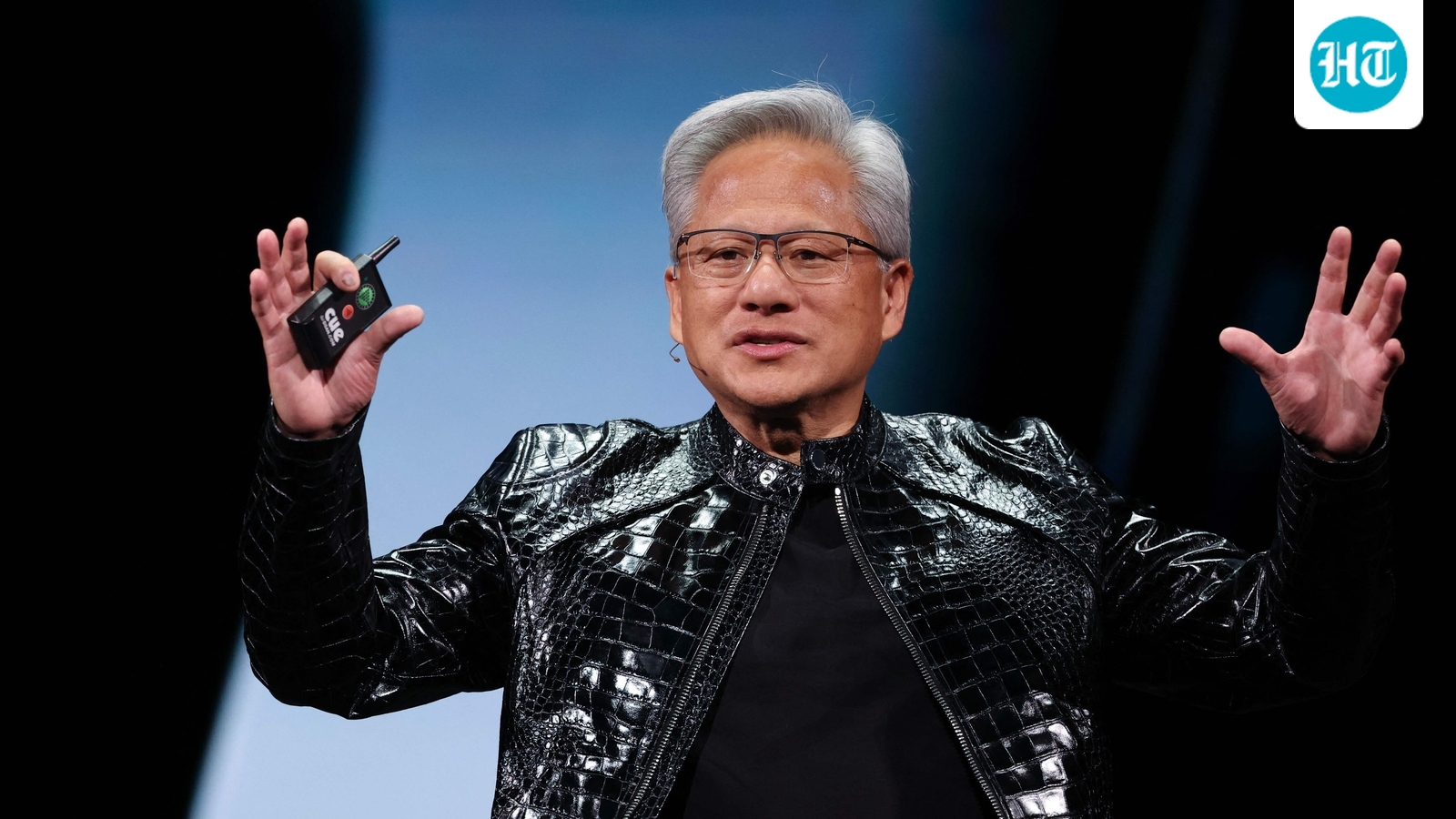
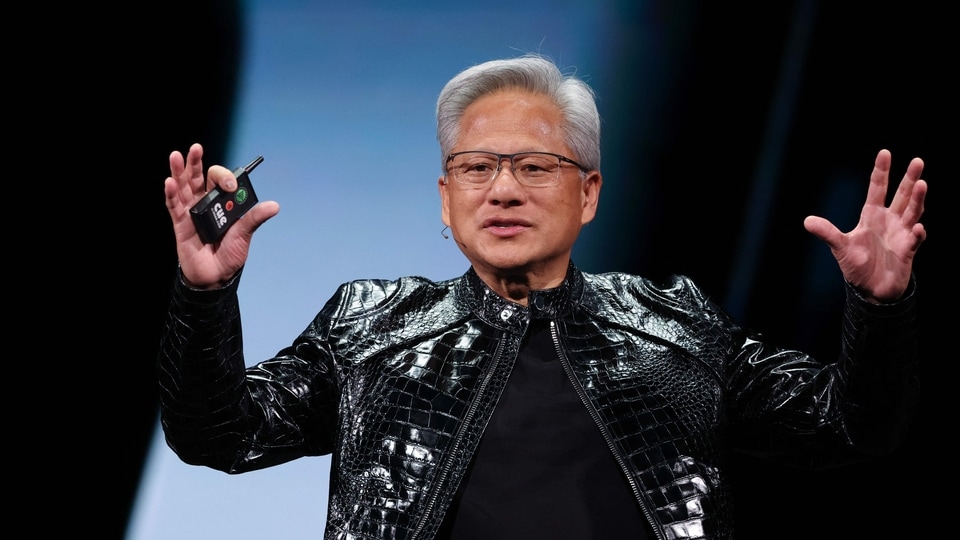
Under Huang’s leadership, Nvidia became one of the world’s most valuable companies as demand for AI infrastructure surged. His trademark leather jackets and direct explanations of complex technology have also made him a recognizable figure beyond the technology industry.
Huang’s achievements have received global recognition. Fortune named him Businessperson of the Year in 2017, while Harvard Business Review ranked him No. 1 on its list of the world’s 100 best-performing CEOs over the lifetime of their tenure in 2019.
“This is the most extraordinary thing,” he told CBS 60 Minutes. “That a normal dishwasher busboy could grow up to be this. There’s no magic. It’s just 61 years of hard work every single day. I don’t think there’s anything more than that.”