
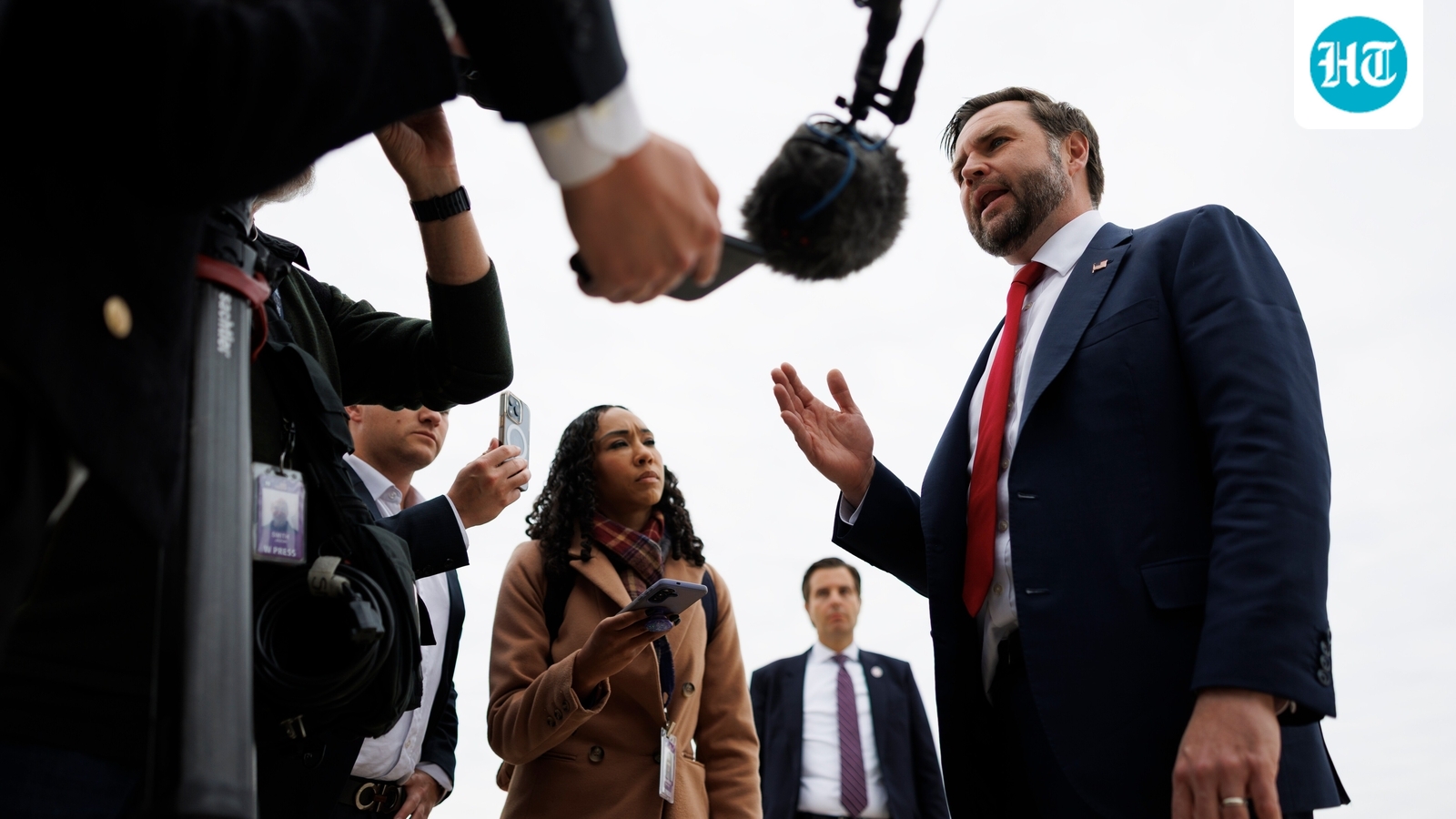
The Vice President didn’t wait to pat himself on the back and assign blame elsewhere for the GOP’s electoral wipeout. Amid the rubble on the morning after the election, JD Vance posted a mini-essay on X.com to pin the defeat entirely on the war in Iran and suggest that ending it is a political necessity. By doing so in public, Mr. Vance signals desperation to Iran’s regime, undermining his boss at a critical moment in the war.
“The real reason we lost is obvious,” Mr. Vance wrote. “The reason we lost is the war.” Corruption? He didn’t mention it, though 90% in the national exit poll rated it of crucial or major importance to their vote.
He also had nothing to say about tariffs, even as cost of living placed second at 89%. On immigration, which scored even with the Iran war (73% vs. 74%), and which the Trump team managed to turn into a political weakness with its harsh enforcement, Mr. Vance set up a straw man by warning against “establishment” calls for “amnesty” that no Republican is calling for.
The selective blame is no accident. While the Vice President has become a true believer on tariffs and hard-line immigration restriction, unidentified leakers to the press throughout the Iran war have suggested he opposed it. When Mr. Vance now writes, “To the people who are pissed off and want to say, ‘I told you so’: you’re right, you did tell us so,” he’s thinking of himself.
Citing unlisted data from an unnamed friend, Mr. Vance wrote that the Republican voters who strayed claim they could be won back if the GOP would “1) End the war.” He also praised the “political advice” that counseled a “diplomatic resolution to the conflict”—his own position, which dragged out the war after its initial six weeks with a worthless April cease-fire and June deal that Iran immediately violated.
It could be honorable to speak up internally about the need to end a war. But to post it on social media is to tell the Iranians they now have the upper hand in nuclear and Strait of Hormuz negotiations.
President Trump has treated an end to the U.S. blockade of Iranian ports and military operations as a U.S. concession for which Iran would have to concede much in return. The U.S. success in the Strait has lately gained Mr. Trump leverage. Now, by announcing that his party needs an end to the war, Mr. Vance helps transform that into an Iranian concession for which the U.S. will be required to pay.
Mr. Vance doesn’t lay out terms to secure peace. His emphasis, entirely on escaping the war, comes close to a public counsel of surrender. This reduces Mr. Trump’s flexibility, and may have been intended to constrain him. At the least it’s hard to see how Mr. Vance can credibly continue as America’s lead negotiator with the Iranians.
The Iran war, its badly uneven prosecution, and the prolonged rise in fuel prices that resulted are part of the reason for the Republican loss. Mr. Trump’s approval rating on the economy, which had already fallen to 38% by the time the war started—down from 52% at the end of his first term—would fall further to 29% by October.
The war is unpopular: 63% in the exit poll say attacking was the wrong decision and 37% the right decision. But that’s better than tariffs, which 66% say hurt the economy and only 21% say helped. Fifty-eight percent also say Trump immigration enforcement went too far.
Nothing on Mr. Vance’s list of ways to win back Trump 2024 voters gives evidence of any self-reflection, least of all “4) Change our relationship to Israel.” That’s the message of the Jews-on-the-mind podcast ecosystem promoted by Mr. Vance and led by his friend and ally Tucker Carlson. The exit poll shows only 4% of voters rank foreign-policy issues first.
Mr. Vance writes, “If you’d like to argue [the war] was worth it, that losing the Senate for the next 6 years was worth it, then do so. Argue it was a worthwhile cost to pay.” Mr. Trump has replied politely, saying alternately that Mr. Vance was “largely correct” about the war’s political cost and that “Iran was a piece of it.”
But in each comment Mr. Trump has made sure to stress, “At the same time, if I had to do it again, I’d have to do it again because long-term, it’s the only answer. You can’t let Iran have a nuclear weapon.”
While the Vice President abandons ship, positioning himself to run for President, Mr. Trump has a decision to make. The U.S. is now winning in Hormuz and the blockade is working. But having paid such a high political price, will he take Mr. Vance’s advice to end the war now on terms that look to the world like an Iranian victory?