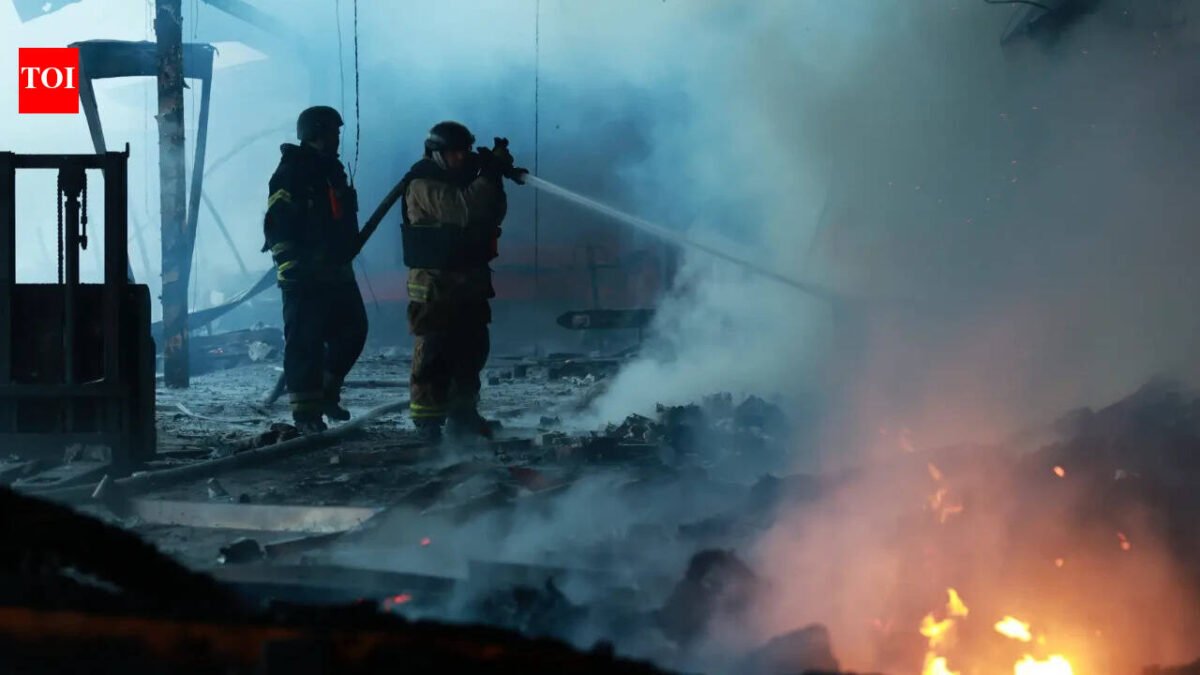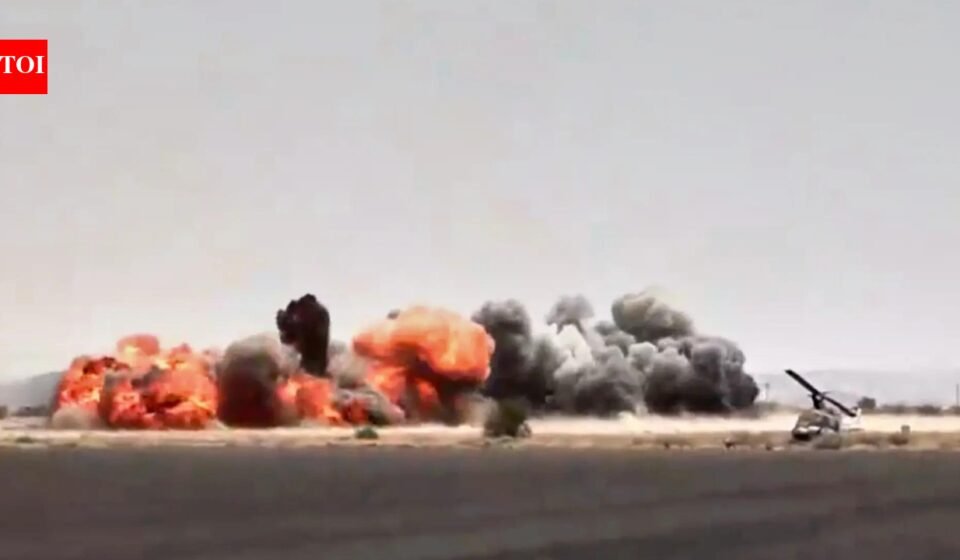

Cairo: Yemen’s Iran-backed Houthi rebels said on Saturday they had fired missiles and drones at Saudi Arabia in response to a Saudi air strike on the strategic Red Sea city of Hodeidah, escalating tensions in the crucial Mideast shipping lane as the United States and Iran battle for control of the Strait of Hormuz. Brig. Houthi spokesman Gen. Yahya al-Sarri said in a prerecorded statement that the attack targeted facilities in the Red Sea cities of Yanbu and Jazan belonging to Saudi Aramco, the world’s largest oil company. Saudi Arabia’s Civil Defense said sirens were sounded multiple times in the two cities early Saturday, but the kingdom had no further comment. There were no reports of attacks in Iran overnight, a marked departure from nearly two weeks of U.S. nighttime attacks
CJP Jantar Mantar Protest Updates
attack. Escalating tensions in the Red Sea further threaten global shipping The Houthis said they would close the Bab el-Mandeb Strait to Saudi-linked shipping in retaliation for the kingdom’s blockade of Yemen and a recent attack on the international airport in the rebel-controlled capital Sana’a. “Except for ending the aggression and lifting the blockade, all this is an illusion and a mirage,” Mehdi Mashat, chairman of the Houthi-led Supreme Political Council that governs territory controlled by Yemen’s rebels, said when talking about how the Houthis could not block the Bab el-Mandeb Strait. The strait is located at the southern tip of the Arabian Peninsula and is an important shipping chokepoint connecting the Red Sea and the Gulf of Aden. About 12% of the world’s trade, including a quarter of container traffic, passes through the narrow strait. The Houthis targeted two Saudi oil tankers in the Red Sea this week. The Saudi-led counter-rebel coalition said on Saturday that Saudi Arabia had attacked Hodeidah in response. Anees al-Asbahi, a spokesman for the Houthi health ministry, said Friday night’s attack hit the port and the state-run telecommunications company, injuring two people. The Saudi-led coalition said it did not attack the port but “legitimate military targets” in Hodeidah province that were “related to threats to commercial shipping in the Red Sea.” Iranian Foreign Minister Abbas Araghchi called for resolving the conflict in Yemen through “diplomacy and dialogue” and avoiding “military confrontation” in an interview published in state-run newspaper Iran on Saturday. Iran’s Health Ministry spokesman Hossein Kermanpour posted on the X website that Iran condemned Ukraine’s attack on commercial ships and “Iran spent a peaceful night.” U.S. Central Command did not immediately respond to a request for comment. Unlike the previous 13 nights, no new strikes were announced. But Iran’s foreign ministry condemned Ukraine’s attack on an Iranian merchant ship in the Caspian Sea on Saturday, which it said killed one person and injured another and called it an act of aggression. Araghchi said in a separate statement that he had spoken to EU foreign policy chief Kaja Karas about the issue and that Tehran had demanded a response. According to Iranian state media, Ukraine’s diplomatic representative in Iran was summoned. Ukrainian President Volodymyr Zelensky said earlier on Israeli Prime Minister Benjamin Netanyahu plans to travel to the United States next week and meet with President Donald Trump in Washington on Tuesday, his office said on Friday, while mediation efforts between the United States and Iran continue. Their last meeting was in February, a few weeks before the war broke out. More than 7,000 people were killed, including in Lebanon. A fragile ceasefire that halted major operations for weeks appeared to unravel this month. The United States accused Iran of attacking three ships in the Strait of Hormuz and responded with strikes on dozens of targets inside Iran, while Iran retaliated by firing on U.S.-allied Gulf Arab states. The US military re-blocks Iranian ports. Iran’s Revolutionary Guards advised residents of neighboring countries to stay away from U.S. military bases. The war has killed more than 3,400 people in Iran, according to Iran’s health ministry. According to reports, 18 U.S. service members, 24 Israeli civilians, and a smaller number of civilians, including foreign workers and sailors, were killed in the area. In Lebanon, more than 4,000 people have been killed since the war broke out two days after Iran-backed Hezbollah militants opened fire on Israel in support of the Islamic republic, while Israel responded with strikes and ground troops. Thirty-eight Israeli soldiers also died.