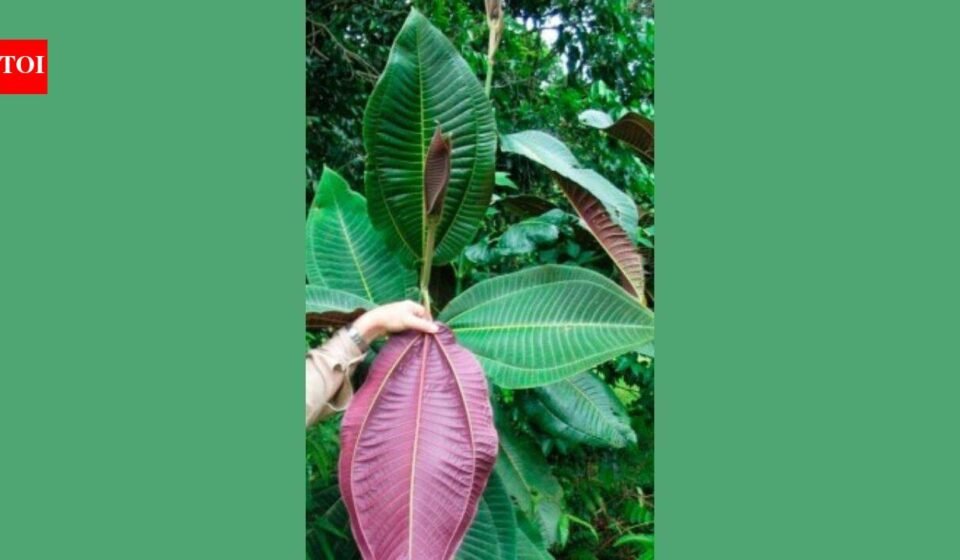
In 1937, an ornamental tree was planted in a botanical garden in Tahiti; today, a single tree can produce 8.9 million seeds and threatens Queensland’s World Heritage Rainforest

In 1937, a botanical garden in Tahiti planted an ornamental tree that would one day serve as a warning sign for some of the world’s most vulnerable rainforests. What started as a beautiful landscaping option has developed into a serious biosecurity threat, with a mature Mykonia tree capable of producing more than 8.9 million seeds in a single fruiting season, posing a significant risk to Queensland’s World Heritage Rainforest.
A plant with a dangerous past
The tree in question is myconia, a tropical plant native to the Americas that was once valued for its striking appearance. Its large leaves, purple underside and lush growth make it attractive to gardeners, and this ornamental quality has helped it grow well beyond its original range. Over time, however, Mykonia has earned a darker reputation in places like Tahiti and Hawaii, where it is notorious for invading forests and suffocating native vegetation, according to a report from Queensland’s Department of Agriculture and Fisheries Biosecurity Branch.The Tahiti connection dates back to 1937, when a botanical garden planted the species as an ornamental tree. Since then, the plant has escaped cultivation and spread wildly across the island’s landscape. Where it takes root, it forms dense vegetation that blocks sunlight from reaching the forest floor and drives out native plants.
Why is Queensland worried?
There’s a reason Queensland considers micon a high priority invasive weed. Biosecurity Queensland said the plant could cause irreversible ecological damage to the state’s subtropical and humid tropical rainforests, including World Heritage areas. These habitats are particularly important because they support rare and endemic species found nowhere else on Earth.It’s not just Mikan’s rapid growth that’s worrisome. It’s that a plant can reproduce with extraordinary efficiency. According to Queensland’s pest risk assessment, a mature Myconia tree with about 200 fruiting panicles can produce more than 8.9 million seeds in a season. This scale of reproduction gives the plant a huge advantage, allowing one mother tree to seed an entire invasive population.
How Mykonia took over
Myconia is particularly dangerous in rainforest environments because it alters the surrounding habitat. It invades the understory, the layer beneath the tree canopy where many delicate plants grow. Rare orchids, ferns, shrubs and small native trees are particularly vulnerable because micon reduces the amount of light they receive.As the plant spreads, it creates a barren understory and reduces ground cover. Not only does this damage biodiversity, it can also lead to erosion. Queensland’s risk assessment states that mykonia’s shallow, spreading root systems could destabilize hillslopes, particularly after heavy rain. In tropical watersheds, this instability can send sediment into streams, ultimately damaging coral reef ecosystems downstream.That’s why weeds are more than just garden escapees. It changes the landscape. Once established, it changes the structure of the rainforest, affects water flow, reduces habitat quality for native animals, and makes the forest much less resilient.
where plants can spread
In Queensland, micon has been deemed a restricted invasive plant under the Biosecurity Act 2014. There are currently three species of concern: Miconia calvescens, Miconia nervosa and Miconia racemosa. Biosecurity Queensland says the species pose a significant threat to local rainforests and all will be eradicated through the National Tropical Weed Eradication Program.The species is adapted to the climate of coastal north Queensland, which is part of why it is so concerning. Moist forests, rainforest ravines, forested streams and even home gardens are considered suitable habitats. Seeds can be spread by birds, water, other animals, contaminated machinery, and footwear, meaning that once the plant appears in an area, it can spread quietly and quickly.
eradication efforts
Queensland is not taking the threat lightly. The National Tropical Weed Eradication Program aims to protect World Heritage rainforest in Australia’s wettest region by surveying and removing invasive weeds in tropical Far North Queensland and subtropical New South Wales. Miconia is one of five target species for the program.The goal is ambitious but important: eliminate weeds before they become permanently entrenched. This is important because many outbreaks start in gardens or small plantations and then spread to nearby native forests. The program combines monitoring, removal, community reporting and working with local landowners to prevent the weed from spreading.Queensland is also asking for the public’s help. People are encouraged to report sightings immediately through official channels, as early detection is one of the best tools when dealing with a plant that hides under the forest canopy and spreads so efficiently.
Why this history is important
Mykonia’s story is a reminder that ornamental plants are not always harmless. A tree planted for beauty in Tahiti in 1937 is now part of a larger environmental challenge across the Pacific. In Queensland, the risk is particularly high because the rainforests at risk are not only ecologically rich but also globally significant.The problem with invasive plants is often that they are introduced for the right reasons, only to be exposed to their dangers after they adapt, spread, and start changing the land around them. Mykonia fits this mold almost perfectly. It looks attractive, grows vigorously, produces abundant seeds and thrives in the moist, shady environment that supports some of Australia’s most precious native ecosystems.That’s why Queensland’s warning is so urgent. A tree may seem insignificant on its own, but with its ability to produce millions of seeds, it can be the starting point of a long and costly ecological battle. As far as micon is concerned, prevention is far easier than control, and the lesson from Tahiti is clear: over time, plants introduced as decoration can pose a serious threat to the entire rainforest system.