
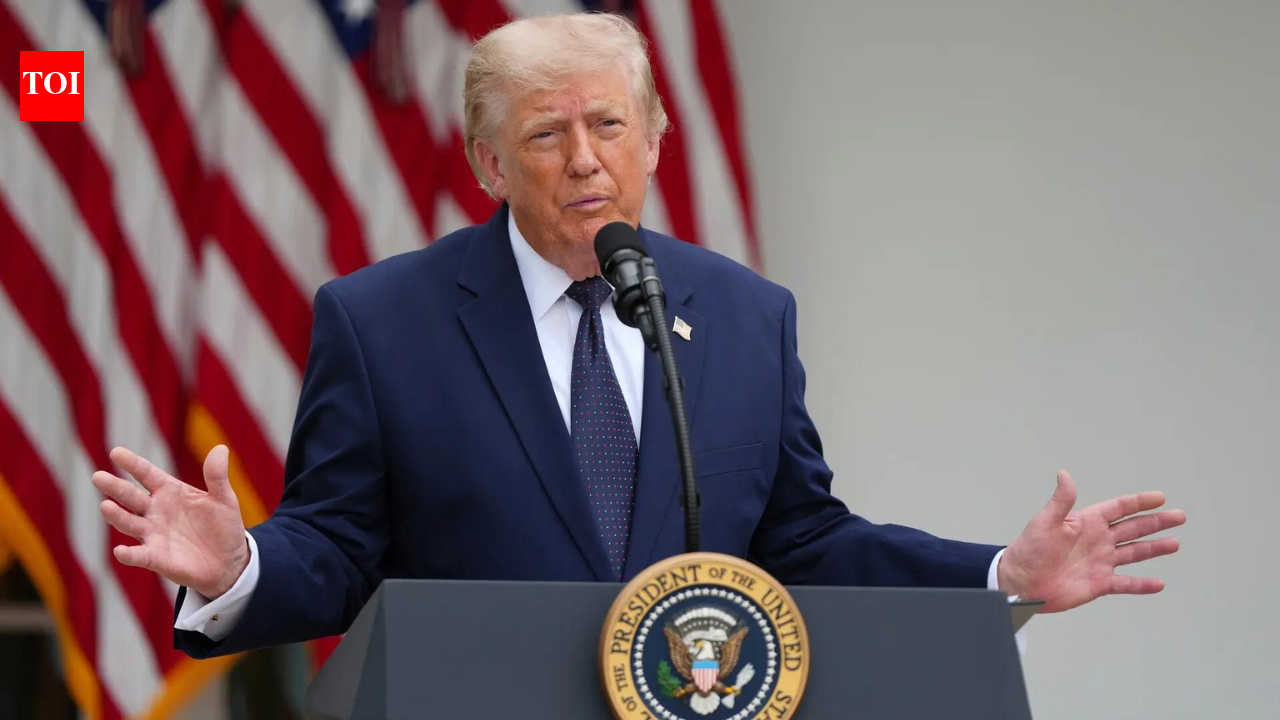
U.S. President Donald Trump has publicly questioned NATO’s reliability during the conflict with Iran, saying a military confrontation has become a test of whether U.S. allies will support Washington in a crisis. Trump admitted he was “very disappointed” with the alliance and claimed some NATO members were refusing to support key U.S. military objectives, deepening already tense relations with several European leaders.The comments came ahead of a NATO leaders’ summit in Ankara, where Trump met Turkish President Recep Tayyip Erdogan. The US president told reporters that the conflict in Iran confirmed his long-standing doubts about whether NATO allies would support the United States when it needs it most.Trump has argued for years that the United States bears a disproportionate share of NATO’s security burden and that European allies rely heavily on U.S. military guarantees. The Iran conflict appears to have exacerbated those concerns as some allies reportedly refuse to allow U.S. forces to use their air bases to attack Iran and contribute military assets to secure the Strait of Hormuz.Trump said he deliberately observes how allies respond during crises.“I’m very disappointed in NATO,” Trump said. “We don’t need any help at all, and in a way, I’m testing people,” he explained. “I’m testing to see if they’ll be there because I said early on that we helped them, but I’m not sure if they’ll be there for us.”One of the leaders Trump named was Italian Prime Minister Giorgio Meloni. Although the two countries have often maintained cordial relations, Trump said Italy’s refusal to support Washington’s approach to the Strait of Hormuz had strained relations.“She refused to intervene in the Strait of Hormuz, or you could say just Iran,” Trump said. “So that soured my relationship with her a little bit. But I like her. I think she’s a good person. But I think she made a mistake.”Trump considered Italy’s reluctance particularly surprising due to its dependence on energy imports from the Gulf, while insisting the U.S. was not driven by energy demand.“We have a lot of oil. The United States has more oil than anybody. When you include Venezuela, it’s like we have more oil than anybody. We don’t need the strait,” Trump said.“We did it because we thought it was an important thing. But she just wasn’t with us. I’m not happy about that,” he added.The U.S. president has repeatedly criticized several European leaders since the conflict with Iran began. He recently mocked Meloni on social media and also took aim at British Prime Minister Keir Starmer, saying the British leader’s cautious approach to the crisis showed he was “not Churchill.” Despite efforts by NATO Secretary-General Mark Rutte to reassure Trump about his growing defense commitment to the alliance, Trump remains unconvinced.By contrast, Trump praised Turkish President Recep Tayyip Erdogan, calling Türkiye a constructive partner during the crisis. He said Ankara helped contain tensions through diplomatic efforts and suggested Erdogan shared the goal with Washington of preventing Iran from acquiring a nuclear weapon.“They know Iran very well and they know the problems in Iran,” Trump said of Turkish officials. “They, along with several other countries, have been very helpful.”“In terms of our relationship, including trying to end the war with Iran, or whatever you want to call it, it’s not even a war. It’s a military operation. It’s a denuclearization,” the US president asserted.Trump also pointed out that Türkiye has strong military capabilities but has chosen not to directly intervene in the conflict.“He could have been in the fight,” Trump said, describing Turkey as “a very strong military country.”Regarding Iran’s nuclear ambitions, Trump expressed confidence that Erdogan remained consistent with Washington’s position.“I don’t think he wants to see them have nuclear weapons either,” Trump said. “I’m pretty sure of that. In fact, I’m absolutely sure of that.”Trump’s comments highlighted growing tensions within the Western alliance, which has brought Nato leaders together to discuss the consequences of the conflict with Iran, collective security and burden-sharing. His comments also highlighted a growing divide between Washington and some of its traditional allies over the extent to which NATO should support U.S. military operations outside its core territories.