
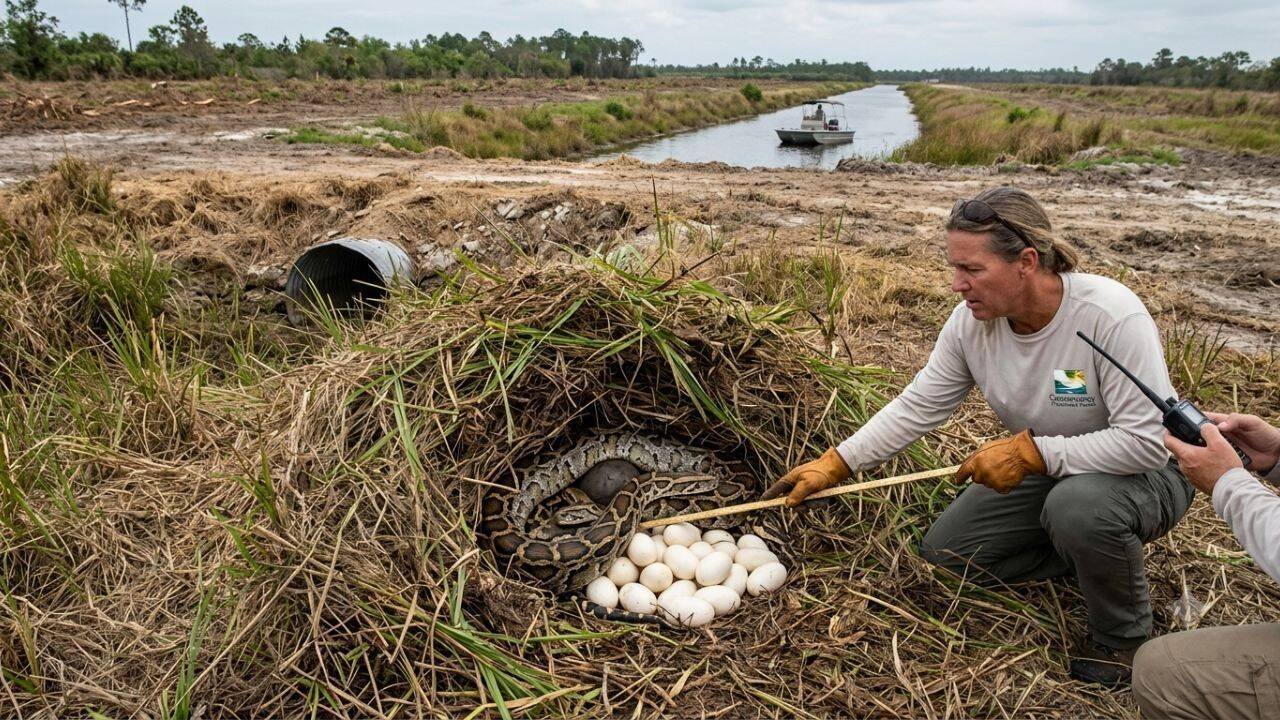
For years, efforts to track invasive Burmese pythons in Florida have focused on the Everglades, where the giant snakes have become one of the state’s most persistent wildlife problems. This is starting to change. Wildlife officials now say a separate breeding population has established farther north along Florida’s Gulf Coast, suggesting the species has gained another foothold outside its long-recognized range. The discovery has renewed concerns among conservationists because once isolated colonies begin to reproduce, they can become difficult to control. While Burmese pythons have already transformed parts of South Florida’s ecosystem, scientists worry that similar changes may be emerging outside what was until recently considered the snake’s main stronghold.
Florida confirms Burmese python population outside Everglades
The Florida Fish and Wildlife Conservation Commission (FWC) has confirmed that Burmese pythons are now inhabiting parts of western Charlotte County. This area, located north of Naples and Fort Myers, represents a unique population outside the species’ long-recognized core range.For decades, the sedentary population was primarily associated with Everglades National Park before spreading across much of South Florida, extending into Lake Okeechobee, Key Largo, and western areas of Broward and Collier counties. The colony in Charlotte County lies outside the familiar range, making it a separate area of concern rather than just another sighting. A few years ago, officials began noticing a steady rise in reports from local communities. Sightings have increased around Rotunda West, Placida, Englewood East and South Bay, prompting biologists to conduct closer monitoring before concluding breeding animals are present.“This is a multi-faceted apex predator, which is why we are so interested in removing them from the ecosystem,” said Ian Bartoszek, a wildlife biologist and science coordinator at the Southwest Florida Conservation Area in Naples, ABC News reported.
Why are snakes there?
Wildlife experts do not believe Charlotte County’s population developed through slow northward migration from existing Everglades populations. Instead, available evidence suggests the snakes escaped or were deliberately released. Burmese pythons have been widely imported into the United States through the exotic pet trade for decades, and accidental escapes and intentional releases have been linked to the species’ establishment in Florida. Biologists studying the new colony say its characteristics match what they would expect from a satellite population created by human introduction rather than natural expansion.
How their eating habits help them spread
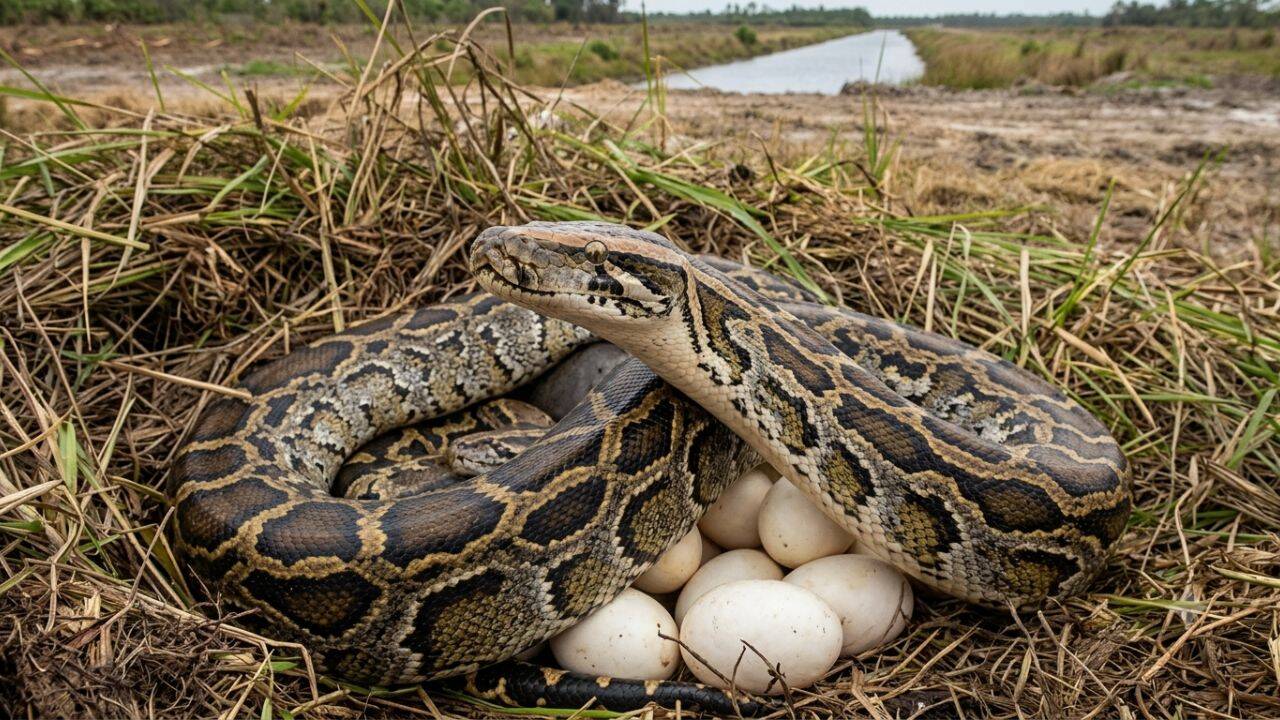
Large Burmese pythons are capable of preying on an unusually wide range of animals. Their diet includes raccoons, opossums, birds, bobcats, and alligators, and they have even been recorded eating prey larger than many people thought snakes could handle.This flexibility is one reason wildlife managers consider them particularly difficult to control. These snakes are not dependent on a single food source, but can move between different prey species as opportunities change, allowing them to survive in a variety of habitats.Conservation workers involved in the python removal describe them as apex predators that can reshape local ecosystems once populations are established.
What happens to native wildlife
The impact goes far beyond the loss of individual animals. Ecologists studying areas where pythons have been infested for many years have found that many native mammal populations have plummeted.As large mammals disappear, ecosystem diversity will gradually decrease. Scientists describe these altered environments as simplified systems in which rodents and other invasive species may become relatively more common while many native animals become scarce.The researchers say this pattern is repeated in parts of South Florida, and preventing similar ecological changes elsewhere remains an ongoing challenge.
Why Most Burmese Pythons Are Undiscovered
Estimating the number of Burmese pythons living in Florida remains difficult.These snakes spend most of their time hidden in dense vegetation, wetlands and waterways, making them difficult to find even during organized surveys. Research shows survey teams may only find about one to three snakes for every hundred snakes in a search area.Even within Everglades National Park, where teams of experts regularly search for pythons, finding one often requires hours of field work. Such low detection rates mean confirmed sightings likely represent only a small fraction of the animals that actually live in the area.
How Burmese pythons took root in Florida
The Burmese python invasion has been developing for decades. Federal wildlife records show that approximately 180,000 snakes entered the United States between 1975 and 2018, primarily through the pet trade.By around 2000, breeding populations had become established in South Florida. Since then, wildlife agencies have relied on public reports, organized removal programs and scientific investigations to try to slow its spread.Those efforts continue as officials monitor Charlotte and neighboring Lee County for more snakes. While biologists acknowledge that managing invasive predators of this size remains one of Florida’s greatest wildlife challenges, detecting breeding colonies early provides the best chance of limiting further expansion.