
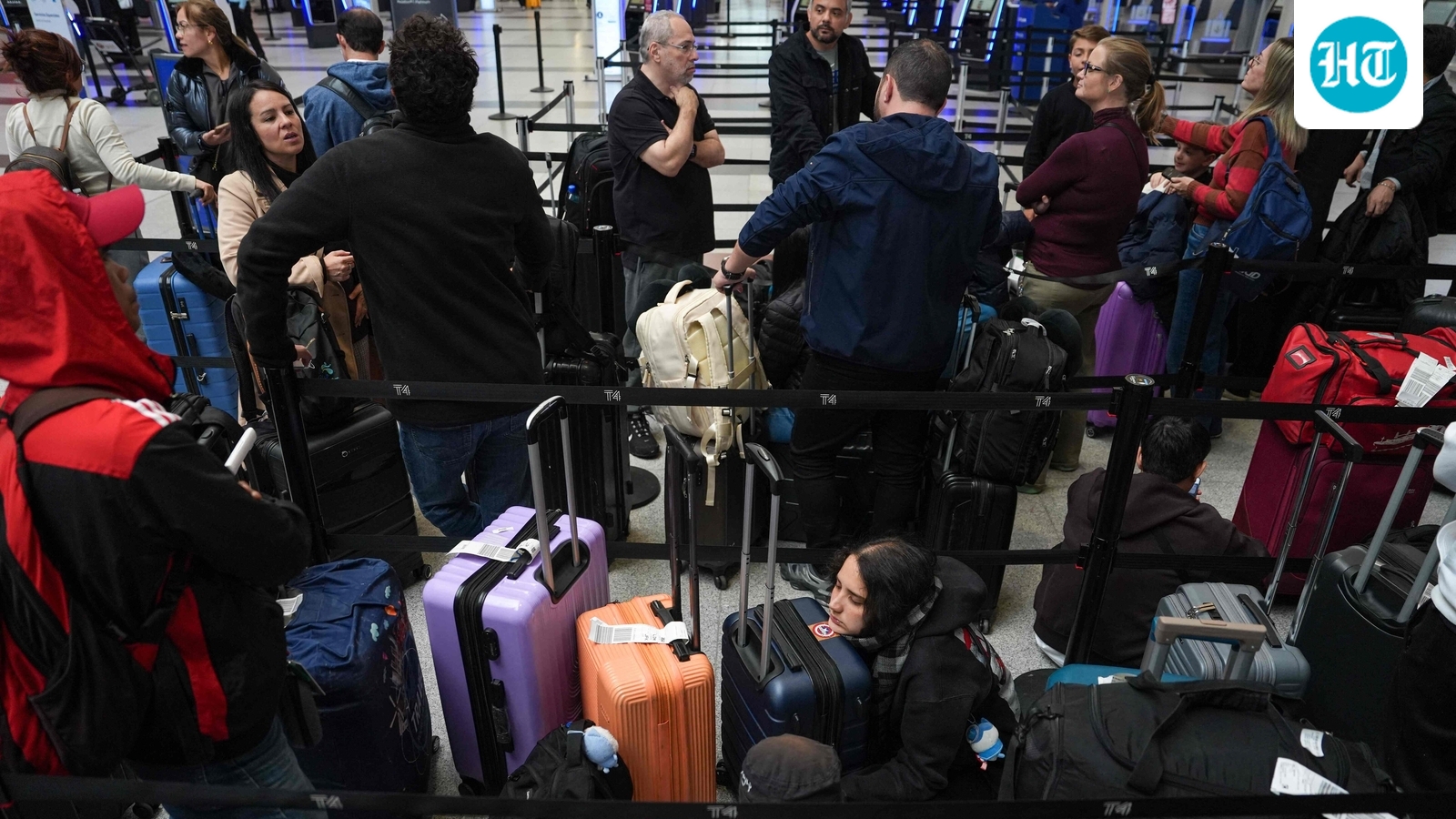
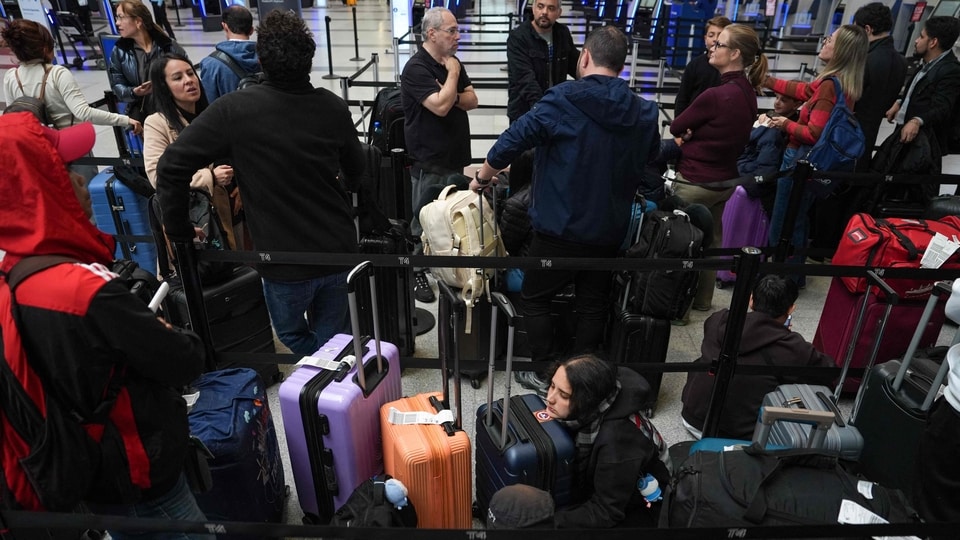
The five-hour nationwide ground stop that disrupted thousands of flights across the United States has renewed scrutiny of years of federal warnings about the country’s aging air traffic control infrastructure. Government watchdogs have previously pointed to repeated delays, oversight failures and costly contract extensions long before last week’s outage.
Transportation Secretary Sean Duffy said investigators are examining whether a decades-old router, which was supposed to be replaced in 2006, played a role in the November 13 disruption that halted departures nationwide.
Officials have not yet identified the final cause, but Duffy said the problems “go back decades” as the Federal Aviation Administration (FAA) continues to rely on outdated technology.
L3Harris Technologies
Fresh attention has focused on defence contractor L3Harris Technologies, which has managed much of the FAA’s telecommunications infrastructure for more than two decades.
According to a 2024 report by the Department of Transportation’s Office of Inspector General, the FAA improperly authorised 10 non-competitive contract extensions after the original 2002 agreement. The extensions added 57 months to the programme and increased spending by about $1.5 billion, CBS reported.
The inspector general warned that repeatedly extending contracts without competition risked increased costs and reduced service quality. The audit said the FAA may have relied on the extensions for “convenience and administrative ease” instead of pursuing competitive procurement.
Government concerns stretch back much further. Audits issued in 2006 and 2008 warned that L3Harris Technologies was falling behind schedule and continued to experience reliability issues affecting air traffic control operations.
In 2009, a telecommunications outage delayed more than 800 flights. The DOT IG investigated the incident and concluded that the FAA had not adequately supervised Harris Corporation, now part of L3Harris, while shifting more operational responsibilities to private contractors.
The agency later awarded another $291 million contract in 2012 to modernise air traffic control voice communications. That programme was terminated in 2018 after repeated technical setbacks, with about $160 million already spent.
Modernisation push faces pressure
Despite longstanding concerns, officials acknowledge replacing the legacy system cannot happen overnight.
Speaking after the outage, Duffy said the government remains dependent on L3Harris while a replacement system is built. “Many of our contractors, many of our partners, they take our money and they provide really poor service to us,” Duffy said.
Former Transportation Inspector General Eric Soskin also said many FAA systems have become so old that some manufacturers no longer produce replacement parts. “If only we had succeeded in getting a full rollout of next-generation technologies a decade ago, I bet whatever the cause was here wouldn’t have happened,” Soskin told CBS News.
L3Harris said it is cooperating with the FAA investigation and has completed about 70% of the transition from copper communication lines to fibre-optic infrastructure. The company said it takes the nationwide disruption seriously and is working closely with federal officials to determine what caused the ground stop.
L3Harris lobbying efforts
According to Senate records, the company has paid lobbyists $23.9 million since 2020, including $2.51 million this year. According to disclosures, it annually pushed Congress for money for FAA modernization. Additionally, L3Harris has personally lobbied the FAA.
L3Harris wrote a letter to legislative leaders of the House Transportation and Infrastructure Committee in April of last year, pleading with them to move forward with a proposal for modernizing air traffic control that originally asked for $15 billion in federal funding.
The letter addressed two lawmakers who had previously received campaign contributions from the company’s political action committee. Four days after the letter was sent, one of the addressee publicly announced the committee’s plan to allocate billions of dollars in additional funds for air traffic control modernization.
The Government Accountability Office reported in 2024 that 51 of the FAA’s 138 air traffic control systems were already unsustainable because of obsolete technology and unavailable spare parts. Another 54 systems were considered potentially unsustainable.
Hence, Congress also recently approved $12.5 billion for FAA modernisation, including $4.75 billion for telecommunications upgrades, as part of President Donald Trump’s One Big Beautiful Bill Act.