
Joe Douglas knew what to expect when he drove 90 minutes to see President Trump in Wichita, Kan., this week. “I’ve heard everything he is going to say,” the 70-year-old retired pipeline worker said, sporting the red MAGA hat he bought in 2016.
So why make the drive? “Because this is live,” Douglas said Monday, adding that he had never seen the president, whom he voted for in the past three elections, in person.
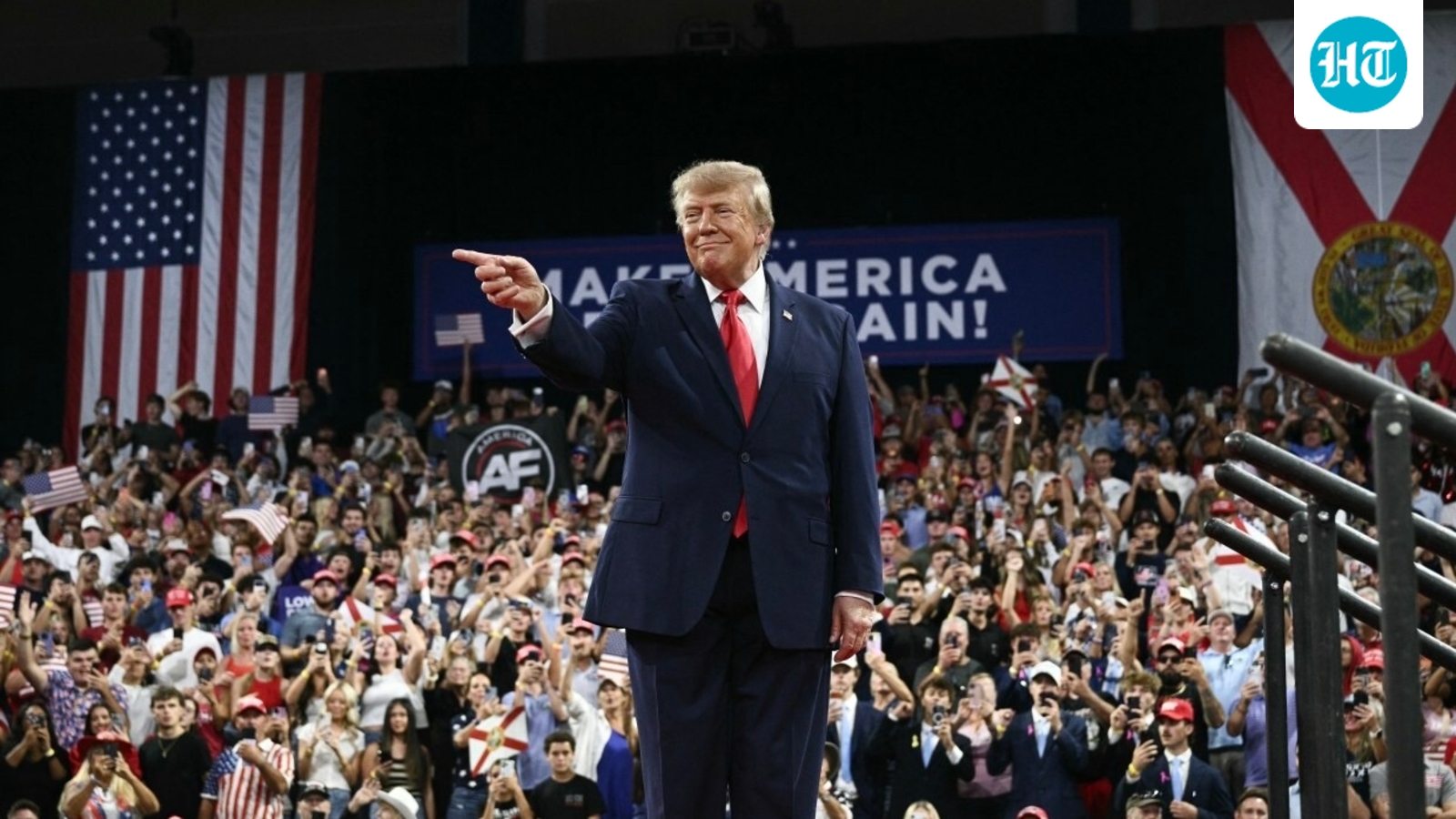
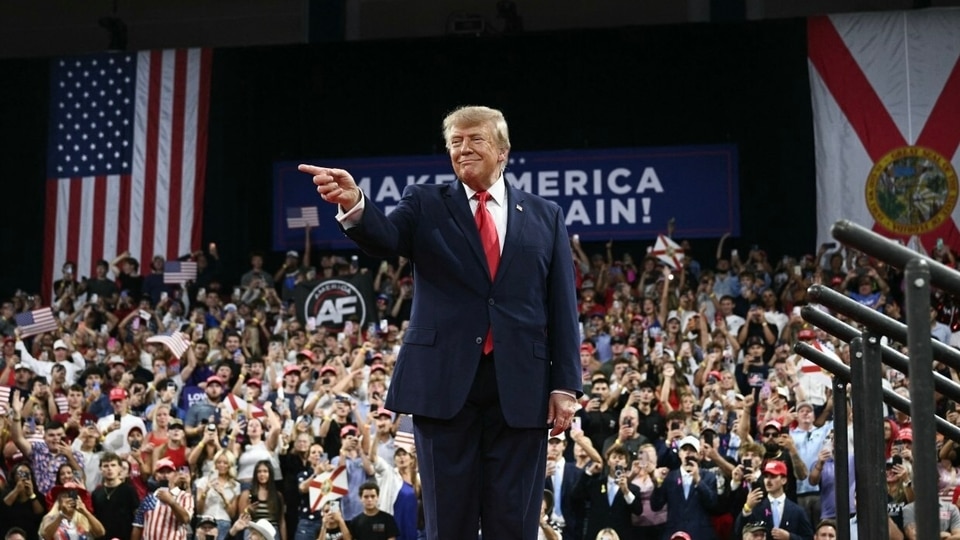
Trump has returned to the rally stage in force, hoping to energize his supporters and defy the polls predicting deep Republican losses in November. Crowds are generally smaller than they were when he was on the ballot, but the president is reveling in the attention, touting his agenda, stirring the pot and veering off script.
Some Republicans fear the spectacle will motivate Democrats and give his opponents plenty of fodder to paint the president as out of touch. But at the arenas, gyms and airport hangars where he has been holding court, the Trump show is unabashedly back—perhaps for a final time as his decadelong dominance in politics begins to sunset.
Wall Street Journal reporters attended every one of Trump’s midterm rallies this week: seven events across seven states, starting in Kansas on Monday and ending in Michigan on Sunday, with stops along the way in North Carolina, South Carolina, Iowa, Florida and Georgia. All told, Trump spoke for more than 11 hours. By Saturday, his voice was noticeably hoarse.
Here’s what we learned:
All about Trump
The rallies are something of a security blanket for Trump, according to advisers, freeing him from the pressures of the job, critical news coverage and the lowest approval rating of any president heading into midterm elections in Wall Street Journal polling dating to the 1990s. Most analysts expect the GOP will lose control of the House and possibly the Senate.
But on stage, Trump is met with cheering crowds and fleeting signs of opposition. In Sioux City, Iowa, congressional candidate Joe Mitchell lamented Trump hasn’t been awarded the Nobel Peace Prize and presented him with a framed “man of the century” certificate. Trump pauses at rallies to play a video clip of a CNN analyst explaining that among Republican voters, he is far more popular than Ronald Reagan or Abraham Lincoln.
Throughout the week, Trump addressed critics who allege that he is slipping by returning to one of his favorite topics: the mental acuity test that he says he aced: “I know everything that I’m doing,” he told a crowd in South Carolina.
Trump also said no fewer than 10 times in Wichita that “nobody appreciates me” despite what he considers his many accomplishments, a routine that culminated in a story he told about expressing that sentiment to a group of businessmen at the White House. “And then I look up and I say, ‘Oh, wait…is this the Oval Office that we’re in?…That means I’m president.”
Few things annoy Trump more than a small crowd. Friday in Fort Myers, Fla., he marveled at a packed arena on a college campus and claimed the crowd outside was “10 miles long.” There were a large number of people outside, but the line didn’t stretch for 10 miles. At every rally he points out how many cameras are in the back of the room. “Oh, wow, that’s a lot of fake news,” he said in North Carolina to laughter and boos.
A midterms strategy
Critics see self-aggrandizement, a blizzard of falsehoods and increasingly uncivil attacks on his opponents. But there is a strategy behind putting Trump at the center of the midterms. Advisers see Trump as the single best motivator for voters.
The Trump political machine is rerunning much of the playbook that returned him to the Oval Office in 2024: targeting the MAGA base, especially low-propensity voters, in red states. A senior White House official said that despite Trump’s polarizing nature, the approach is paying dividends, pointing to Kansas, where Republican Sen. Roger Marshall has seen an uptick in enthusiasm in internal metrics.
Still, it is a risky approach. Far-reaching Republican losses in the midterms could signal that Trump’s political power is diminishing. And the president has made statements at his rallies that could make life harder for vulnerable Republicans.
Saturday night in Georgia, Trump bragged that oil revenues in the U.S. are surging because of the conflict in the Middle East. He said that his advisers told him not to say that because people are paying more for gasoline. “But I said, ‘I don’t give a damn, I’m gonna say it: We’re making a freaking fortune.’ Our country is getting stronger and stronger all the time, and those pump prices are gonna come down,” Trump said.


Some longtime political allies wonder if the grueling pace is getting to the 80-year-old president. Mike Lindell, a businessman and longtime friend of the president’s, said during a recent videoconference with Trump’s allies that the president “looked the tiredest I’ve ever seen him.” Lindell added, “You’ve got to realize, these rallies are just one after another after another.”
A White House official said nonstop travel has pushed the administration to its limits, but insisted that Trump is energized. After rallies, the president has asked aides which part of his remarks they liked best, according to people involved in the conversations.
Republican Sen. Tim Scott of South Carolina has traveled frequently with Trump and dismissed the idea he is slowing down. “Maybe he is a little cyborg,” Scott said in an interview.
‘A pile of muscle’
Trump punctuates his rally speeches with a steady drip of sometimes bizarre, occasionally candid and often comedic comments.
In North Carolina on Tuesday, he talked admiringly and at length about the glutes of Sen. Jon Husted—the Ohio Republican—calling his physique “a pile of muscle.” Husted was one of several men Trump complimented in his travels. “He’s got the body of a 30-year-old,” Trump said in Florida of Health Secretary Robert F. Kennedy Jr. A short time later, he called out Rep. Greg Steube, saying, “Stand up. Look at the build on this guy.” On Sunday in Michigan, Trump marveled at the backside of rapper Nicki Minaj, who attended his rally.
First timer Braxton Best said he came to Sioux City to see Trump in part for those improvisational moments. “He’s fearless. He doesn’t care about what people think about him,” he said of the president. The 17-year-old student from Sergeant Bluff, Iowa, and his friend wore visors that read “Trump” and had orange, fluffy hair sticking out of the top.


An entire subculture has emerged around Trump’s rallies over the past decade. Trump often playfully calls out a group of women from North Carolina who have attended his rallies for years. “They’re stalking me,” Trump said to laughter.
There is also “Mr. Wall,” who showed up at several rallies this week, so named for the suit he wears resembling bricks to signify support for the border wall. Blake Marnell, a retiree from San Diego, said he is sourcing fabric to make a similar suit for Trump at the president’s invitation. At a North Carolina rally, Marnell estimated that he’s already put more than 8,000 miles on his vehicle as he travels the country in support of Trump ahead of the midterms and expects to add an additional 6,000 miles in the final days before the election.
Signs of dissent
MAGA rallies have always attracted detractors, but protesters are increasingly entering the events, laying low and waiting to interrupt the president at key moments. A senior White House official said Trump feeds off the response of the crowd, which often drowns out protesters with loud boos and chants of “USA!”
In Clemson, S.C., the protests were met with violence. “That was incredible! Wow, that was unbelievable,” Trump said after a rallygoer struck a protester halfway through his remarks.
At the Sioux City rally, one protester who declined to give her full name said she drove several hours to the rally. To fit in, she and a friend donned patriotic gear, including American-flag pants, though she acknowledged her light purple hair might have given her away. Five minutes into the rally, she started yelling, “Quiet piggy! Quiet piggy!” at the president. She was quickly escorted out.
A merchandise bonanza
Outside Trump’s rallies, vendors sell everything from classic red MAGA hats to golden Trump sneakers. Jonas Williams, a 53-year-old entrepreneur and ex-convict from North Carolina, said his merchandise business brings in a six-figure income and credits it for turning his life around.
He drives his 2010 Dodge Ram with a trailer to rallies early in the morning to secure the best spot. He has sold Obama memorabilia in years past but said nothing compares to sales generated by Trump’s superfans.
“Trump is going to push and pop until the day that he dies, and then the day that he does die, this merchandise is going to quadruple,” Williams said. “He is what’s called a legend.”
Write to Philip Wegmann at philip.wegmann@wsj.com, Natalie Andrews at natalie.andrews@wsj.com and Alex Leary at alex.leary@wsj.com