
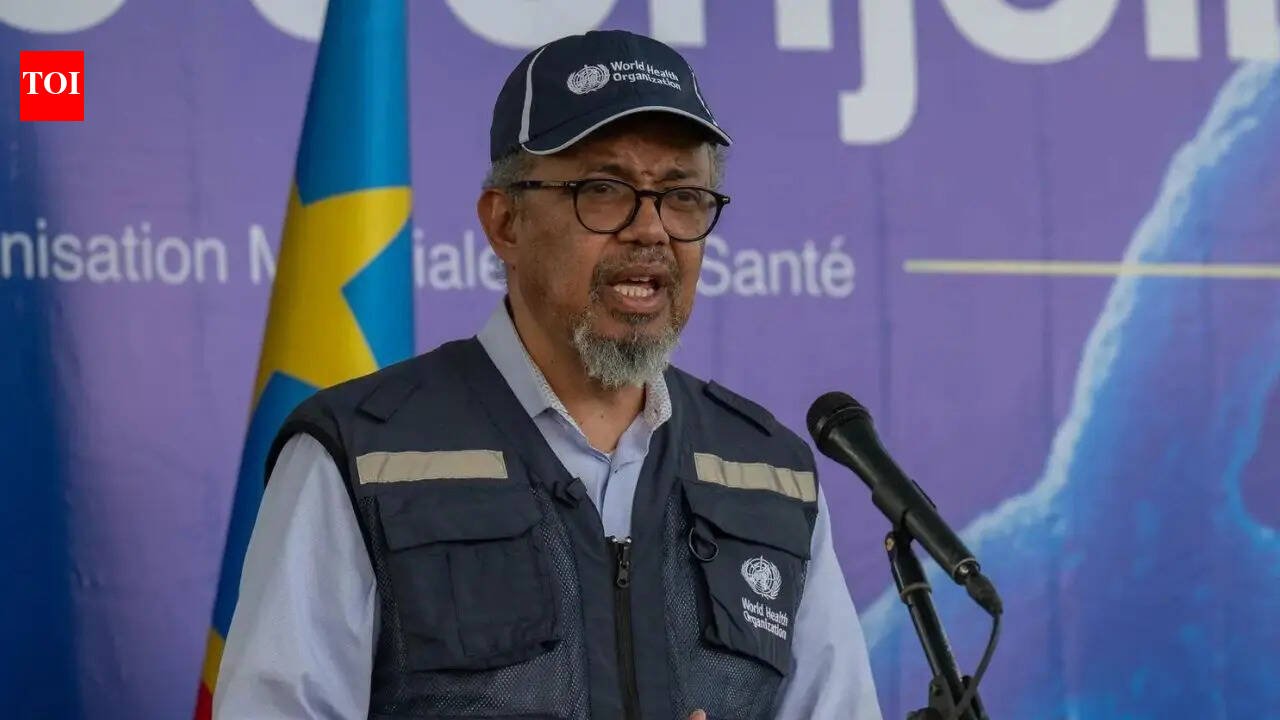
WHO Director-General Tedros Adhanom Ghebreyesus urges the international community to provide stronger support to curb the rapid spread of the epidemic Ebola epidemic The Democratic Republic of Congo (DRC) has warned that a slow response and mistrust within communities are hampering efforts to control the virus.Tedros made the appeal on Saturday after arriving in Bunia, the capital of Ituri province, one of the worst-hit areas.He told reporters that the international community was already assisting the DRC government, but stressed that more funding and stronger community engagement were urgently needed.“We are here to talk to the community and see how the response is going and whether there are challenges that require help,” Tedros said, according to AFP.He added, “You are not alone. We are here, we are with you, and we will get through this together.”
Call to build trust amid rising cases
Tedros stressed that controlling the outbreak requires what he calls “community ownership,” including addressing misinformation and mistrust about disease responses.He also said that while international aid was important, local cooperation remained crucial. “This country has the experience and with the leadership of the government and especially with the help of community ownership, we can stop it,” he said, according to AFP.The WHO director-general further urged countries that have imposed travel restrictions or closed borders to reconsider such measures, saying they could impede reporting and transparency that are critical to containing the outbreak.According to the Associated Press, Tedros said at a press conference: “The Democratic Republic of the Congo has encountered Ebola 16 times before, and each time it ended the epidemic. This is the 17th time. This history gives me real confidence.”
spread rapidly to Congo and Uganda
The outbreak, caused by the highly contagious hemorrhagic fever Ebola virus, has spread to three eastern provinces of the Democratic Republic of the Congo and into neighboring Uganda. Since the outbreak was declared on May 15, there have been at least 1,077 suspected cases and 246 deaths in the Democratic Republic of Congo, and nine confirmed infections and one death in Uganda, according to the Africa Centers for Disease Control and Prevention.Health officials have warned that the true scale of the outbreak is likely to be much larger because of limited and unsafe testing capacity in the region.
On-the-ground assistance efforts and challenges
Medical aid is starting to arrive in Bunia, including supplies from the European Union, while the United States has announced additional financial support. However, humanitarian agencies say the response is still struggling to keep pace with the spread of the epidemic.Médecins Sans Frontières (MSF) warned that the outbreak was progressing faster than the response, saying: “Never has an Ebola outbreak recorded so many cases so soon after it was announced”.The group called for expanded testing, faster deployment of health workers and improved access to medical supplies.Health facilities in Ituri province reported continued challenges, including insecurity, limited infrastructure and repeated attacks on health centers, further complicating the response.
Vaccine hunt and containment measures
The Ebola strain responsible for this outbreak, Bundibugyo virus, currently has no approved treatments or vaccines. However, health authorities said potential vaccines are being evaluated for clinical trials and a candidate could be ready later this year.WHO said containment measures currently rely on traditional measures such as surveillance, contact tracing, isolation, infection prevention and safe burial practices.Uganda has closed its border with the Democratic Republic of Congo and imposed quarantine measures on arrivals, while displacement camps in eastern Congo remain at high risk due to overcrowding and poor sanitation, raising fears of further spread.