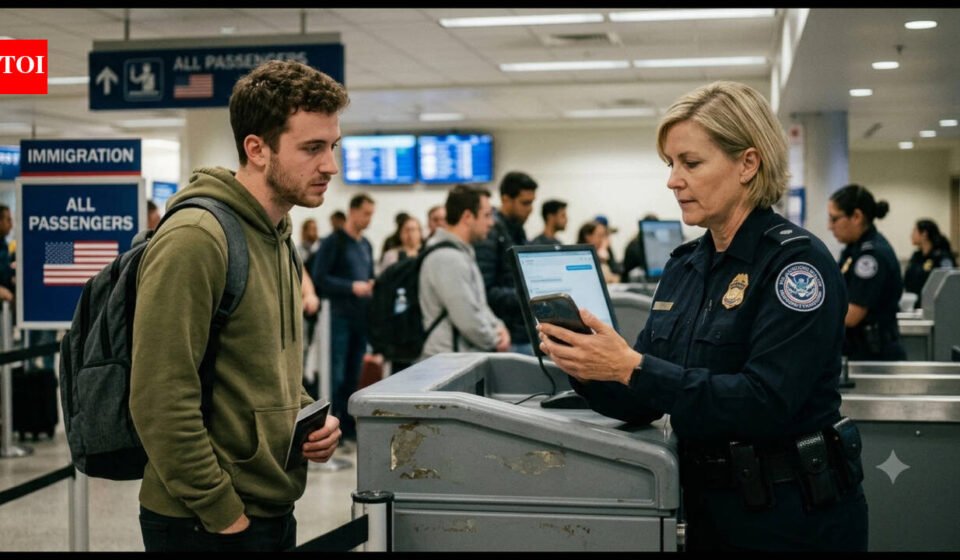

Many people believe that once a message is deleted, it is gone forever. But that may not be the case, lawyer Deepak Ahluwalia warned, citing a recent case in which a client was stopped at an airport and agents allegedly read deleted messages from a phone. Ahluwalia said the client indicated he was flying to San Francisco Airport. CBP took his phone and was able to recover the permanently deleted messages.Ahluwalia said the incident doesn’t sound entirely surprising given the amount of technology and artificial intelligence tools currently being used by CBP and ICE. “But what I find very fascinating is that despite not being linked to any cloud service, despite the messages being permanently deleted, CBP was still able to retrieve and read certain messages that would ultimately be used to block individuals from entering the country,” the attorney said.“If you are traveling internationally, it is important to understand that your electronic devices may be inspected and digital information may still be accessible even if you think it has been deleted,” the attorney said.
CBP Rules Regarding Inspection of Electronic Devices at Ports of Entry
U.S. Customs and Border Protection says this rarely happens. “In rare circumstances, CBP officers may search a traveler’s cell phone, computer, camera, or other electronic device during an inspection,” CBP policy states.“These searches have been used to identify and combat violations such as terrorist activity, drug smuggling, human smuggling, bulk cash smuggling, human trafficking, intellectual property infringement, and visa fraud. They are capable of uncovering digital contraband such as child pornography, illegal transfers of restricted or classified information, or other export controlled information. In addition, border searches of electronic devices are often integral to determining an individual’s intent to enter the United States, thereby providing additional information relevant to the admission of aliens to U.S. immigration laws,” it said.“The number of transit travelers whose electronic devices are searched at the border is low. In fiscal year 2025, less than 0.01 percent of international arrivals encountered by CBP at ports of entry had their electronic devices searched,” the report states.