
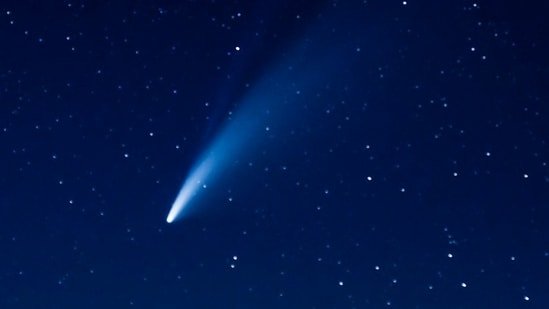
california There has been a recent surge in bright meteor activity in the sky, with multiple fireballs reported in just a few days. The most recent event occurred on March 23, when a bright green fireball streaked across Northern California, the third major meteor event observed in the region in less than a week.

The event attracted widespread attention, with more than 200 eyewitness reports from California, Nevada and Arizona submitted to the American Meteor Society (AMS). The meteor was first spotted about 49 miles above Chowchilla, California, according to AMS. It then hurtled through the sky at 35,000 mph and traveled 58 miles before breaking apart about 29 miles above Colfax.
There have been similar sightings in Texas and Pittsburgh
March 21 in TexasIn 2026, a meteor was visible about 49 miles above Stagecoach northwest of Houston on Saturday, traveling at about the same speed as the California fireball, NASA data showed.
March 17, 2026, A fireball lit up the sky above Pittsburgh, looking almost like a missile hurtling through the atmosphere. It was initially spotted over Lake Erie, traveling at approximately 40,000 mph and traveling 34 miles before breaking up.
Are these events related?
However, both the Pittsburgh and Houston Shooting Stars generated a huge buzz.
Despite the unusual series of sightings in such a short period of time, scientists say there may not be a cosmic connection between them.
According to Geo TV“Typically, they would be viewed as random events,” said Mike Hanker, AMS operations manager.
NASA confirmed that the recent California meteors had different emissions and speeds than previous meteors, meaning they came from completely different directions in space and were unrelated to each other.
What causes these fireballs?
According to NASAMeteors are small pieces of rock and ice shed by comets or asteroids as they orbit the sun. As the Earth passes through these debris fields, especially during periods of increased activity in February and March, the debris enters the atmosphere at very high speeds, sometimes exceeding 35,000 mph.
When these space rocks enter Earth’s atmosphere, they rub against the air and heat up rapidly. This causes them to glow brightly and produce the fireball-like streaks of light we see. If a rock survives a fall and reaches the ground, it is called a meteorite.