
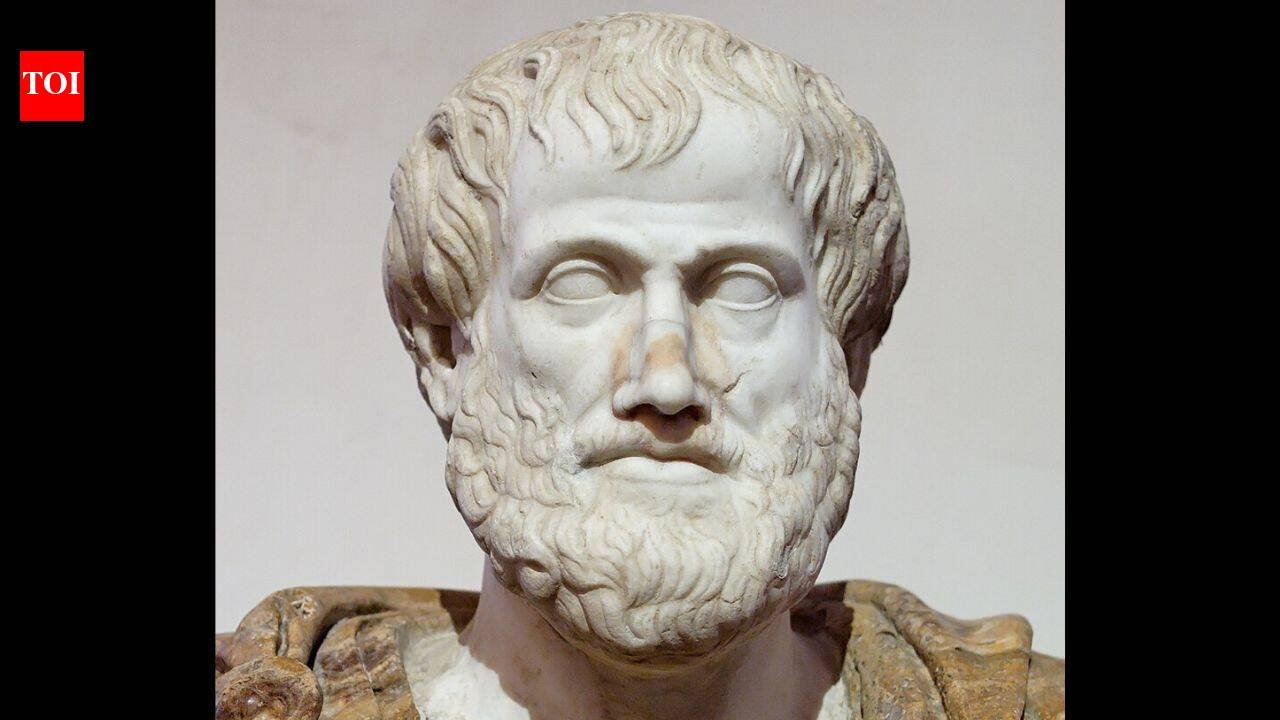
No amount of careful planning can eliminate the possibility that life simply won’t cooperate. Aristotle gave a name to how a person deals with the gap between plans and reality. “The ideal man takes life’s surprises with dignity and grace, making the best of circumstances,” he writes. The word “accident” here does not specifically mean an accident in the literal sense. It means that no matter how prepared you are, unpredictable events, illness, setbacks, losses will come. This statement does not promise that difficulties can be avoided by adequate planning, for Aristotle was too realistic a thinker to make such a claim. Instead, it offers something narrower and more useful, describing what a person can really control once misfortune has struck.
Today’s Aristotle Quotes
“The ideal man takes life’s surprises with dignity and grace and makes the most of his circumstances.”
The place of this idea in Aristotle’s practical philosophy
This line is closely related to a concept elaborated by Aristotle in Book IV of the Nicomachean Ethics, his description of megalopsychos, often translated as great souls or noble persons. The character is described as a man who is equally composed in both good and bad times, neither swollen by success nor broken by misfortune. Taking on an accident with dignity is actually a specific application of a broader character trait.
What do dignity and grace mean here?
Dignity in this context is not the absence of emotion. Some people may feel genuine sadness, fear, or depression but still maintain a sense of self-worth throughout the process. Grace also does not mean passive acceptance. One can respond firmly to real injustice while still avoiding being completely consumed by anger. Both of these qualities describe how a person gets through difficulty, not whether they feel anything at all while experiencing it.
Why responses are more important than events
Two people can face very similar setbacks and come out of it in completely different places. People may focus on what went wrong. Others may seek support, adjust their priorities, and move on. The events themselves are often beyond anyone’s control. What happens next usually does not happen, which is indeed the whole point that Aristotle is making with this statement.
Why accepting setbacks doesn’t mean giving up
Accepting that something painful has happened is different from agreeing with it or giving up on any attempt to change what happens next. A person can feel genuine anger about an unfair situation while still beginning to think clearly about what to do. Aristotle’s famous quote describes the first kind of acceptance, not resignation.
Aristotle’s Other Memorable Quotes
- “Happiness depends on ourselves.”
- “The root of education is bitter, but the fruit is sweet.”
- “The whole is greater than the sum of its parts.”
- “It is a good thing to get up before dawn, for such a habit contributes to health, wealth, and wisdom.”
Why Aristotle’s quote still applies today
No one can plan for every setback life will eventually throw at them. In fact, the difference between people does not lie in whether difficulties come, but in how to deal with difficulties when they come. Aristotle’s line never really promises freedom from difficulty. It describes what the character will be like once difficulty has arisen.