

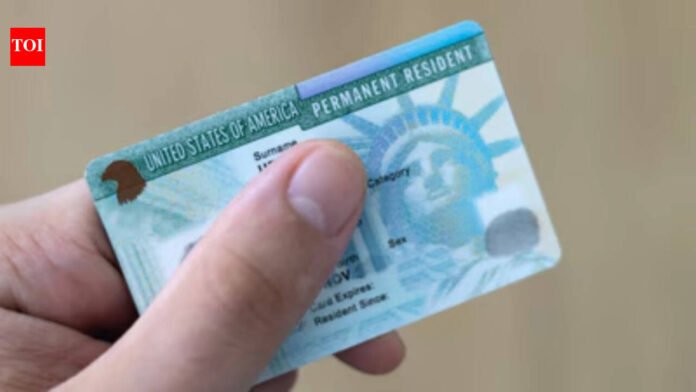
Immigration lawyers say U.S. scrutiny of marriage-based green card applications has tightened in recent months, with applicants facing tighter checks during interviews and stepped up enforcement actions even during the interview phase. Marriage remains one of the most common routes to permanent residency, but lawyers warn the process is now more scrutinized than before.Douglas Lightman, an immigration attorney at Lightman Law Firm in New York, said, “Obtaining a green card through marriage is one of the most common ways to obtain legal permanent residence in the United States. It is also one of the fastest ways to obtain permanent residency, with some applicants taking only 9 to 15 months to be approved.”However, he and other lawyers point out that it is also one of the riskiest avenues because applicants must clearly prove that the marriage was genuine and not established for the purpose of immigration benefits.A marriage-based green card allows the foreign spouse of a U.S. citizen or lawful permanent resident to live and work anywhere in the country. The type of green card issued depends on how long ago the couple was married at the time of approval.Attorney Letterman explained that there are two main categories. Once the application is approved, the spouse who has been married for more than two years will receive a ten-year green card. This is also called an IR-1 visa. A two-year conditional green card is issued when the marriage is approved less than two years ago. This is called a CR-1 visa and requires the couple to later file Form I-751 to remove the conditions.U.S. citizens can usually file Form I-130 and Form I-485 at the same time to expedite processing, but spouses of green card holders often face longer wait times due to visa caps and quotas.Eligibility rules remain strict. Immigration attorney Matthew Curtis explains: “The marriage must be legally valid and accompanied by a government-issued marriage certificate. USCIS recently updated its policy to clarify that only marriages that are legally recognized and registered with civil authorities are eligible. The spouses must be legally free to marry and all previous marriages must have been properly terminated by divorce, annulment, or death.“In addition to paperwork, applicants must meet the so-called bona fide marriage standard, which is often the most scrutinized part of the case. “USCIS will examine whether you and your spouse are living together through financial entanglements, cohabitation and emotional ties. The burden of proof is entirely on you,” Curtis said.Both spouses should provide strong supporting evidence. “Joint financial accounts show financial interdependence,” Lightman said. Housing documents prove you live together. Photos capture the time during your relationship. Affidavits from friends and family provide third-party verification. Travel records, correspondence records and receipts of joint purchases can all enhance your persuasiveness.“At the same time, lawyers warn that certain factors may raise red flags. “Factors such as a significant age difference, limited common language, marriage immediately after a brief courtship, living apart at different addresses, minimal joint financial documentation and a previous marriage to a U.S. citizen all trigger greater scrutiny,” Curtis said.Financial requirements also remain central. Letterman explained that sponsors must prove they can support a spouse at 125 percent of the federal poverty level, which would require an income of about $25,550 for a family of two. If this condition is not met, applicants may rely on joint sponsors, combined household income, or qualifying assets.


