
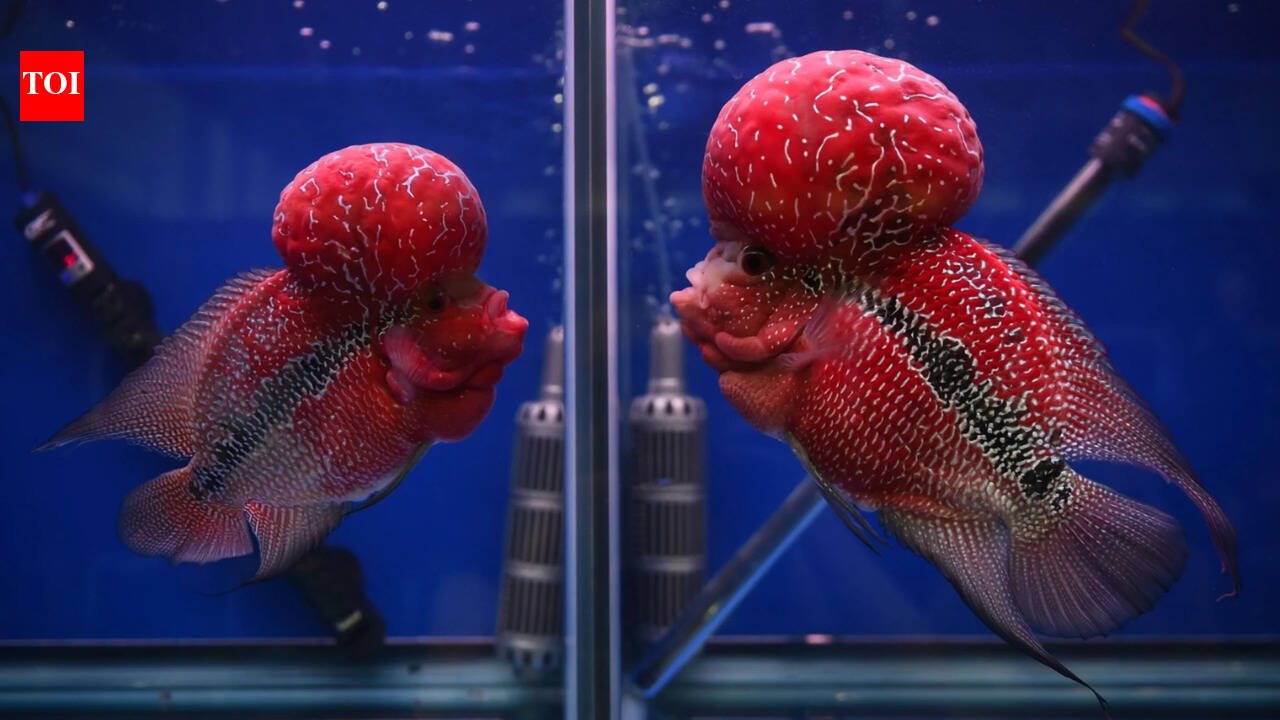
A captive-bred ornamental fish prized for its bright golden color and distinctive hump has escaped into a crater lake in the Philippines, where scientists fear it is threatening local wildlife and spreading to the local aquaculture industry.The flowerhorn cichlid, an artificial hybrid created by crossbreeding various cichlid species used in the ornamental pet trade, is believed to have entered Lake Sampaloc after escaping from a nearby breeding facility during a typhoon. This 104-hectare body of water in the city of San Pablo is now home to a wild population of this invasive predator.Research conducted by Dr. Hannah Nicole C Gasmen and Dr. Janice A Ragaza of the Ateneo de Manila University showed that these fish have successfully integrated into the lake’s ecosystem. Because flowerhorns are highly adaptable and can survive in harsh, degraded environments, local fish farmers raise individuals that enter tilapia cages and sell them back into the pet trade. Some residents are even interested in stocking local waters with them.Researchers warn that intentional stocking and resale will allow already invasive wild populations to expand into Crater Lake, creating a self-sustaining cycle that threatens the delicate balance of the local ecosystem.
Pressure on native wildlife
Even before the hybrids arrived, Lake Sampaloc was already under heavy environmental pressure. Untreated sewage, household runoff, agricultural nutrients and plastic waste contribute to severe eutrophication, making water bodies particularly vulnerable to invasive species.Flowerhorn flowers thrive in these polluted, nutrient-rich environments, competing fiercely with native species for food, breeding sites and shelter. The native Ayun goldfish, or silver perch, was once a common catch for local fishermen and a staple food in the region, but has become increasingly rare. The species is now listed as endangered by the International Union for Conservation of Nature.Rupert Collins, senior curator of fishes at the Natural History Museum in London, noted that degraded environments create ideal conditions for adaptable generalist species to take over and replace native marine life.“Human-degraded habitats are often the most vulnerable to invasion, and they are often invaded by generalist species,” Collins said. “Cichlids are particularly successful at adapting. They are a textbook example of how new phenotypes can emerge quickly.”
Parasite risks and culinary uses
In addition to ecological damage, the study also highlights potential health risks to surrounding populations. In captivity, some flowerhorns have been found to carry Paracapillaris philippines, a parasitic roundworm capable of causing severe intestinal disease in humans.Local residents have been observed capturing wild flower horns for recreation and cooking them for family meals. Although laboratory tests have not yet detected parasites in Lake Sampaloc’s current flowerhorn fish population, Gassman and Ragazza recommend against promoting the fish for human consumption due to inherent biological risks.The situation at Lake Sampaloc reflects a broader global environmental crisis involving the accidental or intentional release of domestic pets into wild habitats. As Collins points out, the release of non-native fish extends far beyond a single volcanic lake in the Philippines.“This is just one lake in the Philippines, but the release of species outside their natural range is a major cause of global biodiversity loss,” Collins said.
Climate change and lake changes
Environmental scientists warn that climate stress and changing weather patterns could make similar ecological disruptions in waterways around the world more frequent.Dr. Noël Juvigny-Khenafou, a lecturer in aquatic environmental science at the University of Stirling, who was not involved in the Ateneo de Manila study, noted that changing weather patterns will change how humans raise fish and where aquaculture systems can operate safely.“Climate change may change where aquaculture occurs and what species people are able to farm,” Juvigny-Khenafou said. “This could mean production shifts between regions and more non-native species are introduced into new places.”He noted that the successful integration of human-bred hybrid fish into Lake Sampaloc raises fundamental questions about the future function of compromised freshwater ecosystems in an era of rapid environmental change.“What does this mean for native species? What does this mean for the functioning of ecosystems? Do introduced species cause ecosystem collapse, or do they just become part of a new ecological community?” Juveni-Kanafo said.