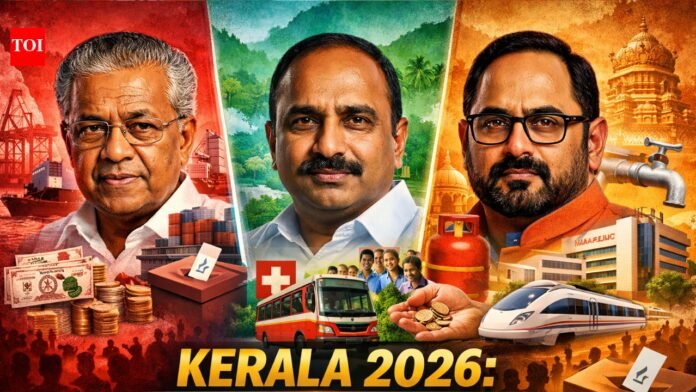
new delhi: as kerala Heading into the 2026 parliamentary elections, the race is no longer just a contest of ideology or leadership, but increasingly a battle of commitments. From welfare spending and free services to massive infrastructure and economic transformation programmes, all three fronts – LDF, UDF and BJP lead confidentiality agreement – Unveiled a broad manifesto aimed at attracting politically aware and welfare-conscious voters.The scale and scope of the pledges underscores a larger shift in electoral politics in Kerala. Benefits are no longer a differentiating factor; it’s the baseline. The parties differ in size, delivery mechanisms and credibility of execution. In a state known for high human development indicators and strong public engagement, voters are now weighing not just promises but also sustainability and governance capabilities.All three alliances focus on key themes such as social security (employment, health care and infrastructure), while competing with each other on volume and coverage. The result is an intensive, high-stakes policy race in which all segments of society, from youth and women to farmers and the elderly, are targeted with tailored policies.
LDF: Incumbents’ bet is on delivery, not disruption
Ruling party LDF led by Chief Minister Pinarayi Vijayansees its manifesto as a continuation of its governance model, which combines welfare expansion with long-term economic growth.At its core is a commitment to eradicate absolute poverty and develop a targeted program to improve the lives of some 500,000 families. It is recommended to increase the welfare pension to Rs 3,000 per month while expanding the care system for the elderly and bedridden.
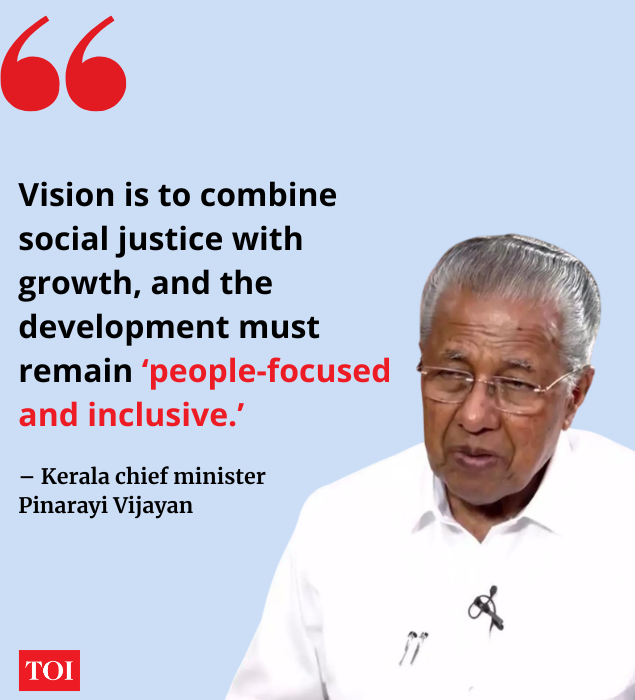
LDF has a strong focus on employment and skills, committing to campus placements, expanded training programs and ‘back to school’ initiatives aimed at closing the employment gap. The female labor force participation rate is targeted to reach 50%, supported by support systems such as childcare, safe travel and skills development.On the economic front, the Left has an ambitious plan to attract Rs 2 billion in investments over five years, develop industrial corridors and promote innovation hubs. Public sector units will be modernized with a target of raising turnover to Rs 10,000 crore by 2031.Tourism, agriculture and infrastructure also feature prominently. The manifesto aims to attract 50 million domestic tourists by 2031, increase support prices for major crops and expand transport networks including metro and waterway systems. After launching the manifesto, Vijayan said its vision is to combine social justice with growth, adding that development must remain “people-centred and inclusive”.
UDF: Comeback – Benefits and Responsibilities
The Congress-led United Democratic Forces fought back with a manifesto that combined welfare guarantees with governance and institutional reforms. The document was released in Kochi and submitted by Telangana Chief Minister Revanth Reddy and handed over to Opposition Leader VD Satheesan. The main highlight was the “Indira Assurance” announced by Rahul Gandhi. These include:
- Women ride the bus for free
- Assistance of Rs 1,000 per month to female college students
- Rs 3,000 Benefit Pension
- Free health insurance up to Rs 25 lakh per family
- Interest-free loan of up to Rs 5 Lakh to young entrepreneurs
The UDF also pledged to protect welfare pensions in accordance with the law, saying they were “not a charity but a right”.Economic proposals include Mission Samudra, which aims to build a port-led economy, expand aviation infrastructure and create 10,000 high-income businesses. It is recommended to establish an “Employment Observation Tower” to track employment trends.On social welfare, the alliance promised to provide food security through Indira Canteens, free ration to vulnerable groups and the ‘Nava Ashraya’ housing scheme for 500,000 beneficiaries.Healthcare and workforce reforms include free dialysis for BPL patients, higher wages for ASHA workers, and subsidies for sectors such as fishing and transportation.The manifesto also emphasized social harmony, proposing the establishment of a Ministry of Tolerance and a Ministry of Social Harmony to address communal tensions and political violence.
NDA: Breaking the Duopoly – Identities, Benefits and Big Bang Projects
The manifesto of the BJP-led NDA, released by party president Nitin Nabin, combines direct welfare with infrastructure and governance-focused proposals.Key commitments include:
- Provides monthly pension of Rs 3,000 to female heads of households, widows and senior citizens above 70 years of age
- Bhakshya Arogya Suraksha Card provides monthly support of Rs 2,500 for daily necessities
- Two free LPG cylinders every year (Onam Festival and Christmas Day)
- 20,000 liters of free water per household
The NDA also promised to establish AIIMS in Kerala and extend healthcare coverage under Ayushman Bharat to all residents.
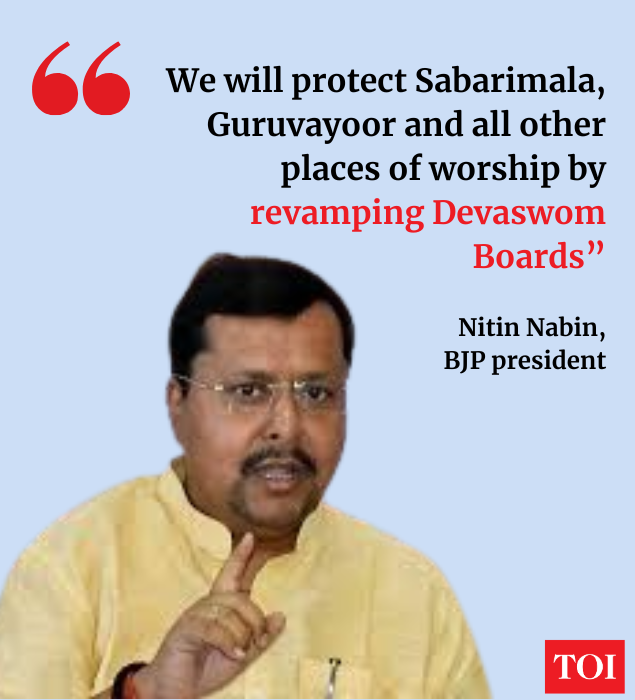
On the infrastructure front, the alliance has proposed a high-speed rail corridor connecting Thiruvananthapuram and Kannur, expansion of the metro network and development of Vizhinjam port into a major industrial hub.The manifesto focuses on religious and institutional reforms and promises to reform the Devaswom Council and ensure “greater participation of devotees” in temple management.“We will protect Sabarimala, Guruvayoor and all other places of worship by revamping the Devaswom panels,” Nabin said.It also promised a time-bound CBI probe into the Sabarimala gold theft case and a dedicated infrastructure mission for the shrine.On the economic front, the NDA aims to transform cities into industry hubs, positioning Thiruvananthapuram as the IT capital, Kochi as a shipbuilding hub and Kannur as a defense innovation hub.Nabin criticized the LDF and UDF, claiming “minimal industrial growth, economic stagnation and poor fiscal governance” and asserted that voters were seeking change.
Common ground: Welfare is at the core of politics
Despite sharp political differences, clear patterns emerged from the manifesto, with welfare remaining at the heart of Kerala’s electoral politics.All three alliances have:
- Social security pension promised at Rs 3,000 level
- Focus on women-centric initiatives
- Prioritizing Healthcare Expansion
- Targeted Youth Employment and Entrepreneurship
This convergence reflects both the expectations of Kerala voters and the competitive nature of its politics, where incremental advantage can determine outcomes.
Beyond Promise: The True Test
While the declaration is broad, the key issue remains implementation. Kerala’s fiscal austerity, rising debt and structural economic challenges pose significant obstacles to delivering on massive promises.At the same time, overlapping commitments increase credibility risks. Voters are likely to evaluate not just what was promised, but also who is best able to deliver on it.As campaigning intensifies, the 2026 election is not just a party contest but a referendum on competing models of welfare, growth and governance.(Based on input from each agency)