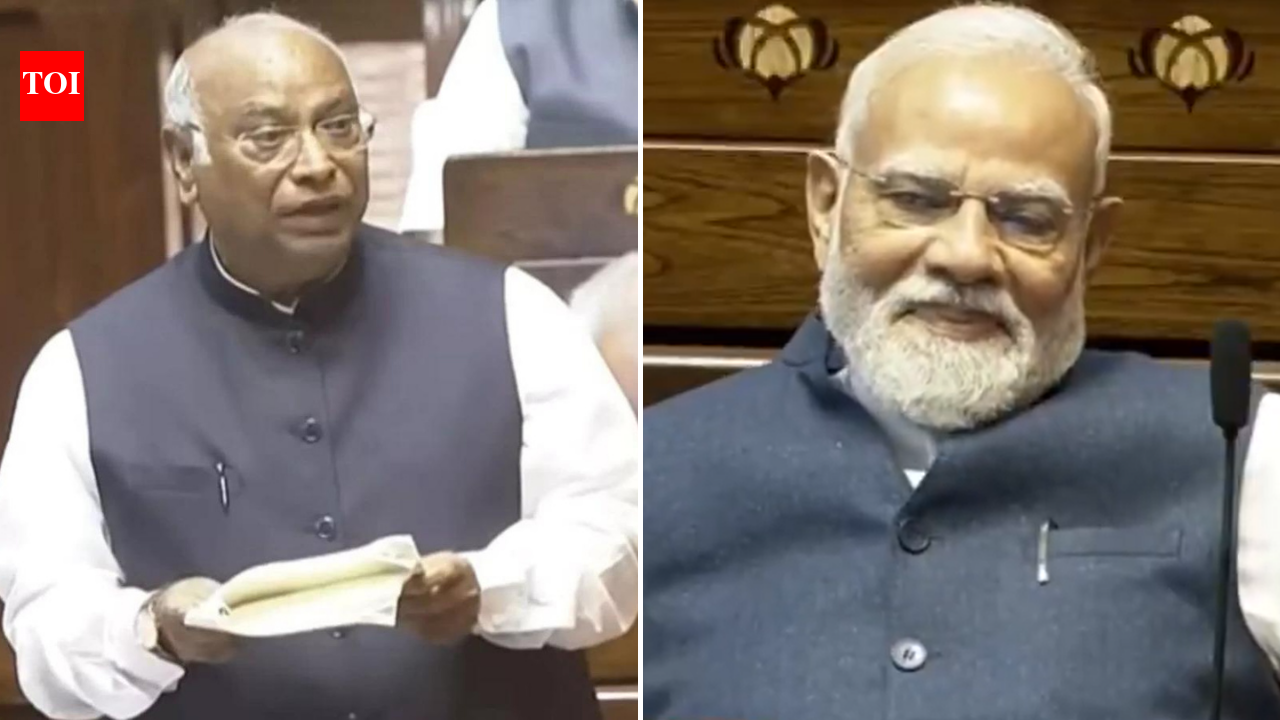

New Delhi: Leader of the Opposition in the House of Commons Malikajun Hager Tributes paid to outgoing Lords colleagues on Wednesday while taking a dig at the former prime minister HD Dev Gundam. Speaking at the farewell ceremony, Haq said he had known the veteran leader for more than 54 years and worked closely with him before his party aligned with the BJP.
“I have known Deve Gowda ji for more than 54 years and I worked with him for many years. Then, I don’t know what happened… ‘Wo mohabbat humare saath kiye, shadi Modi sahab ke sath,” Haq said, drawing laughter from MPs and other parliamentarians. Prime Minister Narendra Modi.The collaboration entered a critical phase in 1996 when Deve Gowda became prime minister and led a Congress-backed United Front government. In Karnataka, his party JD(S) later alternated between opposing and cooperating with the Congress party. Hager’s farewell address focused on the durability of public service. Politicians “neither get tired nor retire” because they are committed to serving the country, he said. While Hager is officially retiring from his current term, he is expected to return to the House, reinforcing his view that political life is rarely ultimately over.Earlier in the day, Prime Minister Modi also addressed the House, thanking the outgoing members for their contributions and expressing similar sentiments. “Politics has no end. The future awaits you,” the prime minister said, urging retired MPs to continue contributing to public life. He also called on the newly elected MPs to learn from senior leaders like Deve Gowda, Kharge and Sharad Pawar, pointing out their decades of parliamentary experience.Prime Minister Modi also paid special tribute to Ramdas Atharwale’s wit, saying humor and satire in the House had declined in recent years but remained alive through characters like him. Athawale is one of the 37 members who completed their term, along with other leaders including Priyanka Chaturvedi, Tiruchi Siva and Abhishek Manu Singhvi.These retirements follow elections for 37 federal parliamentary seats in 10 states, in which 26 candidates ran unopposed. The composition of the upper house has been further reshaped by political developments in states such as Bihar, where opposition abstentions helped pass the NDA.