
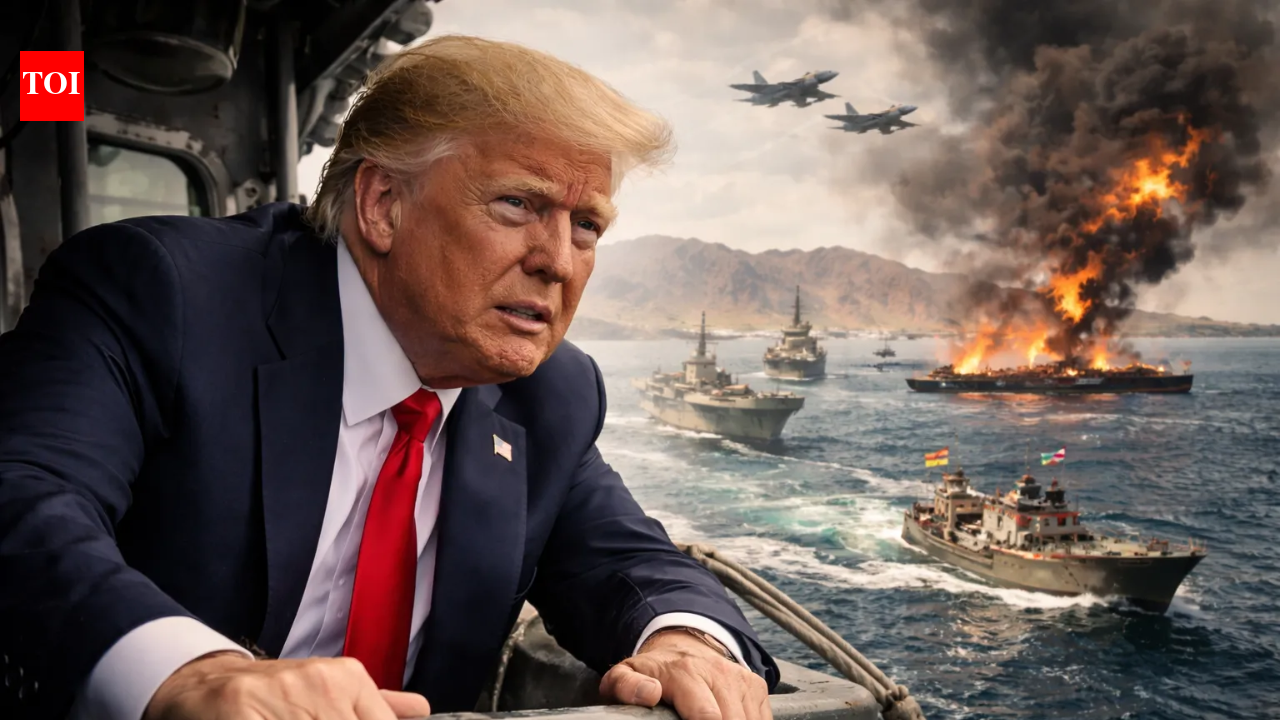
The Trump administration has greatly underestimated the possibility of Iran closing the Strait of Hormuz in response to a U.S. military strike, leaving Washington scrambling to contain the economic fallout as the conflict disrupts one of the world’s most important energy routes, CNN reported citing sources.Officials familiar with internal discussions said the Pentagon and the National Security Council did not fully consider the situation as they planned ongoing operations against Iran. That oversight now leaves the government facing what some officials say is a worst-case scenario, with global oil shipments under pressure and energy markets unstable.
strategic planning gap
CNN quoted sources as saying that although officials from the U.S. Treasury and Energy Departments attended some planning meetings before the operation began, the detailed economic forecasts and inter-agency analysis that usually influence such decisions played a smaller role.Finance Minister Scott Bessant and Energy Minister Chris Wright were involved throughout the planning and execution phases of the conflict. But President Donald Trump’s preference to rely on a small group of close advisers has limited a broader debate among government agencies about the potential economic consequences if Iran responded by closing the strait, sources said.Senior U.S. government officials also acknowledged to lawmakers in confidential briefings that the possibility of Iran shutting down the waterway had not been fully planned for, CNN reported.The assumption within the administration is that the move would hurt Iran more than it would hurt the United States. That view was influenced in part by early threats from Iran that did not materialize after the U.S. struck Iran’s nuclear facilities last year.
Shocked the diplomatic community and industry
The developments in the Strait have surprised diplomats, former U.S. economic officials and energy executives.“For decades, it has been a fundamental tenet of U.S. national security policy around preventing this from happening, even though it long seemed impossible,” a former U.S. official who served in both Republican and Democratic administrations told CNN. “I was dumbfounded.” Shipping companies operating in the region have repeatedly requested the U.S. Navy to provide military escort for the tankers, but these requests have so far been denied. U.S. military officials said they had not yet received orders to begin convoy operations and warned that risks to naval assets remained extremely high, the outlet reported, citing two industry executives.
Washington’s options are limited
U.S. officials say Iranian drones, missiles and mines pose a significant threat to ships trying to pass through the narrow waterway. In military simulations of a potential conflict with Iran, one of the main risks identified was that ships became close together at chokepoints such as the Strait of Hormuz, the Bab el-Mandeb Strait and the Red Sea, leaving them vulnerable to attack.Wright acknowledged the limitations of current military capabilities.“It’s going to happen very soon, but it’s not going to happen right now. We’re simply not prepared for it,” Wright told CNBC in an interview, referring to the possibility of providing naval escort for commercial ships.“All of our military assets are now focused on destroying Iran’s offensive capabilities and the manufacturing that provides its offensive capabilities,” he added.Bessant told Sky News that naval escorts would begin “as soon as it is militarily feasible”.“It was always in our plans that the U.S. Navy, or perhaps the international coalition, would potentially escort the tankers through,” he said.
Iran unleashes pressure tactics
In his first public comments since taking office, Iran’s new supreme leader Ayatollah Ali Khamenei said keeping the Strait of Hormuz closed may still be a “pressure tool,” according to a statement read by Iranian state television.The warning has raised concerns in global energy markets as the narrow waterway is key to transporting oil and liquefied natural gas from the Middle East.Energy industry executives have privately urged U.S. officials to seek a quick end to the conflict, according to people familiar with the matter. Many companies are reluctant to send tankers through the strait while hostilities continue.
Trump downplays oil market turmoil
Despite market volatility, Trump continues to downplay the economic impact.“The United States is by far the largest oil producer in the world, so when oil prices go up, we make a lot of money,” he wrote on Truth Social.Trump said preventing Iran from acquiring nuclear weapons remains his top goal.“As president, I am more interested and more important in preventing the evil Iranian empire from acquiring nuclear weapons and destroying the Middle East and the entire world,” he wrote.The White House defended its planning process. “Through a detailed planning process, the entire administration is prepared to respond to any actions that may be taken by Iran’s terrorist regime,” spokesperson Anna Kelly said.She added that disruptions in energy markets would be temporary and ultimately benefit the U.S. economy in the long run.
Emergency measures are being considered
With energy markets under pressure, the government is exploring a number of measures to mitigate the impact on fuel prices.The U.S. Treasury Department has temporarily lifted sanctions on Russian oil shipments stranded at sea. The White House is also considering limited exemptions from the century-old Jones Act, which requires goods shipped between U.S. ports to be carried by U.S. ships.“In the interests of national defense, the White House is considering waiving the Jones Act for a limited time to ensure the free flow of critical energy products and agricultural necessities to U.S. ports,” Press Secretary Carolyn Leavitt said in a statement to CNN.Officials are also studying regulatory changes to relax summer fuel production requirements in an effort to lower gasoline prices.However, experts warn that such measures may only partially offset the impact of global oil supply disruptions.“I think this is a very small potential offset compared to what’s driving up gasoline prices, which is concerns about the global supply of refined products and physical crude oil,” said Clayton Segel, an energy expert at the Center for Strategic and International Studies.