

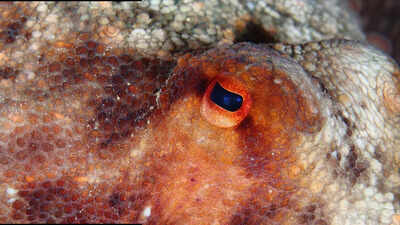
Professor Tim Colson describes evolution as a gradual process that changes organisms over generations. The mechanism is mundane, but powerful. Small genetic mutations occur in the DNA. Most have little effect or cause damage. Some of these can improve survival or reproduction. These traits are passed on more frequently and become common in the population. Over long periods of time, this stable classification can change species. It explains why life on Earth looks the way it does today. From early single-celled organisms to complex animals, every form bears traces of earlier changes. Humans are part of the same pattern. Evolution doesn’t stop. It continues quietly in each generation, shaped by circumstances, competition, and chance events that are entirely within the control of any species.
From primates to octopus explains the race to replace humans
According to an interview published by The European, life on Earth has evolved for about four billion years. Animals appeared about 600 million years ago. Modern humans arrived only about 300,000 years ago. In his book Our Universal History, Colson traces a long chain of events from the Big Bang to the present day. The argument is simple. Extinction is normal. Almost every species that ever existed has disappeared. Humanity is no exception, even if this goal is far away.If humans disappeared, the landscape would not be empty. Forests, oceans and grasslands will change. Species that survive will expand into the spaces left behind. Some people will adapt. Others will fail. The pattern will not be ordered. This is rarely the case.
Despite their intelligence, primates still face limitations
Chimpanzees and bonobos are often viewed as possible successors due to their intellectual and social complexity. They use tools and work in groups. However, their populations are small and dispersed. They reproduce slowly and rely on stable forest habitats. In the event of a massive collapse, they would likely face the same stresses as humans. Intelligence alone may not be enough.
birds and insect show structured society
Certain birds, including crows and parrots, can solve problems that once seemed unique to humans. Some insects form large, well-organized colonies. These examples show that complex behaviors evolve in different ways. Still, physical limitations are important. Wings and smaller body size limit the survivability of architectural birds. Insects operate primarily through inherited behavioral patterns rather than flexible plans. Their society is intricate but structured.
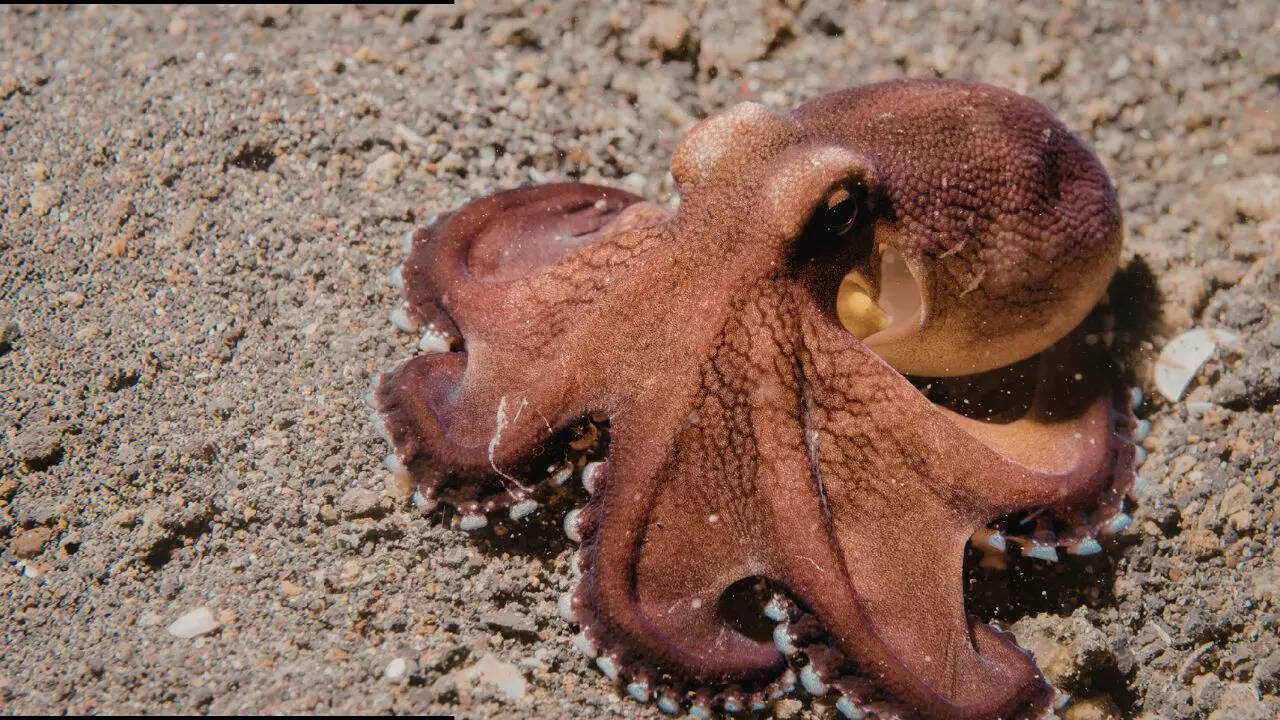
Octopuses combine intelligence and adaptability (Image source – Canva)
Octopuses combine intelligence and adaptability
Colson believes the octopus is a more unusual candidate in discussions of posthuman evolution. Octopuses use their flexible arms to manipulate objects and display advanced problem-solving abilities. Their nervous systems are partially decentralized, allowing them to control their limbs independently. They are adapted to a variety of marine environments from shallow reefs to deep water.There are restrictions. Octopuses lack bones, which makes it difficult to move on land for long periods of time. They can only drink water now. Any major transformation requires evolutionary change over a long period of time. Even so, oceans still cover most of the Earth. Intelligence in marine environments may follow paths that are unfamiliar from a human perspective.