
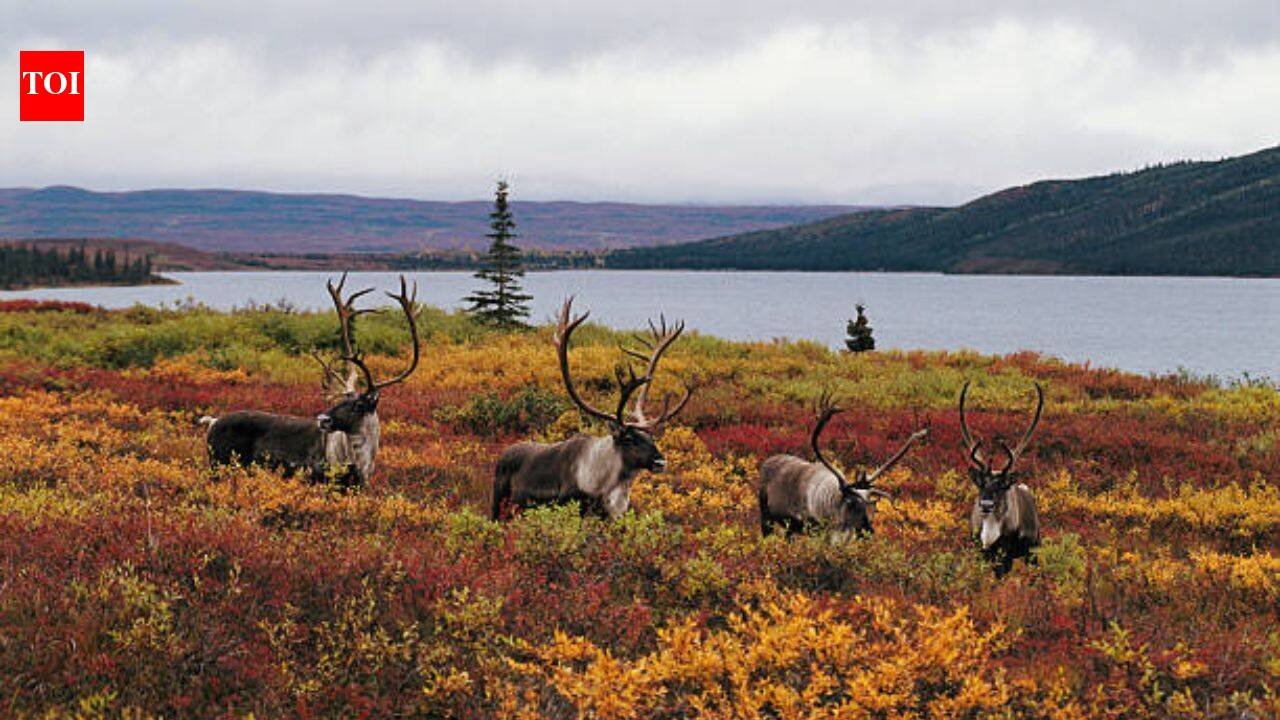
Since 2015, British Columbia has killed 200-300 wolves annually to help endangered caribou populations recover. Recently, the provincial government has proposed extending its decade-long wolf cull program by five more years in areas that are home to 15 declining woodland caribou herds. But according to scientists, the deforestation, not the wolves, is the main driver of caribou declines. They claim the province’s focus on wolf culls is a short-sighted approach that will ultimately not even save the caribou population but also have adverse unintended consequences on the ecosystem, according to a report by Mongabay.In April 2026, provincial authorities in the region began engaging key stakeholders about the proposed extension under its Caribou Recovery Program. They talked to about 70 First Nations in affected areas, hundreds of landowners, environmental NGOs and others. According to a spokesperson from the provincial Ministry of Water, Land and Resource Stewardship and the Ministry of Forests, they are expected to make a final decision by October.If the proposal passes, the government will continue shooting grey wolves, the primary predators of woodland caribou in 15 areas with herds. Eleven of these locations will have a yearly cull; in four, the canids will be killed every two years, said the spokesperson.B.C.’s wolf cull program was instituted to reverse historic caribou declines. Provincial data today show the ungulate’s numbers are rising in areas where wolves are killed. But the proposed extension, without steps to address habitat loss, has sparked outrage and concern among conservationists and scientists.At the Raincoast Conservation Foundation, a B.C. based NGO, wildlife biologist Paul Paquet described it as an “equivocal, intensely debated” issue. “There’s a lot of moral confusion and ethical dilemmas here on this question about protecting caribou and helping caribou by killing wolves.”Caribou do need the protection. Over the past three decades, the population of southern mountain caribou has declined by more than half and the provincial government declared about 10 herds to be locally extinct as of 2023. In 2003, the ungulates were classified as threatened under Canada’s Species at Risk Act (SARA).In 2014, the Committee on the Status of Endangered Wildlife in Canada (COSEWIC), an advisory body to the federal government on wildlife conservation, designated the caribou populations in south and central B.C. as endangered. About 1,900 caribou remain there, according to provincial estimates.
A minor threat
A provincial project
In 2015, the B.C. government launched the predator management program, targeting wolves and pumas (Puma concolor) in key caribou habitat. “It was originally described as an emergency measure and a very short-term action to take as a kind of last-ditch effort to save some of these dwindling caribou herds,” said Kristen Weiss, wildlife and forests campaigner at Pacific Wild, a B.C.-based environmental nonprofit that’s followed the impact of the wolf culls since they began.But that “emergency measure” has continued for more than a decade, killing 200-300 wolves each year. To date, B.C. has killed about 2,800 wolves, spending about C$13 million ($9.4 million) in taxpayer money.It still remains unclear how this has affected the numbers of the wolves. The province estimates there are anywhere between 5,300 and 11,600 wolves and says it isn’t a species of concern. But no one knows for sure as there hasn’t been a B.C.-wide systematic survey. Wolves are intelligent animals with a highly organised social structure. “Removing breeding individuals can have huge impacts on the persistence of that pack and the longevity of that pack,” said Chelsea Greer, director of the wolf conservation program at the Raincoast Conservation Foundation, adding that by killing adults, “you’re losing a lot of generational knowledge” among packs.The last cull program, which began in 2021, expired in March of this year. Officials reached out to stakeholders for input, but unlike the last extension, they have not made a public announcement or engaged the public in discussions. “There hasn’t been a lot of clarity around the process of how they decide they’re to extend or not,” Weiss said, adding that her organisation was consulted by representatives from the caribou recovery program. “We were not given a proposal document; they just gave us a short PowerPoint presentation about their proposed extension, and then we were meant to provide feedback.”A more recent survey, conducted in 2026 by Pacific Wild, found about three-quarters of the province’s people oppose any wolf killing.