Hidden deep in the Swiss Alps, this building built from 60,000 stone slabs disappears into the mountains and is now considered one of the greatest works of modern architecture | World News

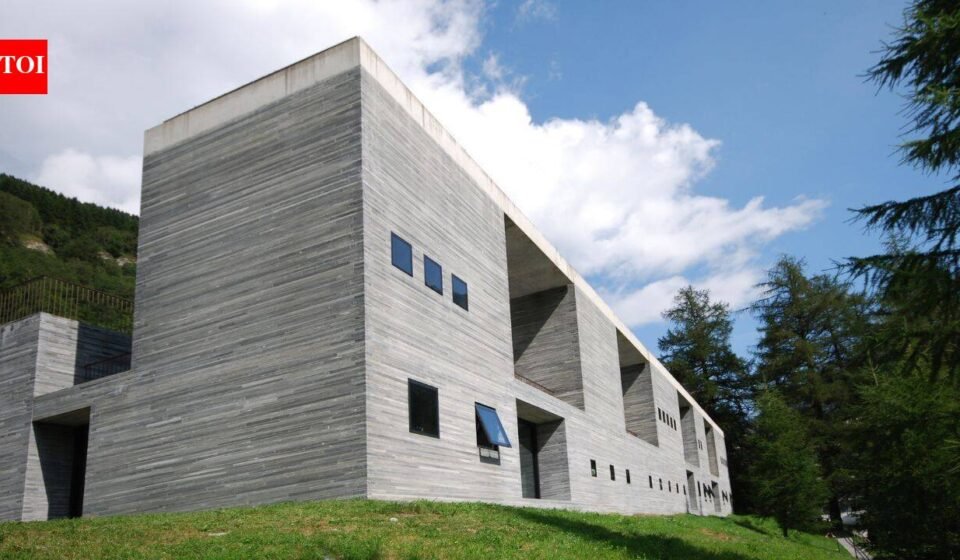
The small village of Vals is located deep in the Swiss Alps at an altitude of 1,200 meters. This remote site features a structure that challenges traditional architectural constraints, the “Therme Vals”.Designed by Peter Zumthor and completed in 1996, the thermal baths were not built to stand out but to blend into the rugged mountain landscape. By utilizing the area’s only hot spring, Zumthor created a spa that feels more like a nature reserve than a hotel. The project, as described in the study’Peter Zumthor’s Phenomenological Approach to Architecture“Focus on creating a natural atmosphere. Through the clever use of 60,000 local stone slabs, the building connects visitors to the rugged mountain landscape.
How architects are protecting the heart of the Swiss Alps
One of the biggest obstacles to the project was the “location” itself. As Scott Murray writes in “Material experience: Peter Zumthorvals Thermal BathsThe building’s location on a steep hillside required design to avoid overwhelming the landscape. Rather than build a tall tower, Zumthor chose to bury it partially underground, connecting the building to the land.Preserving the natural hot springs that have existed since the late 19th century is a necessity, not a visual choice. To maintain a connection with the mountain, the roofs are covered with wild grass, making the building almost invisible from the nearby highlands. This approach ensures that the mountain remains the main focus and the building remains a quiet baby structure on the slope.
Why this modern building feels like an ancient cave
When visitors arrive, they don’t see a typical hotel entrance. Instead, they came down the hall and through a dark passage that led to the center of the bathroom. According to Scott Murray’s research, the entrance has no natural light and is surrounded by stone, immediately giving the impression of entering a dark, isolated cave.This cave-like feeling exists in other spaces as well. There are no set paths to follow, so guests are free to wander at their own comfort, finding hidden pools and quiet corners, just like in a natural cave. The walls are built from a load-bearing mixture of natural stone and concrete, which Zumthor calls “poured stone.” This technique creates the illusion that the building was not built piece by piece, but was instead carved from a single massive block of mountain stone.
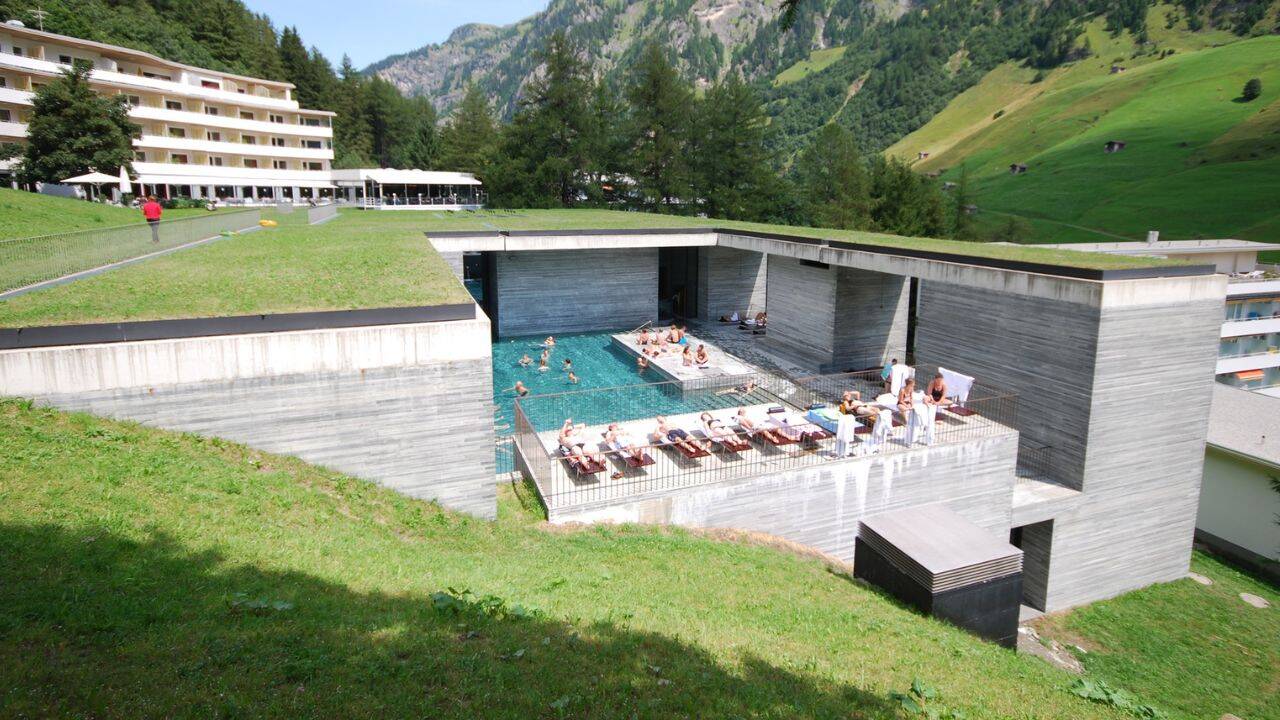
Photo credit: Micha L. Rieser
What role do local rocks play in the experience?
The main material used is a local stone called Vals gneiss, a blue-gray rock sourced from quarries in the nearby mountains. As mentioned in the study, the authors emphasize that the use of local materials allows the building to blend naturally with its surroundings.Some surfaces are polished smooth, while others are sanded, gouged or chipped fresh from the quarry. This variety turns a simple spa stroll into a journey of discovery. Zumthor believed that “material is stronger than thought,” meaning that the physical reality of stone is more powerful than any architectural drawing. By combining this stone with flowing water, the architects tried to create a “charming relationship” where the stone loves the water and the water loves the stone.
Timeless sensual atmosphere is Zumthor’s goal
“Therme Vals” is designed for all senses, not just sight. The concept of “atmosphere” in the study was broken down into factors such as temperature and sound. For example, the temperature of the “fire bath” is maintained at 42 degrees Celsius, and the surrounding walls are painted red to enhance the feeling of warmth. On the other hand, the temperature of the “ice bath” is kept at 14 degrees Celsius and the walls are blue to provide a cooling effect.These temperature differences are not only for health reasons, but can also change how visitors feel within the space. Instead of large, bright lights, Zumthor used very narrow linear skylights to allow thin rays of sunlight to hit the stone walls, highlighting the texture of the thousands of stone slabs.By protecting the hot springs and hiding the structure within the mountain, Zumthor achieved a unique balance between human experience and natural preservation. Each of the thousands of stone slabs serves a purpose, encouraging visitors to slow down and notice the simple beauty of light, water and rock. As the study says, this project proves that when architecture goes beyond basic functions to consider the human spirit, it can transform physical spaces into meaningful memories. It remains a testament to how architecture can both respect the mountain ecosystem while carving out a small but perfect space for people to enjoy.