
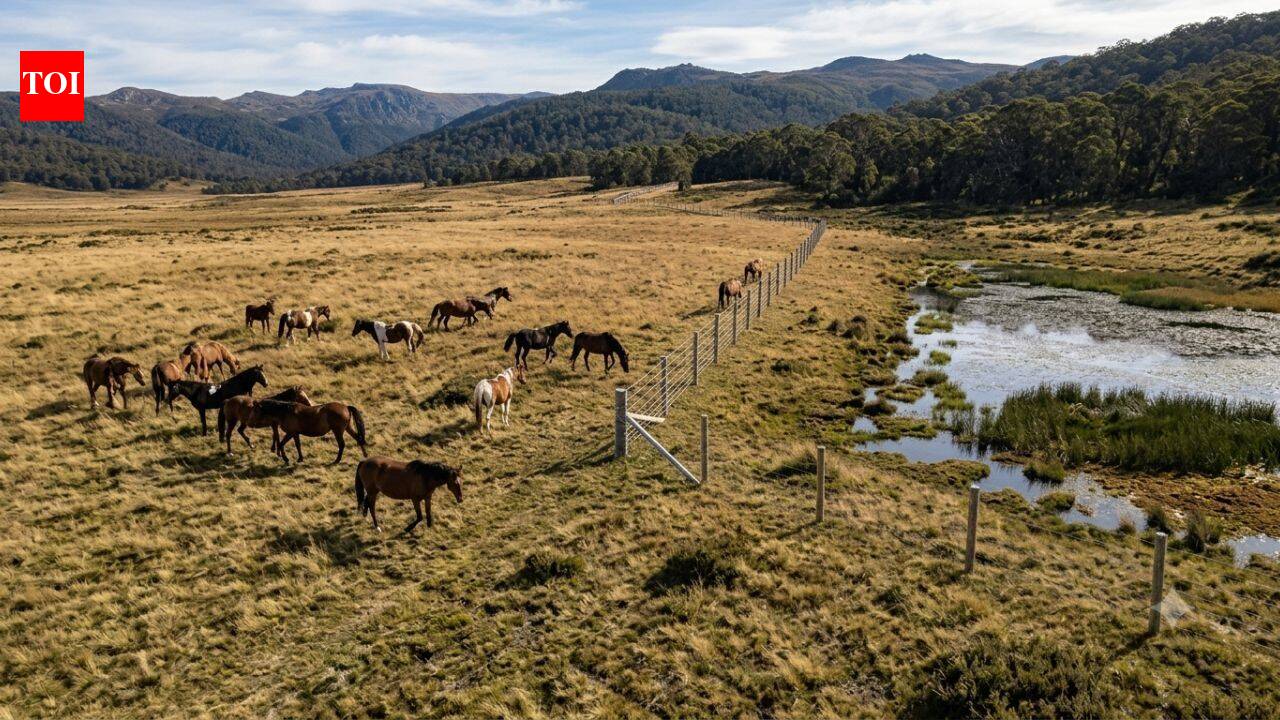
On the plateau of Kosciuszko National Park, where open grasslands meet fragile alpine wetlands, a new fence has become an unexpected feature of the landscape. The electrified barrier stretches across the Wild Horse Plains north of Kiandra, attracting the attention of visitors who are unsure why such a massive structure would appear in a remote area. Some questioned whether it was related to the nearby Snowy 2.0 piece or underground changes. The reason, however, is closer to the surface: to protect a rare wetland system from the damage caused by the introduction of wild horses.
How Australia’s alpine peatlands sustain rivers and shelter threatened species
The paddock covers approximately 108 hectares of alpine wetland, an area containing peat bogs and associated bogs that are considered endangered under both NSW and federal environmental protections.These wetlands are not just wetlands scattered across the mountains. They are slow-growing ecosystems that form where water remains trapped in the landscape, allowing plant matter to accumulate over time and eventually form peat soils. This process occurs gradually, but the result is that the landscape plays an important role in regulating water movement in alpine environments.According to a PubMed publication titled “The role of sphagnum moss (Sphagnum peat moss) in reducing environmental toxicity associated with various microorganisms‘, Sphagnum moss and peat act like natural storage systems. They absorb water during wet periods and slowly release it into streams, helping to maintain water flow in the surrounding area. The peat layer also preserves evidence of past vegetation and environmental changes.The wetlands provide habitat for a variety of threatened species, including the broad-toothed rat, the northern frog, and the squat galactic fish, a small native fish that lives in parts of the alpine region.
Why wild horses pose a growing threat to Australia’s fragile alpine peatlands
The fence is designed to keep wild horses away from sensitive peatland. According to a study published in Ecology Australia titled “Horse activity associated with trampling, loss of vegetation and changes in soil conditions”Wild horses in the Australian Alps and their environmental impacts: policy and management priorities‘.As horses move through a swampy environment, their weight breaks down the moss cover and exposes the ground below. Once exposed areas form, wetlands become more susceptible to erosion and the way water flows through the area changes.Research on the alpine peatlands of Kosciuszko National Park highlights differences between areas affected by horses and areas without horse activity. Areas where horses are present have poorer soil and water conditions, and the bare ground releases more carbon than areas where peat moss remains intact.Protecting vegetation is also important because peatlands store carbon that has accumulated over centuries. Damage to these systems reduces their ability to continue functioning as natural carbon stores.
$187,000 fencing project to protect Australia’s endangered alpine wetlands
The fence will be completed in March 2026 after JD Keys and MJ Keys were awarded the government contract, the Australian news site reported. The project is worth approximately $187,000 and work is scheduled to take place between February and March.The structure itself is hard to ignore. Rows of black steel star-shaped stakes support several electrical wires, and orange insulators can be seen along the fence lines. Solar installations provide power, while gates and warning signs mark entry points around the fence.The project’s costs are derived from biodiversity offsets associated with Snowy 2.0, a major pumped hydro expansion project in the Snowy Mountains region. Despite the funding link, Snowy Hydro confirmed the fence was not part of the Snowy 2.0 construction campaign and was not linked to concerns about ground movement, subsidence or sinkholes.
National park protective fence
While large fenced areas may appear unusual in a national park, similar approaches are used elsewhere in New South Wales to protect fragile ecosystems and native wildlife.Near the Victorian border, a larger reserve at Nungatta in the South East Forest National Park is surrounded by 25 kilometers of electrified predator fences. The project aims to prevent the entry of introduced predators and create safer conditions for threatened native animals. At Wild Horse Plains, the goal is narrower: keeping horses away from a specific wetland system rather than creating a predator-free preserve.Previous management strategies for the wild horse problem in Kosciuszko National Park have included the use of fencing. Early plans identified exclusion fencing as a possible tool along with other methods, depending on location, terrain and horse numbers.
Managing Kosciuszko’s Mustangs
Management of wild horses in Kosciuszko has been a source of debate, with different approaches considered to balance cultural, environmental and conservation concerns.The 2008 Kosciusko National Park Horse Management Plan was later replaced by the 2021 Kosciusko National Park Wild Horse Heritage Management Plan, which was revised in 2023, according to the NSW Government. It is expected that the program will remain in place until wild horse management is integrated into a future park-wide management framework.The Wild Horse Plains fence represents one targeted measure within this broader effort. Rather than trying to separate much of the park from the horses, it focused on protecting a small but environmentally important area.
Protect native species around Snowy Area 2.0
Biodiversity offset funding behind the fence is also linked to other conservation measures in Kosciuszko National Park.As part of Snowy 2.0 approval requirements, Snowy Hydro funded work aimed at protecting native fish species, including dwarf galaxies. This includes specially designed weirs near Tantangala Reservoir to reduce the risk of introduced fish reaching sensitive habitats, as well as other measures such as fine-mesh screening and breeding programs.