China’s fake Paris: Billion-dollar replica with Eiffel Tower and French streets fools the internet | World News

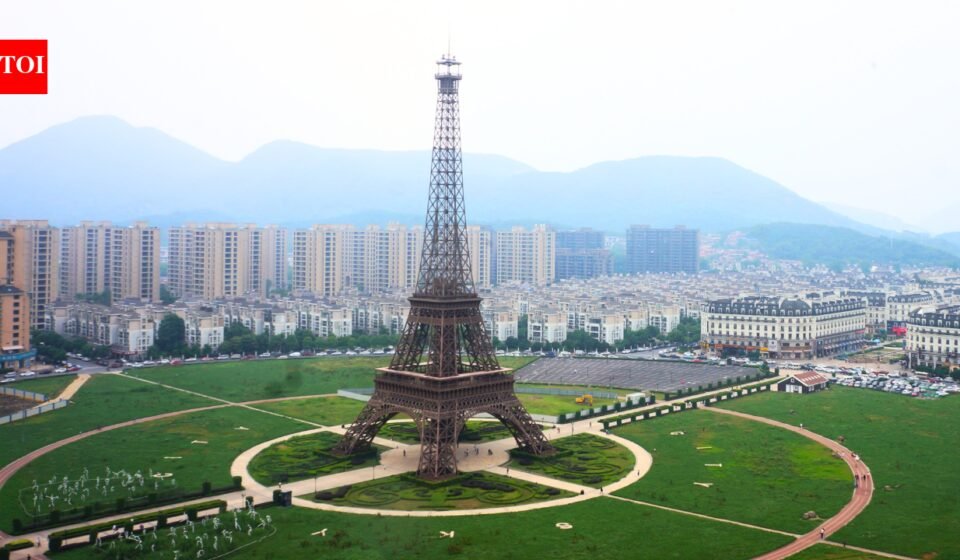
Tianducheng in China is unlike any other residential development in the world. Located on the outskirts of Hangzhou, the neighborhood cost more than $1 billion to build and recreates the look and feel of Paris with its Eiffel Tower, French boulevards and elegant European architecture. Over the years, viral videos and social media posts have repeatedly depicted it as an abandoned “ghost town,” leading millions to believe the ambitious project had failed. However, this view is no longer accurate. Today, Tianducheng is a thriving residential community where homes, cafes, parks and busy public spaces have replaced the emptiness that once defined its reputation, suggesting that the internet’s version of a place can lag far behind reality.
The Making of China’s Fake Paris
Tianducheng, meaning “city in the sky”, is a residential area in Hangzhou, Zhejiang Province, developed by Zhejiang Guangsha Co., Ltd. Construction of the complex began around 2007 as part of an ambitious residential project aimed at recreating the elegance and atmosphere of Paris. Rather than building a tourist attraction, the developers envisioned a community of prime residences that would attract affluent homebuyers seeking a unique European-style setting. Inspired by the French capital’s iconic landmarks, wide boulevards and classical architecture, the project became one of China’s most ambitious examples of themed urban development, attracting international attention long before it was fully operational.
Eiffel Tower, French Boulevards and Parisian Charm
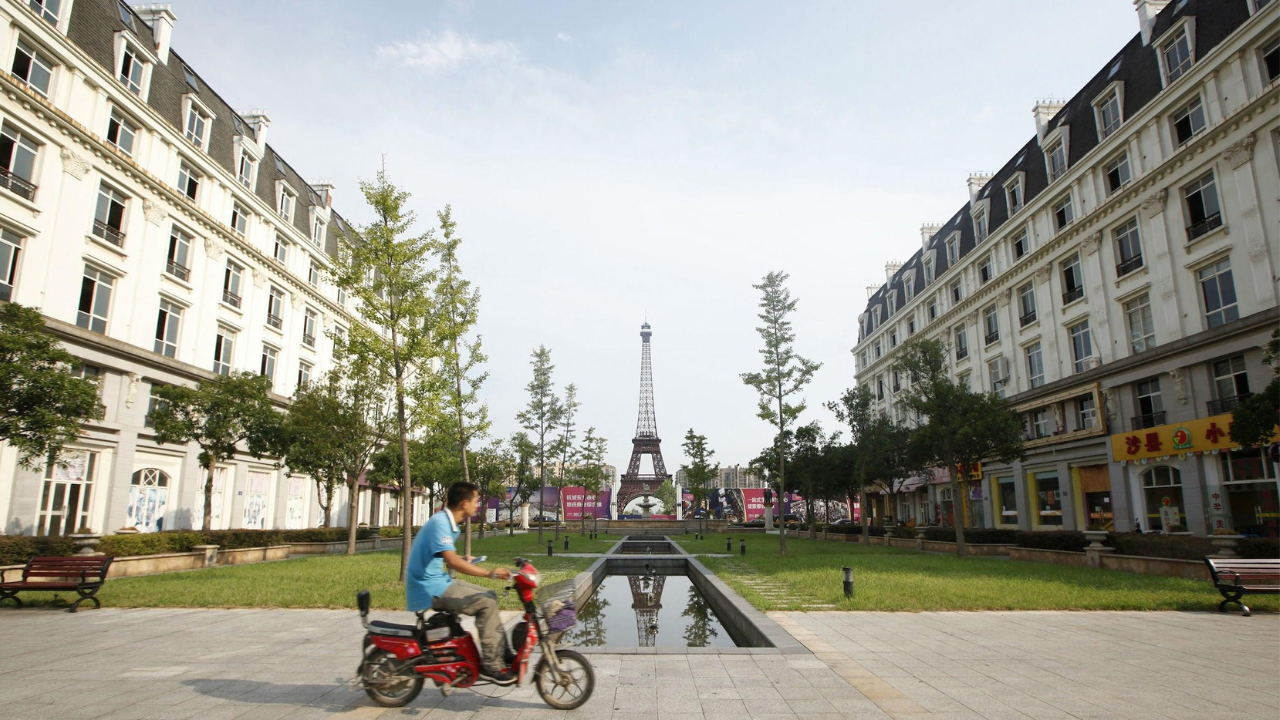
In the center of Tianducheng stands a 108-meter (354-foot) replica of the Eiffel Tower, approximately one-third the height of the original tower in Paris. The district also features tree-lined boulevards inspired by the Champs Elysées, Haussmann-style apartment buildings with ornate facades, elegant fountains, statues, manicured gardens and spacious public squares. Each element is designed to evoke the character of the French capital while being part of a fully functional residential complex. European-style architecture also makes the area a popular location for photography, travel and wedding photography.
Why is Tiandu City called “Ghost City”?
Although Tianducheng was designed to accommodate a population of over 100,000, only a handful of people moved in in the early years. It was estimated that as of around 2013, only about 2,000 people lived there, and its many apartment buildings, streets and squares seemed very quiet. Images of empty roads surrounding a replica of the Eiffel Tower quickly spread in international media, which often refers to Tianducheng as one of China’s most famous “ghost towns.” The label reflects the development’s low initial occupancy rate, even as it expanded and attracted residents over time.
Transformation from empty streets to thriving communities
Over the next decade, as transportation networks improved, Tianducheng became more closely connected to downtown Hangzhou and gradually shed its reputation. New apartment buildings were built, schools and commercial facilities opened, and more families chose to settle in the area. By 2017, the population was reported to have grown to approximately 30,000 residents, transforming the once quiet development into a functional suburban community. The gradual increase in occupancy shows that many large housing projects take years, not months, to develop into vibrant communities.
Visitors’ experience today
Visitors expecting empty streets are often surprised by what they find. While mornings remain relatively quiet thanks to the area’s wide boulevards and wide public spaces, later in the day the atmosphere changes significantly. Families gather in parks, children ride bicycles across the square, elderly residents perform traditional square dances and cafes welcome local patrons. Wedding photographers often use Eiffel Tower replicas and French-style buildings as scenic backdrops to create scenes that resemble European cities while retaining distinctly Chinese features in everyday life.
Why China is copying European towns
Tianducheng is not an isolated project. During China’s rapid urban expansion in the 2000s, developers built several residential communities inspired by famous European destinations to differentiate their projects in an increasingly competitive real estate market. Replicas and themed developments based in Venice, London, Hallstatt in Austria, Amsterdam and Florence are also popping up across the country. While some developments had low occupancy rates in their early years, as infrastructure, transport and local services improved, others gradually attracted residents and became regular neighborhoods despite their unusual architectural styles.
The image of Tianducheng on the Internet is outdated
Despite the transformation, Tianducheng is still portrayed online as an abandoned curiosity. Viral videos and recycled photos from those early years still circulate on social media, reinforcing a perception that no longer corresponds to reality. Today, the district is an inhabited residential community, where daily life unfolds beneath a replica of the Eiffel Tower and French-style streets.