
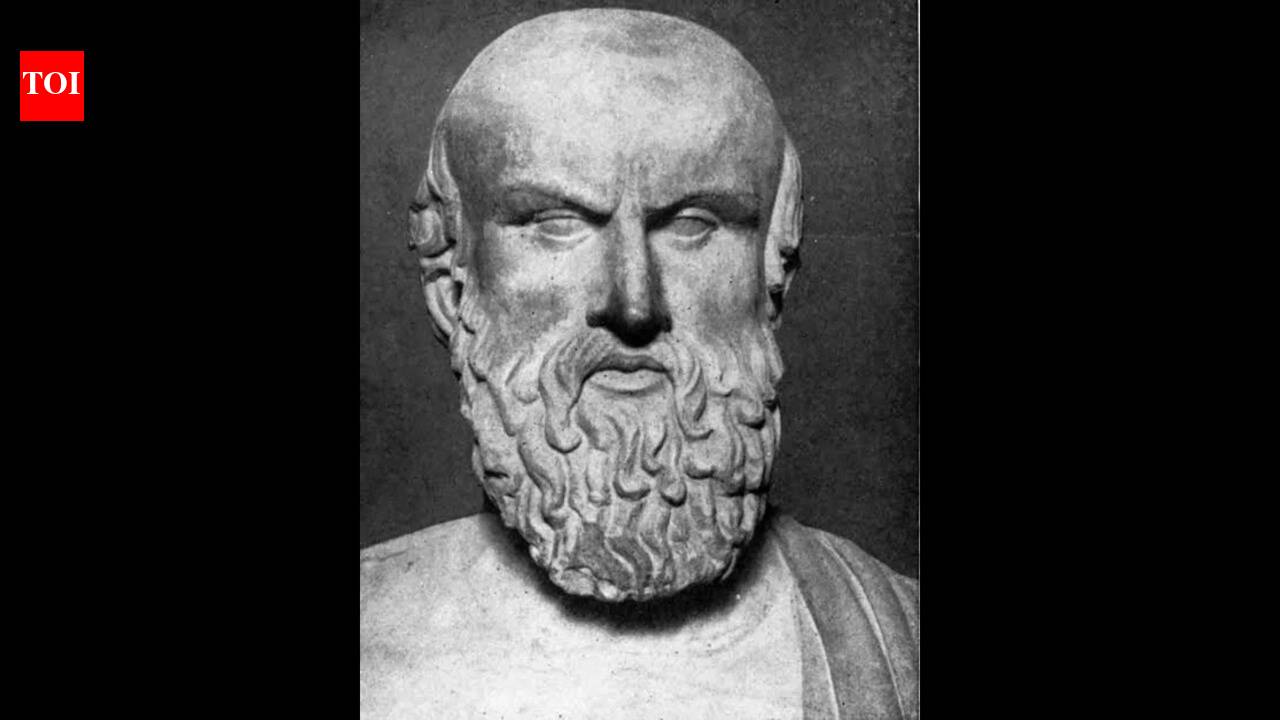
The ancient Greek playwright Aeschylus, who redefined drama and is known as the “Father of Tragedy,” gave us this noble quote that remains a survival lesson even today. in his play Prometheus BoundOceanus gave this advice to Prometheus, suggesting that when dealing with a tyrant as powerful as Zeus, it is sometimes safe and wise to pretend you know nothing or keep a low profile rather than show off your intelligence.Today’s quote is from Prometheus Bound: “When one is wise, it is wisest to look foolish”This quote is about strategic survival. This means that when you’re in a dangerous situation, especially when the situation is more powerful than you are, showing off your intelligence or being openly defiant is a quick way to get overwhelmed. Sometimes, the smartest thing you can do is pretend to be harmless, innocent, or even a little silly.Powerful people, tyrants, or insecure bosses are often threatened by people of high intelligence or ability. If you show how smart you are, you’ll instantly become a target. By “looking stupid,” you disarm them. They let their guard down because they don’t see you as a threat.When people think you’re stupid or incompetent, they’ll stop filtering themselves around you. They talk openly, reveal their plans, and underestimate your abilities. This gives you a huge information advantage. You can observe everything clearly while remaining completely understated.Arguing publicly or trying to prove yourself right to a powerful and stubborn force is usually a waste of time and energy. Feigning ignorance allows you to avoid unnecessary conflicts and conserve energy for emergencies.
background of prometheus bound
Prometheus stole fire from the gods and gave it to humans. As punishment, Zeus chained him to a rock to torment him forever. When his friend Oceanus came to visit, Oceanus told Prometheus to stop being openly defiant and angry with Zeus. Prometheus stubbornly refused. But the phrase itself has become a timeless political and social strategy.
Who is Aeschylus?
Before Aeschylus, Greek drama was very simple. There is only one actor and a large choir (a group of people who sing and dance) on stage. Individual actors just talk back and forth with the chorus. Aeschylus had a brilliant breakthrough: he added a second actor. By introducing a second character, he allows the actors to actually talk, argue and interact face to face rather than just narrating to an audience. This single change essentially invented “drama” and dramatic dialogue as we know it today. He also popularized the use of elaborate costumes, stage designs, and masks. He is said to have written about 90 plays, but only 7 survived through the centuries.Aeschylus saw himself primarily as a soldier. He fought for Athens in the famous Persian Wars (especially the battles of Marathon and Salamis), defending his city from invasion. When he died, the tombstone he wrote himself made no mention of his famous plays or theatrical trophies. It only mentions his bravery as a soldier fighting against the Persians.According to legend, he died tragically when an eagle mistook his bald head for a shining rock and dropped a turtle on his head to break his shell.