
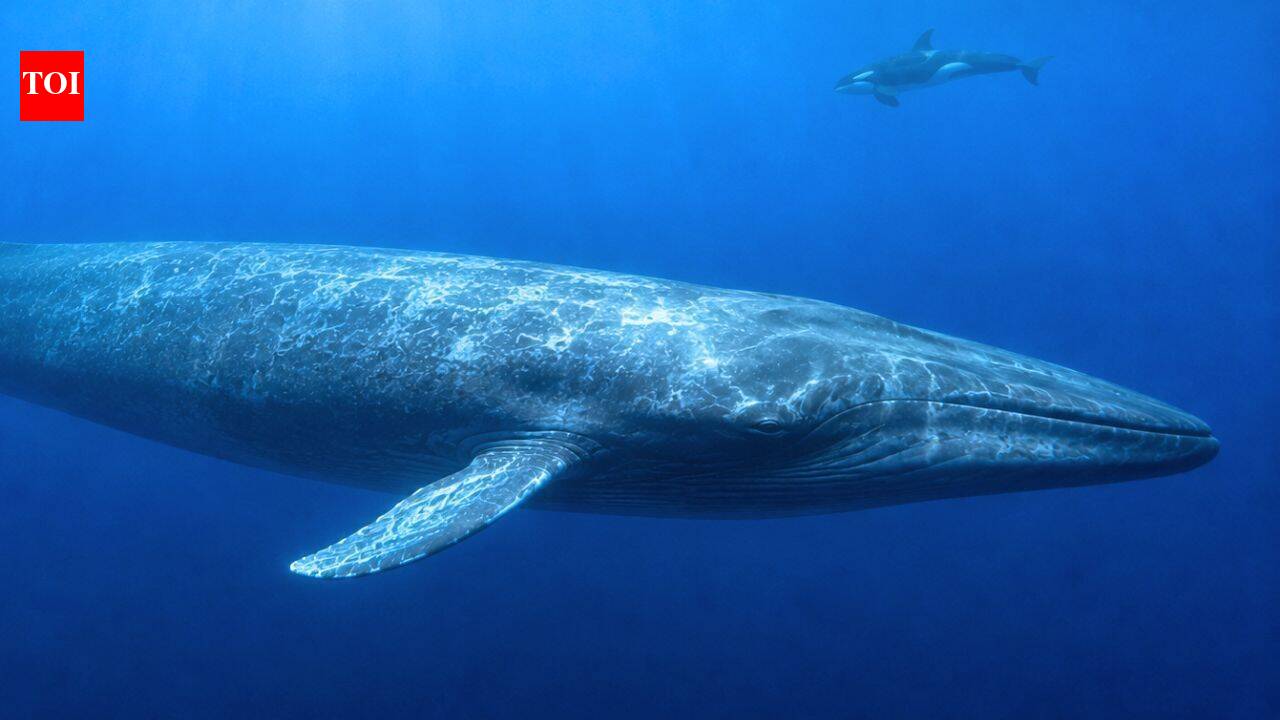
Whales are famous for their songs. But scientists have discovered that for some whales, these songs may also help them survive. A University of Washington researcher has discovered that some baleen whales, including blue, fin and minke whales, have evolved to sing at such low frequencies that their only natural enemies, killer whales, cannot hear them. Scientists call this behavior acoustic stealth. This means that these whales make it difficult for predators to detect them by using sounds that killer whales cannot hear. The discovery gives scientists new insights into why some whales sing the way they do and suggests the risk of being hunted affects how they communicate.
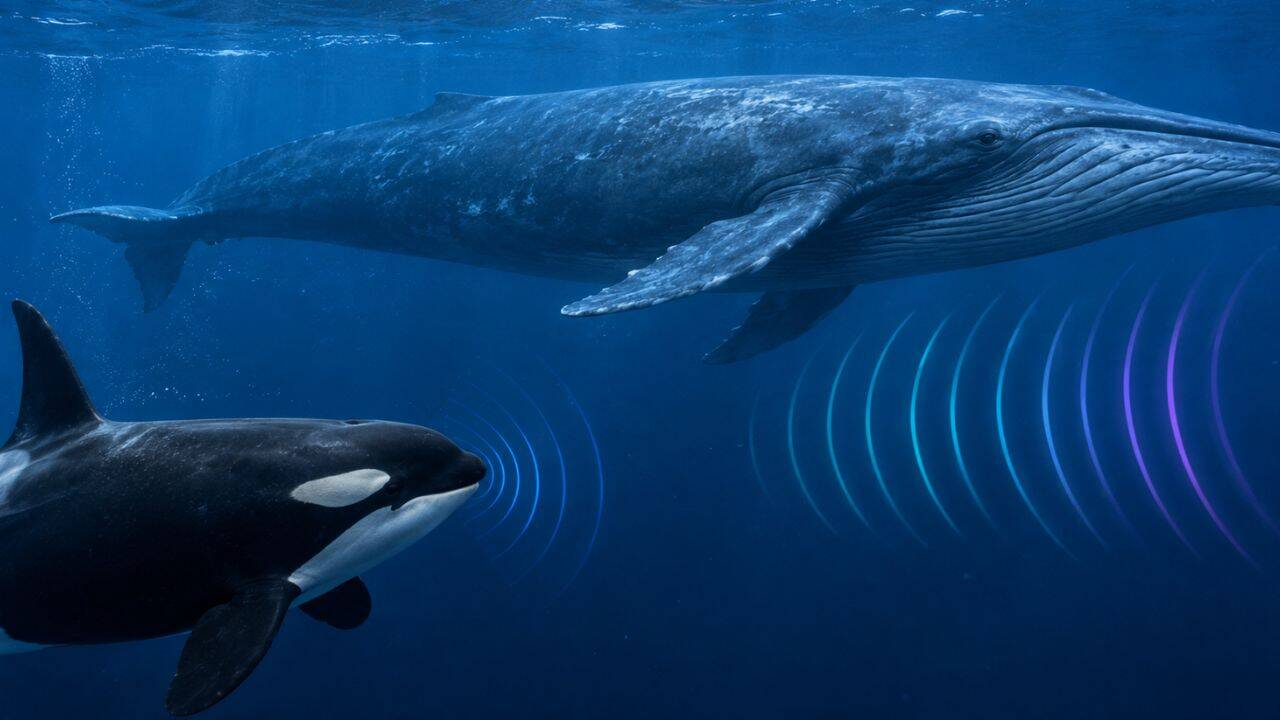
PC: Artificial Intelligence Generation
What is vocal camouflage and what research finds in blue whales
The study is titled “Unlike “fighting” species, most “flying” baleen whale species are acoustically cryptic to killer whales“, published in the journal Marine Mammal Science. The research was led by Trevor Branch, a professor of aquatic and fisheries sciences at the University of Washington.In the study, Branch reviewed aquarium experiments that measured the hearing range of killer whales. He also examined the calls of all baleen whale populations and studied how sounds travel through the ocean. This helped him figure out which whale calls killer whales can actually hear.It turns out that killer whales cannot hear sounds below 100 hertz (Hz). They can only hear loud sounds below 1,500 Hz. Branch found that “flying” whales will flee when attacked, and their calls are usually inaudible to killer whales more than a kilometer away.Acoustic hiding is a behavior that helps animals avoid detection by predators. Simply put, these whales don’t sing any quieter. They sing at a frequency that killer whales can’t hear, making it nearly impossible for their predators to detect them by sound.
Fighting and flying whales use different survival strategies
The study divided baleen whales into two categories: fighting species and flying species. Combat species move slower but are more maneuverable. They protect their young by congregating in shallow coastal waters during the winter and defend themselves if attacked. Flying species swim very fast. When they detect danger, instead of fighting, they flee and spend the winter in the vast, deep ocean.This flying group includes blue whales, fin whales, baleen whales, Bryde’s whales and minke whales. Fighting groups include right whales, bowhead whales, gray whales and humpback whales. The two groups also communicate differently. Fighting species emit more complex songs to compete with other whales in the group. Flying species emit loud, simple songs that can travel great distances to attract females.The blue whale is one of the best examples. They are the loudest animals on earth, capable of making calls of about 180 decibels. Although their calls are very loud, their frequency is so low that killer whales cannot hear them.
What this discovery tells scientists
The research also helps explain how these whales evolved. They didn’t choose to sing at a lower frequency. Over millions of years, natural selection has favored whales whose low-frequency calls are less likely to be heard by killer whales. These whales are more likely to survive and have offspring, and pass this trait on to their offspring.Killer whales live in all oceans and prey on many different species of animals, from small fish to the largest whales. For a flying species that spends most of its time alone in deep, open water, remaining invisible through sound is an important way to reduce the risk of attack. Research shows that fear of predators helped shape one of the most advanced communication systems in the animal world.