
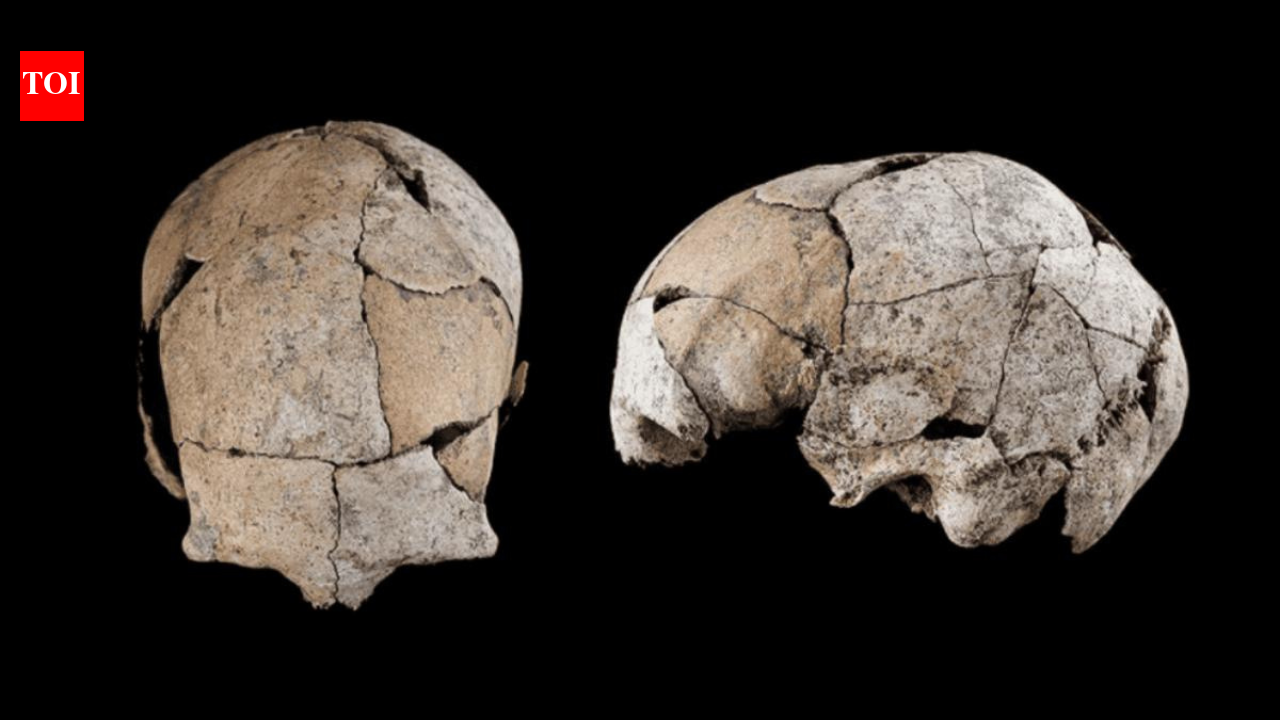
For more than 5,300 years it has lain beneath a Stone Age tomb in northern Spain, containing the remains of nearly 100 people. When archaeologists finally discover the ancient skull, they look forward to learning about prehistoric life again. Instead, they found evidence of something more unusual. Closer examination revealed that the woman had undergone not one but two complex ear surgeries thousands of years before modern medicine existed. Even more surprising, signs of new bone growth suggested she survived both surgeries, making the discovery the world’s earliest known physical evidence of ear surgery and rewriting what scientists know about prehistoric healthcare.The skull was unearthed in 2018 from the El Pendon dolmen, a large Neolithic burial monument near Reynoso in the Spanish province of Burgos. The tomb dates from 3800 BC to 3000 BC and was a mass burial for approximately 100 individuals. Among them is the skull of an elderly woman, believed to be around 65 years old, whose remains will be the focus of an extraordinary scientific study.
How a 5,300-year-old skull reveals the world’s earliest ear surgery
Researchers found two elaborate openings behind the woman’s ears, indicating she had undergone two separate surgeries. One surgery was performed on the right side of her skull and the other on the left side. Scientists believe the surgeries could have been performed months or even years apart. The precision of the cuts rules out the possibility of accidental injury or ritual alteration, pointing instead to intentional medical treatment.According to the study published in Scientific Reports, the woman likely suffered from mastoiditis, a dangerous bacterial infection that affects the mastoid bone behind the ear. If left untreated, the condition can spread to the brain and cause meningitis, blood clots, and even death. Researchers believe prehistoric healers identified the source of the infection and removed the diseased bones in an attempt to save her life.The most convincing evidence of the surgery’s success comes from the skull itself. New bone formed around both surgical openings, proving that the woman survived at least a few weeks after each surgery, and possibly longer. Without this bone regeneration, archaeologists might view these openings as damage caused after death rather than evidence of surgery.
Stone Age surgeons relied on flint tools instead of modern medicine
Unlike modern surgeries, which are performed with surgical drills and anesthesia, prehistoric surgeries were performed using sharp flint tools. Researchers believe the surgeon gradually scraped and drilled through the mastoid bone in slow, circular motions until the infected area was reached. Microscopic analysis of the skull revealed cut marks consistent with stone tools, suggesting the surgery required considerable skill, precision and knowledge of anatomy.Archaeologists also found a flint blade in the cemetery that showed microscopic signs of cutting bones. The tool was repeatedly heated to around 350 degrees Celsius, and researchers believe it may have been sterilized during surgery or used to cauterize tissue. Although its exact purpose cannot be confirmed, the blade provides a rare glimpse into the medical practices of Neolithic communities.
The surgery will be very painful
This surgery occurred thousands of years before the advent of antibiotics, anesthetics or metal surgical instruments. Researchers believe the woman may have been physically restrained during the surgery or taken natural pain-relieving plants such as poppy or other psychoactive herbs to ease her pain. Despite severe pain and ongoing risk of infection, she survived both surgeries, highlighting the amazing effectiveness of the treatments and the expertise of the prehistoric healers.Prior to this discovery, the earliest physical evidence of mastoid surgery dates to the Proto-Byzantine period between the fourth and ninth centuries AD, while the first written descriptions of the procedure did not appear until the 17th century. The Spanish skull pushes direct archaeological evidence of ear surgery back more than 4,000 years, making it the oldest known example ever found.
What this discovery tells us about prehistoric medicine
The discovery challenges the long-held view that Stone Age societies relied solely on primitive remedies. Rather, it demonstrates their ability to diagnose serious disease, determine its origin and perform complex surgical procedures that give patients a real chance of survival. Along with other archaeological evidence of trepanation, early amputations and ancient dental treatments, the Spanish skull paints a picture of a prehistoric community that possessed more advanced medical knowledge than previously thought.