
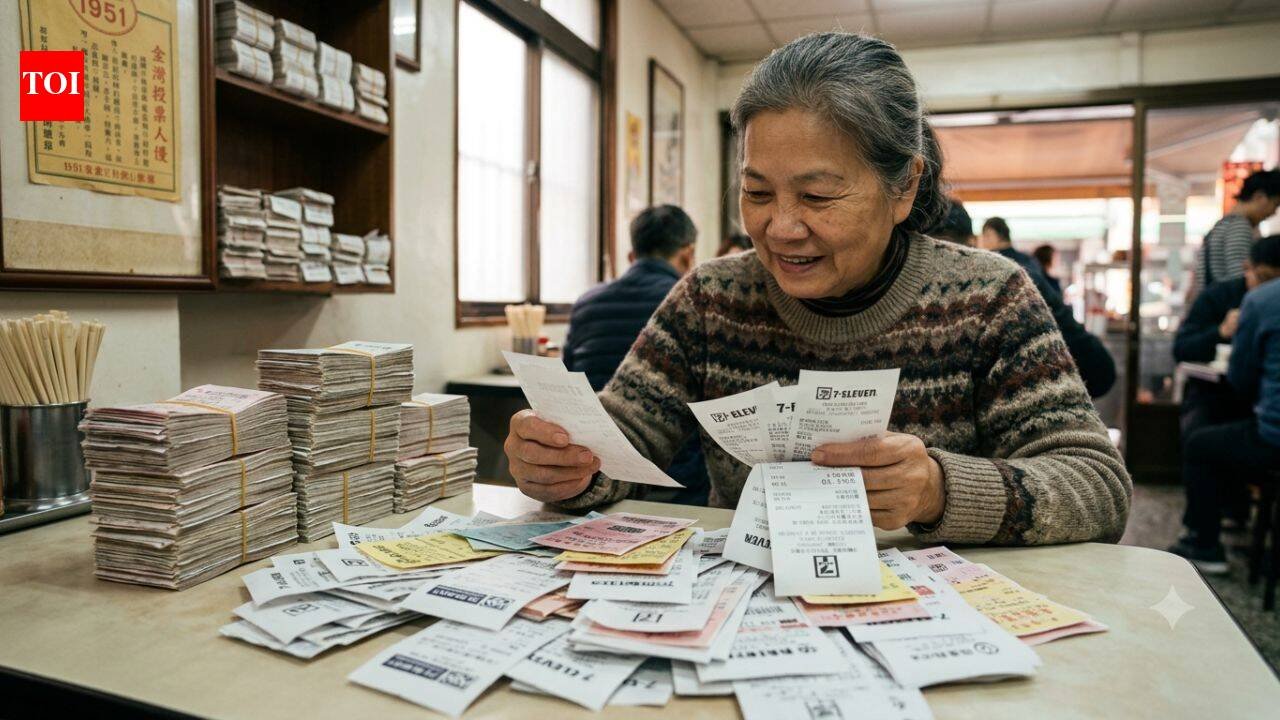
For most people, shopping receipts quickly disappear into wallets, pockets, or trash bins. However, in Taiwan, that little piece of paper has a completely different effect. Routine purchases in supermarkets, cafes or clothing stores can also become opportunities to enter a national lottery, where receipts could potentially win thousands of dollars. The idea may seem simple, but behind it is a carefully designed tax system that uses consumer behavior to improve compliance. By giving shoppers a personal reason to ask for receipts, Taiwan has created a way for ordinary purchases to become part of the government’s efforts to track commercial activity and reduce hidden transactions.The Ministry of Finance stipulates that a unified invoice bonus number will be drawn every two months in the invoice cycle. The rules stipulate that the winning numbers are drawn on the 25th of every odd-numbered month (January, March, May, July, September and November), that is, the lottery is drawn six times a year. According to the Ministry of Finance Regulations Retrieval System, Taiwan has moved towards electronic invoicing, including digital carriers and mobile services. Consumers can store invoices electronically and check winnings digitally.
How a simple Taiwan shopping receipt turned into a chance to win big
Visitors shopping in Taiwan may notice an unusual habit at checkout counters. Unlike many countries where receipts are quickly thrown away, shoppers in Taiwan often keep receipts because each official invoice carries the potential to win a cash prize. Rejection of receipts is common in many countries.The identification number printed on Taiwan’s unified invoice is more than just a transaction record. It could also serve as a lottery entry, giving consumers a reason to keep receipts they might otherwise throw away.This system has been in place for over seventy years and is still in effect today. Taiwan’s Ministry of Finance holds receipt draws six times a year, and consumers can win prizes ranging from small amounts to a maximum of NT$10 million. The system has been in existence for more than seventy years. It was introduced in 1951 to solve a problem faced by many governments: businesses failing to report all of their sales and underpaying taxes.
Taiwan solves tax problems by changing customer behavior
The challenge with indirect taxes is that governments often rely on businesses to accurately record transactions. When sales go without receipts, authorities have limited visibility into the true level of economic activity. Stores that don’t report sales can reduce the amount of tax they owe. Monitoring each transaction requires significant resources, making enforcement difficult.Taiwan’s approach has changed the relationship between customers and businesses. Instead of relying solely on government inspections, it gives consumers a reason to ask for proof of purchase.If customers want to have a chance to win, they need a receipt. Businesses are more likely to record sales correctly if they require receipts. A simple rewards system provides shoppers with financial incentives to help ensure transactions enter official records.
Why tax evasion is so difficult to solve
The phenomenon of tax evasion is not unique to Taiwan. Governments around the world have long grappled with the gap between actual economic activity and the data reported to tax authorities.Traditional approaches typically involve audits, penalties and inspections. These tools can work, but they are expensive and often only cover part of a business. Tax authorities may never learn of transactions deliberately kept outside official records.Economists have studied tax compliance for decades, studying how enforcement, penalties, income levels and social expectations influence people and businesses to comply with tax rules.A recurring problem is the information imbalance between taxpayers and government. Businesses often know more about their sales than tax authorities do. The receipt lottery attempts to close this gap by involving consumers in the reporting process.Instead of just asking “How do governments catch hidden sales?” ask a different question: “How do you encourage customers to make hidden sales more difficult?”
How Taiwan is bringing receipt lottery into the digital age
While the initial system relied on paper receipts, Taiwan has gradually moved to digital versions.Many shoppers no longer need to keep piles of receipts at home. They can connect their purchases to a digital account, scan barcodes before paying, or receive notifications via mobile services when a receipt number wins. This shift helps reduce paper waste while keeping the basic idea intact. The rewards remain the same: consumers have a reason to ensure transactions are officially recorded.For many residents, checking winning numbers has become a daily routine. Some people only receive small prizes, while others continue to hope that their daily purchases will eventually lead to larger rewards.Receipts may also be donated to an approved charity. In this case, the organization may claim any winnings associated with the donated entry.
Tax experiment expanding beyond Taiwan
Taiwan’s model has drawn attention from other countries seeking to improve their tax collections.According to the Australian Broadcasting Corporation (ABC), the governments of Brazil, Portugal, the Czech Republic, Lithuania, Romania and Slovakia have launched similar receipt lottery schemes. After seeing Taiwan’s experience, the mainland has also tried lottery receipts in various places.China adopted the idea because of concerns about unreported economic activity and the difficulty of capturing accurate business transactions. Studies of these programs show that encouraging consumers to request official receipts can increase tax reporting.This approach does not eliminate tax evasion but provides a different approach to enforcement. It doesn’t just rely on government oversight, but uses incentives to change everyday behavior.