
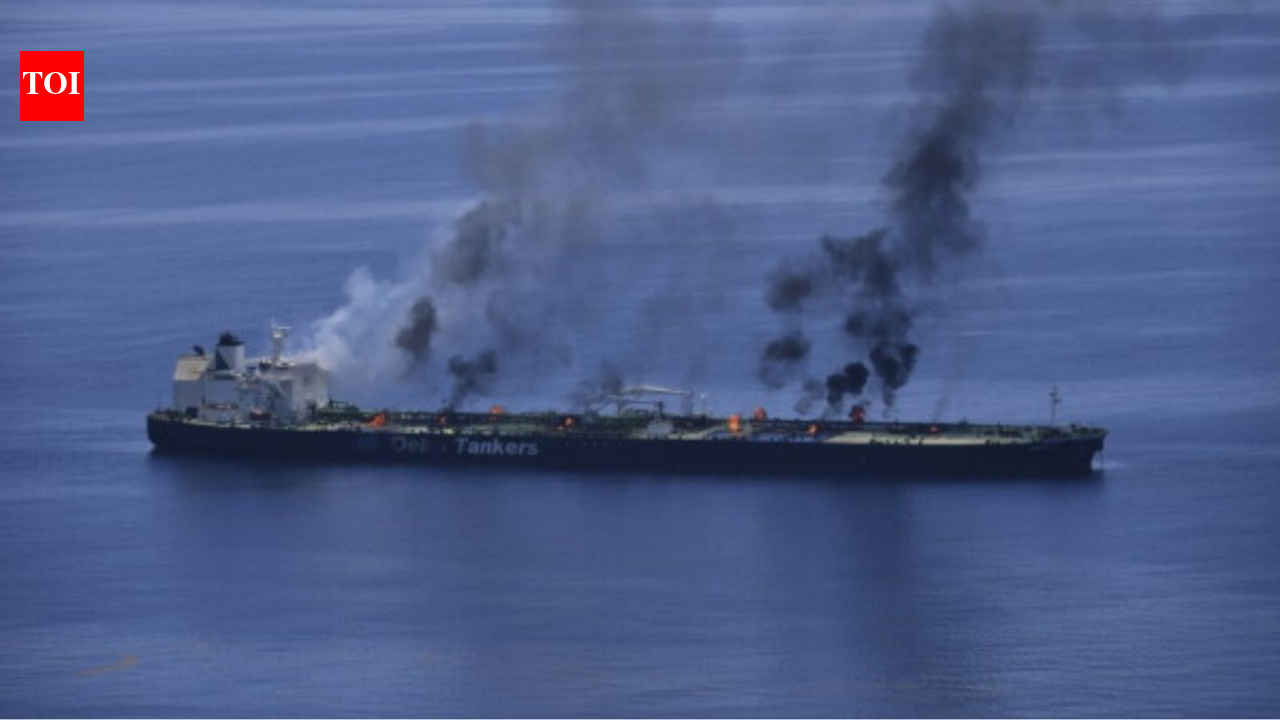
An oil tanker caught fire after being hit by an “unidentified projectile” as it passed through the Strait of Hormuz off the coast of Oman, Britain’s maritime authority said on Tuesday, an incident that has heightened tensions in one of the world’s most important energy shipping routes.The UK Maritime Trade Organization (UKMTO) said the tanker was traveling south near Lima, Oman, when its port side was hit, causing a fire.The agency said there were no injuries or environmental damage and advised ships to use caution when passing through the area. Authorities are investigating the incident.
U.S. officials blame Iran for attack
Iran’s military fired at least two missiles at merchant ships in the Strait of Hormuz on Monday night, Axios reported, citing two U.S. officials.A U.S. official said the tanker reported by Britain’s maritime trade group was one of the ships hit, while another merchant ship was also hit by an Iranian missile. Both ships sustained significant damage, but no casualties were reported.The attack reportedly came after a week-long agreement between the United States and Iran to halt attacks in the Strait of Hormuz expired.The suspension coincides with Iran’s six-day state funeral for former supreme leader Ali Khamenei, whose body was moved from Tehran to the holy city of Qom on Monday following a massive funeral procession that drew millions of mourners.Axios reports that Washington may now consider retaliatory strikes against Iranian targets.The attack came despite a ceasefire between the United States and Iran and ongoing diplomatic efforts to secure a long-term peace deal.Indirect talks between Washington and Tehran ended last week in Doha without significant progress on the future of shipping in the Strait of Hormuz.
Major global routes
The Strait of Hormuz remains one of the world’s most strategic maritime chokepoints, transporting about 20 million barrels of crude oil per day by 2024, accounting for about a fifth of global oil supply, according to the U.S. Energy Information Administration.The waterway has been at the center of the recent U.S.-Iran conflict after Iran imposed a blockade, attacked several commercial ships, and pushed up global energy prices.Maritime traffic resumed after the two sides signed a memorandum of understanding last month aimed at reopening shipping routes.However, Tehran insists shipping will not return to pre-war arrangements and has warned ships not to use routes outside authorized corridors along Iran’s coastline.Funeral services for Khamenei, who was killed in a US-Israeli attack on February 28, continue this week in Qom, the Iraqi holy city of Najaf and Karbala, and will be held in Mashhad on Thursday.Iran’s leadership sees the massive mobilization as a sign of public solidarity following the recent conflict.The British military said the tanker was trying to leave the Strait of Hormuz and enter the Gulf of Oman when it was hit.As tensions continue to simmer in the Gulf region, the latest incident is expected to once again raise concerns about the security of global energy supplies.