
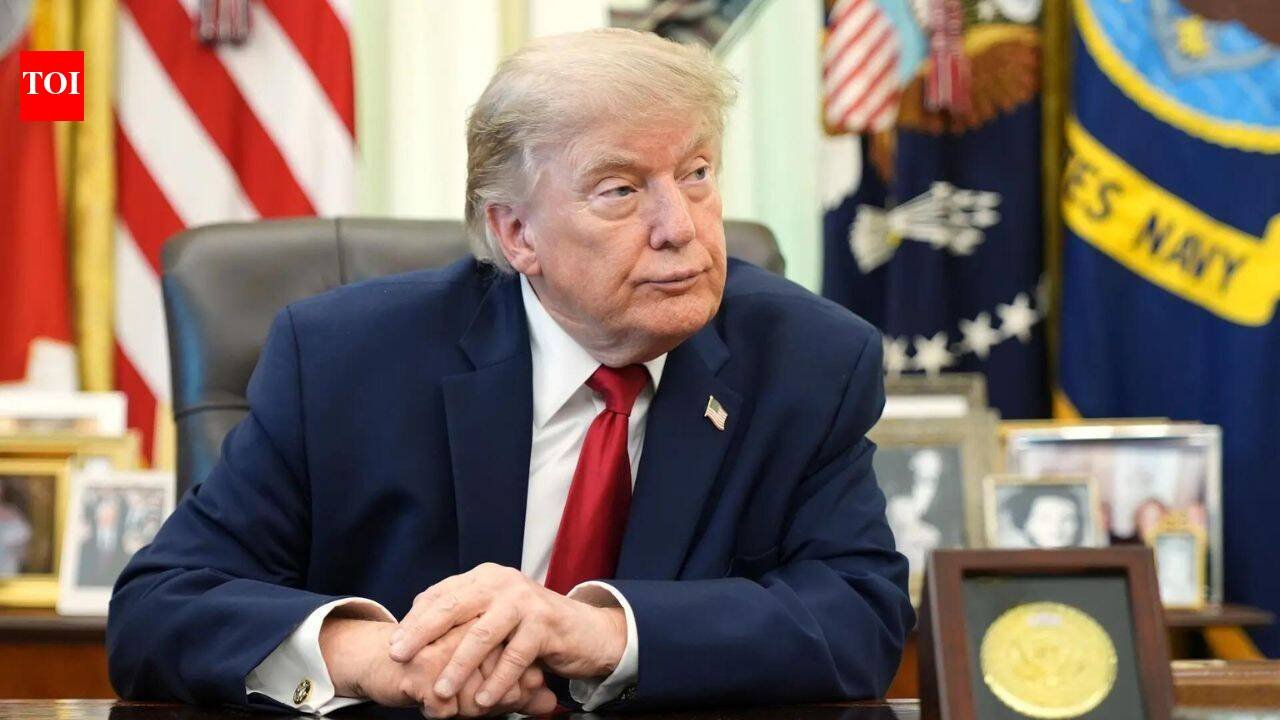
U.S. President Donald Trump is aggressively pursuing nuclear diplomacy with Iran even as military plans for an attack are being finalized, according to a new book detailing how negotiations collapsed and the attack that followed.“Regime Change” by New York Times reporters Jonathan Swan and Maggie Haberman depicts a president who refused to give up on the deal until the end.But as negotiations stalled, Trump began to believe Iran was weak. He told advisers he had a “good feeling” about military action, and the authors wrote that he hoped to “eliminate the regime and figure out the details later.”
Netanyahu pressures Trump
The book reveals that Israeli Prime Minister Benjamin Netanyahu actively lobbied Trump to take action, arguing that Iran has never been more vulnerable. He proposed a four-phase plan: behead Iran’s leadership, destroy its army, overthrow the regime and form a new government.Netanyahu showed Trump a video showing what post-revolutionary Iran would look like and suggested exiled Prince Reza Pahlavi as a possible leader. Trump liked what he saw but expressed doubts about the later stages, reportedly believing regime change would be “their problem.” The book doesn’t make it clear who “they” refers to.
Top US official refutes Netanyahu’s plan
Trump’s national security team isn’t convinced. CIA Director John Ratcliffe reportedly called Netanyahu’s vision “farcical.” Secretary of State Marco Rubio was even more blunt, interjecting at a meeting: “In other words, it’s bollocks****.”Rubio opposes regime change as a goal. If the goal is to destroy Iran’s missile program, “that’s what we can achieve,” he said.
final situation room meeting
One of the most dramatic scenes in the book occurs during the final situation room meeting before the attack. Ratcliffe briefed Trump on intelligence that Iran’s senior leadership was expected to gather at Khamenei’s compound. Ratcliffe reportedly told the president that if regime change meant killing Khamenei, “we might be able to do it.”Dan Kaine, chairman of the Joint Chiefs of Staff, warned that a protracted conflict could deplete U.S. weapons stockpiles, overwhelm Ukraine and Israel’s already stretched missile defenses and put U.S. forces at risk.Vice President Vance, the administration’s strongest opponent of military action, reiterated his opposition but said he would support Trump if he decided to go ahead with the action. Sources familiar with Vance’s concerns told the author that he warned that the war could fracture Trump’s political coalition and alienate voters who support his pledge not to break out into new wars.
Diplomacy continued almost until the attack
Trump’s Middle East envoy Steve Witkoff and adviser Jared Kushner had been negotiating with Iranian officials in Oman and Switzerland until the final days. One proposal would provide Iran with free nuclear fuel for life for its civilian program, a test to determine whether Tehran’s enrichment activities are energy or weapons-related.Witkoff and Kushner concluded that Iran was playing for time, hoping to outlast Trump’s presidency. This convinced presidential diplomacy that it was complete and led to Trump issuing the final order.Trump made his decision after listening to his advisers. “I think we need to do this,” he said.He gave his final orders the next afternoon while en route to Texas.Seventeen days after the war began, the author found Trump in the Oval Office, his desk covered with printouts of maple trees instead of military maps. “I’m ordering trees for the White House,” he told them. “I know how to buy good trees. Maple trees.”