‘It’s frustrating’: Antarctica’s winter sea ice disappears as temperatures reach 20°C above average

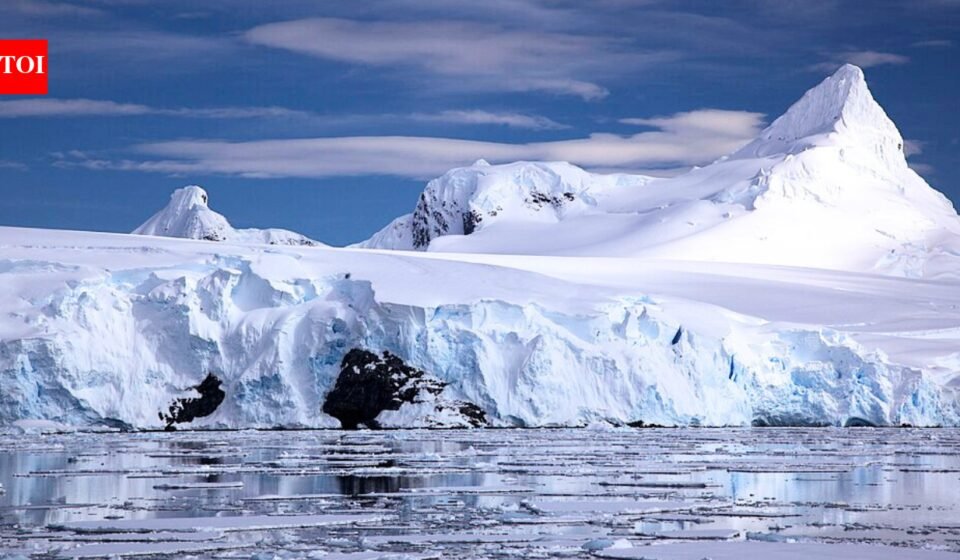
Vast swaths of Antarctica that should be covered by winter sea ice are largely exposed to the ocean, alarming scientists and raising new concerns about the future of the frozen continent. Satellite observations show that about 650,000 square kilometers of sea ice have not yet formed in the Bellingshausen Sea near West Antarctica, an area equivalent to the size of France. The unusual ice loss comes as parts of Antarctica experienced a dramatic winter heatwave, with temperatures more than 20 degrees Celsius above average. Researchers say the event could have consequences for penguins, marine ecosystems and even future sea level rise.
Antarctica should be frozen now
For most people, Antarctica is synonymous with ice. What makes this latest development so concerning is that it occurs during the Antarctic winter.Unlike the Arctic, where sea ice reaches its greatest extent around March, Antarctica’s sea ice expands throughout the southern winter, typically growing rapidly from March to September. By June, the Bellingshausen Sea, located west of the Antarctic Peninsula, is usually covered by a large sheet of sea ice.In contrast, satellite images show the area is almost completely ice-free.Scientists estimate that the region is missing about 650,000 square kilometers of sea ice compared with the average observed from 1991 to 2020. To put this into perspective, France covers an area of approximately 551,000 square kilometres.Dr Will Hobbs, an Antarctic sea ice expert from the University of Tasmania and the Australian Antarctic Program Partnership, describes the situation bluntly.“I’m worried. It’s frustrating.”He added:“It’s worth noting that this is June and there’s no sea ice out there.”
Why are scientists particularly worried this time?
Sea ice changes every year, but researchers say this is not an isolated event.Hobbs said this is the third time in four years that sea ice in the Bellingshausen Sea has been unusually low. Scientists are growing concerned as repeated low-ice years suggest something more serious than normal fluctuations may be afoot.Perhaps the most striking remarks came when Hobbs suggested the region might be entering a new normal.“I don’t think we’re going to see sea ice out there anymore. It’s over.”While other scientists caution that more research is needed before such conclusions can be drawn, the announcement highlights growing concerns among polar researchers that long-term changes may be underway in West Antarctica.Scientists are now investigating whether changes in ocean circulation, rising ocean temperatures and human-driven climate change have combined to prevent ice from forming the way it once did.
Extraordinary Antarctic heatwave
The loss of sea ice coincides with one of the most unusual winter warming events recorded on the Antarctic Peninsula.Temperatures at the Esperanza research station in Argentina reached 15.4°C on June 5 and 13.4°C on June 6. These figures are extraordinary for a region where the average daytime temperature in early June is about -6.2°C.In other words, temperatures are more than 20°C above normal.The reading of 15.4°C also surpassed the station’s June record of 13.3°C set since 1998.Meteorologists from Argentina’s National Meteorological Service described the event as an “extreme temperature event”, underscoring how unusual the conditions are in the middle of Antarctic winter.
Are heat waves getting worse as sea ice disappears?
Scientists believe the two incidents may be related.Sea ice acts like a giant natural air conditioner. As warm air moves south from lower latitudes, the ice helps the air cool before it reaches Antarctica.Without ice caps, the ocean is directly exposed to the atmosphere. Open water absorbs and stores much more heat than ice, allowing warm conditions to persist.Dr Hobbs explained that while detailed calculations have not yet been completed, there is reason to suspect that the lack of sea ice is exacerbating the heatwave. Typically, large frozen surfaces reflect heat and cool the incoming air mass. However, open water absorbs and releases more heat.Scientists say this creates a feedback loop. Reduced sea ice exposes more ocean water, absorbing more heat. A warming climate makes it harder for sea ice to form, further exacerbating the warming trend.
Sea ice is different from glaciers
A common misconception is that all Antarctic ice behaves the same way.Sea ice forms when ocean water freezes. It floats on the surface and grows and shrinks with the seasons. In contrast, glaciers and ice sheets are located on land and contain large amounts of frozen fresh water.Because sea ice is already floating, its melting does not directly raise sea levels. However, that doesn’t mean its disappearance is harmless.Sea ice reflects sunlight back into space, helping to keep the area cool. It also protects the Antarctic coastline from powerful waves and provides important habitat for many species. In addition, it protects fragile ice shelves from waves and storms.Without sea ice, Antarctica would be more vulnerable to warming and erosion.
Connections to Thwaites Glacier and Pine Island Glacier
Scientists are particularly concerned because the Bellingshausen Sea is close to some of Antarctica’s most vulnerable areas glacierIncludes Thwaites Glacier and Pine Island Glacier.Both glaciers are among the largest contributors to Antarctic ice loss and global sea level rise.Dr Phil Reid of the Australian Bureau of Meteorology noted that sea ice acts as a protective buffer in front of the floating ice shelves attached to these glaciers. When sea ice is not present, it is easier for waves to reach and damage ice shelves.If an ice shelf weakens or breaks up, the glaciers behind it can flow into the ocean more quickly. Over time, this process directly contributes to rising sea levels around the world.
What does this mean for penguins?
The consequences extend far beyond the ice.Sea ice is an important part of Antarctica’s ecosystem. Algae grow beneath the ice and form the basis of the Antarctic food web. Small shrimp-like creatures called krill feed on these algae, and many larger animals also depend on krill for survival.Emperor penguins, Adélie penguins, crab-eating seals, whales and numerous seabirds all depend directly or indirectly on healthy sea ice ecosystems.Dr Peter Fretwell of the British Antarctic Survey has spent several years studying emperor penguin populations and their reliance on stable sea ice.According to Fretwell:“Sea ice forms too late and melts too early.”He warned that changing ice conditions were reducing breeding success and forcing penguins to travel long distances to find suitable habitat.
The tragic penguin disaster of 2022
Scientists have seen what happens when sea ice disappears prematurely.In late 2022, thousands of emperor penguin chicks died when sea ice broke up beneath their habitat before the chicks could grow waterproof feathers.Researchers describe the event as a catastrophic breeding failure. The chicks fell into the freezing water before their bodies were capable of surviving the harsh Antarctic environment.The disaster led international conservation agencies to upgrade emperor penguins to endangered status earlier this year.The current sea ice shortage has raised concerns that similar reproductive failures may become more common if sea ice continues to decline.
Is Antarctica entering a new era?
For decades, Antarctic sea ice has behaved differently than Arctic sea ice.While Arctic sea ice shows a clear long-term downward trend, Antarctic sea ice has remained relatively stable and even experienced periods of growth. This model has changed dramatically over the past decade.Since 2016, Antarctica has experienced several record-low sea ice years. Scientists are increasingly debating whether the continent has entered a new era characterized by persistently low sea ice cover.Researchers warn that just one season doesn’t prove a permanent shift. However, consecutive years of very low sea ice are increasingly difficult to dismiss as natural fluctuations.The Bellingshausen Sea event is therefore being closely watched because it may provide clues about how Antarctica is responding to global warming.
What happens next?
Scientists will continue to monitor Antarctic sea ice throughout September, when it typically reaches its annual maximum extent.The key question is whether the Bellingshausen Sea will eventually freeze over later this winter, or whether the deficit will persist for months.Researchers are also studying ocean temperature records, atmospheric circulation patterns, wind changes around Antarctica and long-term climate trends. Their findings may help determine whether this year’s event was a temporary anomaly or evidence of a deeper shift in Earth’s southernmost continent.The loss of Antarctica’s winter sea ice, which is an area the size of France, is more than just a startling statistic. It’s a warning sign from one of the most climate-sensitive regions on Earth.The fact that the ice failed to form in the winter, rather than melting in the summer, caught the attention of scientists. Combined with temperatures more than 20°C above average, the event raises urgent questions about the future of Antarctic sea ice, the wildlife that depends on it, and the stability of the ice sheet that helps regulate global sea levels.