Is religion in decline? As Christianity declines, a quarter of the world’s population is now irreligious, making it the third largest group |


Nearly a quarter of the world’s population currently has no religious affiliation, according to new analysis from the Pew Research Center’s Pew-Templeton Project on the Future of Global Religion. The study is based on more than 2,700 censuses and surveys in 2010 countries and regions, which accounted for 99.98% of the global population in 2020. The study found that between 2010 and 2020, both the absolute number and the proportion of the population of people without religious beliefs (commonly known as “non-religious persons”) increased. The number of people who consider themselves atheists, agnostics or “nothing special” has increased by 270 million over the past decade and will reach 1.9 billion by 2020. Their share of the global population increased from 23.3% in 2010 to 24.2% in 2020. Along with Muslims, they were the only major group to see an increase in their share of the world’s population during the same period. Their expansion has had a measurable impact on the size and distribution of other religious groups, especially Christianity, and on the number of countries with a Christian majority.
who is’noness ‘?
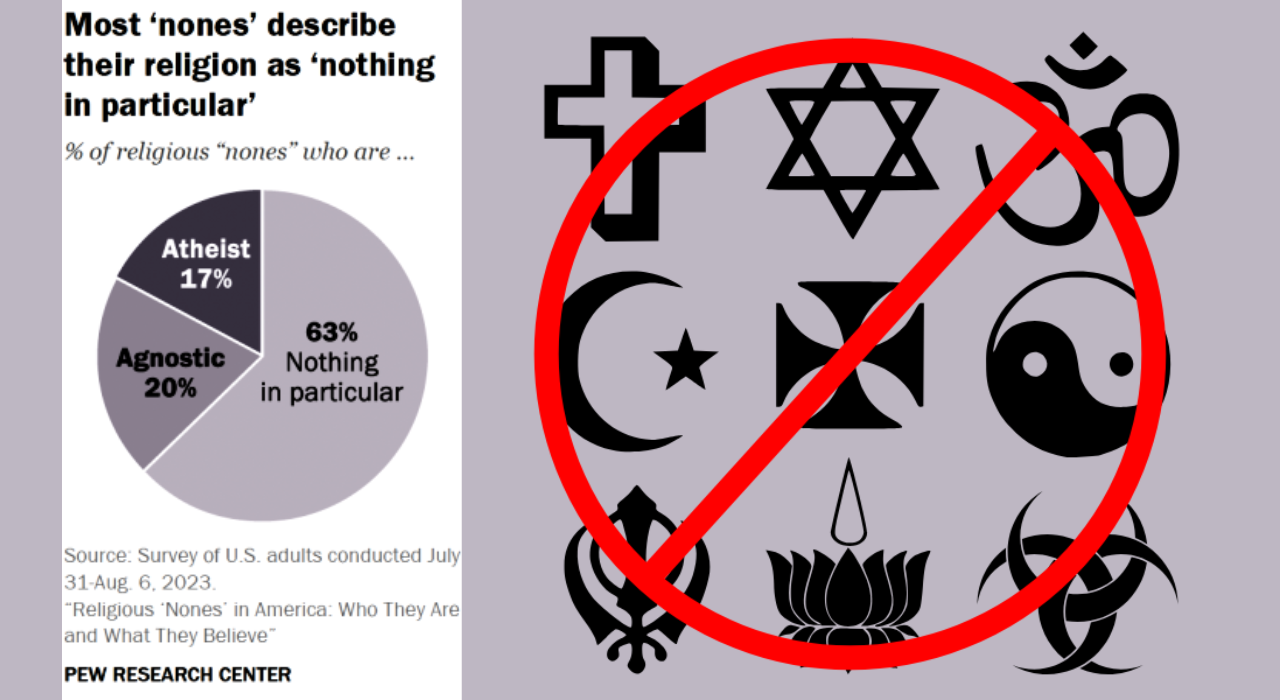
In Pew Research Center surveys and the national census, the “no religious affiliation” category includes people who describe themselves as atheist, agnostic or “nothing in particular” when asked about their religious affiliation. In other data sources, this group includes people who select “no religion” or “no religion.” American academics have used the term “nones” since at least the 1960s, and it has since become common in academic and media discussions. Diversification within the category. The latest data from Pew shows:
- 17% of “atheists” identify themselves as atheists.
- 20% said they were agnostic.
- 63% describe their religion as “nothing special.”
The religiously unaffiliated are now the third largest group in the world and include atheists, agnostics, spiritual but non-religious people, and people not affiliated with organized religion.
As of 2020, 75.8% of the world’s population has a religious affiliation, while 24.2% (approximately 1.9 billion people) have no religious affiliation. This makes the non-religious community the third largest group in the world, behind Christians (2.3 billion) and Muslims (2 billion).
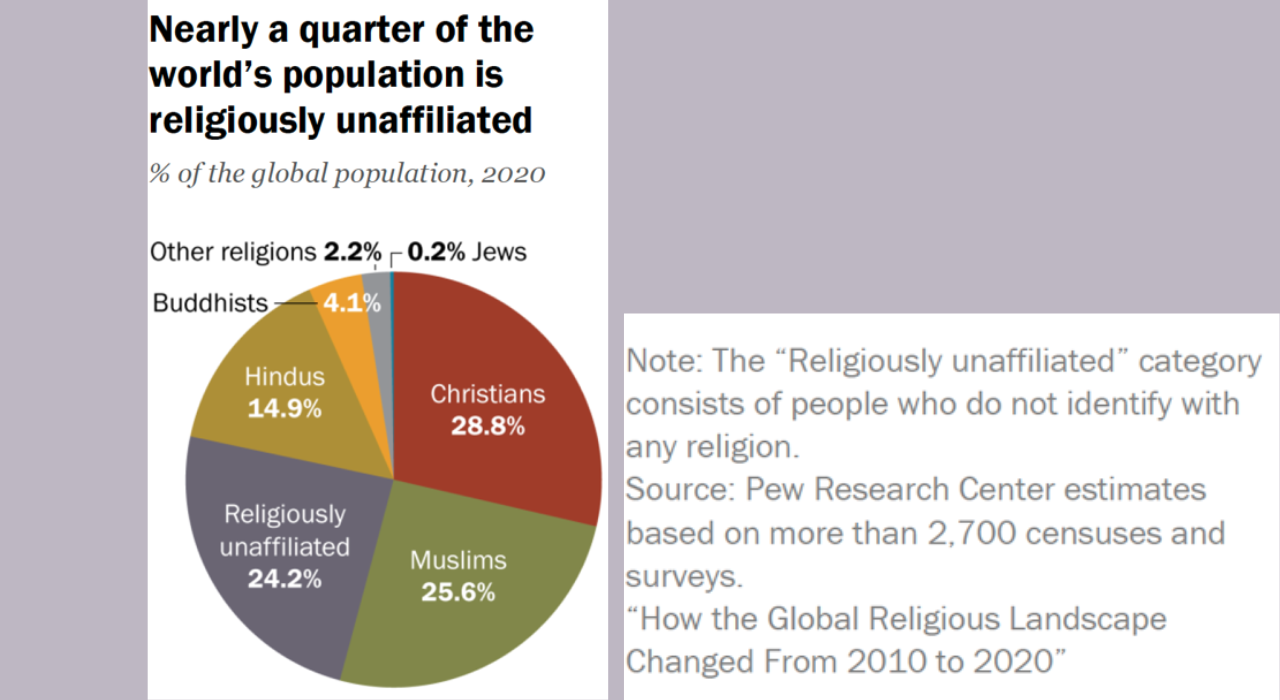
Currently, independents make up 24.2% of the global population, largely due to the Christian schism.
Since 2010, the share of the population with religious beliefs has dropped by nearly a percentage point from 76.7%, while the share with no religious affiliation has increased by a similar amount, from 23.3%.
Is “no” a non-believer?
Not all “nothings” reject belief in God or the supernatural. While they are much less likely than religious people to believe in God “as described in the Bible,” most do believe in God or some higher power. Only 29% of “no”s said there is no higher power or spiritual force in the universe. Most people are raised in a religion, usually Christianity. Their current identity reflects a break from religious institutions, not necessarily a rejection of all spiritual beliefs. Their institutional disengagement is evident: 90 percent of the religiously unaffiliated say they rarely or never attend religious services. Nothing is not a monolith when it comes to science and religion. Most people reject the idea that science can explain everything. At the same time, they have a more positive view of science than religious Americans. In the survey, 43 percent said religion does more harm than good in American society, but many also acknowledged that religion can provide meaning and encourage people to be kind to one another. Their views are mixed rather than uniformly hostile.
Growth despite ‘demographic disadvantage’
The expansion of independents is notable because they face structural headwinds from a demographic perspective. Globally, independents make up the smallest share of children under 15 (19%), while Muslims make up the smallest share of adults aged 50 and over (13%). On average, the nonreligious population is older and has lower fertility rates than many religious groups. From a demographic perspective, this puts them at a disadvantage compared to groups with younger age structures and higher birth rates. However, their share of the global population has increased. The reason lies mainly in the change of religious beliefs.
Religious Conversion: Key Drivers
The Pew Research Center analysis of 117 countries and territories compared adults ages 18 to 54’s views of the religion they grew up in with their current religious identity. Religious conversions tend to occur early in life, so this age range reflects recent changes.Globally, 3.2 out of 10 adults who grew up without a religious affiliation and joined a religion have left it entirely. For every 100 people aged 18 to 54 who have no religious affiliation, 7.5 people leave the non-religious group and 24.2 join the non-religious group, a net increase of 16.7 people. As a result, the non-religious receive the greatest net benefit from conversion.Christians experienced the greatest net loss: for every 1.0 people who joined Christianity, 3.1 people left. Most former Christians no longer have a religious affiliation, but some join other religions. Buddhists also leave more than they arrive, with 1.8 Buddhists leaving for every 1.0 Buddhists who join.
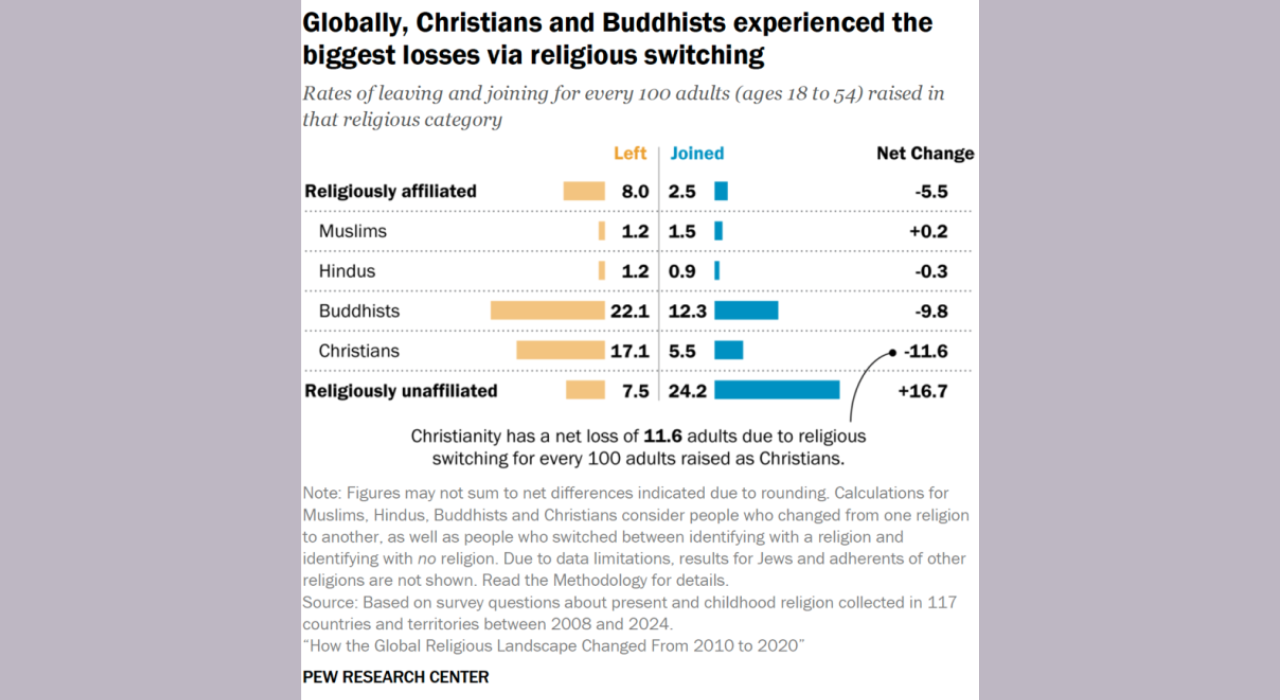
Despite older ages and lower fertility rates, religious conversion, especially Christians abandoning their faith, has increased the number of the religiously unaffiliated to 1.9 billion.
Hindus leave slightly more than they arrive, while the reverse is true for Muslims. However, transitions into and out of Hinduism and Islam remain relatively uncommon, so these rates have little overall impact on their global population sizes.The shift helps explain why Christians have declined as a share of the global population despite relatively high fertility rates, and why independents have increased as a share of the human population despite an aging age structure and lower fertility rates.
changes at national level
Between 2010 and 2020, the number of religiously unaffiliated people increased by at least 5 percentage points in 35 countries. A percentage point is the simple numerical difference between two percentages. For example, if a group comprised 10% of a country’s population in 2010 and 15% in 2020, that would represent an increase of 5 percentage points. This is not the same as a 5% increase in the number of people; it reflects a change in the proportion of the total population.The largest increase in the non-affiliated share was in the United States, which increased by 13 percentage points, Uruguay, which increased by 16 percentage points, and Chile and Australia, which both increased by 17 percentage points. These shifts represent significant changes in religious identity over a relatively short period of time.Meanwhile, in 41 countries, Christians have experienced significant declines, which the study defines as a decline of at least 5 percentage points, more than any other religious group. In all cases but one, Christianity declined as a share of the national population. The decline ranged from 5 percentage points in Benin to 14 percentage points in the United States and 20 percentage points in Australia.These changes transformed religious majorities in some countries. As of 2020, Christians remain a majority in 120 countries and territories, down from 124 in 2010. The proportion of Christians fell below 50% in the UK (49%), Australia (47%), France (46%) and Uruguay (44%). In these countries, the non-religious now make up 40% or more of the population.
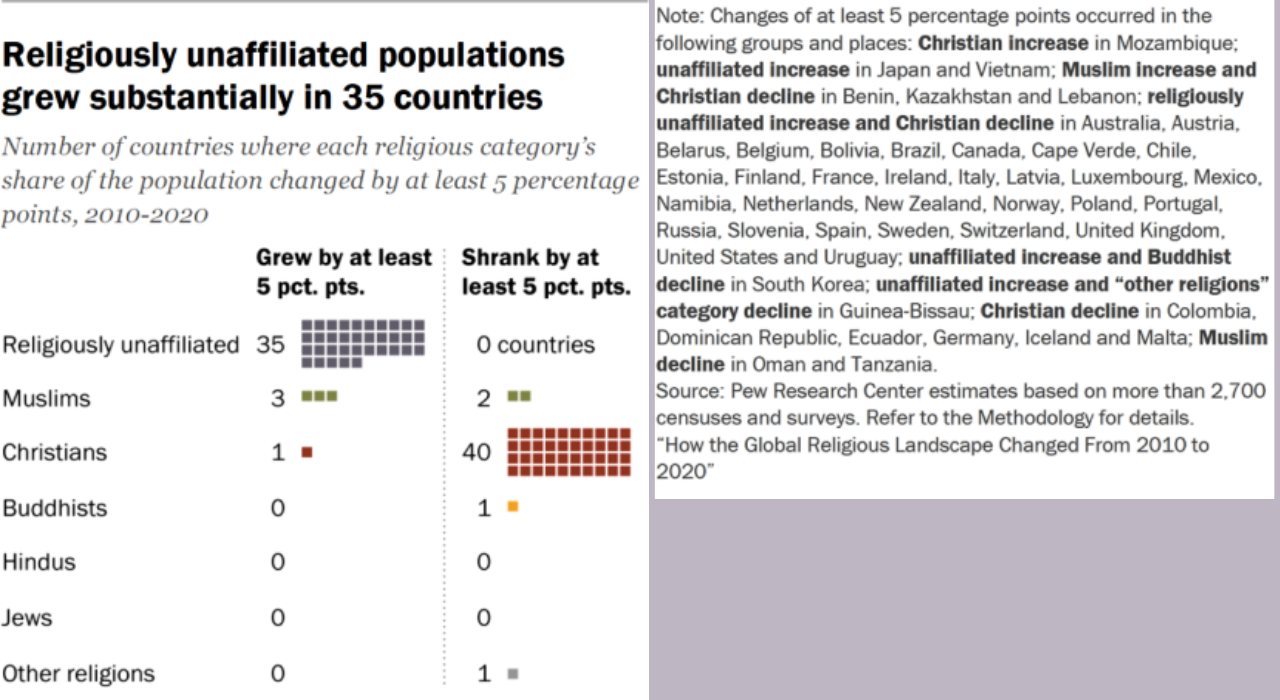
Between 2010 and 2020, the number of religiously unaffiliated people increased by at least 5 percentage points in 35 countries.
Over the course of a decade, the number of nonpartisan majorities increased from 7 to 10 seats. The Netherlands (54%), Uruguay (52%) and New Zealand (51%) join China, North Korea, the Czech Republic, Hong Kong, Vietnam, Macau and Japan, which already had nonpartisan majorities in 2010.In contrast, there was no change in the number of Muslim-majority countries (53), Buddhist-majority countries (7), Jewish-majority countries (1), or “other religion”-majority countries (1), suggesting a more stable distribution of these religions over the same period.
A place where “nothing” is concentrated
China still has the largest population of non-religious people. In 2020, approximately 1.3 billion people (about 90% of the population) identified as independents.The United States currently has the second largest population, with approximately 101 million “non-believers”, a 97% increase from 10 years ago. They make up about 30% of the U.S. population. Japan follows closely behind, with 73 million unrelated people, a year-on-year increase of 8%, accounting for 57% of its total population.
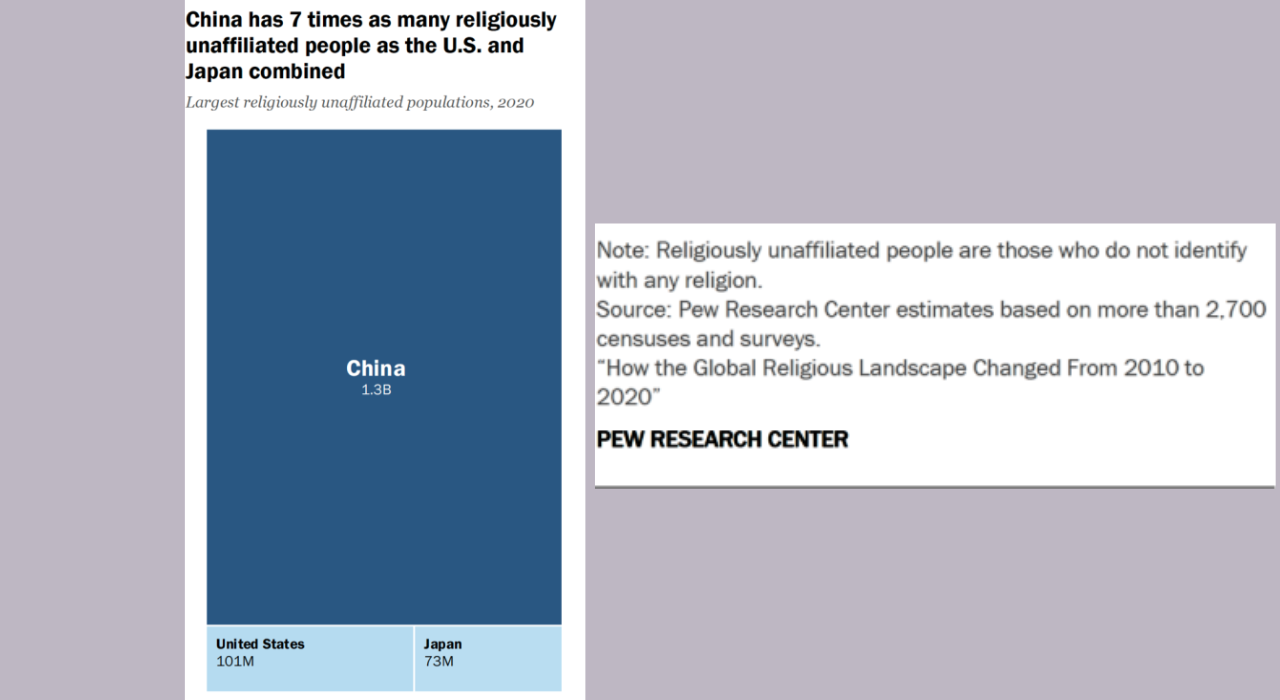
China, the United States and Japan are the countries with the largest non-religious populations in the world.
The unrelated population in China alone is approximately seven times the combined populations of the United States and Japan. Together, these three countries account for a large portion of the global unrelated population.
A note on age patterns and Simpson’s paradox
Globally, unrelated people are older on average than related people. At the national level, however, the opposite pattern often emerges. In China, Japan, and most European and American countries, including the United States, independents are younger than partisans. This apparent contradiction is an example of Simpson’s Paradox. Because China and Japan have large populations and high median ages, their demographic structure largely affects the global average. Both have nonpartisan majorities and aging populations, which shift the global age structure upward.
wider global context
As the global population increased between 2010 and 2020, so did the absolute numbers of most religious groups. However, only Muslims and the non-religious have increased as a share of the world’s population during this period.Christians remain the world’s largest religious group, numbering 2.3 billion in 2020. But its global share fell by 1.8 percentage points to 28.8%. In contrast, the Muslim population grew by 347 million, more than all other religions combined, accounting for 25.6% of the global population.The number of non-religious persons also increased significantly, with an increase of 270 million, accounting for 24.2% of the total human population. Unlike many religious groups, this growth is not driven primarily by fertility rates. Rather, it stems primarily from religious disengagement, specifically Christianity. The net movement away from religion is strong enough to offset the aging of the nonreligious population and lower birth rates, reshaping the religious balance in dozens of countries.As of 2020, nearly a quarter of the world’s population has no religious affiliation. While the pace and scale of change varies by region and tradition, the overall change is sufficient to reduce the number of Christian-majority countries and increase the number of non-religious countries.