
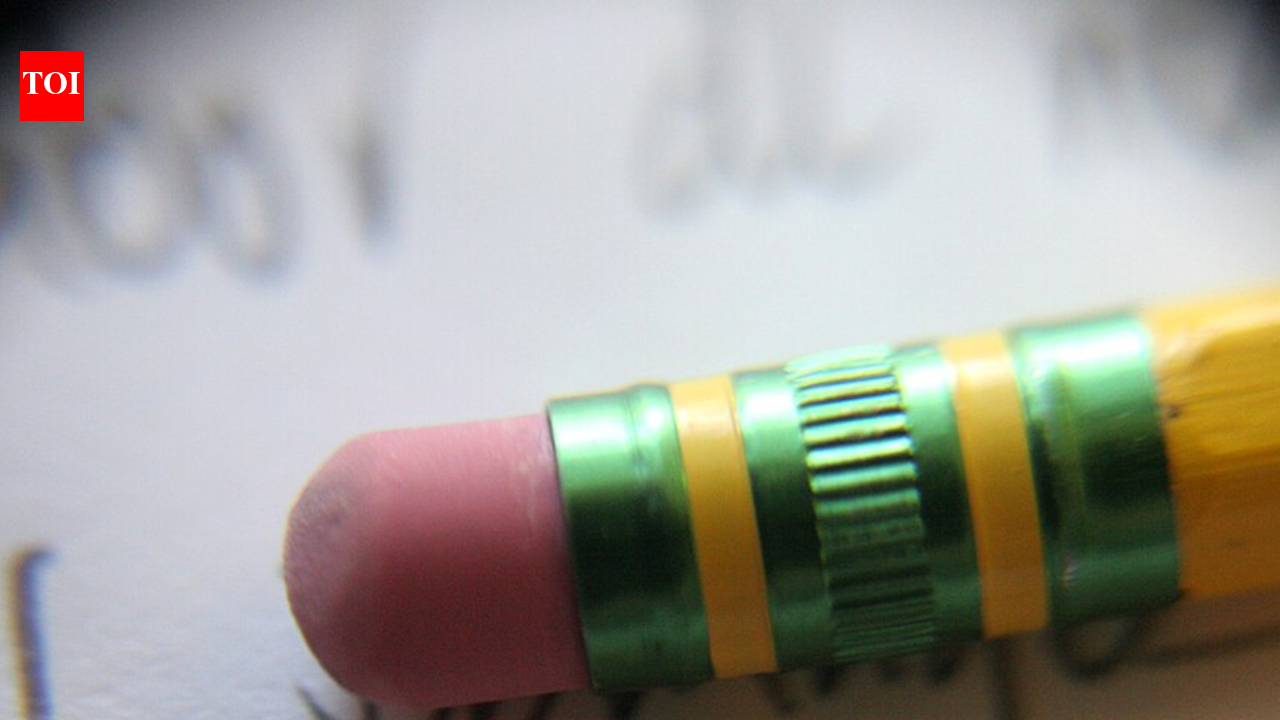
A new sheet of paper is a blank canvas, but a microscope reveals it to be a wild, tangled jungle of cellulose fibers. “Every time you drag the pencil across the grid, you create a little structural collapse.Pencil lead is not made of lead. Instead, they are made from graphite, a crystalline form of carbon that looks like a pile of paper. The pressure of your hand shears these carbon layers, sending a cascade of tiny flakes into the paper’s fibrous valleys.They are held together not by permanent chemical bonds, but by a delicate molecular handshake. It’s a gentle reminder of how everyday physics governs our daily work.molecular tug of warThe invisible forces that hold graphite to paper are called van der Waals interactions. These are weak, temporary electrostatic attractions that occur when clouds of electrons move randomly, creating temporary positive and negative charges between surfaces. These charges are so small that the graphite’s grip on the laptop is very weak.Enter pink rubber. The eraser works by better handling trapped carbon particles. Rubber or synthetic polymer materials have a higher bonding affinity with graphite than paper fibers. The rubber is taking over mechanically. You are pressing down on the rubber and sliding it across the page.The friction of the strokes physically breaks down the subtle van der Waals forces between paper and carbon. At the same time, the eraser’s viscoelastic matrix traps loose flakes.This is common behavior in materials science. The research is published in the journal LubricantIt was found that because graphite has weaker molecular bonds and therefore lower interlayer shear strength, particles are easily lifted and transferred when rubbed against a more cohesive, viscous anti-material.
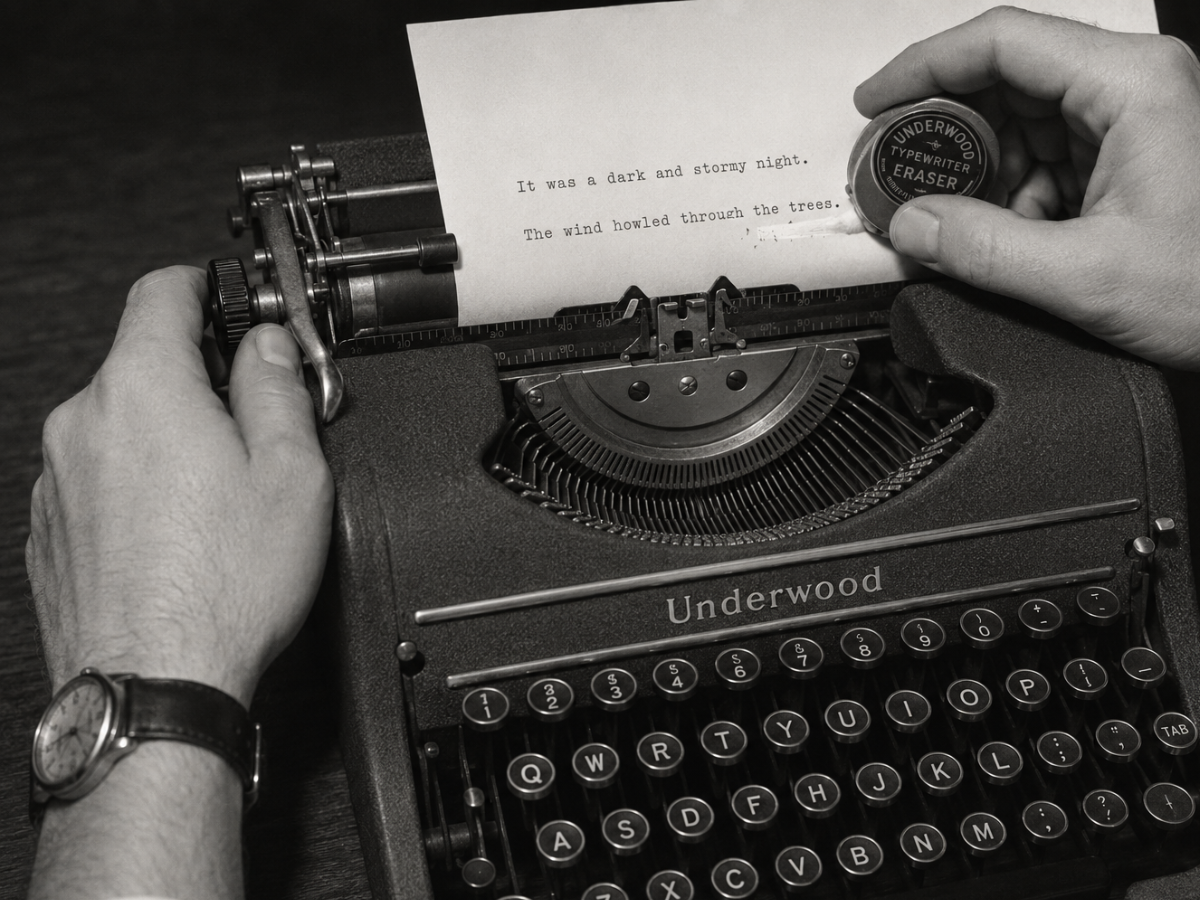
The eraser has a high affinity for graphite and can mechanically lift and capture these flakes while also slightly abrading the paper. Image source: Chatgpt
Precision micro grindingWhen you erase a typo, you’ll see the eraser leave little crumbs behind. This is entirely intentional. If the eraser didn’t self-destruct, the lifted graphite would simply coat the surface of the tool and turn the rest of the document into a gray mess.Instead, the rubber rolls back and comes off from friction, trapping the carbon into debris that you can easily brush off the table.But this is not a victimless process. It’s a little bit slightly abrasive. To cleanly pick up the deepest particles, the eraser must carefully rub against the top layer of cellulose fibers. Advanced tribology (the study of interacting surfaces in relative motion) is primarily concerned with the delicate balance between friction, load, and surface wear.For example, a paper in a journal natural materials Investigate the direct response of structural bending stiffness and graphite layer bonding properties to the application of mechanical loads. Simply put, the stiffness of the eraser determines how much it disturbs the paper fibers to grab the stranded carbon.When there is ink in the frameStandard ink is nothing like graphite. Pencil marks lie lazily on the surface of the page, while liquid ink seeps into the pores of the paper, forever hidden within the molecular network of fibers. When you try to remove regular ink with an eraser, most of the time you will see the page tearing.Modern erasable pens solve this problem by using chemistry rather than brute force. For example, Pilot uses special thermochromic inks that are sensitive to temperature changes. The eraser tip on these pens isn’t worn at all; it’s a hard piece of silicone designed to increase friction.When you rub the silicone on the page hard, the friction quickly heats the local temperature to over 140 degrees Fahrenheit. Brief microthermal waves of intense heat activate the chemical conditioners in the ink, breaking the bond between its couplers and developers. The ink doesn’t really disappear; It just becomes transparent and hides your mistakes in plain sight.