
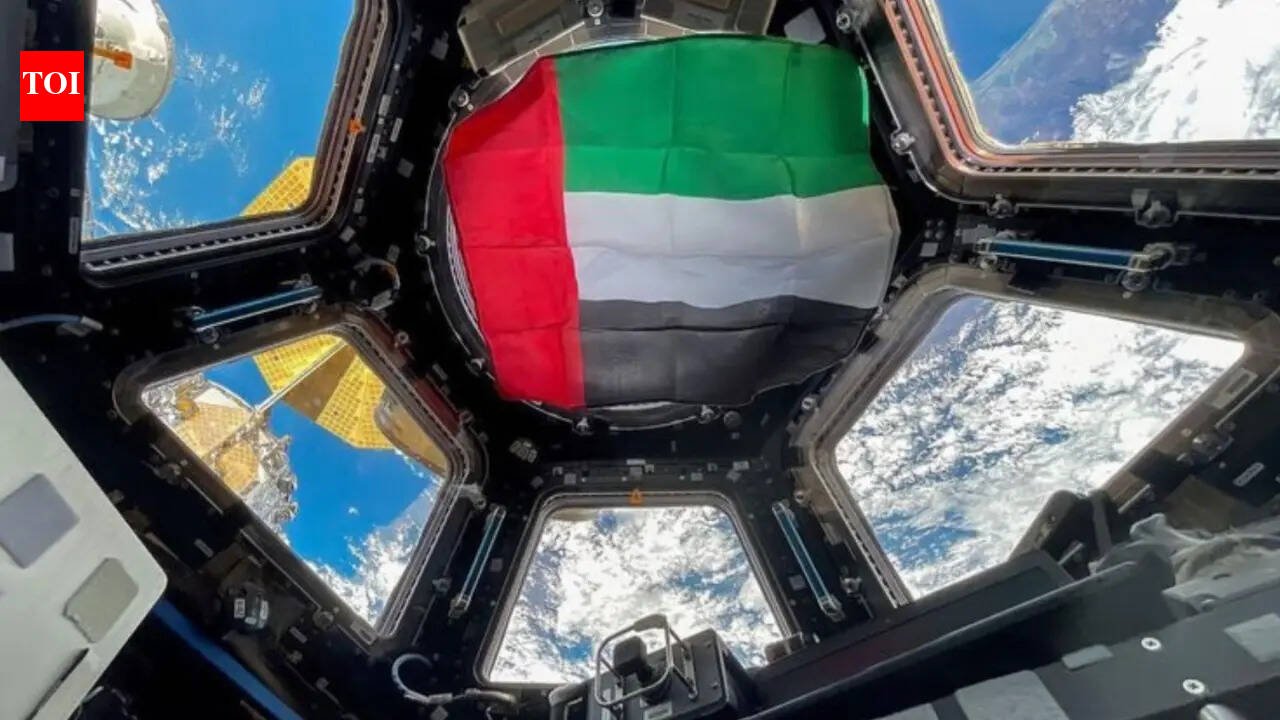
Major shifts as global space race enters decisive new phase NASA It caused a ripple effect among international partners, including the United Arab Emirates. The decision to suspend the Lunar Gateway project raised questions about the future of global lunar cooperation, but the Mohammed Bin Rashid Space Center (MBRSC) responded quickly and strategically, making its position clear: the UAE will not withdraw from the moon, but redouble its efforts.Previously, NASA confirmed that it would stop development of the Lunar Gateway “in its current form” and shift its efforts to establishing a permanent base on the lunar surface. In response, MBRSC reaffirmed its commitment to the Artemis program, its continued collaboration with NASA, and its continued involvement in the long-term vision for future lunar infrastructure. This is not just a diplomatic statement, but a signal that regardless of changes in global strategies, the UAE intends to continue to play an important role in deep space exploration.
What is the Lunar Portal?
The Lunar Gateway is designed as a space station orbiting the moon, a staging hub for astronauts traveling to the lunar surface, and a collaborative project involving multiple international partners. It’s also central to NASA’s broader Artemis program, which aims to return humans to the moon and eventually Mars.For a country like the United Arab Emirates, the gateway is more than just symbolic, it serves as a direct entry point for humanity’s deep space exploration. In fact, the UAE has committed to building a key airlock for the space station, a contribution that will enable scientific research, spacewalk operations and potential astronaut participation.
NASA’s big shift from orbit to ground and UAE’s reaction to adapt rather than withdraw
NASA’s decision marks a fundamental change in strategy. Rather than building infrastructure around the moon, the agency is now prioritizing a $20 billion lunar base, faster human presence and direct operations on the lunar surface over orbital upgrades. As part of this pivot, the Gateway project has effectively been paused or put on hold. Reasons include technical and schedule challenges, high costs and a desire to accelerate to the moon amid global competition. Notably, the move is also motivated by geopolitical exigencies, particularly the race with China to establish a sustained presence on the moon.Rather than seeing this shift as a setback, the UAE sees it as an opportunity. MBRSC welcomed NASA’s new direction, calling it a “transformative” step towards a sustained human presence on the moon, expanded lunar exploration capabilities and new avenues for international cooperation. Crucially, the UAE says it will continue to work with Artemis, aligning with the new moon base roadmap and seeking to play a role in upcoming infrastructure projects.NASA’s strategic focus has implications far beyond the United States. International partners face uncertainty as countries such as Japan, Canada and European countries have committed resources to Gateway. Now, their roles are being re-evaluated. For the UAE, however, the quick reaffirmation signals a willingness to remain relevant despite changes in the framework.The focus on a lunar base has intensified competition, as the United States aims to have a sustained presence until the late 2020s and China has a similar timeline. This transformed the moon from a symbolic destination into a strategic frontier with global influence. Gateways represent shared infrastructure and distributed responsibility, but new models may favor faster, more centralized execution and flexible partner roles. This requires countries like the UAE to continually adapt to changing mission architectures.
UAE’s larger space vision
The UAE’s response cannot be understood in isolation; it is part of a larger national strategy. Over the past decade, the country has:
- Launching the Hope Probe to Mars
- initiated
Emirates Airlines moon landing mission - Invest in astronaut programs and advanced research
Its approach combines scientific ambition, soft power and long-term economic diversification. By aligning itself with NASA’s evolving plans, the UAE is ensuring that it remains in the future of space, rather than sitting on the sidelines. Despite the optimistic tone, uncertainty remains:
- What will happen to gateway-related investments in the UAE?
- Will existing donations be repurposed or deferred?
- How will the new moon base model redefine the role of partners?
NASA said some gateway components may be reused, but details are still emerging. Currently, international partners are in a phase of recalibration rather than retreat.The future roadmap is ambitious, including increasing robotic lunar missions, planning to achieve human landings around 2028, gradually building a permanent lunar base, and expanding Mars exploration. For the UAE, the key question is not whether to participate, but how deeply to integrate into the next phase.