
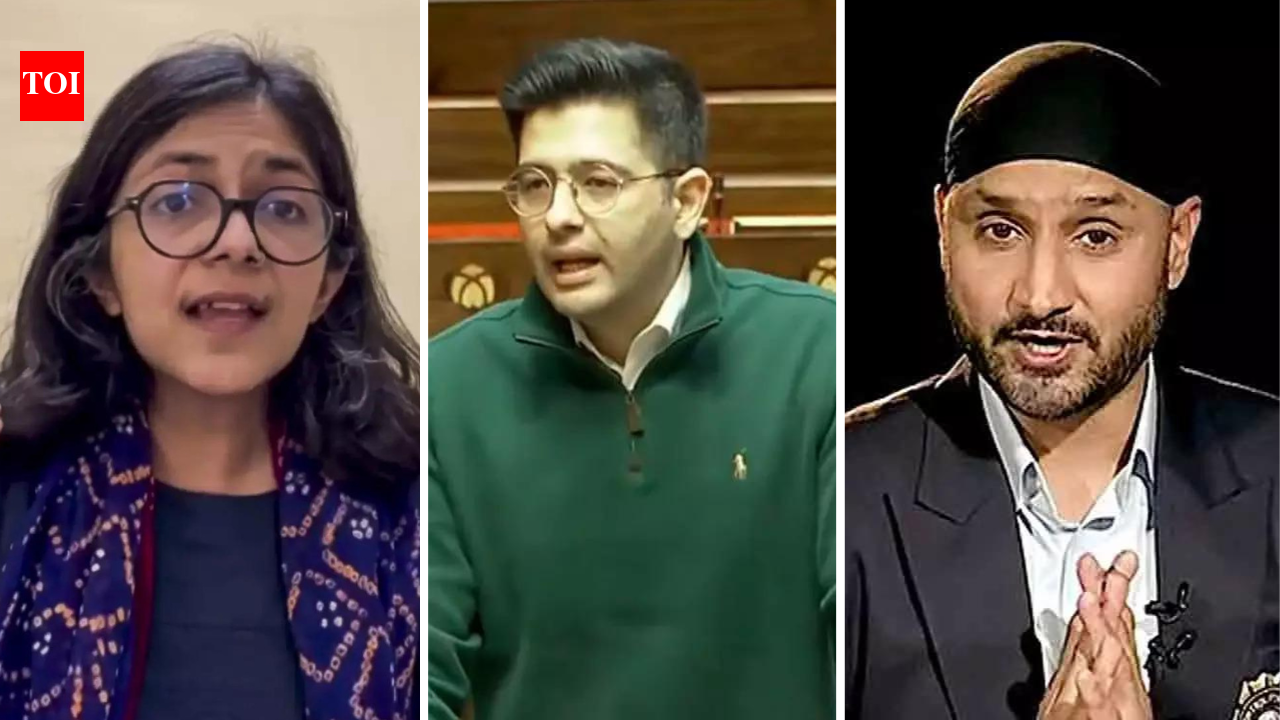
New Delhi: Rajya Sabha MP Raghav Chadha’s announcement to quit the BJP and join the BJP is not an isolated move. It is related to specific constitutional provisions involving terms such as “two-thirds” and “merger.”““We have decided that we, the 2/3 members of the AAP who are members of the Lok Sabha, will implement the provisions of the Constitution of India and merge with the BJP,” he told a press conference.
Here’s why it’s important:
If at least two-thirds of a party’s members in the House of Representatives agree to merge with another party, it is considered a valid merger rather than a defection. In this case, members will not be disqualified under the anti-defection law, making this provision crucial for group-level political reorganization like the one announced by MPs.Currently, there are 10 members from the AAP in the Union House. After this move, two-thirds, or 7, will merge with the BJP. If the number were any lower, those seeking amalgamation would have to give up their membership in the House of Lords.Therefore, if Chadha withdraws alone, he will have to give up his membership of the House of Federation. But that is not the case and the outgoing AAP leaders include Swati Maliwal, Harbhajan Singh, Sandeep Pathak, Ashok Mittal, Rajinder Gupta and Vikram Sahni.Under the Tenth Schedule of the Constitution, the anti-defection law aims to prevent MPs from changing parties after being elected and to maintain stability in Parliament, including the House of Federation. If a member voluntarily renounces party membership or votes against the whip, the member will be disqualified.In the House of Federation, the decision to disqualify is taken by the President on a petition from another member. However, the law also provides for exceptions to mergers, and this is where the “two thirds” condition becomes important.