
this us The stock market is gearing up for one of the biggest structural changes in decades as several major exchanges plan to introduce 23×5 trading from December 6.
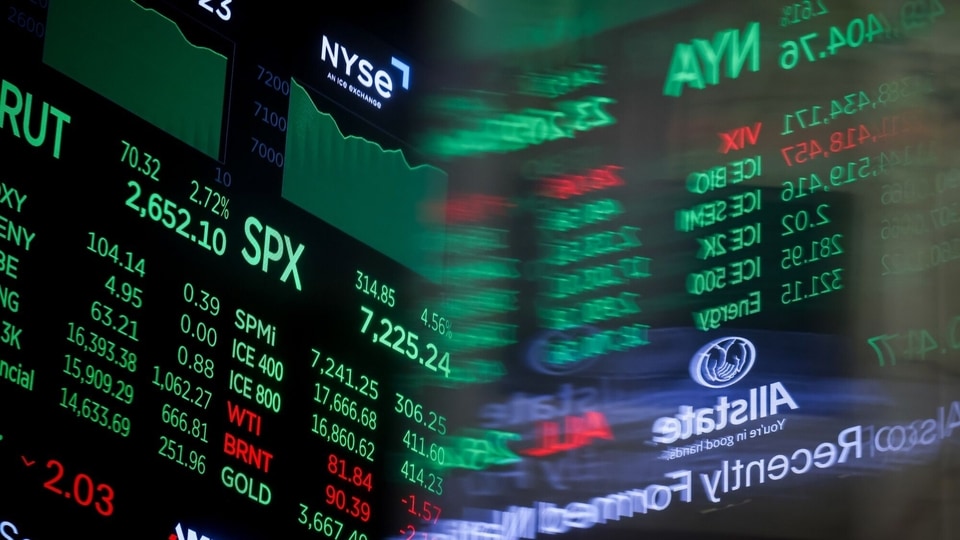
NasdaqNYSE Arca, Cboe EDGX, MEMX and 24X extend trading hours beyond traditional market hours. The Securities Information Processor (SIP) will also run overnight for the first time, which will create comprehensive quotes and trade reports for nearly the entire trading day.
Bloomberg The shift means more than just longer market trading hours, as it fundamentally changes how investors react to overnight news and price action.
Why an overnight trade matters more than its volume
Although overnight trading currently accounts for only 0.8% of U.S. dollar equity trading volume, according to U.S. Securities and Exchange Commission According to staff data, these times produce disproportionately large price swings.
A Bloomberg analysis based on a decade of futures, news and events data found that price risk in overnight trading sessions is two to three times higher than its trading volume suggests.
The study found that trading between 9 p.m. and 4 a.m. Eastern time accounted for about 5% of S&P 500 futures volume but contributed 14% of daily price variance. Nasdaq 100 futures show a similar pattern, with about 6% of volume accounting for 12% of the daily price movement.
This means relatively little money changes hands overnight, but prices tend to move wildly as major global developments occur while U.S. stock exchanges remain closed.
Bloomberg noted that prior to December 6, investors holding stocks overnight had two main options. They can hedge their exposure through the futures market or take an opening price gap when Wall Street reopens. The launch of exchange-based overnight trading adds a third option, allowing investors to trade stocks and ETFs when major news is released.
Asian and European markets
The introduction of overnight trading comes amid a significant increase in global participation in the U.S. market. International investors are increasingly looking to Wall Street from Asia and Europe, where important economic announcements and corporate earnings often occur during the U.S. nighttime hours.
According to Bloomberg, nearly 44% of weekday evenings see at least one piece of major news involving the suspension of trading in U.S. listed companies while regular U.S. exchanges are closed.
For example, by comparison, the Bank of Japan’s decision increases Nasdaq 100 futures price differentials by about 3x within an hour of release, and by about 11x on any U.S. election and referendum night.
Asian and European technology companies often report earnings when U.S. markets are closed. These announcements tend to trigger large moves in the underlying U.S. stocks.
Bloomberg cited ASML’s financial report released on January 29, 2025 as an example. The Dutch chip equipment maker’s U.S.-listed shares opened 6.4% higher after the Dutch chip equipment maker reported results overnight in the United States. U.S. semiconductor equipment companies such as Lam Research, Applied Materials and KLA also rose between 2.6% and 4.1%, while broad-cap ETFs were little changed.
Bloomberg found that in 121 financial reports released by companies such as TSMC, Samsung, SK Hynix, Tokyo Electronics and ASML since 2016, the opening price fluctuations of U.S. chip equipment stocks were about 2.6 times the normal level.
Liquidity, spreads and what investors should pay attention to after December 6
Institutional participation is expected to gradually increase as trading hours extend.
According to Bloomberg, overnight trading currently occurs primarily through alternative trading systems rather than public exchanges. The introduction of exchange-based overnight trading introduced uniform pricing and market-wide price protection that did not previously exist during these hours.
Participants in the September SEC Roundtable It is said It said institutions may begin overnight trading during major events such as earnings reports, elections and geopolitical developments before expanding activity more broadly.
The SEC’s Office of Analysis and Research reported that the 10 most actively traded stocks now account for 51% of overnight dollar trading volume, compared with 21% during regular market hours.
transaction costs and changes
Bloomberg research found that overnight bid-ask spreads for S&P 500 futures typically widened only about 20% to 40% on the most volatile nights, despite the sharp increase in price differentials. The exception is during extreme market shocks, such as the pandemic-induced sell-off in March 2020.
Experts say investors should keep a close eye on exchange-traded overnight stocks for similar liquidity after Dec. 6.
The shift will also affect market data.
Bloomberg noted that volume-weighted average price (VWAP), trading volume and trade date calculations will begin to accumulate around 9 p.m. ET, even for companies that choose not to participate in overnight trading.
That means execution desks, brokers and institutional investors will need to determine whether their benchmarks reflect the entire trading session or just regular trading hours on Wall Street.
Bloomberg advises firms to first monitor overnight prices, news flows and economic events, then expand trading activity as liquidity improves.