
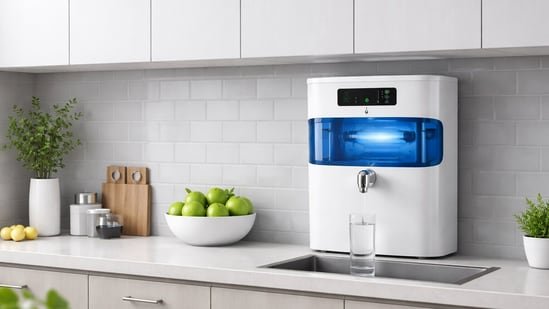
Clear water often gives people a sense of security, but that’s not always the whole story. In many homes, tap water may appear to be perfect, but it can still harbor harmful microorganisms such as bacteria and viruses. These invisible contaminants can enter through aging pipes, overhead tanks or storage systems, especially in urban homes.


This is where UV water purifiers really come into play. Instead of changing the taste or wasting water, it uses UV light to neutralize harmful bacteria, making your drinking water safer without unnecessary complexity. For households using municipal water supplies with acceptable TDS levels, UV purifiers can be a practical and cost-effective solution.
It adds an extra layer of protection without requiring a lot of maintenance or wasting water like other systems. If safe daily drinking water is your top priority, understanding how UV purification works can help you make smarter choices for your home.
Why “Looking Clean” Water Is Still Unsafe
Most of us believe what we see. If water looks clear, we assume it is clean, but harmful microorganisms do not. In urban households, water usually comes from municipal supplies and is treated before distribution. However, the journey doesn’t end there. Water flows through long pipes that may be old or poorly maintained. Contamination can still occur during this process.
The problem usually starts here:
Old or damaged pipes: Water travels long distances and may carry contaminants along the way
Overhead and underground tanks: A poorly cleaned water tank can be a breeding ground for bacteria
Home storage: Even clean water can become contaminated if stored for a long time
No obvious signs: You won’t see, smell or taste these bacteria
This is why relying solely on appearance can be misleading.
What is a UV water purifier and how it works
UV water purifiers are designed to address microbial contamination in a simple way.
Here’s how it works:
- Water passes through chamber exposed to UV light
- UV light neutralizes bacteria and viruses, rendering them inactive
- This process occurs immediately as water flows through
What it doesn’t do:
- It does not remove dissolved salts (TDS)
- It does not change the taste or smell
This makes it ideal for homes where water quality is already good, but safety is still an issue.
Why UV Water Purifiers Make Sense for Many Homes
If your water looks clean but you still want to be safe, UV purification may be a practical option.
Here’s why:
Kill harmful microorganisms: One of the biggest advantages is that it effectively kills harmful microorganisms without adding chemicals or changing the natural composition of the water. You get safe drinking water while retaining essential minerals.
Don’t waste water: Another major benefit is zero water waste. Unlike some purification methods that discard large amounts of water, UV purifiers treat water without wasting it. This makes them a more environmentally friendly option, especially in cities where water conservation is becoming increasingly important.
Preserve essential minerals: Keeps the water’s natural ingredients intact.
Low maintenance: Maintenance is also relatively simple. Since there are fewer components involved, you don’t have to worry about frequent filter replacements or high repair costs.
Quick purification: Not storing or delaying access to safe water.
UV vs. Reverse Osmosis: Do You Really Need a Reverse Osmosis Purifier?
This is one of the biggest confusions when buying a water purifier.
Here’s a simple way to understand it:
RO (reverse osmosis) purifiers are designed to remove dissolved impurities, including salts and heavy metals. They are ideal for areas with high TDS (Total Dissolved Solids) water content, such as well water or brackish water.
Select RO if the following conditions are met:
Water with high TDS (salt water or hard water)
The water source is well water or tanker water
Concerns about heavy metals
Our top RO water purifiers for you
UV purifiers, on the other hand, focus on eliminating bacteria and viruses without changing the composition of the water. They are more appropriate when the concern is safety rather than severe contamination.
Select a UV if the following conditions are met:
Water TDS is low or acceptable
Source: municipal supply
The main concern is bacteria and viruses
Our top-rated UV water purifiers for you
Also remember:
- RO systems waste a lot of water
- UV systems more efficiently meet basic purification needs
Should you consider a UV water purifier?
You should consider it if:
- If you live in a city and rely on municipal water supplies, a UV purifier can add an extra layer of security. Even if water is treated at the source, the risk of contamination during transportation remains.
- This is also a good option for apartment living as the water is stored in an overhead tank. These tanks are not always cleaned regularly, increasing the chance of microbial growth.
- Homes with low TDS water will benefit the most because they don’t require as much filtration. Instead, they only need to protect against invisible contaminants.
- If you prefer a low-maintenance, affordable option without any complications, UV purifiers are perfect for daily use.
Especially useful for households who want safe water without making things overly complicated.
Common mistakes people make when choosing a water purifier
Many buyers end up choosing the wrong purifier because of a few simple mistakes:
- Assume RO is always better
- Not checking TDS levels before buying
- ignore water source
- Spend money on features they don’t need
- Ignore maintenance costs
Avoiding these can save you money and ensure better results.
Things to check before buying a UV water purifier
Know your water source: UV purifiers are best suited for municipal water supplies where TDS levels are already very low and the main concern is microbial contamination.
Check TDS levels beforehand: Be sure to test the TDS level of the water to ensure RO purification is not required as UV light alone cannot remove dissolved salts or heavy metals.
Looking for pre-filter support: If your water contains visible dirt or sediment, make sure the purifier includes or supports a sediment filter for better overall performance.
Consider storage and usage requirements: Choose a water purifier capacity that matches your household size and daily water usage to avoid inconvenience during peak usage times.
Assessment Service and Maintenance: Choose a brand that provides reliable service in your area, as timely maintenance and replacement of UV lamps is important to maintain consistent performance.
Consider long-term costs: In addition to the purchase price, consider electricity usage, annual maintenance and replacement parts to get an idea of the total cost of ownership.
Give you similar stories
Tired of filter costs? These 10 water purifiers cost zero for 2 years
Disclaimer: At Hindustan Times, we help you stay updated with the latest trends and products. Hindustan Times has affiliate partnerships, so we may get a share of the revenue when you make a purchase. We are not responsible for any claims relating to the products under applicable law (including but not limited to the Consumer Protection Act 2019). The products listed in this article are in no particular order of preference.