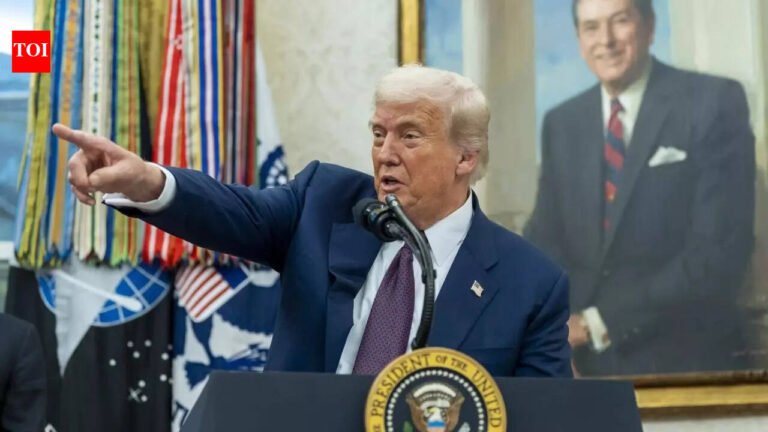
President of the United States Donald Trump He said on Saturday that there were still multiple “exits” to the U.S. military campaign against Iran, suggesting that although the operation is broad, it may be short-lived. In a five-minute phone interview with Axios from Mar-a-Lago, Trump said he could either “take over the whole thing for a long time” or end the attacks in a matter of days and warned Tehran not to rebuild its nuclear and missile programs.“I could take over the whole thing for a long time, or end it in two or three days and tell the Iranians: ‘If you start rebuilding, see you in a few years. [your nuclear and missile programs],” Trump said.“In any case, it will take them several years to recover from this attack,” he predicted.The comments provide the first real window into Trump’s thinking about how the operation will end and show that he remains open to a diplomatic solution even after U.S.-Iran nuclear talks collapsed in Geneva. A new ultimatum following a short period of action would have a very different outcome than the regime change that some U.S. and Israeli officials have described as the goal. Trump faces domestic pressure, including from his MAGA base, to avoid long-term intervention in the Middle East.Trump cited two main reasons for the attack, the first being the failure of negotiations this week led by his special envoys Steve Witkopf and Jared Kushner.“The Iranians approached, then retreated – approached, then retreated. What I learned from that was that they didn’t really want to make a deal,” he said.The second reason is Iran’s behavior over the past few decades.Trump said that as he wrote the speech announcing the attack on Friday, he asked his team to catalog every Iran-related attack around the world over the past 25 years.“I see them every month doing something bad, blowing something up or killing someone,” he told Axios.Trump also claimed that Iran had begun rebuilding some of the nuclear facilities attacked by the United States and Israel during the 12-day war last June. Independent analysts pointed out that some nuclear facilities are undergoing construction activities, but did not conclude that Iran has resumed nuclear activities.Trump has repeatedly reiterated that his decision to launch Operation Midnight Hammer – which destroyed or seriously damaged three of Iran’s nuclear facilities – made the current operation possible. He argued that if he had not attacked the nuclear facility in June, Iran might have developed nuclear weapons by now, which would have prevented it from launching an attack.The United States and Israel have launched what is considered the most ambitious military campaign in the Middle East in a generation, aiming not only to weaken Iran’s military capabilities but also to create the conditions for overthrowing the regime.U.S. and Israeli operational plans anticipate the massive bombing campaign to last at least five days, according to a senior U.S. official. However, Trump told Axios the timeline could change based on developments on the ground, including the fate of Supreme Leader Ali Khamenei, who and other senior officials have been targeted for assassination by Israel.
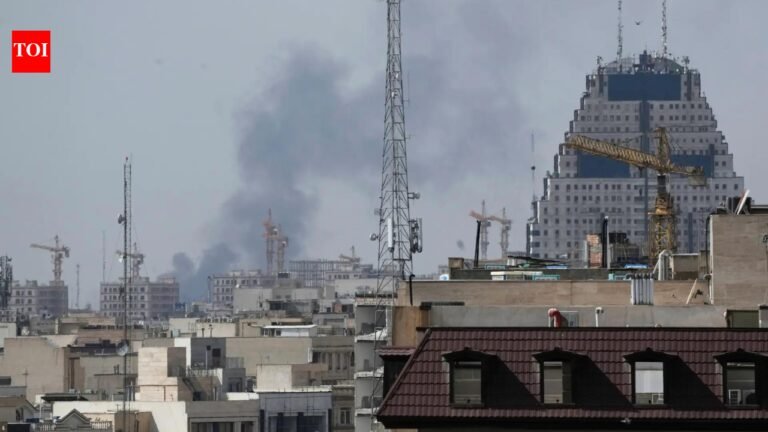
India walks a tightrope in Iran conflict
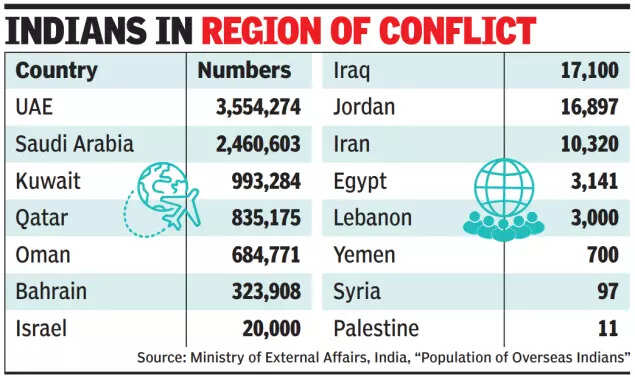
New Delhi: India is deeply concerned about recent developments in Iran and the Gulf region, the government said on Saturday, hours after the United States and Israel launched joint military operations against Iran and targeted Gulf states where Washington has military assets in retaliation. While seeking security for civilians in a region home to nearly ten million Indian expatriates, the Indian government, in its tough balancing act, has stressed the need to protect the sovereignty and territorial integrity of all countries.External Affairs Minister S Jaishankar held separate phone calls with his Iranian and Israeli counterparts Seyyed Abbas Araghchi and Gideon Sarr, expressing deep concern and reiterated India’s call for de-escalation of tensions through dialogue and diplomacy. During the evening, Jaishankar also spoke to his counterparts in the UAE, Qatar, Kuwait and Bahrain, seeking their cooperation to ensure the well-being of the Indian community.

India’s Ministry of External Affairs’ response in the form of a statement was carefully calibrated, saying dialogue and diplomacy should be pursued to de-escalate tensions and resolve underlying issues. “We urge all parties to exercise restraint, avoid escalation and prioritize the safety and security of civilians,” the MEA said, adding that Indian missions in the Gulf are in touch with Indian nationals and have issued appropriate advisories asking them to remain vigilant and adhere to local security guidance. There are nearly 40,000 Indian citizens in Israel and 6,000 to 10,000 in Iran.As the United States and Israel reportedly try to broker regime change in Iran, India is once again forced to walk a diplomatic tightrope between a stable relationship with Iran based on shared regional interests and clear signs of improvement in India’s key relationship with the United States after a period of extreme turmoil.The attack on Iran also came less than 48 hours after Indian Prime Minister Narendra Modi and Israeli Prime Minister Benjamin Netanyahu held a bilateral meeting in Israel, where the two leaders discussed US-Iran tensions, with Modi expressing India’s support for any efforts to resolve the issue peacefully if necessary. It is worth noting that during his visit at a time of intensified friction between the United States and Iran, Modi stated in his media speech that peace and security in West Asia are directly related to India’s security interests.The Gulf region is also one of India’s most important and reliable sources of oil and gas. The welfare of the diaspora is a top priority for the government and is one of the largest sources of remittances in India. The GCC countries – Bahrain, Kuwait, Oman, Qatar, Saudi Arabia and the United Arab Emirates – are also India’s largest trading partner group.While India has deepened its strategic partnership with Israel over the past decade, its relations with the Gulf countries have also undergone a complete transformation during this period. In fact, India now has strategic partnerships with five of the six GCC countries, moving away from the traditional energy buying and selling relationship to other areas such as defense and security, investment, connectivity and technology.India will be concerned about the impact a full-scale regional war could have on the India-Middle East-Europe Economic Corridor (IMEEC) project, which has been delayed by instability in West Asia. During his visit to Israel, Modi said that the two countries will promote initiatives such as IMEEC and India-Israel-UAE-US (I2U2) with new momentum to promote regional connectivity.For India, Iran remains an important regional partner, one that New Delhi has not abandoned despite President Donald Trump’s resumption of maximum pressure on Iran. In January, India joined China, Pakistan and four other countries in voting against a United Nations Human Rights Council resolution that strongly condemned the crackdown on protests in Iran and extended the mandate of a fact-finding mission in the country.Indian authorities say it is in India’s interest to maintain functional relations with Iran, especially because of its strategic position chabahar port India is helping countries develop access to Central Asia and Afghanistan, bypassing Pakistan – although the U.S. decision last year to revoke sanctions exemptions for the port, expected to take effect in late April, has made the situation even more confusing.
“Khamenei is alive”: Iranian media refutes Israeli and US accusations against supreme leader; Trump delivers important leadership speech
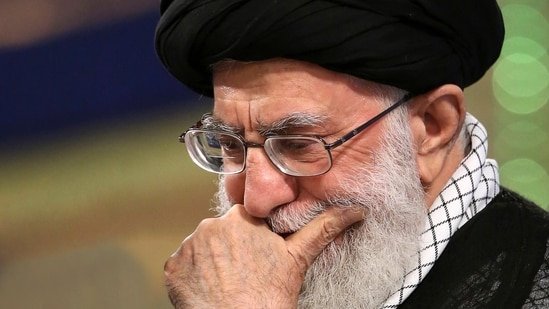
News of Khamenei’s death: Conflicting reports about Iran’s supreme leader Ayatollah Ali Khamenei dies Show up on Saturday. Despite multiple U.S. media reports, the Israeli Prime Minister Benjamin NetanyahuEven US President Donald Trump suggested the 86-year-old was killed, with an Iranian publication describing him as “commanding the battlefield with firmness and determination”.

Trump addressed the reports in an interview with NBC News. “We think it’s the right story,” he said. The 79-year-old added that much of Iran’s senior leadership had “left.”
“Most of the people who made all the decisions are gone.”
Read more: Why Ayatollah Ali Khamenei’s son Mojtaba is unlikely to become Iran’s next supreme leader
Iranian media suggests Khamenei is not dead
Iran’s Tasnim and Mahr news agencies reported that Khamenei was still commanding the field. However, they provided no evidence.
regime change in iran
Trump also talked about regime change in Iran. Asked how long U.S. operations with Israel would last, he told ABC News: “Realistically, as long as we let it. But it’s done so much damage. It’s like, they’ve basically been incapacitated for as long as we let it.”
Asked about the next leader and if one had been identified, the president added: “Yes. We have a very good idea.”
Netanyahu is Iran’s supreme leader
Israeli Prime Minister Benjamin Netanyahu said in a nationally televised address that there were “increasing signs” that Khamenei had been killed in an Israeli attack on his residence early Saturday.
“There are many signs that Khamenei has died,” Netanyahu told reporters, further urging Iranian citizens to “come to the streets and get the job done.”
Iran’s response
As reports emerged of Khamenei’s death, an Iranian official issued a warning to Israel and the United States.
“We will make Zionist criminals and despicable Americans regret it,” Ali Larijani, a senior Iranian security official, wrote in a post on his X platform, formerly known as Twitter.
He added: “The brave soldiers and great Iran will provide an unforgettable lesson to the hellish oppressors of the international order.”
Iran situation
As attacks on Iran unfold, President Trump urges the Iranian public to “take control of their own destiny” by defying Islamic leadership. In a video announcing “major combat operations,” Trump told the Iranians, “When we’re done, take over your government. It will be yours. This may be your only chance in generations.”
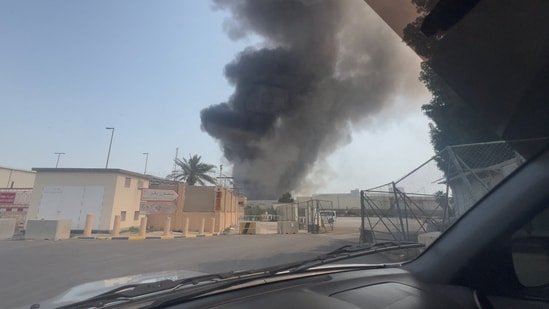
Iranian state media reported late Saturday that at least 201 people were dead and more than 700 injured, citing the Red Crescent Society. Iran retaliated by firing missiles and drones at Israeli and U.S. military bases in the region, with fighting continuing late into the night.
Some of the first attacks on Iran appeared to have occurred near the office of the 86-year-old Khamenei. Before Israeli officials confirmed the deaths, Iranian Foreign Minister Abbas Araghchi told NBC News that “as far as I know,” Khamenei and President Masoud Pezeshkian were still alive. He called the attack “unprovoked, unlawful and absolutely unlawful.”
(With AP input)
UAE markets stable amid escalation between Iran, US and Israel, food prices, stock updates: Panic buying in UAE as oil prices soar?
Amid rising geopolitical tensions in West Asia, including a recent missile exchange between Iran, the United States and Israel, unsettling Gulf cities and triggering alarm in the region, the United Arab Emirates assured the public that its markets remained stable and strategic grain reserves were secure. Despite the cyclical fluctuations in financial markets during such crises and wider concerns about supply chains, the UAE Ministry of Economy and Tourism firmly stated that all retail stores across the country have sufficient supplies of essential goods (both food and non-food) and there are no signs of shortages or disruptions.The ministry confirmed that it is actively monitoring stock levels through advanced digital systems that collect and analyze data on a daily basis, ensuring that supplies remain adequate and prices remain stable even amid heightened uncertainty across the region. Strategic reserves of key commodities remain high and diversified, and import flows continue to be normal, thanks in part to the UAE’s extensive network of global trading partners and diversified supply routes. Officials urged residents not to panic buy or overstock, stressing that the country’s resilience and preparedness will protect daily life and businesses.
Iran and US-Israel conflict raise regional tensions, UAE economy stabilizes
The reassurance comes against a backdrop of concerns not just about the supply of food and essential goods, but also about finances. market Reactions to geopolitical pressures. UAE stock indexes have fallen slightly in recent days, with shares of major developers and banks under pressure as investors react to uncertainty over deadlocked diplomatic talks and the growing possibility of conflict involving Iran. Meanwhile, oil prices climbed on worries about supply disruptions, reflecting the tight link between energy markets and regional stability.
Is there a food shortage in the UAE? Government releases major update on supply
Despite this volatility, the UAE government’s proactive policies, from diversifying import sources and strategic reserves to real-time price monitoring, appear to be providing a buffer for the broader economic ecosystem. Markets, logistics networks and supply chains remain functional, underscoring the robustness of the country’s economic framework even in times of geopolitical stress.
Why UAE food security matters now
Food security is a pressing issue in the Gulf, as the UAE relies on imports for a large portion of its food, so a secure supply chain is vital to the country’s well-being. In times of international turmoil, rapid disruption or disruption of trade corridors, for example due to maritime tensions in the Red Sea or risks in the Strait of Hormuz, can quickly increase public anxiety. However, authorities have continuously emphasized that comprehensive planning, diversified sources and strong logistics infrastructure support uninterrupted supply of essential goods.This firm stance is in line with the UAE’s broader approach to economic resilience: strengthening strategic reserves, maintaining a diversified import portfolio and leveraging world-class transport and logistics networks. These measures help ensure that no single route, region or event significantly destabilizes supplies, which is critical not only for food, but also for overall economic and social stability.
UAE public assurances and official information on Iran and the US-Israel conflict
Officials are also careful to keep residents calm and confident, urging the public to rely on verified information and avoid succumbing to rumors or fear-driven purchases. The message is part of a wider communications strategy seen in recent days, including high-level calls for stability across security and government sectors, emphasizing that the UAE’s internal environment remains stable even as external tensions persist.
Will food prices rise in the UAE? Authorities respond to soaring oil prices
At a time when conflict and diplomatic tensions in the Middle East dominate headlines, the UAE government’s message is clear: Daily life, market functioning and access to essential goods are safe, underpinned by sound economic planning and resilient supply chains. The UAE Ministry of Economy and Tourism has confirmed that the market is stable, with sufficient stocks of basic food and commodities, and adequate strategic reserves.Despite regional tensions, import activity and supply flows are proceeding normally, with no signs of shortages. Financial markets are facing some pressure due to geopolitical uncertainty, but core economic functions remain resilient. Authorities continue to monitor data in real time and are urging the public not to panic buy, reassuring residents that the country is prepared.
Israel’s Netanyahu suggests Iran’s Khamenei is dead, US issues serious warning to citizens; here’s what to do based on recommendations
On February 28, the U.S. State Department issued a warning to citizens around the world. This comes amid ongoing tensions between the United States and the two countries. Israel attack Iran.
Despite Israeli Prime Minister Benjamin Netanyahu’s claim that “there are many signs that Khamenei is no longer alive‘.
Speaking after the attack, Netanyahu said, “Today we have killed several key leaders involved in Iran’s nuclear program and we will continue to strike multiple locations of the regime. We have targeted the location of Khamenei,” adding, “There are many signs that this tyrant no longer exists. This morning we eliminated senior officials of the Ayatollah regime, Revolutionary Guard commanders, senior figures in the nuclear program – and we will continue. Over the next few days, we will strike thousands more targets of the terror regime.” “
follow: Dubai news real-time updates
However, Israeli authorities have not released any intelligence or video evidence to support this claim.
What did the US alert say?
USA alarm wrote: “As the United States launches combat operations in Iran, Americans around the world, especially in the Middle East, should follow the guidance in the latest security alert issued by the nearest U.S. embassy or consulate. Their travel may be disrupted due to scheduled airspace closures. The State Department advises Americans around the world to be more cautious.”
follow: US attacks Iran in real time
It sets out some of the steps citizens can take to receive timely alerts.
What citizens should do as recommended
The State Department notice says people should be in https://step.state.gov Get the latest security alerts. They are also advised to follow the “US Department of State – Security Updates for US Citizens” channel on WhatsApp.
The State Department notice also advises people planning to travel to carefully read travel warnings as well as country information and latest alerts on the State Department’s international travel page.
Large-scale operation against Khamenei’s residence
Netanyahu’s remarks came after Israel’s Channel 12 network reported that 30 bombs struck a building associated with Iran’s 86-year-old leader.
While Khamenei is believed to have been underground during the attack, veteran journalist Amit Siegel, who is close to Netanyahu, noted that the Iranian leader “may not have been in his bunker.” However, the report did not cite any sources.
It was unclear whether Khamenei was in the building when the attack began. The Supreme Leader has not been seen since the offensive began. Meanwhile, Iranian Foreign Minister Abbas Araghchi told NBC News that “as far as I know,” Khamenei and President Masoud Pezeshkian are still alive.
His Majesty Shah reviews border security in Seemanchal; all post-SIR deaths to be verified
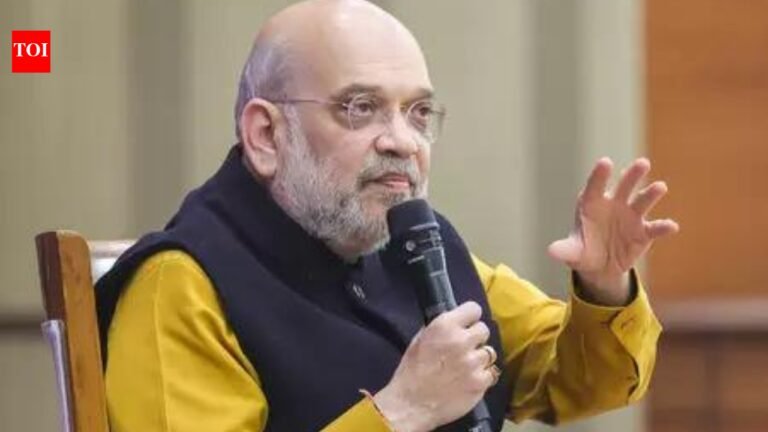
New Delhi: High-level meeting chaired by Home Minister Amit Shah In Purnea, bihar Reviewing security-related issues in border areas of the state, it was decided on Friday that all death cases reported after Special Intensified Amendment (SIR) would be thoroughly verified and matched deleted and updated in all official records including aadhaar, driving license and pan database, etc. to ensure accuracy and prevent any misuse.Central government sources told TOI that door-to-door surveys will be conducted to verify individuals reported as having migrated but were absent during the verification process, while ensuring that no genuine voters are mistakenly removed.The review meeting, attended by district magistrates and police chiefs of seven border districts in Semanchal, called for strengthening border management, increasing vigilance against illegal activities and coordinating inter-agency operations to address issues such as illegal construction, illegal immigration, circulation of fake Indian currency notes, encroachments and unauthorized movement of funds near border areas.
During the meeting, Shah called for strict implementation of a zero-tolerance policy against illegal construction, especially in forests and uninhabited areas, and ordered the immediate removal of encroachments in “no man’s land” adjacent to the international border. The border district magistrates are tasked with ensuring that all banks within their jurisdiction, including cooperative banks, comply with legal and financial regulations. All banks have been directed to comply with compliance regulations issued by the following agencies: reserve bank of indiaincluding reporting of large cash transactions and PAN linkage to bank accounts. The Bihar Chief Secretary will review the compliance, especially with regard to cooperative banks. Strict action will be taken against sub-registrars (SROs) who fail to report or report defectively large property transactions or irregularities involving cash transactions beyond the prescribed standards. The Bihar government will raise the issue with the State Level Bankers Committee (SLBC) and in consultation with the Reserve Bank of India, install note sorting machines at all bank branches along the borders while ensuring adequate penetration of the banking sector in border areas.The district magistrate has also been asked to verify major business establishments to ensure that their financing sources are legal and not related to illegal activities. In cases where properties are purchased by suspicious persons, their source of funds, purchasing power and PAN details will be thoroughly checked.
Amid Iran and US-Israel conflict, viral fake news retweets could cost you Dh200,000: Tensions fuel misinformation, UAE cracks down on online rumors
As geopolitical tensions grip the world middle EastEscalating conflicts involving Iran and U.S.-Israeli interests in particular have triggered a wave of speculation and fear online, with authorities in the United Arab Emirates issuing a stern warning to residents and digital users: Sharing or forwarding rumors from unverified sources could lead to prosecution under federal law. The move reflects the UAE’s broader efforts to curb misinformation that could harm public order, security and social stability.In a statement released through official channels, the UAE Prosecution Authority reminded the public that disseminating content from unknown or unauthorized sources constitutes a punishable offense even if it is not the original author. Officials stressed the need to rely only on verified information from recognized sources, including government platforms and recognized news media, and warned that baseless claims “can cause confusion and undermine social security and stability.”
UAE’s Information Responsibilities Under Federal Law in Iran and U.S.-Israeli Conflict
Under current legislation, in particular Federal Decree No. 34 of 2021 on combating rumors and cybercrime, individuals who republish or disseminate false information may face legal consequences, which may include imprisonment and significant fines. In past cases, courts have imposed penalties ranging from a minimum of one year in prison and fines of Dh100,000 to higher penalties (Dh200,000 and above) when rumors incited public opinion against the authorities or during national crises or emergencies.The emphasis on legitimacy is more than a mistake. Authorities have repeatedly taken action against the original sources of false posts and those who shared them: in one reported case, seven people were referred for prosecution in Ras Al Khaimah for spreading inaccurate social media content that “undermined community security and incited public opinion.”
Background: Why now? Misinformation and regional security pressure in the UAE
The warning comes amid heightened regional anxiety. Recent military and diplomatic developments involving Iran, the United States and Israel have fueled speculation, conspiracy posts and unsubstantiated claims online, ranging from alleged military operations to speculative analyzes of regional alliances. In this climate, social platforms can quickly amplify baseless content that appears authoritative but lacks official verification. These false narratives not only spread confusion but may also exacerbate fears or misunderstandings among residents and foreign communities in the UAE, which has a large expatriate population. Gulf governments and security analysts are increasingly linking misinformation to potential impacts on public safety, travel confidence and economic stability – factors that authorities want to protect as part of a resilient national infrastructure.Global experience shows that in times of geopolitical tension, rumors and unconfirmed reports can exacerbate tensions, sometimes leading to panic and even real-world behavioral shifts. This is exactly what the UAE’s messaging aims to prevent by reinforcing legal accountability and urging users to wait for information from official authorities, public prosecution channels or accredited media outlets before sharing any claims.
UAE balances security and digital freedoms amid Iran and US-Israel conflicts
The UAE’s approach reflects broader trends among governments at the intersection of national security, digital communications and civil liability. While critics sometimes express concerns about curbs on online speech, authorities consider these laws crucial to maintaining “social harmony, public order and national stability,” especially at a time of heightened international tensions.Under the current legal framework, individuals may face serious consequences if their online activities are found to include:
- Publish or spread unsubstantiated information or rumors,
- Contradicting official announcements from recognized authorities,
- incite fear, anxiety or public disorder,
- Increasing public opinion against state entities or during a crisis.
In recent years, several emirates, including Ras Al Khaimah and Abu Dhabi, have published enforcement examples to drive home the message that digital conduct has real-world legal effects.
What this means for UAE residents and social media users
For anyone active on social media in the UAE, whether a citizen, expatriate, student or tourist, the updated warning is a reminder that online behavior is governed by the law and that forwarding unsubstantiated claims during a sensitive geopolitical time can have serious consequences. In practice, this means:
- Always cross-check with official government sources before sharing news.
- Avoid forwarding messages from anonymous or unverified social media accounts.
- Please do not repost claims that may be sensational but lack evidence.
- Trust only accredited media outlets and government channels for the latest information on regional developments, security alerts and official statements
In an era where information travels at the speed of a click, the UAE’s renewed emphasis on legal responsibility aims to promote responsible online participation while contributing to a more informed and stable digital public sphere.
2 people indicted on gun charges in connection with shooting outside Utah church
SALT LAKE CITY — A federal grand jury has indicted two men on firearms charges in connection with a shooting in a Salt Lake City church parking lot last month. two people died Six others were injured.

The U.S. Attorney’s Office for the District of Utah said the indictment unsealed Friday charges 32-year-old Ryan Toutai with unlawful disposal of a firearm and 26-year-old Fineeva Maka with possession of a firearm by a felon.
Investigators used cellphone video and photos, as well as GPS ankle monitor evidence, to strap two men to a handgun recovered from the scene. The shooting incident on January 7, the U.S. Attorney’s Office said. Prosecutors accused the two men of being gang members.
The violence occurred in the back parking lot of a place of worship for The Church of Jesus Christ of Latter-day Saints, also known as the Mormon Church. Investigators said the shooting broke out due to an argument between people who knew each other and were attending the funeral. All victims are adults. No one has yet been charged in connection with the actual killing.
The church primarily serves a Tongan congregation, its website says. In the 1890s, Mormon missionaries brought their faith to the South Pacific island of Tonga. More than 25% of the Tongan American population lives in Utah, the church’s headquarters.
Dongtae and Macca are scheduled to appear in court on Tuesday. It was unclear whether they had attorneys, and The Associated Press could not immediately reach them for comment. The federal public defender’s office also could not be reached.
Police previously arrested Dongtai on suspicion of felony obstruction of justice. He was booked into jail on Saturday. A third man was also arrested on the same charges.
This article was generated from automated news agency feeds without modifications to the text.