Home Blog Page 735

Tejal Hasabnis leads India A to beat Bangladesh A by 46 runs to win Women’s Asia Cup Rising Stars 2026 | Cricket News

0

Led by Tejal Hasabnis, India A beat Bangladesh A by 46 runs to win Rising Stars Women's Asia Cup 2026 title

New Delhi: India women’s football team defeated Bangladesh by 46 runs in the final to claim the ACC Women’s Asia Cup Rising Stars title on Sunday. Batting first, India A posted a competitive score of 134/7 in 20 overs, mainly due to Tejal Hasabnis’ unbeaten half-century and the valuable contribution of the captain Radha Yadav.Openers Nandini Kashyap and Vrinda Dinesh made a solid start but failed to convert a big score while Anushka Sharma and Minnu Mani were dismissed cheaply to leave India in trouble. Tejal Hasabnis then steadied the innings with a flowing 34-ball 51, hitting three boundaries and two sixes. Radha Yadav’s crucial 36 off 30 balls supported her as India crossed the 130-run mark. Bangladesh captain Fahima Khatun led the bowling with impressive figures of 4/25, while Farjana Easmin and Fatema Jahan Sonia scored one wicket each.In response, Bangladesh’s chase never gained momentum. Opener Ishma Tanjim was dismissed early and while Shamima Sultana, Sarmin Sultana, Sadia Akter and Fahima Khatun tried to stabilize the innings with small partnerships, they struggled against India’s disciplined bowling attack. Bangladesh were eventually bowled out for 88 in 19.1 overs.India’s bowlers shared the spoils, with Prema Rawat leading the attack with 3/12, while Sonia Mendhiya and Tanuja Kanwer took two wickets each. Saima Thakor, Minnu Mani and Radha Yadav also contributed a wicket each.Tejal Hasabnis was named Man of the Match for his unbeaten half-century, capping off a dominant performance by the India A women’s team in the tournament final.

D. A hasty death: What we should know amid reports of famed Detroit jeweler’s death

0

Reports circulating on social media and local news pages describe Darrel Hasty Jr., better known as “D. Hasty,” as a prominent figure Detroit– Area jeweler, deceased. As of now, details surrounding his death have not been publicly confirmed.

Friends and family confirm death of Darrel Hasty Jr. (@mymixtapez/ X)

The hip-hop platform My Mixtapez posted on Some asked about the situation, writing: “RIP how did he die?” Others expressed shock: “Okay, what happened? Like what actually happened?”

Several comments mentioned the impact on the local community, with one user writing: “Damn dude. Hutch will never be the same again.” Another added, “Didn’t know him but looked like he had a good life. Bye man.”

Local reports identified him as Darrel Hasty Jr.

Darrel Hasty Jr’s death was confirmed by friends and family, the Detroit Metro News reported. According to reports, he is the general manager of Hutch’s Jewelry, a historic jewelry store in Oak Park, a suburb of Detroit.

Also read: Generous Detroit man drops cash at his own funeral, helicopter drops $5,000

Over the years, Hasty has become a regular at the store and is widely recognized by customers and community members, the store reported.

Hastie’s biographical details remain limited.

Cause of death has not yet been determined

As of press time, there has been no official statement confirming Hasty’s cause or time of death. Reports circulating online mainly rely on local confirmation and social media post.

Also read: What does video show after a car crashes into a Detroit airport terminal? video

More details may emerge as family members or local authorities release a formal statement.

This is a developing story and will be updated as more information becomes available.

‘Babar Azam finds himself a bit behind’: Faf du Plessis explains Pakistan star’s struggles in T20 World Cup | Cricket News

0

'Babar Azam finds himself a bit behind': Faf du Plessis explains Pakistan star's struggles at T20 World Cup
Babar Azam of Pakistan (AP Photo/Eranga Jayawardena)

pakistani star batsman Babar Azam The T20 World Cup has been a tough one so far, with only 66 runs scored in four matches and a poor strike rate. As a result, he was moved from his usual opening position to the middle order in the batting order, a move that sparked controversy.former south africa captain Fife du Plessis Backing Pakistan head coach Mike Hesson’s decision, he said it made sense given the pace of modern T20 cricket. He pointed out that the strike rate in the powerplay has increased significantly and batsmen are now required to score runs at a faster pace.

Why does Pakistan no longer trust Babar Azam? 2026 T20 World Cup

“Look, I think first of all, all great players develop their career at different stages in their career. So a guy like Babar, we’ve known for a long time that he’s one of the best players in the world. I think T20 cricket has moved forward so fast and towards batting averages that he finds himself a bit behind in batting averages,” Du Plessis said.He added, “Look at what he’s done over the past few years, especially on the power play, it’s been too fast and too forward to hit 120. Now you need to be 160-190-200-plus to maximize your hits in the first six overs.”Still, du Plessis believes Babar is still very valuable, especially on slower pitches where batting rotation is important. “So I think if you’re a guy like Mike Hutson who’s trying to figure out the best way to introduce him into the game and spin the pitch in the middle, that’s where a guy like him deserves a gold medal,” he said.He also noted that “when you come to flat-wicket, the role is not that important these days… so I can imagine that he is almost thinking about how to get the best out of Babar Azam.”

What’s in a name? The debate over renaming cities and landmarks | India News

0

What’s in a name? The debate over renaming cities and landmarks
This image is used for representative purpose only (AI-generated)

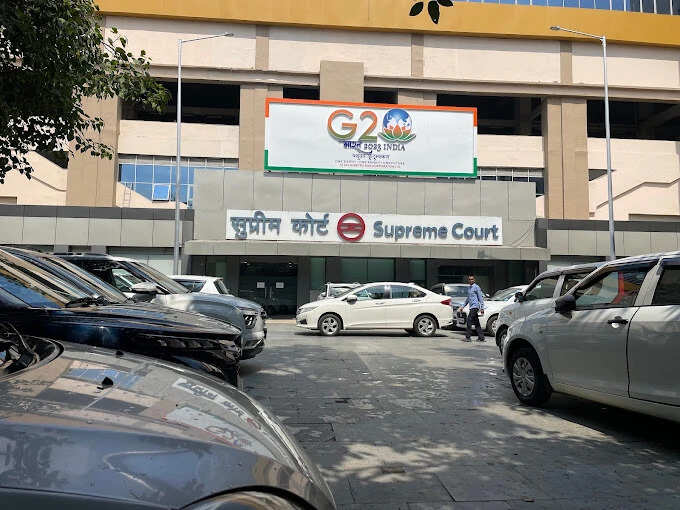
You are travelling on Delhi Metro’s Blue Line. The train slows down. A familiar announcement echoes through the coach: “Agla station hai… Supreme Court.”On the display board, it still reads in Hindi: “सुप्रीम कोर्ट.”For most commuters, it is just another stop. For a few, it sparks a question. If the country’s highest court is officially referred to in Hindi as Sarvochh Nyayalaya,” why does the station continue to use the English name? Think about it. How often do you still call Varanasi by its older, more familiar name—Banaras? Or refer to Prayagraj as Allahabad in everyday conversation? The instinct is almost automatic. Names, after all, are more than administrative labels; they are memories, habits and histories rolled into a single word.Each renaming brings with it fresh signage, updated records and official notifications. But while governments can issue gazette notifications overnight, public memory rarely updates at the same pace. This results in creating a visible overlap of the past and the present, where old names continue in conversation and memory, even as new ones appear on official boards, documents and public announcements.

From Seva Teerth to metro maps: How a name is reshaping public space and law

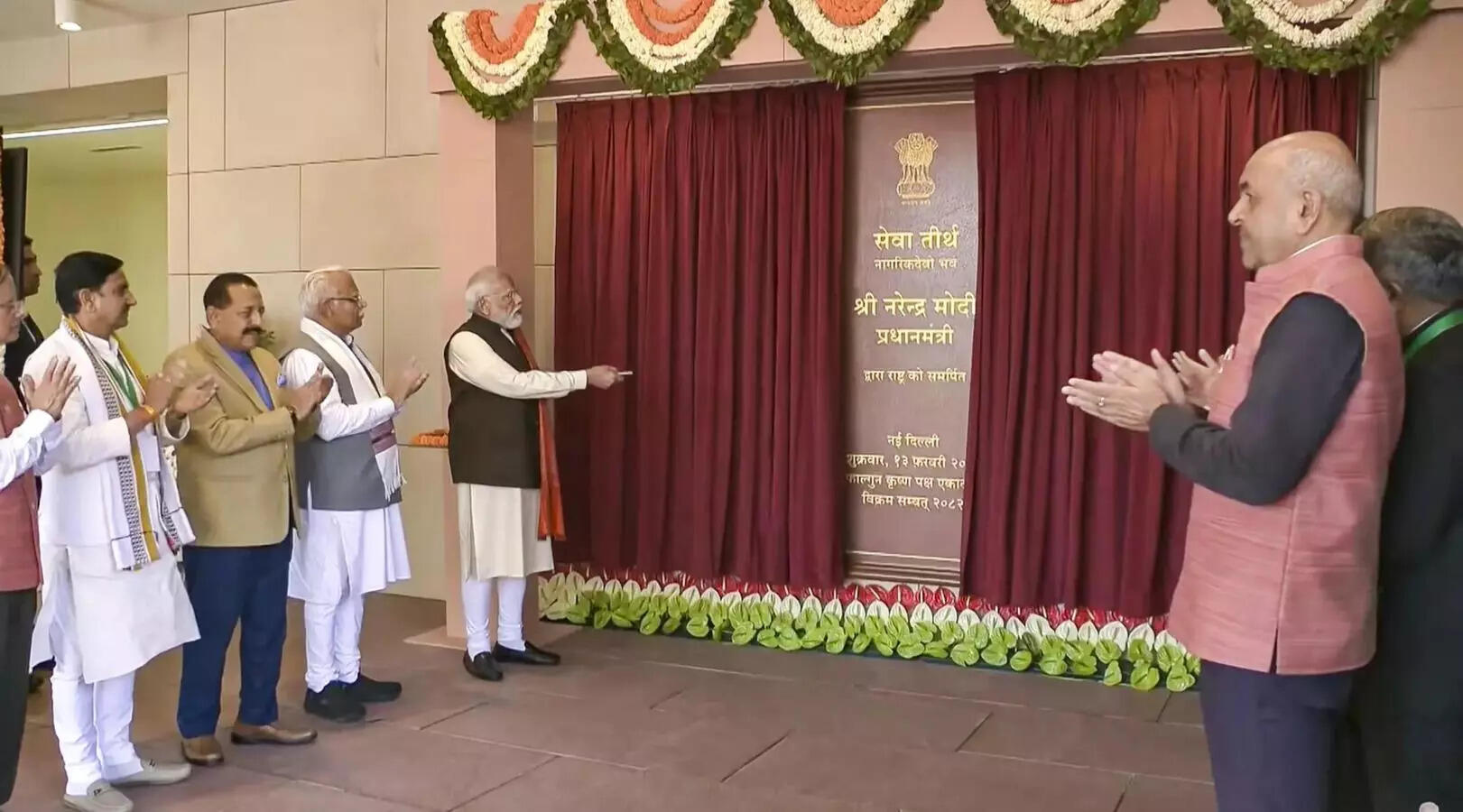
In the heart of the capital, a name change has sparked public discussion, policy attention and administrative implications.Following the renaming of an iconic complex as Seva Teerth, discussions have also extended to process, precedent and legality that have reached the Supreme Court.On February 13, Prime Minister Narendra Modi unveiled the name Seva Teerth for the new building complex housing the Prime Minister’s Office, the National Security Council Secretariat and the Cabinet Secretariat. He formally inaugurated Seva Teerth and Kartavya Bhavan-1 & 2 and addressed a public programme the same evening.

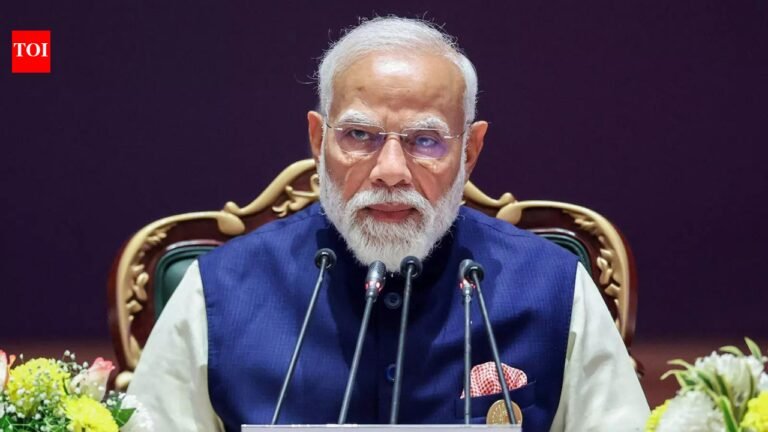
PM Modi inaugurates new PMO building (PTI image)

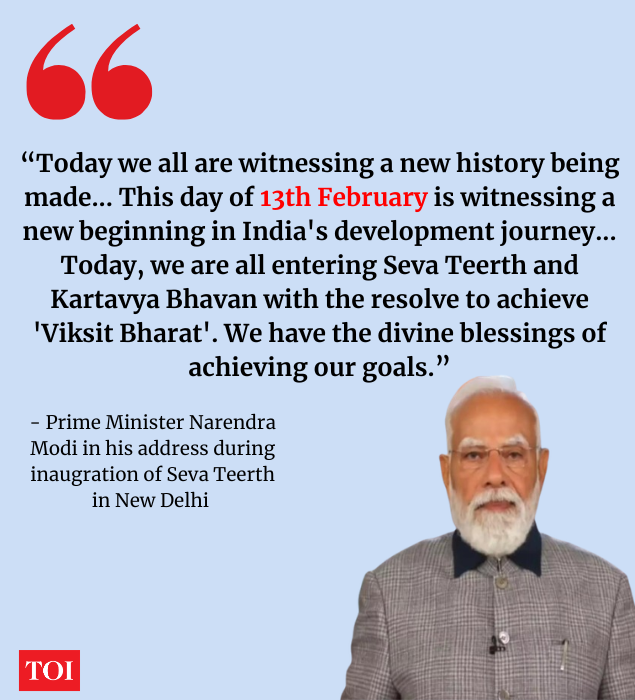
The government described the inauguration as “a transformative milestone in India’s administrative governance architecture,” stating that the new complexes consolidate ministries that were earlier functioning from fragmented and ageing infrastructure across the Central Vista area.Kartavya Bhavan-1 and 2 accommodate key ministries including Finance, Defence, Health & Family Welfare, Corporate Affairs, Education, Culture, Law & Justice, Information & Broadcasting, Agriculture & Farmers Welfare, Chemicals & Fertilizers and Tribal Affairs.Addressing the gathering, PM Modi said: “Today we all are witnessing a new history being made… This day of 13th February is witnessing a new beginning in India’s development journey… Today, we are all entering Seva Teerth and Kartavya Bhavan with the resolve to achieve ‘Viksit Bharat’. We have the divine blessings of achieving our goals.”

PM Modi's address during Seva Teerth inauguration

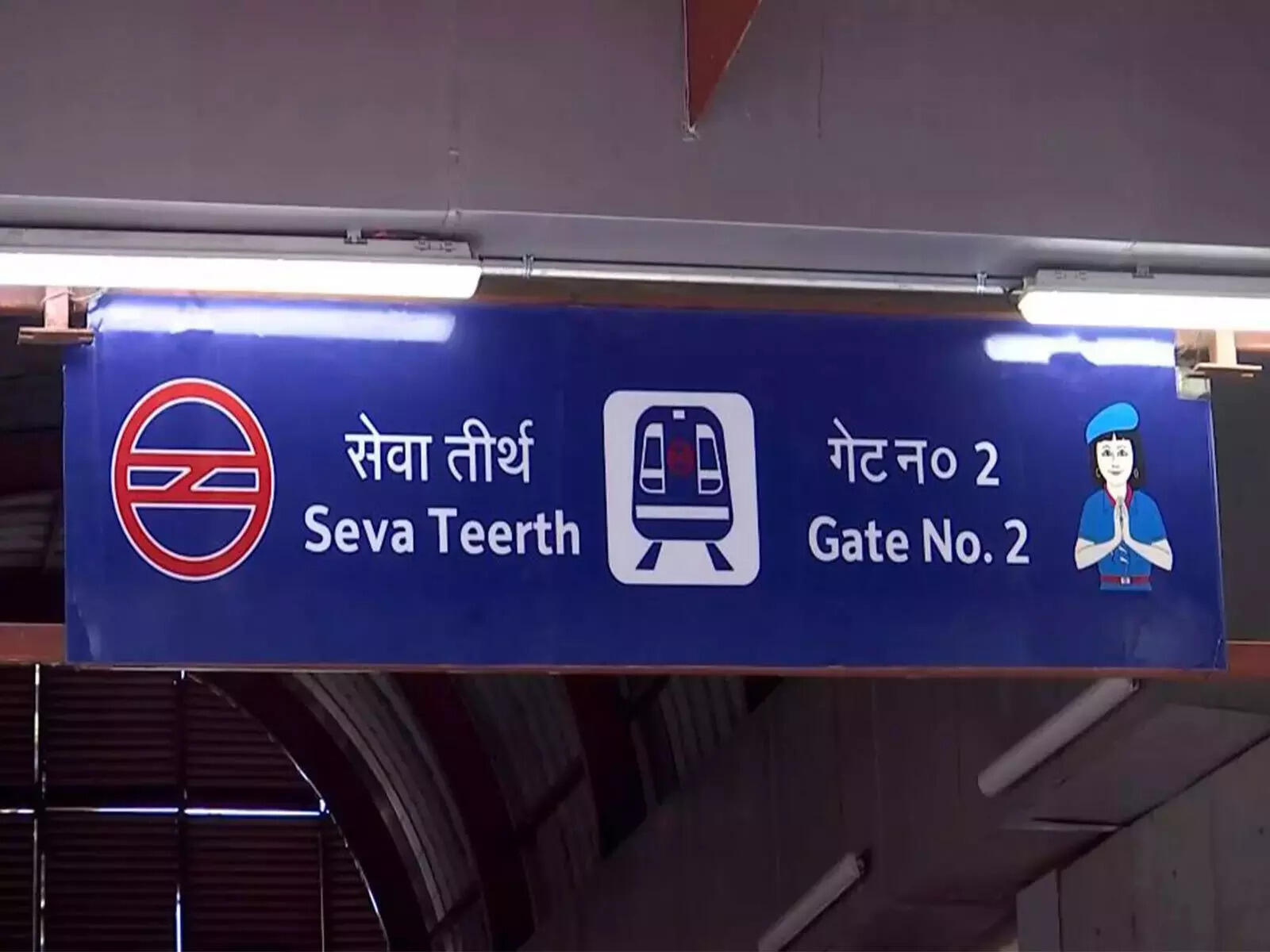
A day after the unveiling of the PMO complex, the Udyog Bhawan Metro Station on the Yellow Line was renamed Seva Teerth. The station lies beside Lok Kalyan Marg (earlier called Race Course) and serves lakhs of commuters across the capital.The renaming aligns with the government’s broader move since 2014 to shift away from colonial-era nomenclature. Over the years, Race Course Road became Lok Kalyan Marg, Rajpath became Kartavya Path and other similar changes were introduced.

Delhi's Udyog Bhawan Metro Station renamed to Seva Teerth (ANI image)

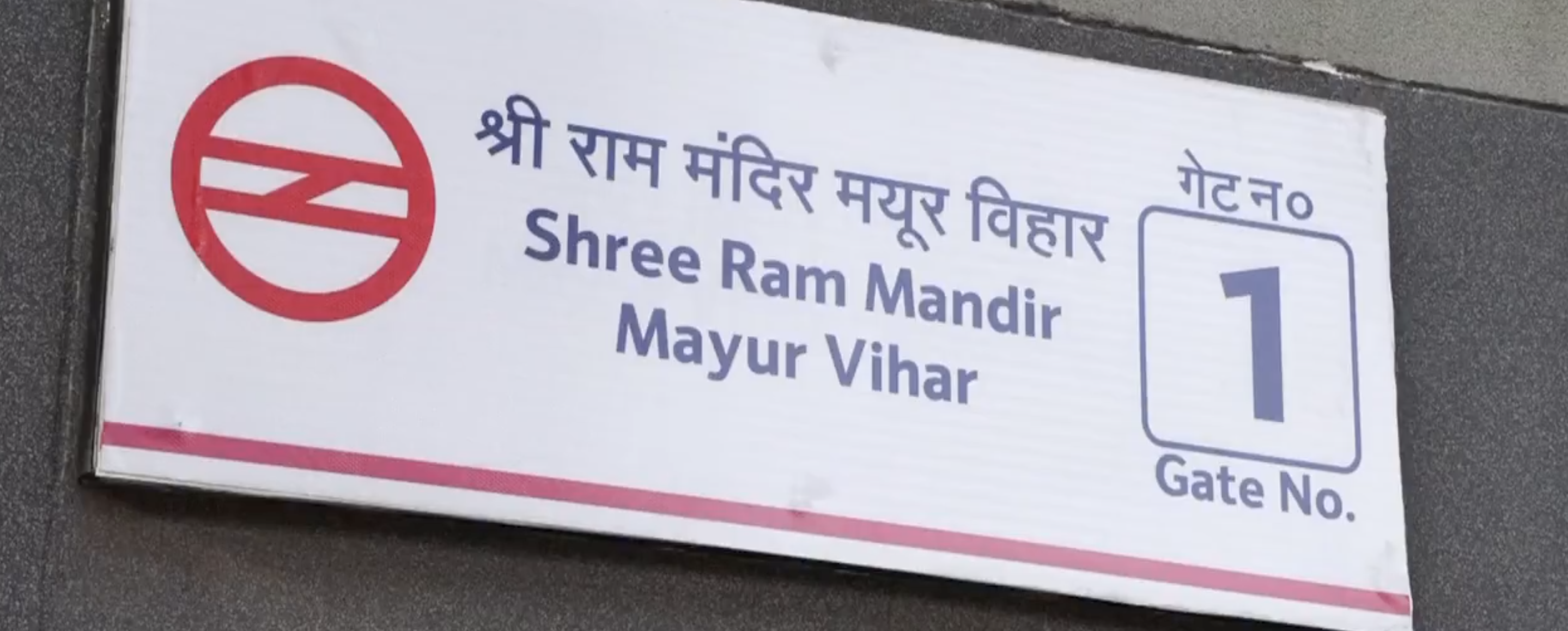
Another recent example is the Mayur Vihar Pocket 1 Metro Station, now renamed Shree Ram Mandir Mayur Vihar. The station, located on the Pink Line, connects major transit points including Anand Vihar Railway Station, Rajouri Garden and Lajpat Nagar.Explaining the decision, a local resident and Sanatan Dharm Sabha patron Govind Singh Pawar said: “People used to get confused between Mayur Vihar Phase 1 and Mayur Vihar Pocket 1. The BJP government, which promotes Sanatan Dharma, has corrected this. The people are very happy with this decision.”
.

.

“I don’t really see any harm in changing metro station names. But yeah, it can be confusing for people who don’t travel every day. Someone who visited Mayur Vihar Pocket 1 earlier might struggle to find it again on the map after the name change. It’s a small issue though, people will get used to it over time. Mayur Vihar connects to Noida and Ghaziabad, so many students and working professionals live here, and I don’t think this will affect their daily lives much,” a local resident said.

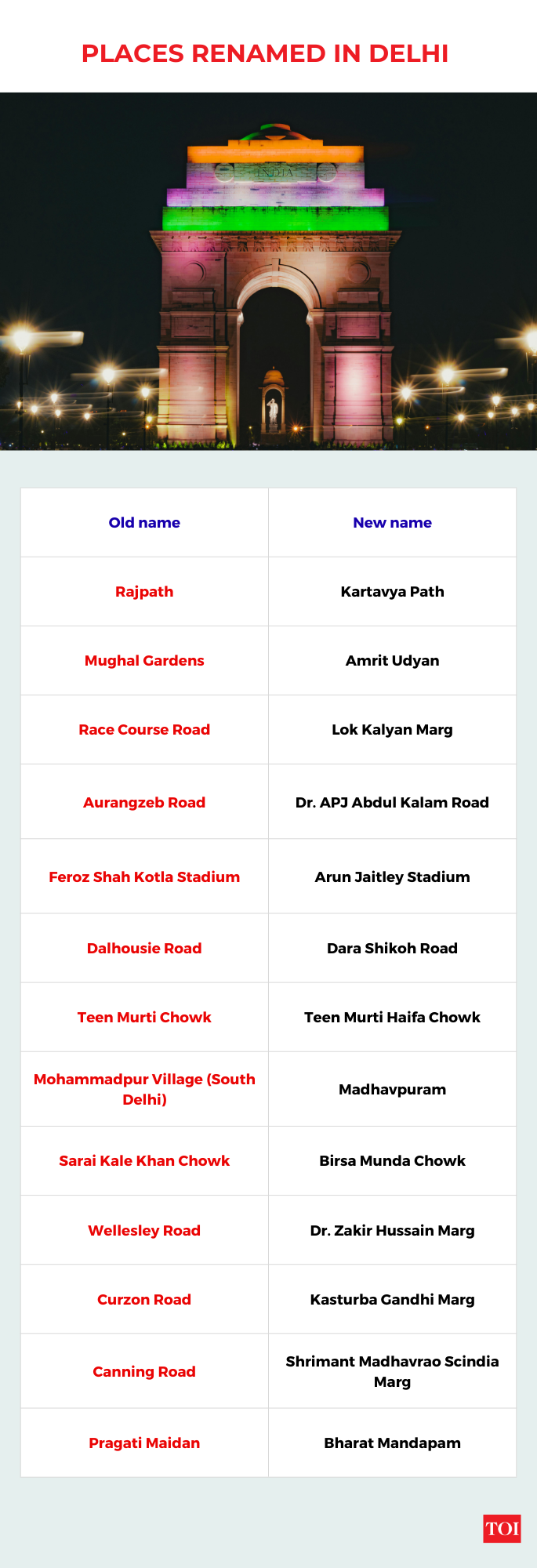
Places renamed in Delhi

A plea before the Delhi high court seeks to designate the Hindi name of the Supreme Court Metro Station as ‘Sarvochh Nyayalaya’ instead of simply writing ‘Supreme Court’ in Devanagari script.Advocate Umesh Sharma, who filed the petition, told the court: “The Metro station had been named ‘Supreme Court’. We demanded that its name be ‘Sarvochh Nyayalaya’… On the Supreme Court’s board and website it is written as ‘Sarvochh Nyayalaya’.”He argued that under the Official Languages Act, 1963, Hindi in Devanagari script must be used appropriately and that merely transliterating the English term does not fulfil the mandate.Appearing before the Delhi high court, the Delhi Metro Rail Corporation (DMRC) opposed the plea, citing financial and operational concerns. Counsel for DMRC submitted: “It comes as a financial burden. One such change is 40-45 lakh per station… It will involve a change in the roadmap. It’s a PSU and the public’s money.”The corporation also warned of a potential ripple effect, stating that similar litigations could follow if the change were allowed.However, the court observed: “Multiple litigation is not (the defence). We have to honour the act.”It directed the Centre and the DMRC to file affidavits, keeping in view the Official Languages Act, 1963 and the Official Languages (Use for Official Purposes of the Union) Rules, 1976.

The law behind a name: What the Constitution says on renaming?

The legal framework governing the renaming of places in India differs depending on whether the change involves a state or a city/local area. The Constitution lays down a clear procedure for states, while cities are guided by legislative powers and central guidelines.The Constitution of India provides for the renaming of a state under Article 3. It empowers Parliament to form new states and alter the areas, boundaries or names of existing states by law.Under this provision:

  • A bill for renaming a state can be introduced in Parliament only on the recommendation of the President.
  • Before the bill is introduced, the President refers it to the concerned State Legislature to express its views within a specified period.
  • The views of the State Legislature are not binding on Parliament, but they must be taken into consideration.
  • The bill must be passed by a simple majority in both Houses of Parliament.
  • After passage, the bill is sent to the President for approval, and upon assent, it becomes law.

Article 4 complements Article 3 by enabling Parliament to make consequential amendments necessary to give effect to such changes.

.

.

The procedure for renaming a state can be initiated either by Parliament or by a State Legislature passing a resolution and sending it to the Central Government for approval. The Central Government then introduces the bill in Parliament after obtaining the President’s recommendation.At the central level, the proposal is examined by the ministry of home affairs in consultation with concerned agencies. Approval is granted only after obtaining no objections from:

  • The Department of Posts
  • The Survey of India
  • The Ministry of Railways

These agencies confirm that there is no other village, town or city with a similar name in official records that could create administrative confusion.The Central Government considers factors such as:

  • Historical significance
  • Public sentiment
  • Linguistic affinity
  • Administrative convenience
  • National integration

Guidelines issued in 1953 further state that:

  • The change should not involve a radical alteration but may allow phonetic correction or transliteration.
  • It should not be based on communal or sectarian considerations.
  • It should not create confusion for postal, railway or other services.
  • It should not adversely affect the interests of any other state or union territory.

After scrutiny and approvals, an executive order is issued formalising the renaming.

The administrative cost: What renaming entails

Renaming a city or state is not limited to replacing a signboard — it triggers a multi-layered administrative overhaul involving state and central agencies, public institutions and private entities.The material shows that the cost of renaming a city or state can range from Rs 200 crore to Rs 500 crore, depending on its size and global recognition. In the case of a major city, estimates suggest that the figure can go up to Rs 1,000 crore.

  • The renaming of Allahabad to Prayagraj reportedly cost over Rs 300 crore, according to government estimates.
  • The Indian Railways spent Rs 2.5 crore to change Bombay to Mumbai on signboards, tickets and timetables in 1995.
  • Using a revenue-based estimation model, the projected cost of renaming India to Bharat was calculated at approximately Rs 14,304 crore, according to government of finance.

The expenditure typically covers:

  • Updating road signage, highway markers and railway station boards
  • Revising official maps and land records
  • Changing government stationery and departmental documentation
  • Modifying databases across ministries and civic authorities
  • Updating railway tickets, timetables and postal records
  • Adjusting airport signage and aviation documentation
  • Changes to Aadhaar, passports, voter IDs and other official records

Beyond government departments, private institutions like banks, schools, businesses and corporate houses must also update their records, branding and promotional material. This involves both direct expenditure and indirect administrative costs.

.

.

The process requires coordination between the State Government, the Ministry of Home Affairs, the Survey of India, the Railways and the Department of Posts. Government guidelines have historically outlined considerations for renaming proposals. For instance, a 1953 Ministry of Home Affairs communication noted that it “should be discouraged as far as possible unless there are compelling reasons,” observing that such changes create confusion and administrative burden.

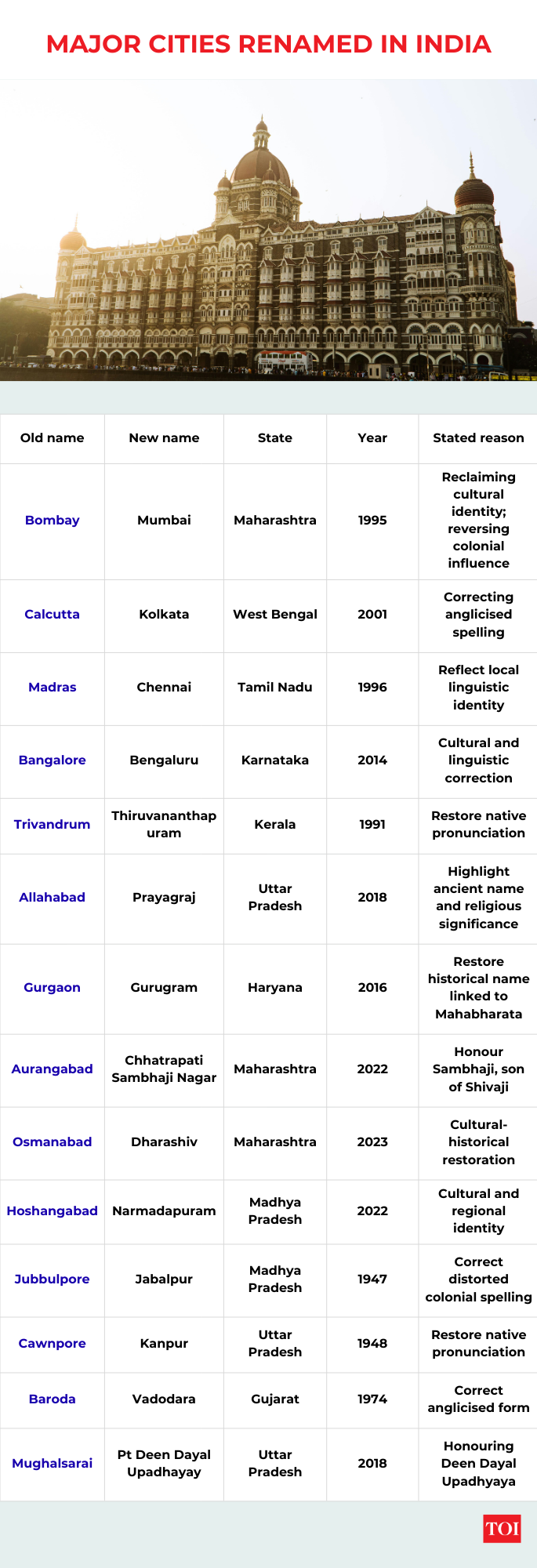
List of cities renamed

The material also highlights that renaming affects not only local systems but district, state, national and even international documentation. In a country as large and diverse as India, this coordination significantly increases logistical complexity.

Identity, impact and the Supreme Court: Advantages, challenges and the 2023 ruling

Renaming a place is driven by multiple factors. The rationale behind renaming includes:

  • Rapid urbanisation, with India projected to add 416 million people to cities by 2050, requiring new infrastructure and names.
  • Reclaiming identity by correcting anglicised or distorted spellings imposed during colonial rule.
  • Honouring national leaders, martyrs and culturally significant figures.
  • Asserting linguistic and cultural identity of regions.
  • Political repositioning and symbolic shifts in public memory.

Supporters argue that renaming can:

  • Instil pride, dignity and a sense of belonging among residents
  • Preserve and revive cultural heritage and civilisational consciousness
  • Correct historical distortions in spelling and pronunciation
  • Shape the values inscribed in public space
  • Build a distinctive brand identity that may attract tourism and investment

On the loop side there can be several challenges associated as well:

  • Confusion in a global economy once a city has achieved international recognition
  • Administrative inconvenience and extensive paperwork updates
  • Economic strain due to large public expenditure.
  • Emotional and cultural resistance from residents accustomed to older names
  • Risk of social division and political polarisation
  • Possible erosion of historical continuity and public memory

In 2023, the Supreme Court dismissed a Public Interest Litigation seeking the formation of a renaming commission focused on “ancient India” and restoration of names allegedly altered by “barbaric invaders”.

Supreme Court metro station (Image/X)

The bench made it clear that the “country cannot remain a prisoner of the past.” It observed that selectively invoking history could create divisions”.

What’s in a name? Perhaps everything.

You are still in that metro coach. The announcement has passed, the doors have opened and closed, and the train has moved on.Centuries ago, William Shakespeare wrote in Romeo and Juliet:

“What’s in a name? That which we call a rose,By any other name would smell as sweet.”

William Shakespeare

The line suggests that essence matters more than labels. Yet in modern India, names are rarely just labels. They carry history, memory, politics and identity. From Calcutta becoming Kolkata to Aurangabad being renamed Chhatrapati Sambhaji Nagar, each decision is framed as restoration, assertion or correction.

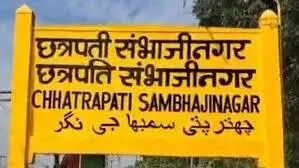
Aurangabad renamed to Chhatrapati Sambhajinagar (Image/X)

But even as official notifications are issued and signboards replaced, conversations at tea stalls, in homes and on public transport often tell a different story. Banaras survives in speech. Allahabad slips into daily vocabulary. Old and new coexist.In India, names often carry layers of history, memory and identity. They are reflections of power, pride, protest, policy and perception. They can unify, divide, restore or rebrand. They can cost hundreds of crores or just a few strokes of ink in a gazette. But they always mean something.So the next time the metro announcement echoes through the coach, whether it says Supreme Court or Sarvochh Nyayalaya, the question may not simply be what the station is called.It may be what we choose to remember when we hear it.

From India To Bharat: PM Modi’s Nameplate Grabs Eyes, Draws Global Attention At AI Impact Summit

Nearly 300 drones and 50 missiles: Russia launched a large-scale attack on Ukraine at night, and its energy base was attacked

0

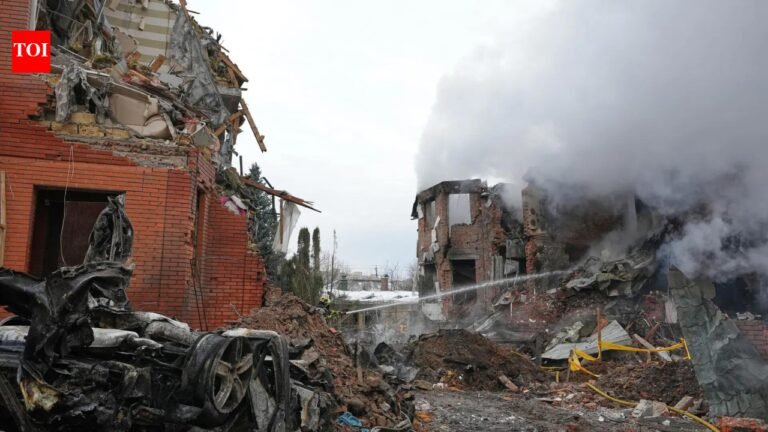
Nearly 300 drones and 50 missiles: Russia launched a large-scale attack on Ukraine at night, and its energy base was attacked

According to the Associated Press, citing Ukrainian officials, Russia launched a large-scale missile and drone attack on Ukraine overnight, killing one person in Kiev and damaging energy infrastructure in the south.One person died in the Kiev region and eight people, including a child, were rescued from the rubble of a destroyed building, Ukraine’s emergency services said on Sunday.

Putin orders Russians to leave Cuba ahead of ‘final showdown’ with Trump? A storm is brewing in the Caribbean

The attacks caused damage and fires in five districts on the outskirts of Kiev. In the village of Putrivka in the Fastiv district, emergency teams are working to rescue people trapped under rubble.In southern Ukraine, Russia attacked energy infrastructure in the Odessa region, sparking a fire that was later extinguished, emergency services said.According to the Ukrainian Air Force, 297 drones and 50 missiles of various types were used in the night attack. It is said that 274 drones and 33 missiles were shot down or otherwise disabled. Among the remaining missiles, 14 missiles and 23 drones hit 14 locations, while 3 missiles are still missing.The latest attack comes as Ukraine continues to face sustained airstrikes nearly four years after Russia launched a full-scale invasion. Moscow has stepped up its crackdown on Ukraine’s power grid in recent months, causing winter power and heating outages.Separately, Ukrainian President Zelensky said on Telegram on Sunday that an explosion occurred in the western city of Lviv, killing one person and injuring 25 others. One person has been arrested in connection with the incident, which officials said was not related to Russian airstrikes.On the Russian side, the Russian Defense Ministry said its air defense systems destroyed 86 Ukrainian drones overnight. Two Ukrainian drones struck an oil depot in the Russian-occupied Ukrainian city of Luhansk, injuring a security guard and causing a fuel tank to catch fire, Moscow-based leader Leonid Pasechnyk said.

‘Karni Sena workers get ready’: Right-wing leader issues stern warning to filmmakers over film ‘against’ Sanatan Dharma India News

0

'Karni Sena workers get ready': Right-wing leader issues stern warning to filmmakers over films 'against' Sanatan Dharma

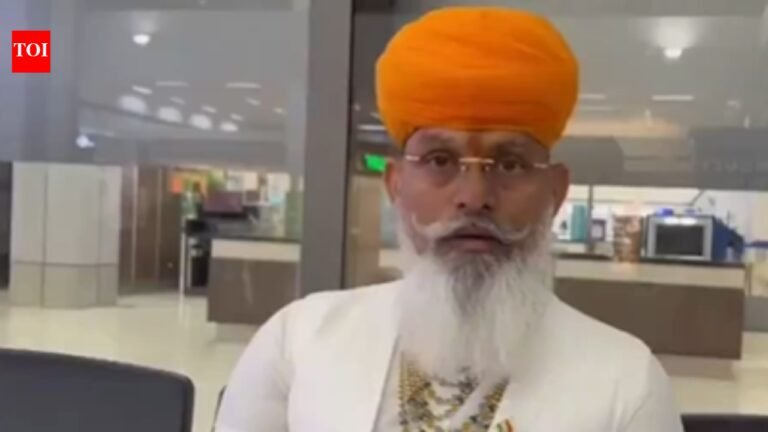
The Kshatriya Karni Sena chief has issued a strong warning to film producers, saying his films target “Sanathan Dharma” and hurt religious and communal sentiments. Sena national president Raj Shekhawat said his organization might confront them at their homes in Mumbai and “teach them a lesson.”The right-wing leader has expressed disapproval of the upcoming films Yadav Jiji Love Story and Gusho Pandat, accusing the filmmakers of disrespecting faith and social groups, PTI reported.“It is time to go into the homes of producers and directors who are making films about our gods and culture and teach them a lesson,” Shekhawat told reporters after praying at the Chamunda temple in Harusalai on Saturday night. “I’m directing Carnicena Workers need to be prepared. We will soon travel to Mumbai and take action against these filmmakers at their homes,” he added.He alleged that the filmmakers had earlier targeted the Kshatriya and Brahmin communities and were now “insulting” the Yadav community. He said such films were made under the guise of freedom of expression while “misleading young people” and “hurting religious sentiments”.Talking about Yadav Ji Ki Love Story, which is slated to release on February 27, Shekhawat said community members have started protesting. Some have objected to the depiction of a romantic relationship between a Yadav woman and a Muslim man, with critics saying it could disrupt social harmony. Some BJP leaders have also called for a ban. According to news agency PTI, the filmmakers are yet to respond to the allegations.Shekhawat had also announced a “major movement” against the new UGC equity regulations in Delhi on March 8 and said a Swarna Samaj committee had been formed to demand their withdrawal. He said the group was reaching out to members of Congress to seek support.On February 18, an FIR was registered in Sambhal against the producer, director and star of “Yadav Ji Ki Love Story”. In a separate dispute, Netflix film “Ghooskhor Pandat” faced a legal challenge over its title, with the platform later agreeing to change the title following court proceedings.

Bodies of nine backcountry skiers found days after California avalanche

0

Crews recover bodies of nine backcountry skiers killed in avalanche california A tragic operation in the Sierra Nevada that was hampered by heavy snowfall has ended, authorities said Saturday.

A search team recovered the bodies of eight victims and discovered another person who had been missing since Tuesday's avalanche and was presumed dead. (Associated Press)
A search team recovered the bodies of eight victims and discovered another person who had been missing since Tuesday’s avalanche and was presumed dead. (Associated Press)

A search team recovered the bodies of eight victims and discovered another who had been missing and presumed dead since Tuesday’s avalanche in Green Mountain near Lake Tahoe. Nevada County Sheriff’s Lt. Dennis Hack said the ninth missing person was found “relatively close” to the other victims but could not be seen due to white light conditions at the time.

At a news conference, Sheriff Shannon Moon praised the collective efforts of the numerous agencies that helped recover the bodies, from the California Highway Patrol and the National Guard to Pacific Gas and Electric Co., as well as the 42 volunteers who helped on the final day of the operation.

“We are fortunate in this mountain community that we are very close-knit and our community steps up when tragedy strikes,” Moon said.

victim name

The sheriff has for the first time released the names of the three Blackbird Mountain Company tour guides who died: 34-year-old Andrew Alissandratos, 42-year-old Nicole Choo and 30-year-old Michael Henry.

Alisandra Toss is originally from Tampa, Fla., and moved to Tahoe about a decade ago, according to a biography on the company’s website. He enjoys all kinds of adventure activities, from backcountry safaris to rock climbing.

Henry moved to Colorado in 2016 and then to Truckee three years later. He is described as “laid back” and dedicated to sharing his knowledge and love of the mountains with others.

There is no profile of Qiu on the website.

“This is a huge tragedy and the saddest event our team has ever experienced,” Blackbird Mountain founder Zeb Bryce said in a statement Wednesday.

“We are doing everything we can to support the families who have lost so many people, as well as the team members who have lost cherished friends and colleagues,” he said.

The six other fatal victims were women who were part of a close-knit group of friends, all experienced backcountry skiers who knew their way around the Sierra Nevada wilderness, their families said this week.

They were identified as Carrie Atkin, Liz Clabaugh, Danielle Keatley, Kate Morse, Caroline Sekar and Kate Vitt, all in their 40s. They live in the San Francisco Bay Area, Idaho and the Lake Tahoe area.

“Words cannot describe our grief,” the family said in a statement. “Our focus now is on supporting our children through this incredible tragedy and honoring the lives of these remarkable women. They were mothers, wives and friends, all connected by their love of the outdoors.”

The families asked for privacy as they grieve, adding they have “many unanswered questions.”

Two of the friends survived Tuesday’s avalanche and were rescued along with four others, including a guide. Their names have not yet been released.

Trapped in the mountains for hours

The avalanche occurred on the last day of a three-day trip for 15 skiers, when the group decided to end the trip early to avoid an approaching snowstorm. Officials said the route they took was a “normal travel route,” but declined to specify what that meant.

Six survivors called for help at around 11:30 a.m. on Tuesday, describing a sudden and terrifying landslide about the length of a football field. According to Harker, they found the bodies of three fellow skiers afterwards.

Harker said rescuers found them about six hours after the initial distress call, taking two different routes to get there. They also found five other bodies, with only one missing.

But rescuers immediately realized it was too dangerous to extract the body at that time due to heavy snowfall and the threat of more avalanches. These conditions continue Wednesday and Thursday.

Friday’s breakthrough

Authorities used two California Highway Patrol helicopters with help from Pacific Gas and Electric Co. to clear the snow and intentionally release unstable snow to reduce avalanche risk.

That night, crews managed to rescue five victims before dark, but were unable to rescue the final three.

The next morning, rescuers braved strong winds and made multiple trips to lift the last four bodies from the mountain using helicopters and ropes. The body was then taken to a snowcat (a truck that can drive on snow) for further transportation.

“We are deeply sorry for the families affected by this avalanche,” Moon said.

Harker said initial reports indicated that at least two surviving skiers were not swept away by the avalanche. The others stood separately, relatively close to each other, and were all hit.

Harker declined to provide information about the possible triggering of the avalanche.

Authorities closed the area

Chris Feutrier, forest supervisor for the Tahoe National Forest, said the area will be closed to visitors until mid-March. Officials intend to restore public access once the investigation is complete.

“It’s the public’s land, and they like to rebuild on it,” Fetrier said. “The Forest Service will not close public lands for every hazard or every obstacle. We trust the American people to use their best judgment as they rebuild.”

Oman Ministry of Education announces new teaching vacancies: how to apply, qualifications, and everything you need to know | World News

0

Oman Ministry of Education announces new teaching vacancies: how to apply, qualifications, everything you need to know
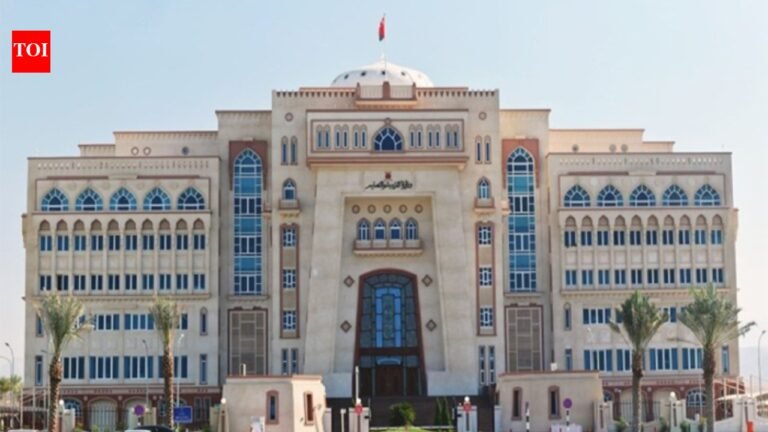
Oman’s Ministry of Education announces new teaching vacancies/Image: X

Oman’s Ministry of Education, in coordination with the Ministry of Labour, has announced a new round of teaching vacancies, opening the door for graduates and aspiring educators to join the country’s school system. The move aims to strengthen the teaching workforce and support sustainable employment for Omani job seekers.This vacancy is open to candidates holding a university degree in Education or a general university degree supplemented by a Postgraduate Diploma in Education.Eligibility also applies to students expected to graduate in the 2025/2026 academic year, whether in first semester, second semester or summer semester.In addition, the Ministry of Education has reopened the doors for graduates from previous years who did not take the recruitment exam, as well as graduates who had previously taken the exam but did not meet the passing score.

Application process and timeline

Applications must be submitted electronically through the designated recruitment link on the Ministry of Education Education Portal.The application window will run from February 22, 2026 to March 12, 2026. Candidates must complete their submission within this period.Applicants must upload all necessary documents, including academic transcripts and identification documents. English language specialists must provide a recognized proficiency certificate such as IELTS or TOEFL, while French and German graduates must submit a DELF certificate where applicable.All applications will be scrutinized in detail against established admissions and selection criteria.

Graduates from outside Oman

The ministry noted that graduates from outside the Sultanate who were still on the waiting list in previous years must complete equivalency and certification of their academic qualifications. This step is necessary to ensure that the appointment process goes smoothly if they are nominated.

Support national employment goals

The announcement is in line with the directives of His Majesty Sultan Haitham bin Tariq to monitor and advance programs that support sustainable employment of job seekers across various sectors.Through this recruitment initiative, the Ministry of Education aims to not only fill classroom vacancies but also integrate new talent into Oman’s public education system while providing structured opportunities for aspiring teachers.

‘Gandi aur nangi rajneeti’: PM Modi slams Congress after youth faction ‘topless’ protest at AI summit | India News

0

'Gandi aur nangi rajneeti': PM Modi slams Congress after youth faction 'topless' protest at AI summit

New Delhi: Prime Minister Narendra Modi Sunday joined the chorus of criticism Congress Party for his “topless” protest Artificial Intelligence Impact Summit The meeting, held in New Delhi, accused the grand old party of turning global events into an arena for its “gandi aur nangi” politics.“Congress has turned a global event into an arena of ‘gandi aur nangi’ (dirty and shameless) politics,” the Prime Minister said while speaking after alighting from the train in South Mobarat.Stepping up his attack on the largest opposition party, he added, “I ask the leaders of Congress – the country already knows who you really are. What is the need for further divestment?”Prime Minister Modi’s remarks came days after workers from the party’s youth wing, the Indian Youth Congress (IYC), staged a “topless” protest at the Bharat Mandapam, the venue for the Artificial Intelligence Summit in New Delhi.The Congress party faced widespread backlash following the incident, including criticism from some allies and other opposition leaders who called the action “inappropriate”, as well as a strong reaction from the ruling Bharatiya Janata Party.One of the main allies in Congress, Akhilesh Yadavalso condemned the protest, saying “they should avoid doing things that would bring shame to our country in front of foreign representatives and world representatives.”Meanwhile, the Patiala House Court sent four IYC workers – Krishna Hari, Kundan Yadav, Ajay Kumar and Narsingh – to five days of police custody.During the protest, they wore T-shirts with the slogan “Compromise on India-US trade deal”.The court rejected the bail requests of all four defendants. The investigation is at an important early stage and releasing them now could lead to them fleeing or tampering with evidence, the statement said. The court said the bail request was premature.Delhi Police told the court that the accused raised anti-national slogans and protested in a manner similar to the Gen Z protests in Nepal, allegedly to defame India at international events. The protest took place as foreign dignitaries attended the Bharat Mandapam.The police have registered a case against them on charges including obstructing a public servant from carrying out his duties, assaulting a public servant, hate speech and criminal conspiracy.Judicial Magistrate First Class (JMFC) Ravi granted police custody for five days after hearing arguments from the Delhi police and the additional public prosecutor.
‘Dangerous tactics’: Former India cricketer questions Suryakumar Yadav’s slow scoring rate in T20 World Cup Cricket News

0

'Dangerous tactics': Former India cricketer questions Suryakumar Yadav's slow scoring rate at T20 World Cup

Sanjay Manjrekar has expressed concerns over the way India captain Suryakumar Yadav is batting during the ongoing ICC Men’s T20 World Cup.Manjrekar praised Suryakumar for pacing himself and delivering a strong performance during his 84-run innings against the United States in Mumbai. However, he said the Indian captain continued to be cautious in the remainder of the game, which limited the role of Hardik Pandya, Shivam Dubey and Linku Singh in the final game.“I saw something in Suryakumar Yadav that I didn’t really like. 77-6, India vs. USA in Wankhede, Suryakumar Yadav had to change the way he played and he did a fantastic job. Just slowed down a bit and then exploded, got a great score, man of the match, etc.,” Manjrekar said on his Instagram page.He added that Suryakumar may have taken things too far after that match, including during the match against Pakistan. According to him, both Suryakumar and Tilak Varma batted conservatively, which reduced the impact of the finishers.“From then on, I thought he went a little too far. Against Pakistan, India lost a few wickets and he really brought the shutters down a lot. He and Tilak Varma both played slightly conservatively and in the end, the likes of Hardik Pandya, Shivam Dubey and Linku Singh didn’t really make use of the resources,” he continued.Manjrekar also said that this approach could be risky in T20 cricket if senior players or captains feel the need to stay till the end, especially when batting first or chasing a big score. He said no top-order batsman should try to control the innings in this way.“It’s a dangerous thing to do in T20 cricket, where a senior player or a captain feels he has to stay on the field, especially when batting first. When you set a target of 200-plus, it’s a very dangerous strategy if someone in the top four believes he has to control the innings and make sure he can lead India to a certain score. No batsman should have such thoughts. So, Surya has to be careful about that,” Manjrekar concluded.Suryakumar has scored 164 runs in the tournament so far, second only to Ishan Kishan among Indian batsmen. His strike rate of 136.13 is much lower than Kishan’s 202.29.India will face South Africa in their first Super Eight match in Ahmedabad on Sunday. India top Group A with 8 points after winning all their group matches.